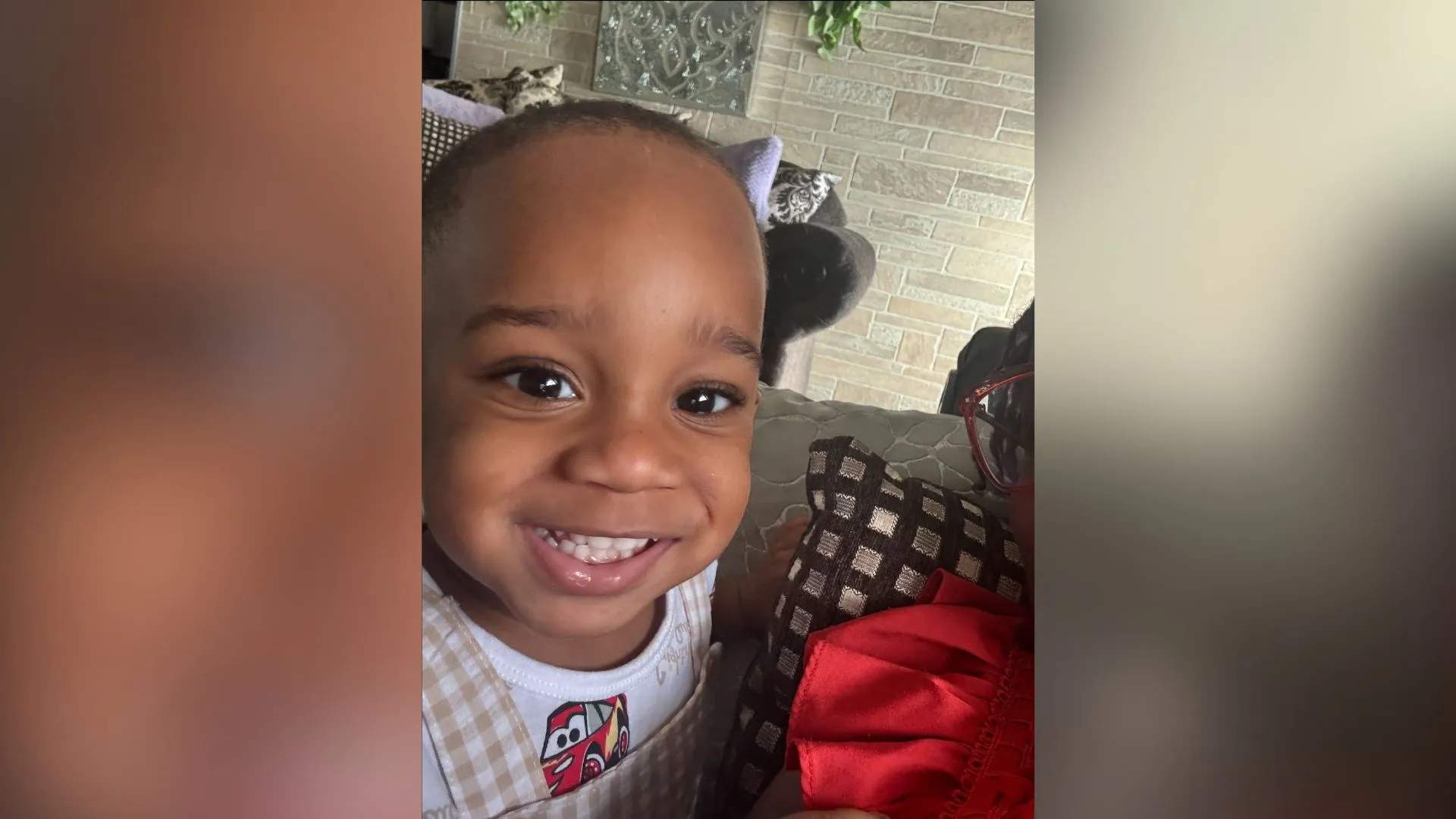
On Sunday afternoon, June 14, 2026, police in Senatobia, Mississippi shot into a vehicle outside a Walmart, killing 1-year-old Kohen Wiley and critically injuring another person. The alleged crime that triggered the lethal response? Shoplifting diapers.
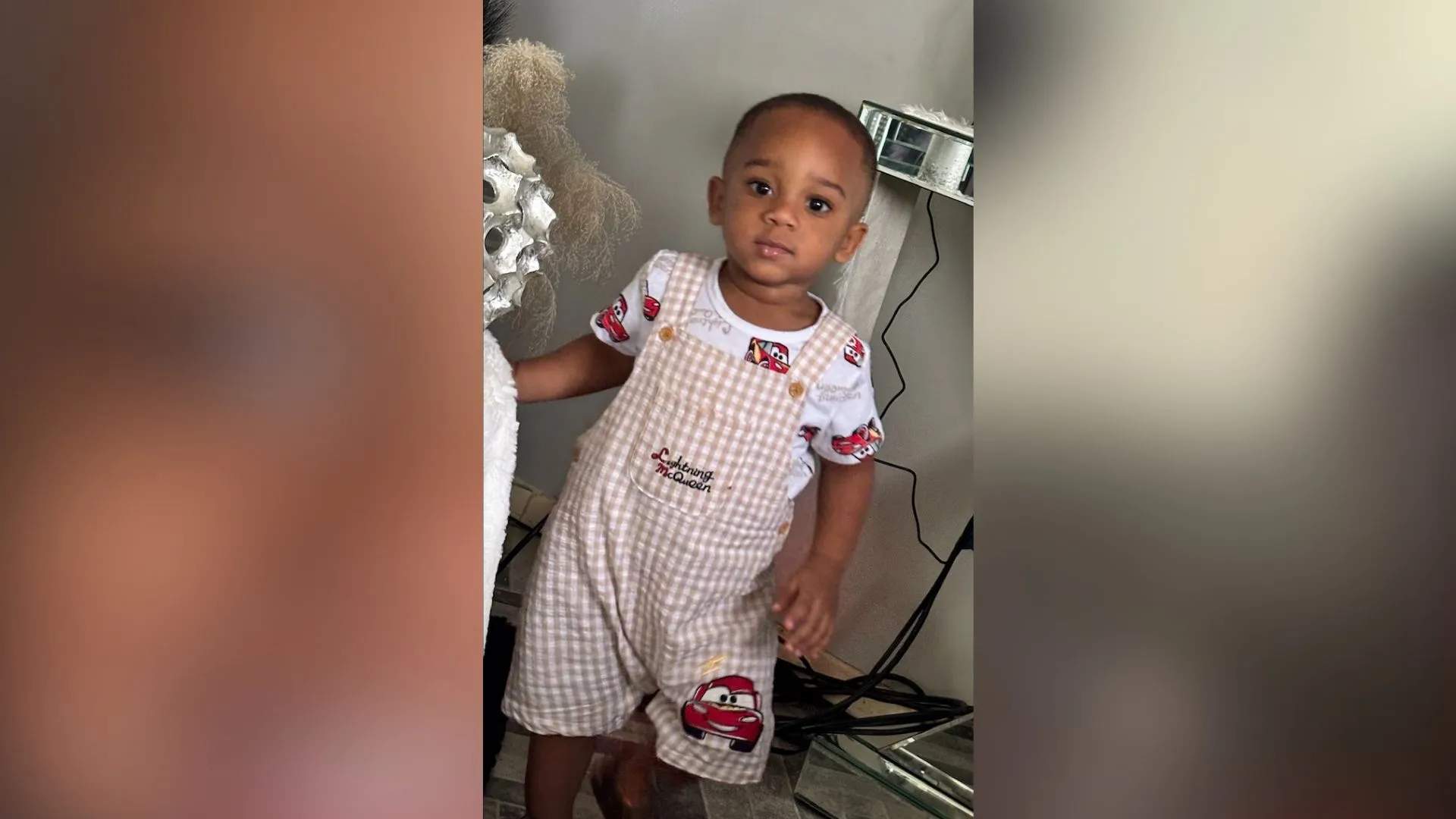
Kohen Wiley was one year old. His name was Kohen Kartier Wiley. He was a baby — a Black baby boy whose life was taken by a bullet fired by a police officer responding to a call about stolen Pampers from a Walmart in a small town in northwestern Mississippi.
This is the state of American policing. A child is dead over diapers.
What Happened
According to the Mississippi Bureau of Investigation, the incident began just after 2:00 p.m. on Sunday, June 14, when Senatobia police officers and Tate County sheriff's deputies responded to a shoplifting call at the Walmart on U.S. Highway 51 in Senatobia.
Officers encountered two adults and a child fleeing from the store and entering a vehicle. What happened next is where accounts diverge — but where the outcome does not.
Police claim that as the vehicle attempted to leave the parking lot, the driver "drove in the direction of officers, almost striking one." In response, an officer opened fire on the vehicle — shooting into a car containing two adults and a one-year-old baby.
The vehicle fled the scene and arrived at a nearby hospital. Kohen Wiley was pronounced dead. A second person — identified by family members as the child's aunt, who was driving the car — suffered critical injuries and was transported to Regional One Health in Memphis. The child's mother was in the front passenger seat, holding her baby, when the bullets tore through the vehicle.
No officers were injured. The Mississippi Bureau of Investigation has taken over the case. No officer has been named. No body camera footage has been released. No charges have been filed.
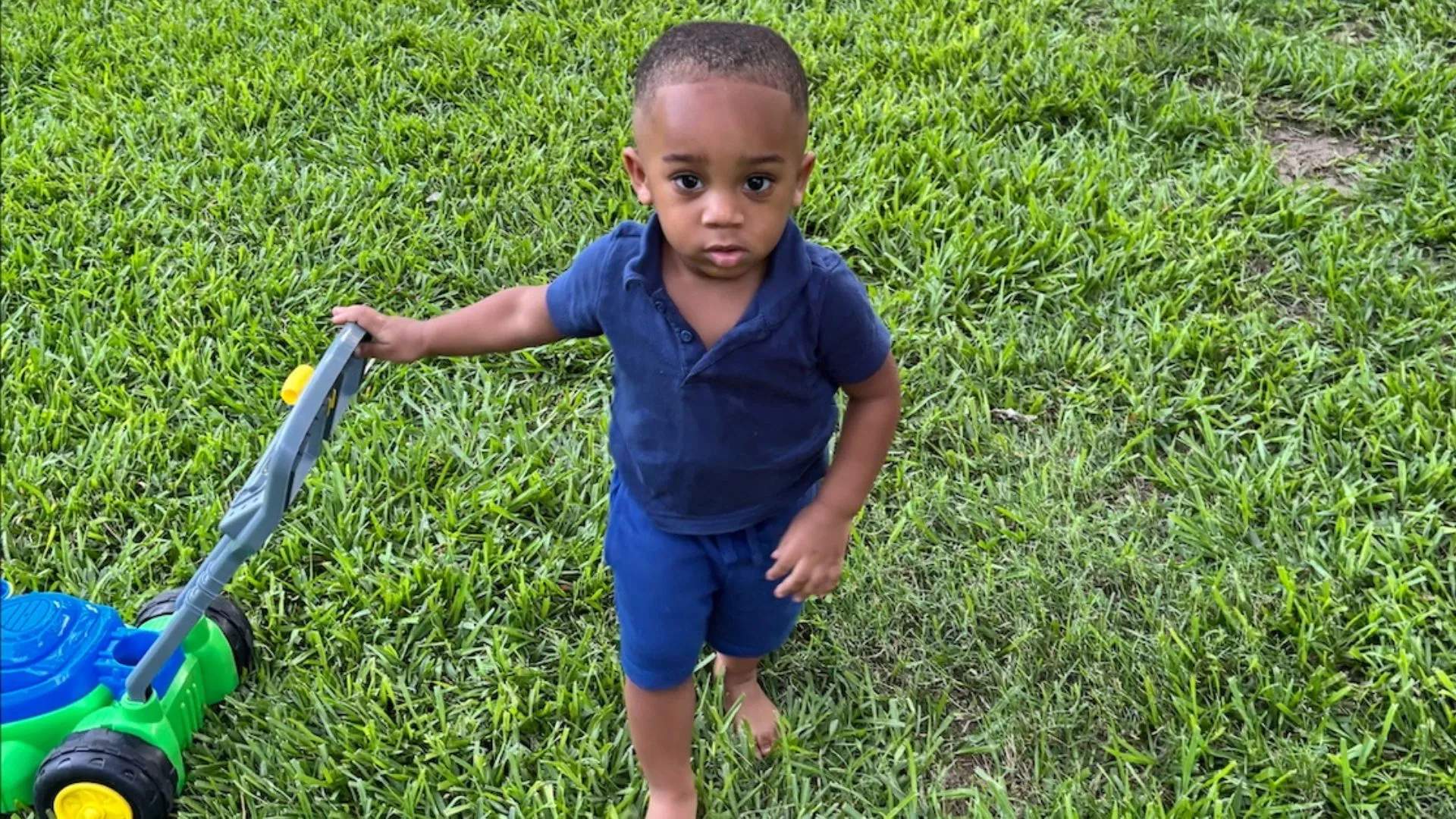
Black family members speaking to reporters about the police killing of baby Kohen Wiley.
The Family Speaks
The Wiley family has been left shattered, searching for answers that the police department has refused to provide.
Carolyn Stokes, Kohen's great-grandmother, described the agonizing lack of information from authorities:
"The police department not telling us anything. They removed the baby's body without anybody seeing it. All we know is that a car was shot up and a one-year-old baby was killed, and then nobody tells us anything, like we're not anybody."
Licole Wiley, Kohen's grandmother and sister to the critically injured woman, cut through the absurdity of what led to her grandson's death:
"Policeman shot, opened fire in a public setting, over allegedly some Pampers. Whatever the incident may have come to, it still didn't need for you to shoot two adults and a baby that was not even a threat to you."
Carlos Haynes, Kohen's grandfather, echoed the grief and demand for accountability:
"My grandson gone. I just want justice."
Lasandra Williams, another grandmother, channeled the community's rage into resolve:
"The situation that took place really was unnecessary. Everybody that was involved need to be held accountable. I'm not giving up until I get justice. Justice will be served."
Family members waited outside the hospital for hours, denied information about their loved ones, denied the chance to see Kohen's body before it was taken away. The indignity compounds the horror.
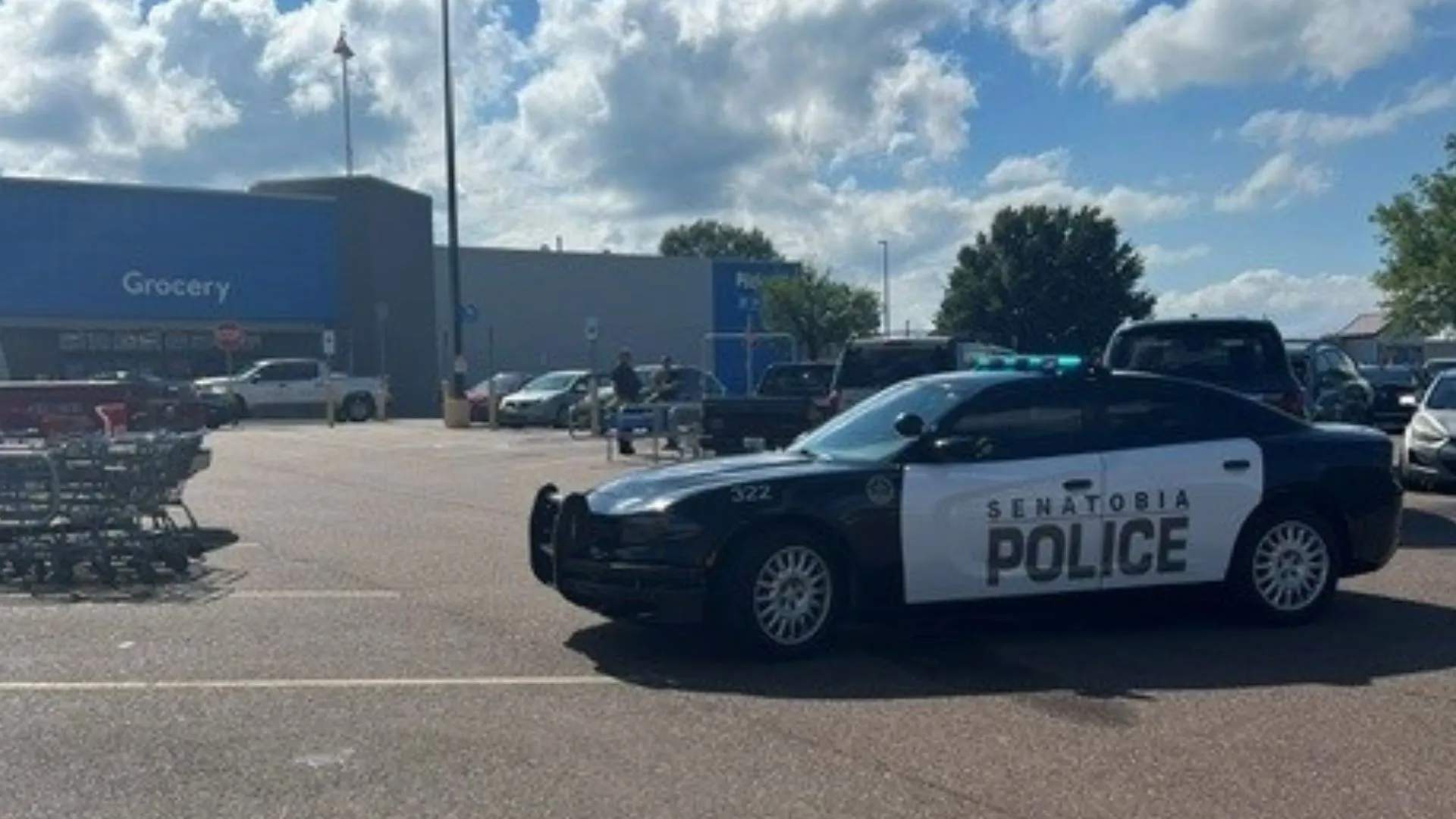
Crime scene tape and police vehicles in a Walmart parking lot in Senatobia, Mississippi after a police shooting.
A Pattern, Not an Anomaly
The killing of Kohen Wiley is not an isolated incident. It is the logical endpoint of a system that arms officers with lethal force, trains them to treat every encounter as a potential threat to be neutralized, and shields them from the consequences of their actions.
Police in the United States kill with staggering regularity. In 2025, law enforcement officers killed at least 1,300 people — a number that has remained consistent year after year while other wealthy nations measure police killings in the single digits. Black Americans are disproportionately represented among those killed, a fact that is not a coincidence but a feature of a system rooted in white supremacy and social control.
The specific mechanics of Kohen's death — shots fired into a vehicle over a nonviolent property crime — follow a pattern that has been documented, condemned, and repeated without end. From the killing of Kendra James in Portland to the countless unnamed victims of police gunfire, the script is always the same: officers claim they feared for their lives, internal investigations drag on, and the family is left to bury their dead.
In Senatobia specifically, this killing comes against the backdrop of a broader pattern of police violence in Mississippi. The state has a long and documented history of racial terror — from lynching to mass incarceration to the contemporary reality of police departments that serve as occupying forces in Black communities.
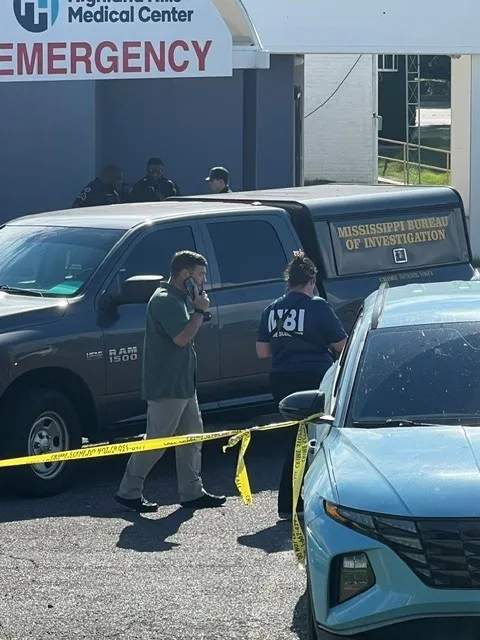
Mississippi Bureau of Investigation vehicles and agents at a hospital entrance in Senatobia, Mississippi.
The Official Response — or Lack Thereof
The Mississippi Bureau of Investigation has issued only the barest acknowledgment of the incident, calling the information "preliminary" and noting that "details could change." The MBI says it will share its findings with the Mississippi Attorney General's Office when the investigation is complete — a process that typically takes months, if not years.
The Senatobia Police Department released a statement claiming commitment to "full transparency," pledging to share information "as facts are verified." A Walmart spokesperson said the company was "saddened by what took place" and was "working with law enforcement." Senatobia Alderman Chris McConnell urged residents to "rely on official information" and pray for everyone involved.
Notice what is missing from all of these statements: accountability. No officer has been placed on leave. No policies have been questioned. No acknowledgment that a baby is dead — not as collateral damage, not as a tragic accident, but as the direct and foreseeable result of a police officer's decision to fire a weapon into a car over stolen diapers.
The MBI told ABC News on Monday that it would make "no further comment" on the investigation. The family was not notified before Kohen's body was removed. The community was told to pray and wait.
What This Tells Us
There is a question that cuts through the bureaucratic fog surrounding this killing, a question that every official statement, every investigation, every prayer request is designed to obscure:
Was the life of a one-year-old child worth less than a pack of Pampers?
In the logic of American policing, the answer is yes. The officer who pulled the trigger did not pause to consider whether the alleged crime warranted lethal force. The department that deployed officers to a shoplifting call did not equip them with de-escalation training adequate to the situation. The system that employs, trains, and protects these officers did not build safeguards to prevent exactly this kind of killing.
This is not a failure of one officer or one department. This is the system working as designed. American policing exists to enforce property relations and social hierarchy. When those relations are challenged — even by the alleged theft of diapers from a Walmart — the system responds with violence. That violence is disproportionately directed at Black bodies. And when that violence kills a child, the system responds with silence, procedure, and prayers.
Kohen Wiley was one year old. He did not steal any Pampers. He did not drive any car. He did not threaten any officer. He was a baby, sitting in the front seat of a car with his mother, when a bullet fired by a police officer ended his life.
His family wants justice. They deserve it. But in the America that killed Kohen Wiley, justice is the one thing the system is least equipped to deliver.
Black family members grieving the loss of baby Kohen Wiley at a press gathering.
The Investigations Must Be Independent
The Mississippi Bureau of Investigation's handling of this case follows the standard playbook for police killings: a state agency investigates fellow law enforcement officers, with no independent civilian oversight, no transparency timeline, and no commitment to public accountability.
Community members have already begun questioning whether the situation could have been handled differently. Derik Shaw, a local resident, voiced what should be obvious: "They are supposed to trail her home... get her tag number. Like they said — stop chasing people."
The fact that a shoplifting call at a Walmart escalated to gunfire in a parking lot — with a child inside the vehicle — represents a catastrophic failure of police training, tactics, and judgment. The question is not whether this could have been avoided. The question is how any system designed to protect public safety could produce this outcome, and why it continues to produce outcomes like it.
The MBI investigation must not be the final word. There must be independent civilian oversight, public release of all body camera and dashboard camera footage, and a federal civil rights investigation by the Department of Justice. Anything less is not justice — it is procedure.
Sources & Methodology(8 sources)
- WMC Action News 5 — Family Demands JusticeNews Article
- FOX13 Memphis — Shoplifting Call Ends in GunfireNews Article
Methodology
Reported using verified local news coverage from WREG, WMC Action News 5, FOX13 Memphis, ABC News, WJTV, and Tippah News. Sources cross-referenced across eight local and national outlets. Family statements and MBI official statements included verbatim. Investigation is ongoing.
Filed Under
Frequently Asked Questions
- Who was Kohen Wiley?
- Kohen Kartier Wiley was a 1-year-old Black boy from Senatobia, Mississippi. He was shot and killed by a police officer on June 14, 2026, during a shoplifting response at a local Walmart.
- What led to the shooting?
- Police responded to a shoplifting call at a Walmart in Senatobia. Family members said the alleged theft involved diapers (Pampers). Officers encountered two adults and the child fleeing into a vehicle. Police claim the driver drove toward officers, prompting an officer to open fire into the vehicle.
- Who is investigating the shooting?
- The Mississippi Bureau of Investigation (MBI) has taken over the investigation. The findings will be submitted to the Mississippi Attorney General's Office. No officer has been named, no body camera footage has been released, and no charges have been filed.
- What injuries were sustained?
- Kohen Wiley was pronounced dead at a local hospital. A second person, identified by family as the child's aunt who was driving the vehicle, suffered critical injuries and was transported to Regional One Health in Memphis.
- What has the family said?
- Family members have demanded justice and accountability. Grandmother Licole Wiley stated: 'Policeman shot, opened fire in a public setting, over allegedly some Pampers.' Great-grandmother Carolyn Stokes said the police removed the baby's body without letting the family see it and provided no information.