A Box of Diapers Became a Death Sentence
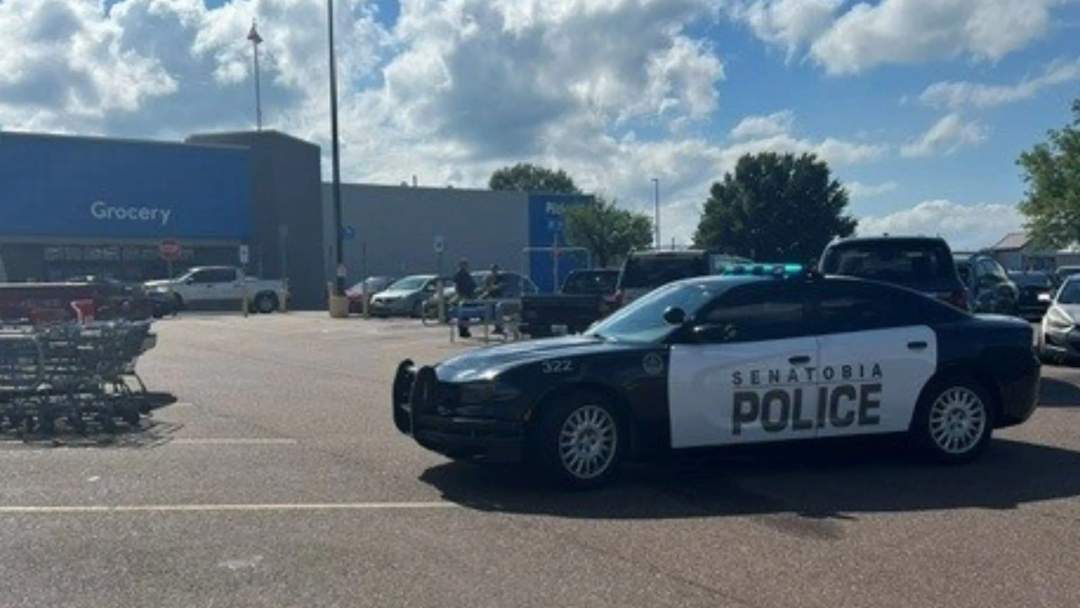
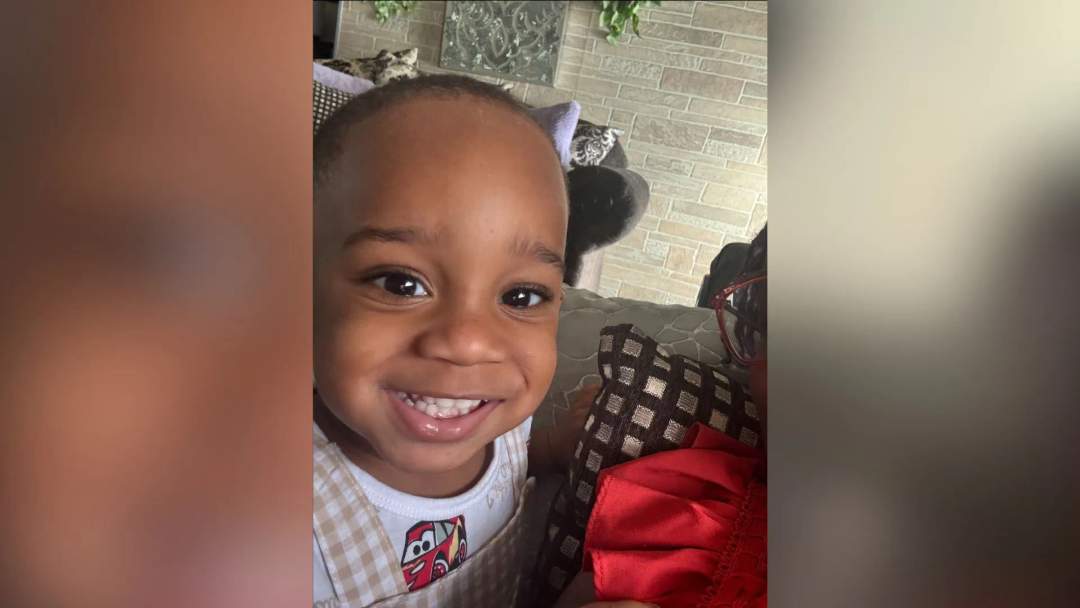
On Sunday, June 14, 2026, a one-year-old boy named Kohen Kartier Wiley was shot and killed in the parking lot of a Walmart in Senatobia, Mississippi — a town of roughly 8,500 people nestled in Tate County, about 40 miles south of Memphis. A Senatobia police officer, now identified through public records as Sergeant Hunter Foster, opened fire on a silver sedan containing Kohen, his mother Vellesiya Wiley, and a family friend. The officer was responding to a shoplifting call. The alleged stolen item? A box of diapers.
Kohen was struck in the rib cage. His mother's friend was shot in the arm and thigh. The child was pronounced dead at a local hospital.
No officer was seriously injured. No arrests have been made.
The Mississippi Bureau of Investigation (MBI) claims the vehicle was "driving in the direction of officers" and "almost striking one." The family — and witnesses — say that is a lie. The mother says she raised her baby up in her arms to show officers a child was in the car, that the car was moving away from police, not toward them, and that she was never charged with any crime.
This is not a story about a "tragedy" or an "incident." This is the story of a Black baby executed in a Walmart parking lot by a police officer who had a racial slur complaint filed against him by a fellow officer just days before the shooting — a complaint the department ignored. It is a story about a system that kills Black children with impunity, a state that cloaks itself in "transparency" while releasing no information, and a country that has made peace with the idea that Black life is disposable.
As UnTelevised reported in our initial coverage, Senatobia police shot and killed one-year-old Kohen Wiley while responding to a call about stolen diapers at a local Walmart. The child's mother was holding him when officers opened fire. Read our original report →
It is also a story about a community that said enough.
The Killing: What Happened on June 14
The official timeline is thin, and that thinness is itself a form of violence. Here is what is known.
At approximately 2:05 PM on Sunday, June 14, officers from the Senatobia Police Department and the Tate County Sheriff's Office responded to a shoplifting call at the Walmart on U.S. Highway 51. The Mississippi Department of Public Safety released a statement claiming officers encountered "two subjects and a juvenile child fleeing from the store into a vehicle."
According to the DPS statement: "Officers attempted to stop the vehicle, but the driver drove in the direction of the officers, almost striking one. An officer then discharged their weapon and the vehicle fled the scene."
The subjects drove to a local hospital. One-year-old Kohen Wiley was pronounced dead. Another person — the family friend driving the car — was in critical condition.
That is the state's version. Here is the mother's.
Vellesiya Wiley Speaks: "I Raised My Baby Up"
Two days after her son was killed, Vellesiya Wiley released a video through her attorney, civil rights lawyer Ben Crump. In it, she described what happened in her own words — words that directly contradict the official police narrative.
"It was me, my son and another friend of mine at Walmart. We were leaving out the Walmart and they tried to stop us, but I kept walking because it had nothing to do with me." —Vellesiya Wiley*, mother of Kohen Wiley
She described getting into the car — she was in the passenger seat, holding Kohen. Her friend got in the driver's seat. As they began to back out, officers ran toward the vehicle with guns drawn.
"I raised my baby up, because they had drawn their guns — she had no tint — I raised my baby up trying to show them he was in the car." —*Vellesiya Wiley
Her friend, backing up, struck another car. Vellesiya's door flew back in. By the time she set her baby down, she said, "it was like three to four shots." Kohen was hit in the rib cage. Her friend was hit in the arm and thigh.
They drove to Senatobia Hospital, where Kohen was pronounced dead.
"They tried to say that she forcefully was trying to drive and hit them, but they all was on the right side and she was driving towards the left. They just... purposefully shot in the car." —Vellesiya Wiley*, disputing the police claim that the car was driving toward officers
She was never charged with any crime. Police told the crowd at the hospital only that "they were shoplifting."
Her friend, she said, had paid at the self-checkout. The Walmart security footage — which the state refuses to release — would show this.
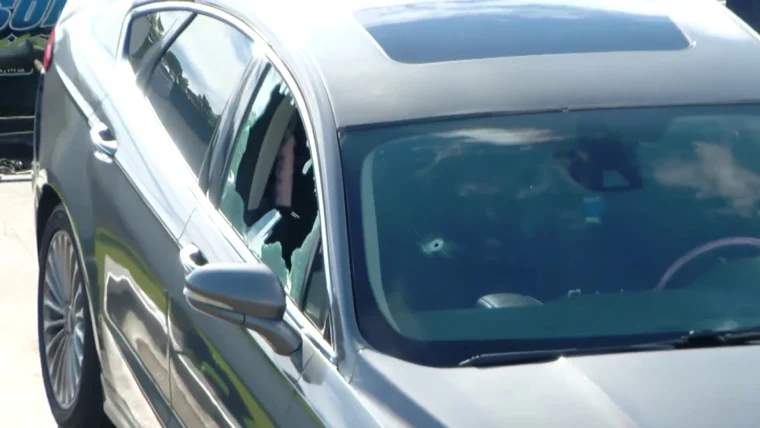
Photos of the car show bullet holes through the passenger-side windshield. The passenger-side window was shattered. The bullets were fired directly into the side where a baby was sitting.
The Officer: Hunter Foster and the Red Flags the Department Ignored
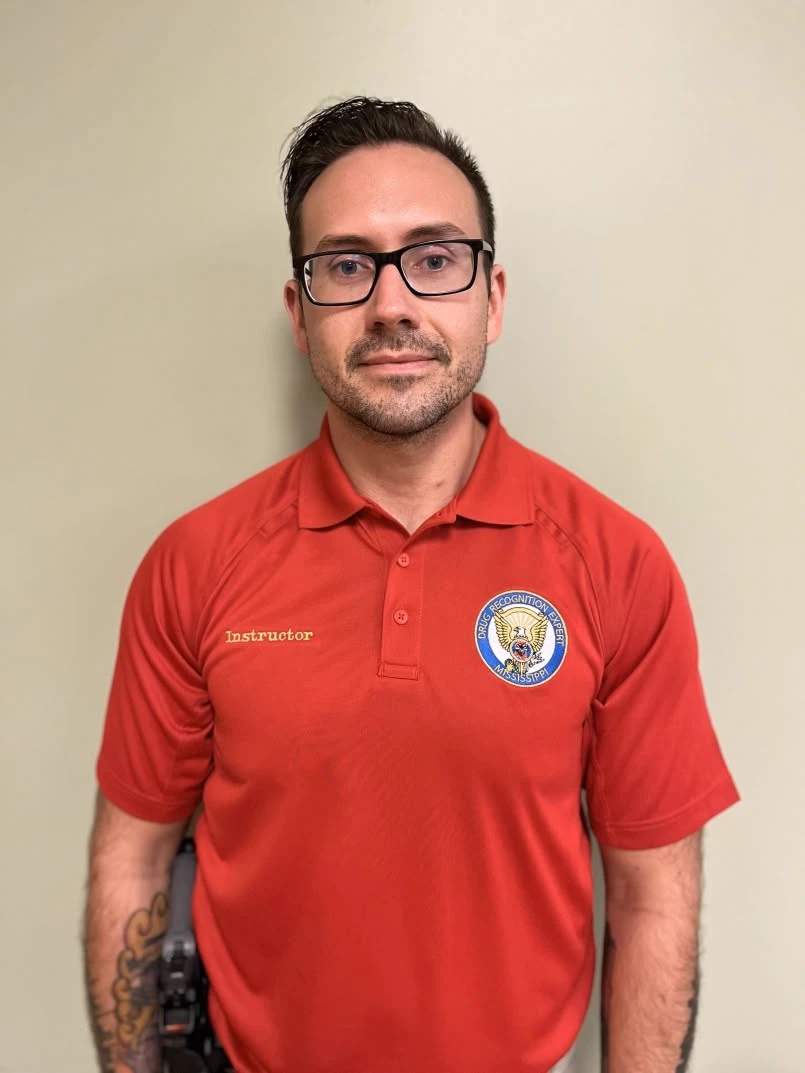
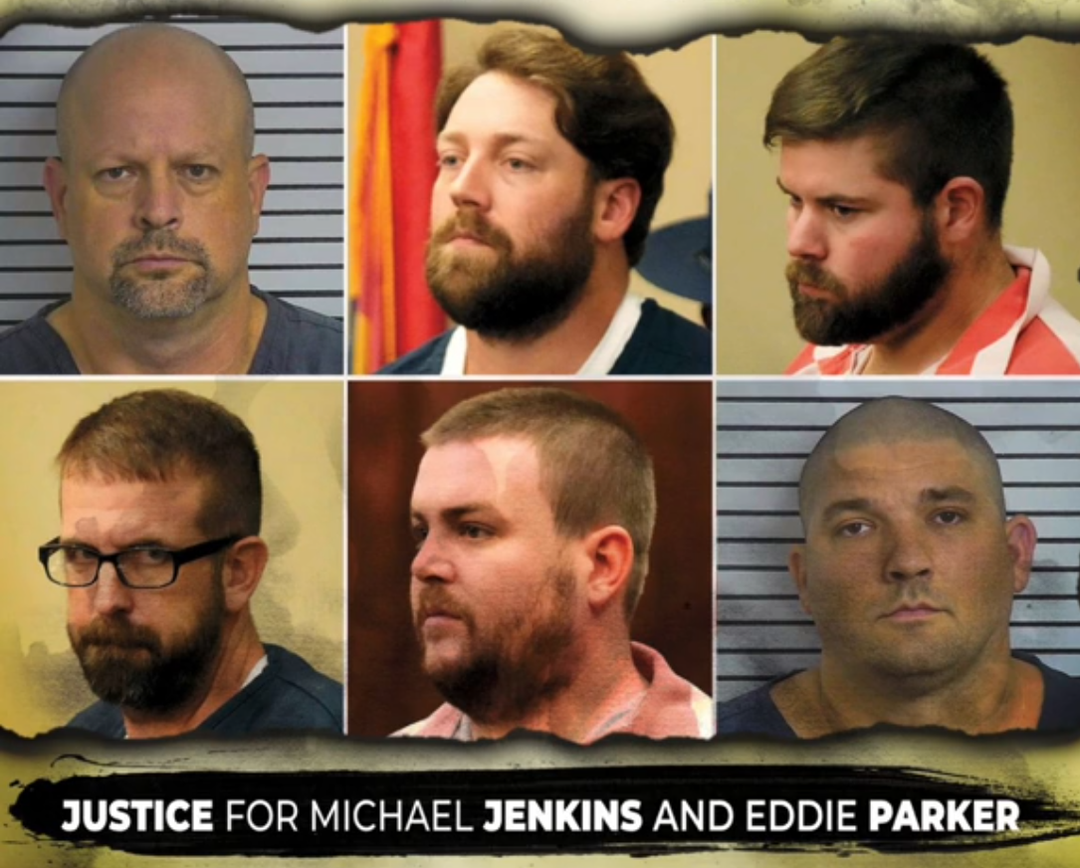
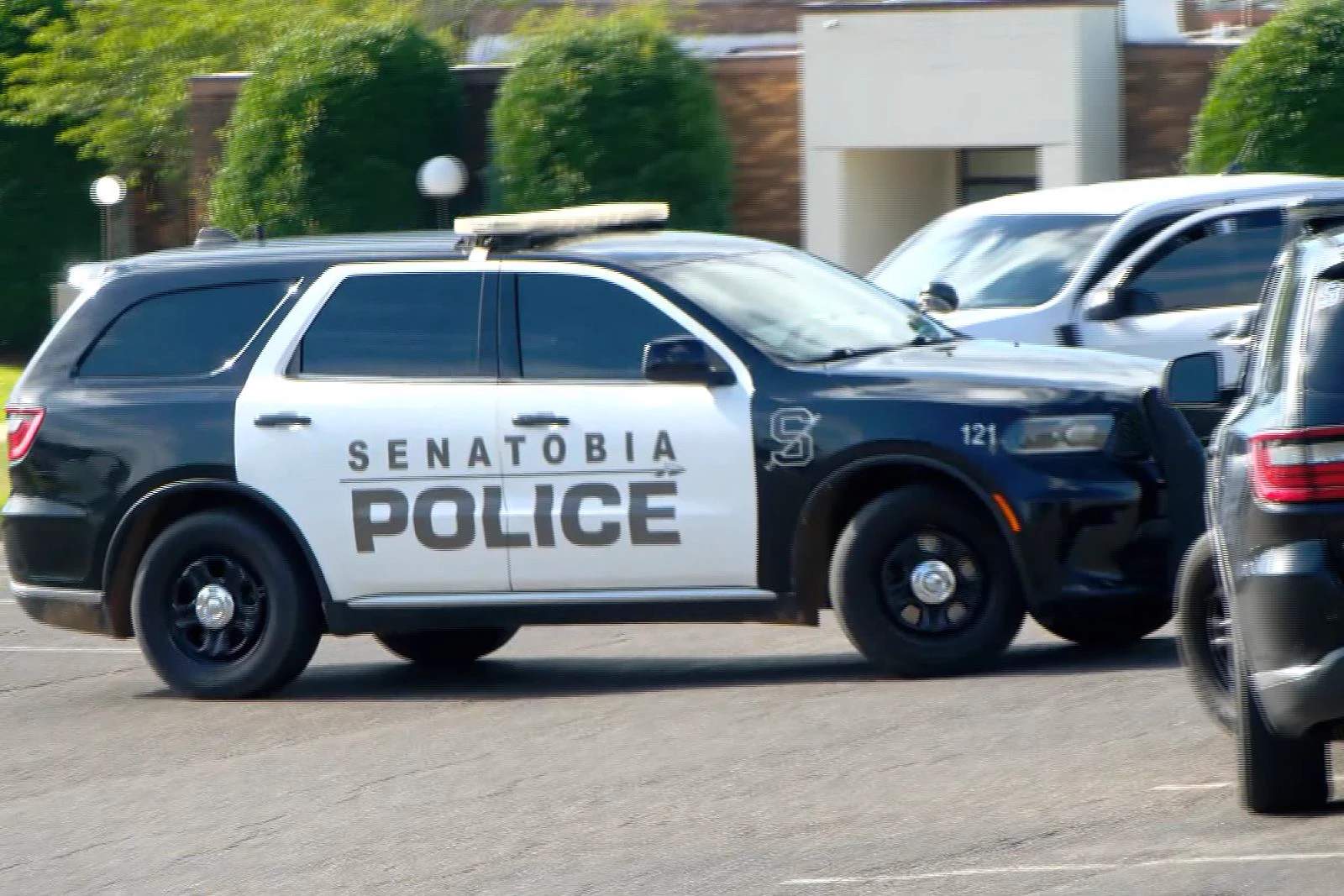
The city of Senatobia and the MBI refused to publicly name the officer who shot Kohen Wiley. It was only through a public records request by Memphis Action News 5 that the officer was identified as Sergeant Hunter Foster of the Senatobia Police Department.
Public records obtained by Action News 5 Memphis identified Hunter Foster as the officer who fired the shots that killed Kohen Wiley. Foster was hired in March 2025 and promoted to sergeant within six months. Read the full breakdown →
What the records show — and what the community has alleged — paints a deeply disturbing picture.
Foster was hired by the Senatobia Police Department on March 4, 2025. Within six months, on September 16, 2025, he was promoted to Sergeant. His LinkedIn profile — since deleted — listed him as a Drug Recognition Expert Instructor and a SWAT Operator. He graduated Summa Cum Laude from Bethel University.
But the gloss of professional credentials masks something far uglier.
Marquell Bridges, the community activist who has been helping organize the protests and is assisting the Wiley family, revealed that a fellow police officer filed a complaint against Foster just days before the shooting. The complaint alleged that Foster was using racial slurs inside the police precinct.
Days. Not months. Not years. Days before Hunter Foster shot and killed a one-year-old Black child, a fellow officer reported him for using racial slurs at work. The department did nothing.
A Change.org petition demanding Foster's termination describes the situation in stark terms: "Just two days before this heartbreaking incident, Officer Foster was reported by another officer for using racial slurs within his precinct, leading to an investigation." An investigation that had not concluded before Foster killed a baby.
"Just two days before this heartbreaking incident, Officer Foster was reported by another officer for using racial slurs within his precinct, leading to an investigation." —Change.org petition* demanding Foster's termination
This is not a portrait of an aberration. This is a portrait of institutional tolerance — a department that received a warning, in writing, from one of its own officers that a man with a gun and a badge was using racist language in the workplace, and chose to do nothing about it. Until that man killed a child.
As of this writing, no body camera footage, dash camera footage, or Walmart surveillance footage has been released.
While one Senatobia officer was stopping to buy diapers at that same Walmart, another officer was executing a baby over a box of them. The grotesque symmetry is impossible to ignore. Read "Two Calls About Diapers" →
The Silence: Days of Nothing from the State
For two days after Kohen Wiley was killed, the officer who shot him remained on active duty. Let that sit.
A one-year-old child was shot dead in a Walmart parking lot by a police officer, and for 48 hours, that officer was still working.
The city said nothing. The police department posted a brief statement on Facebook acknowledging an "officer-involved shooting" and promising "transparency" — a word that, in the context of Mississippi law enforcement, has never meant anything.
It was only after the community erupted — after hundreds of people descended on City Hall, after they marched to the Walmart and were met with tear gas, after the national media arrived — that the mayor and Board of Aldermen held a meeting on Tuesday evening, June 16, and placed the officer on administrative leave. Not fired. Not arrested. Placed on leave. With pay.
The sequence of events tells you everything about power in Senatobia:
- Sunday, June 14: Officer shoots and kills one-year-old Kohen Wiley. Officer remains on active duty.
- Monday, June 15: Silence. The officer is still working. The community begins organizing.
- Tuesday, June 16, 5 PM: Over 200 people gather outside Senatobia City Hall, demanding the officer be fired and arrested.
- Tuesday, June 16, 6 PM: Mississippi Department of Public Safety Commissioner Sean Tindell holds a press conference outside the Tate County Courthouse, pledging transparency but providing no new information, no timeline, and no video release.
- Tuesday, June 16, evening: Hundreds march to the Walmart. Law enforcement deploys tear gas on peaceful protesters, including media crews.
- Tuesday, June 16, later evening: Under immense public pressure, the Board of Aldermen votes to place the officer on administrative leave.
The announcement drew applause from some in the crowd. Others recognized it for what it was: the absolute minimum, granted only because the community forced the city's hand.
Sean Tindell, the public safety commissioner, told reporters that no video evidence would be released until the investigation concludes. When pressed, he offered no timeline. He later told Mississippi Public Broadcasting that the investigation could take six to nine months. Six to nine months before the public sees the footage of a police officer shooting a baby.
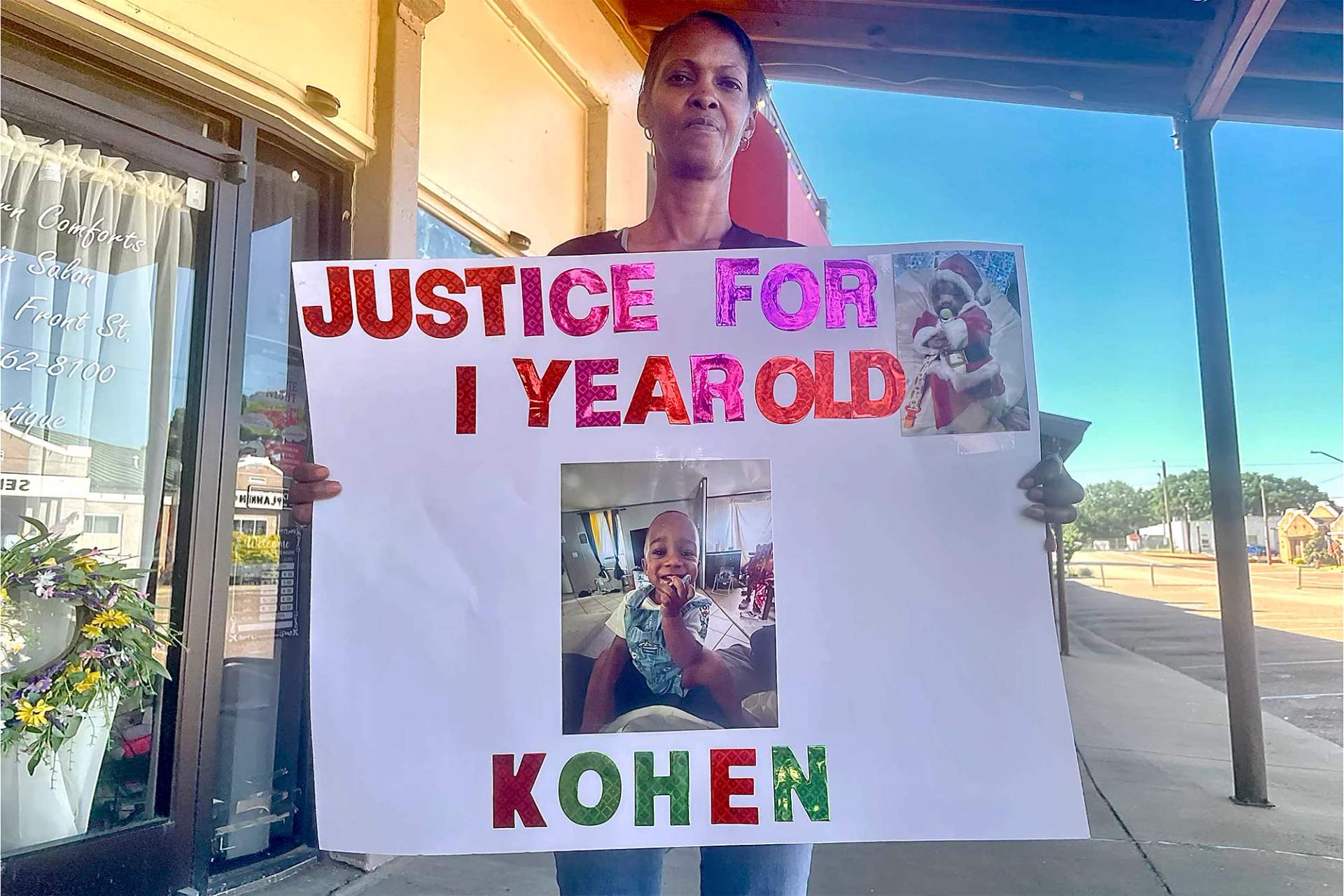
A woman holds a protest sign reading 'Justice for Kohen Khalil Wiley' amid a crowd of demonstrators gathered outside a government building in Senatobia, Mississippi on June 16, 2026
"The People Demand: End to Police Terror"
The protests that consumed Senatobia in the days following Kohen's death were not spontaneous outbursts. They were the product of years of accumulated rage.
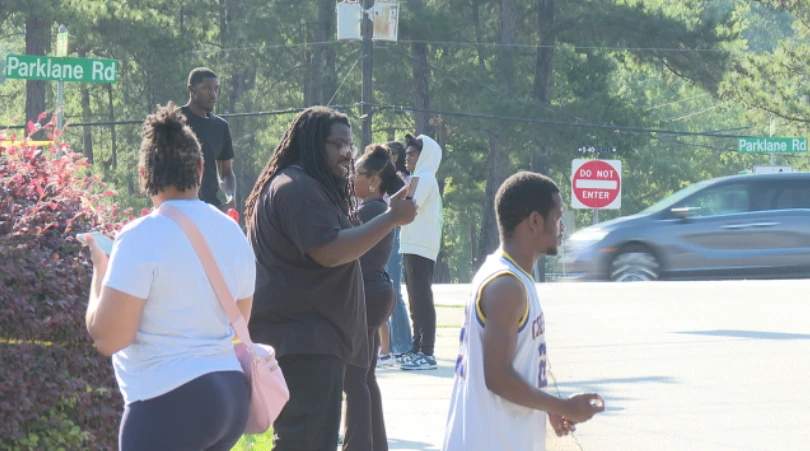
On Tuesday, June 16, at 5 PM, more than 200 people — from Senatobia, from neighboring towns, from Memphis 40 miles north — gathered outside Senatobia City Hall as the mayor and Board of Aldermen met inside. Police snipers were positioned on the rooftops of downtown commercial buildings. The street was cordoned off.
Leon White, a Senatobia resident since 1999, held a sign reading "The People Demand: End to Police Terror." He walked with the crowd, shouting "No Justice, No Peace."
"This has been a problem that has been building for a long time. For many years, the police force was fine, but in recent years — I don't know why — it's become a big problem." —Leon White*, Senatobia resident since 1999
He blamed it on inadequate training. But the deeper truth — the one that no official statement will ever contain — is that Senatobia's police department has been terrorizing its Black residents for years, with no accountability.
Consider the pattern:
2023: Mark Lesure, a 41-year-old lifelong Senatobia resident, was physically assaulted during an arrest by the previous police chief and other officers inside his own home. The department faced no meaningful consequences.
2024: Senatobia police arrested a 10-year-old Black boy for urinating outside a jail building while his mother was inside an attorney's office. The child was initially sentenced to probation and ordered to write a two-page report about Kobe Bryant. The case was eventually dismissed after national outrage, but the damage — the criminalization of a child for a bodily function — was done.
May 2025: Breshari Faulkner, a 27-year-old mother with two toddlers in her backseat, was pulled from her car, thrown to the ground, and handcuffed in the same Walmart parking lot where Kohen Wiley would be killed a year later. Her crime? Parking in a handicapped-accessible spot with her grandmother's placard while her grandmother was inside the store. Officers escalated a trivial parking question into a violent arrest, charging Faulkner with disorderly conduct and resisting arrest. The charges were later quietly dropped.
"I honestly thought I was going to be killed in front of my children." —Breshari Faulkner*, mother violently arrested in the same Walmart parking lot, May 2025
She was right to think so. Because a year later, in the exact same parking lot, a police officer did kill a child.
Felicia Jackson carried a sign reading "JUSTICE FOR KOHEN KHALIL WILEY." Shirley Hardin, who lives in nearby Como, pointed to the arrest of the 10-year-old boy as proof that this was always going to end in tragedy. Bettersten Wade drove all the way from Jackson, Mississippi to join the protest — a woman intimately familiar with losing loved ones after police encounters.
"The only violence came from the police department when they decided to tear-gas peaceful protesters." —Marquell Bridges*, community organizer
"This is definitely about Kohen, but it's not just about Kohen. It's about a long history of overpolicing, racism and brutalization that the people have been suffering, and the people are saying we're not going to take it anymore." —*Marquell Bridges
"We made sure that our local government understood our demand, and they refused our demands. So, right now, we're ready to move and do whatever it takes as a community of Black people who have been shown disrespect." —Patrick Lumumba*, community activist
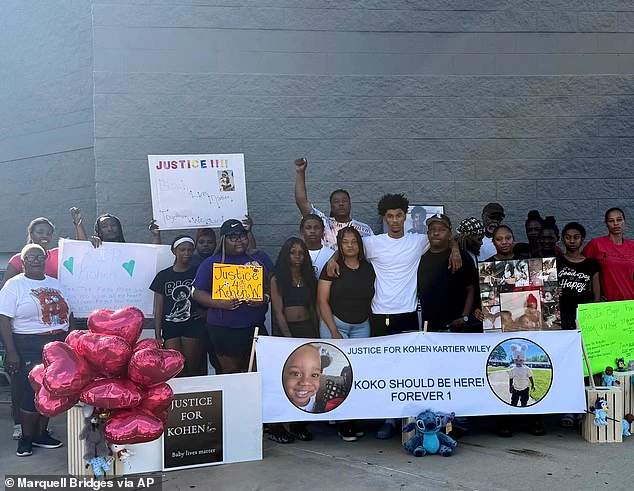
Flowers, balloons, and handwritten signs arranged on the pavement outside a Walmart store entrance as a memorial for one-year-old Kohen Wiley in Senatobia, Mississippi
Tear Gas at Walmart: Punishing the Grieving
From City Hall, the crowd marched to the Walmart — the site of the shooting. What happened next was both predictable and sickening.
Law enforcement officers, wearing gas masks, formed a line under the grocery-side entrance of the store. Within minutes of the protesters' arrival, they deployed tear gas into the crowd. People scattered through the parking lot. A FOX13 Memphis news crew was hit with the chemical agent. Children were present.
"Who in their right mind would come out shooting behind two women and a baby? It's ridiculous." —Kohen Wiley's grandmother*, speaking to FOX13 Memphis
This is the same parking lot where, two days earlier, a police officer had shot a one-year-old child. The city's response to the community's grief was to gas them.
The Walmart was forced to close temporarily.
The next day, June 17, the store was back open — but not quiet. Mourners arrived to leave flowers, teddy bears, and balloons at a growing memorial in the parking lot. At least six Senatobia police officers were stationed inside and outside the store, watching.
"Senatobia Police Department get away with too much stuff. I hear about it all the time. It's in the news all the time. Y'all probably down here all the time, recording this stuff, but it's just too much." —Carolyn Stokes*, Kohen Wiley's great-grandmother
A large crowd of protesters marching along a street at night in Senatobia, Mississippi on June 16, 2026, demanding justice for Kohen Wiley
The Vigils, The Solidarity, The Movement
By Wednesday, June 17, the story had gone national. Ben Crump, one of the country's most prominent civil rights attorneys, announced he and Memphis civil rights attorney Van Turner were representing the Wiley family.
"This was a baby. A one-year-old child is dead because police officers in Mississippi opened fire on a car in a crowded Walmart parking lot. Kohen Wiley was a baby. His mother, who has not been charged with any crime, says she was trying to communicate to officers that there was a baby in the car. They fired anyway, leading to the death of an innocent one-year-old. We intend to seek justice for baby Kohen and the life that was stolen from him." —Ben Crump*, civil rights attorney representing the Wiley family
The news spread. A rally in solidarity was held nearly 1,000 miles away in St. Paul, Minnesota. Community members there said it was about showing solidarity with Mississippi and making a call to action for everyone to stand up.
In Senatobia itself, a memorial at the Walmart continued to grow. Delta Steakhouse, a local restaurant, announced a benefit on behalf of the Wiley family. A prayer vigil was planned for Friday, June 19, at 6 PM at LifePoint Church on Scott Street.
A Change.org petition demanding Foster's termination gathered thousands of signatures. The story was covered by NBC News, The Guardian, CBS News, The New York Times, The Washington Post, and outlets across the country.
The State's Performative "Transparency"
The performative theater of accountability has been revolting to watch.
Mayor Greg Graves broke his silence days after the killing, offering platitudes but no action. The city released a statement calling the death "a heartbreaking tragedy" and extending condolences — the language of a condolence card, not a government responding to the killing of a child by its own employees.
The city asked the community to "avoid speculation and the spread of unverified information while the investigation is underway" — a request that is both insulting and transparently self-serving. The community is not speculating. They are demanding evidence that the state is actively withholding.
Sean Tindell's press conference was a masterclass in saying nothing while appearing to say something. He vowed transparency. He assigned five MBI agents to the investigation. He promised that body camera footage and Walmart security footage would eventually be released. He provided no timeline, no details, no answers to any substantive questions.
When asked when the public might see the video, he said the investigation could take six to nine months. Six to nine months before the family of a murdered baby can see the footage of how their child died.
He offered a reason: releasing video early might discourage witnesses from coming forward. This is the same argument police departments make across the country, and it is almost never true. What early video release actually does is allow the public to see what happened before the police narrative calcifies into accepted fact.
Tindell said it would be up to local law enforcement to determine whether the shoplifting allegations were credible. Vellesiya Wiley has said her friend paid at the self-checkout. No one has been arrested for shoplifting. No merchandise has been confirmed stolen. The entire pretext for the police encounter may be fabricated.
Mississippi has a long, documented history of police violence targeting Black communities — from the Rankin County "Goon Squad" to systemic abuse in small departments like Senatobia. The culture of impunity runs deep. Read "A Shadow Over Mississippi" →
A crowd of demonstrators holding signs and gathering at a protest rally in Columbia, South Carolina after Rick Chow was acquitted in the shooting death of Cyrus Carmack-Belton
The Pattern: From Senatobia to Columbia, Black Life is Cheap
What happened to Kohen Wiley did not happen in a vacuum. It happened in a country where Black children are killed with regularity, where their killers are protected by systems designed to shield them, and where juries and prosecutors routinely refuse to hold them accountable.
Less than three weeks before Kohen was killed, another story concluded with an acquittal that should have shaken the nation.
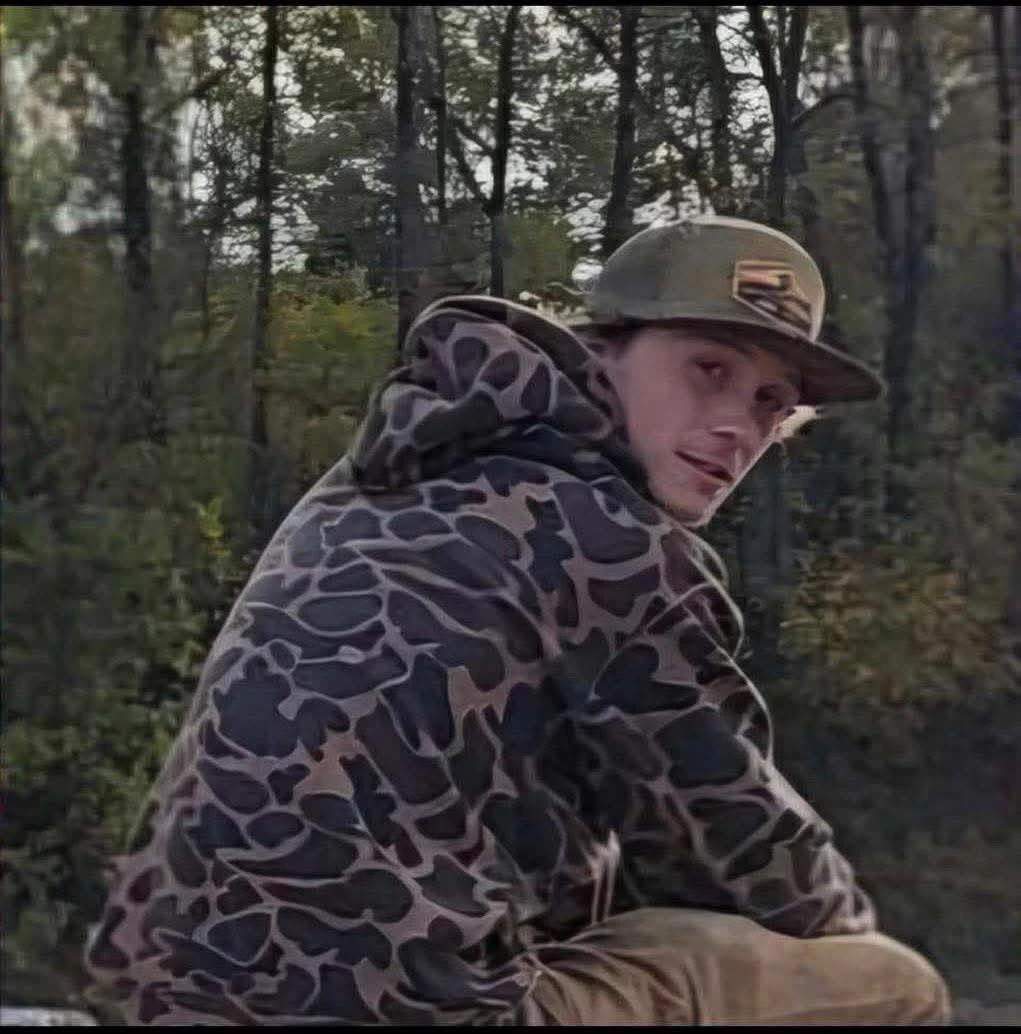
The Killing of Cyrus Carmack-Belton
On June 1, 2026, a South Carolina jury found Chikei "Rick" Chow not guilty of murder in the shooting death of Cyrus Carmack-Belton, a 14-year-old Black boy.
The facts of the case were never in dispute. Chow, the 61-year-old owner of a gas station in Columbia, South Carolina, wrongly accused Cyrus of stealing four bottles of water from his convenience store. Cyrus had not stolen anything. Surveillance footage and evidence confirmed that the boy had not taken any merchandise.
But Chow and his son chased Cyrus out of the store and into the parking lot. Chow shot the 14-year-old in the back. The boy died.
A judge had previously denied Chow immunity under South Carolina's Stand Your Ground law, calling him a danger to the community. He was held without bond for three years. Prosecutors charged him with murder.
And a jury let him walk free.
Cyrus Carmack-Belton was 14 years old. He was chased and shot in the back by a man who falsely accused him of theft. The boy didn't steal anything. The man killed him anyway. And 12 jurors decided that was acceptable.
"We do not accept it." —Carmack-Belton family*, responding to the acquittal of their son's killer
The Connecting Thread
There is a straight line from Columbia, South Carolina to Senatobia, Mississippi. The line runs through every Black community in America where a suspected thief — or a falsely suspected thief — is treated as a capital crime defendant, where the penalty for alleged shoplifting is death, and where the killers are shielded by badges, stand-your-ground laws, and a legal system that values property over Black life.
In Senatobia, the alleged theft was a box of diapers. In Columbia, it was four bottles of water. In both cases, the victims were Black. In both cases, they were killed over items worth less than $20. In both cases, the killers faced a system designed to protect them.
The message is not subtle. It has never been subtle. Black skin makes you a suspect. Suspect status makes you a target. And the system will find a way to call your killing justified.
A Senatobia Police Department SUV parked on a street in a small Mississippi town during protests over the police killing of one-year-old Kohen Wiley
Senatobia: A Town With a Problem It Won't Name
Senatobia is a town of 8,500 people, roughly 40% of whom are Black. Its crime rate is below the national average — one of the lowest in Mississippi. It does not have a crime problem. It has a police problem.
The department has about 30 officers serving a small, rural town. Yet in recent years, it has produced an outsized catalog of violence and overreach: a 10-year-old arrested for urinating, a mother violently arrested over a parking spot, a man assaulted in his own home by the police chief, and now a one-year-old shot dead in a Walmart parking lot.
"Any time local police were called, it immediately puts a Black person's life in danger or in danger of going to jail." —Mark Lesure*, Senatobia resident brutalized by police in 2023
"This was going to eventually end up with them killing someone, because they overreact on small things that shouldn't escalate." —Breshari Faulkner*, whose 2025 arrest in the same parking lot predicted this outcome
She was prophetic. And she was right.
What Comes Next
As of this writing:
- Sergeant Hunter Foster has been placed on administrative leave. He has not been arrested, charged, or fired. His identity was only confirmed through public records requests, not through any official disclosure.
- The MBI investigation could take six to nine months. No body camera footage, dash camera footage, or Walmart surveillance video has been released.
- The Wiley family is represented by Ben Crump and Van Turner. They are demanding the immediate release of all video evidence and the arrest of the officer.
- Protests continue. A prayer vigil was held at LifePoint Church on Friday, June 19. A Change.org petition has thousands of signatures. Vigils have been held as far away as Minnesota.
- Kohen Wiley's body was taken to Jackson for autopsy. His mother was told she could not leave the hospital and could not have visitors.
The family's GoFundMe has raised funds for funeral and burial expenses. A community that was already reeling from years of police violence is now grieving a baby.
The city of Senatobia has promised transparency. The state has promised an investigation. The officer has been placed on leave.
None of this is justice. Justice would be an arrest. Justice would be a charge. Justice would be the immediate release of every piece of video evidence so the public can see what the state already knows.
What Kohen Wiley's family wants is simple: they want the world to know what happened to their baby. They want the officer who shot him held accountable. They want the video released.
What they are getting is the same thing every Black family in America gets when police kill their children: delays, deflections, and the cold comfort of a system that was never designed to protect them.
The Names We Must Say
Kohen Kartier Wiley. One year old. Killed on June 14, 2026, in Senatobia, Mississippi. Shot in the rib cage by a police officer responding to a shoplifting call over a box of diapers. His mother, Vellesiya Wiley, was holding him in her arms when she raised him up to show officers he was in the car. The officer fired anyway.
Cyrus Carmack-Belton. Fourteen years old. Killed on May 29, 2023, in Columbia, South Carolina. Shot in the back by a store owner who wrongly accused him of stealing water bottles. He didn't steal anything. A jury let his killer walk free.
Two Black children. Killed over items worth less than $20. One by a police officer with a badge and a gun. One by a store owner with a gun and a grudge. One killer on paid leave. The other acquitted by a jury.
The system is working exactly as designed.
The question is whether the people watching will continue to accept it.
Sources & Methodology(14 sources)
Methodology
Reported using primary source documents from the Mississippi Bureau of Investigation, Vellesiya Wiley's video testimony shared by Ben Crump Law, public records obtained by Action News 5 Memphis, and on-the-ground reporting from Mississippi Free Press, NBC News, FOX13 Memphis, WAPT, The Guardian, and local outlets. The Cyrus Carmack-Belton case was reported using coverage from CBS News, AP News, and The New York Times. All claims are cross-referenced across multiple independent sources.
Filed Under
Frequently Asked Questions
- Who was Kohen Wiley?
- Kohen Kartier Wiley was a one-year-old Black boy who was shot and killed by a Senatobia, Mississippi police officer on June 14, 2026, in a Walmart parking lot. The officer was responding to a shoplifting call over a box of diapers.
- Who is Hunter Foster?
- Hunter Foster is the Senatobia police sergeant identified through public records as the officer who shot and killed Kohen Wiley. He was hired in March 2025 and promoted to sergeant in September 2025. A fellow officer filed a racial slur complaint against him days before the shooting.
- What happened during the protests?
- Hundreds of protesters gathered outside Senatobia City Hall on June 16, 2026. They then marched to the Walmart where the shooting occurred. Law enforcement deployed tear gas on the peaceful crowd, including media crews and children. It was only after this that the officer was placed on administrative leave.
- What did the mother of Kohen Wiley say?
- Vellesiya Wiley said she raised her baby up in her arms to show officers that a child was in the car before they fired. She disputed police claims that the car was driving toward officers, saying the car was moving away. She was never charged with any crime.
- How does the Cyrus Carmack-Belton case connect?
- Cyrus Carmack-Belton was a 14-year-old Black boy shot in the back and killed by a South Carolina store owner who wrongly accused him of stealing four bottles of water in 2023. On June 1, 2026, a jury acquitted the store owner. Both cases illustrate the devaluation of Black life in America.