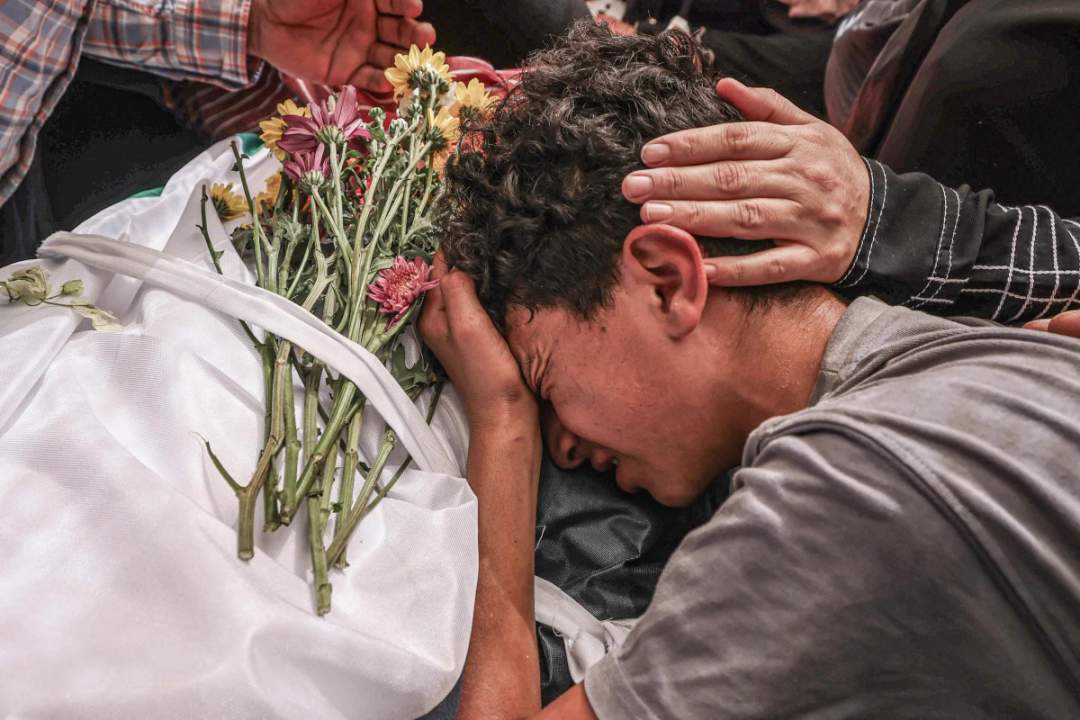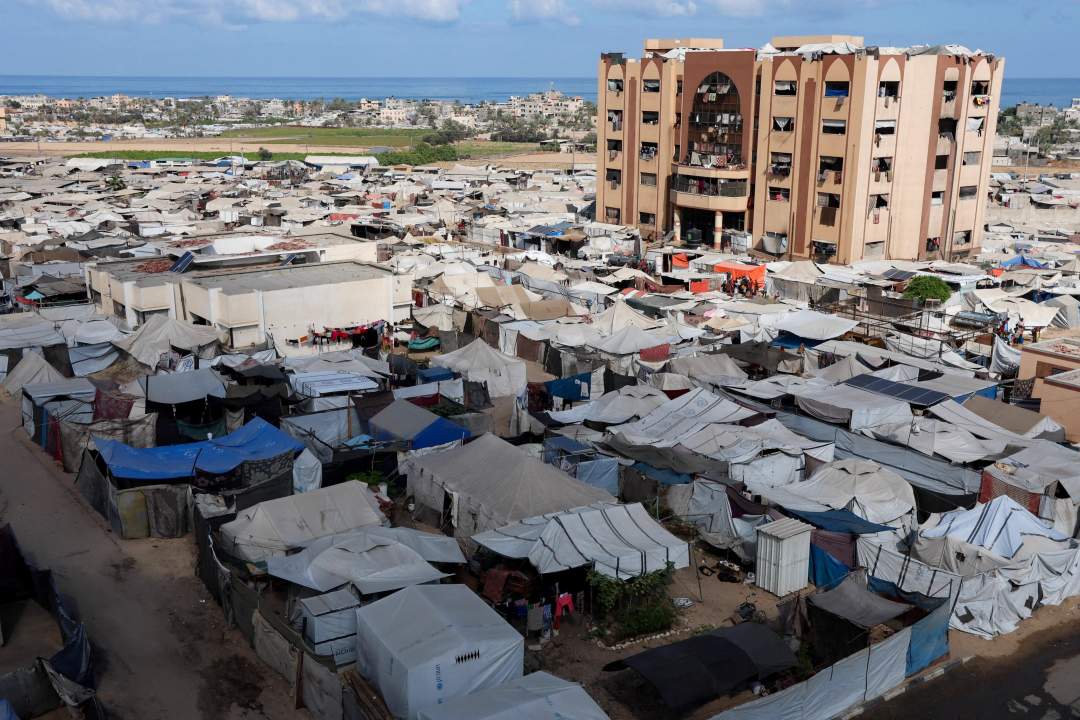
Israeli settlers carried out a coordinated overnight rampage across the occupied West Bank in the early hours of Sunday, July 26, burning two mosques to the ground, setting fire to a Palestinian home, torching multiple vehicles, and spraying Hebrew graffiti demanding "revenge" — the latest eruption of state-backed settler terror that Palestinian officials describe as intensifying into systematic pogroms. This is the same settler terror network that attacked a West Bank school, killing children at their desks, the same network operating behind the largest West Bank military invasion since 2002,
The attacks followed a deadly confrontation on Friday in the village of Tell, southwest of Nablus, in which four Palestinians and two Israelis were killed. Among the dead Israeli was Benayahu Mellet, a 32-year-old member of the civilian security squad from the illegal Havat Gilad settlement, and IDF Maj. Yuval Ezra, 27. The four Palestinians killed in the same incident have not been named in most Israeli reporting — a silence that speaks volumes.
The settlers' answer was not grief. It was arson.
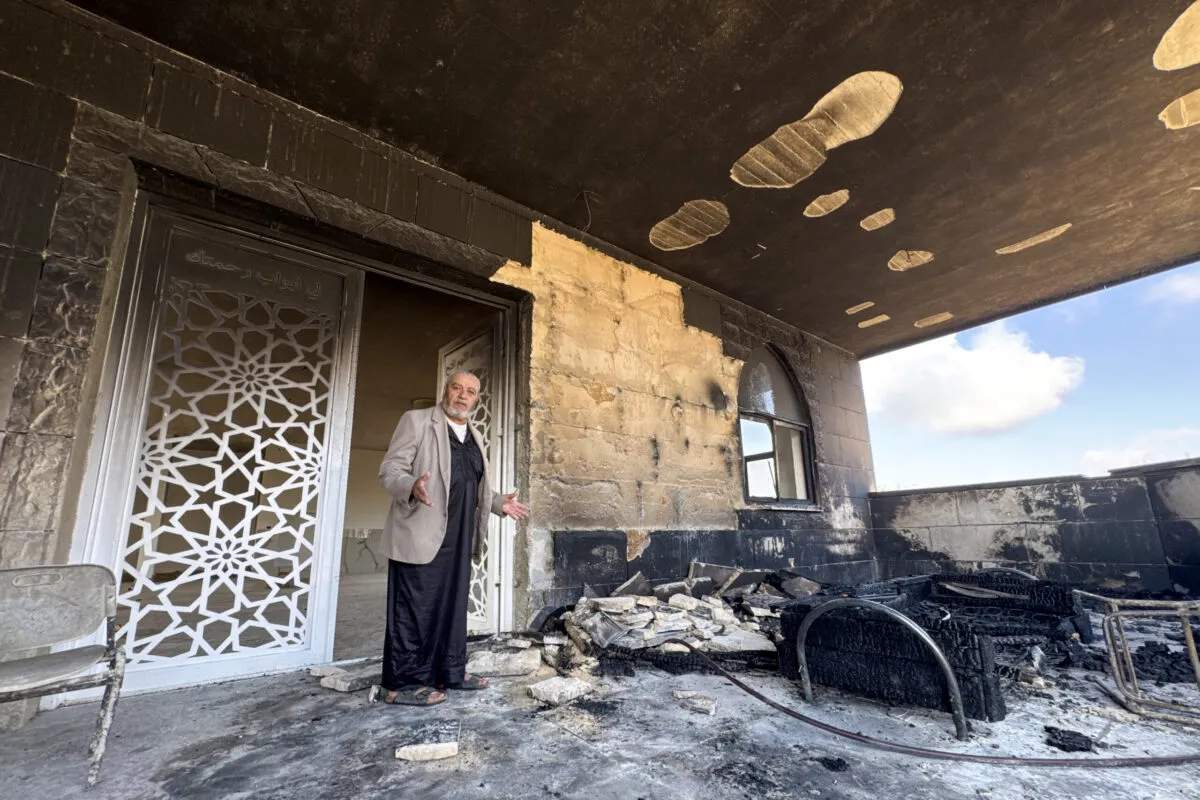
Burned mosque courtyard with fire damage visible in Qusra village
Qusra: A Mosque in Flames
In the village of Qusra, southeast of Nablus, settlers raided the under-construction Al-Rahma Mosque before dawn and set it ablaze. This has been a region of focus for settlers of late. Footage from the scene showed the building engulfed in fire alongside spray-painted Hebrew graffiti reading "Benayahu's Revenge," accompanied by a Star of David.
Qusra Mayor Abdul Azim Wadi described the destruction to WAFA, the Palestinian Authority's official news agency:
“The mosque was in its final stage and was ready to receive worshippers. It had already been furnished with couches. They set it on fire and spray-painted Hebrew slogans on its walls.”
The mosque had been months from completion. Wooden materials and equipment were destroyed. No injuries were reported in the arson — not because the settlers showed restraint, but because the attack happened at dawn, when worshippers were not yet inside.
The Israeli military acknowledged the attack, stating that troops dispatched to Qusra had found "arson and graffiti" and were searching for suspects who had fled before their arrival. The IDF's statement included the ritual condemnation: "The security forces strongly condemn incidents of this kind, including harm to religious institutions." The same formula deployed after every pogrom — condemnation without consequence, accountability that never arrives.
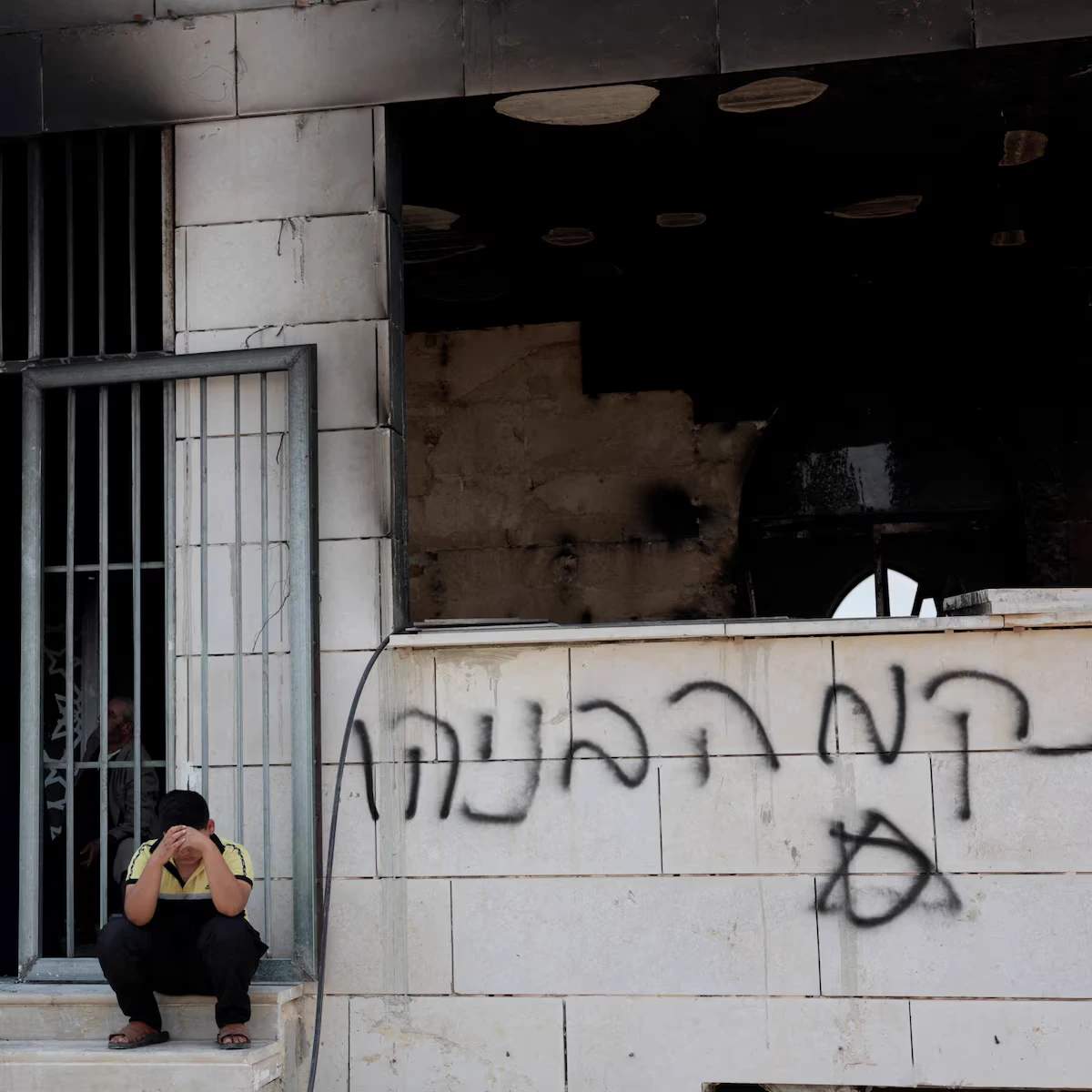
Palestinian sitting on the steps outside a damaged mosque with visible fire and graffiti damage
Kur: A Community Under Siege
In the village of Kur, near Tulkarm, settlers attempted to burn a second mosque at dawn. This time, worshippers were inside and fought back. Farid Jiyousi, a member of the Kur village council, told reporters that three settlers tried to set the mosque ablaze but were stopped.
“This is the first attack our village has experienced,” Jiyousi said. “The attackers sprayed Hebrew graffiti on the mosque walls, including the message ‘Jewish blood is not free.’"
The pattern is unmistakable. The arson is not spontaneous rage. It is coordinated. It is ideological. It carries messages — written in Hebrew, on the walls of houses of worship — that declare an explicit program of collective punishment.
The Rampage Spreads
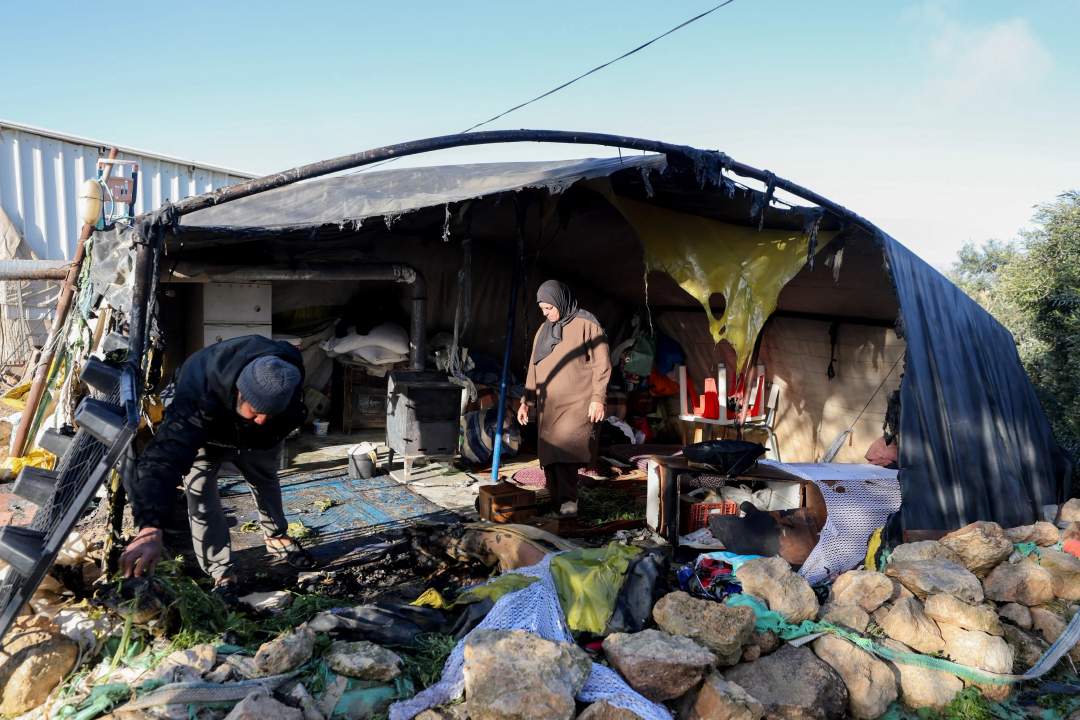
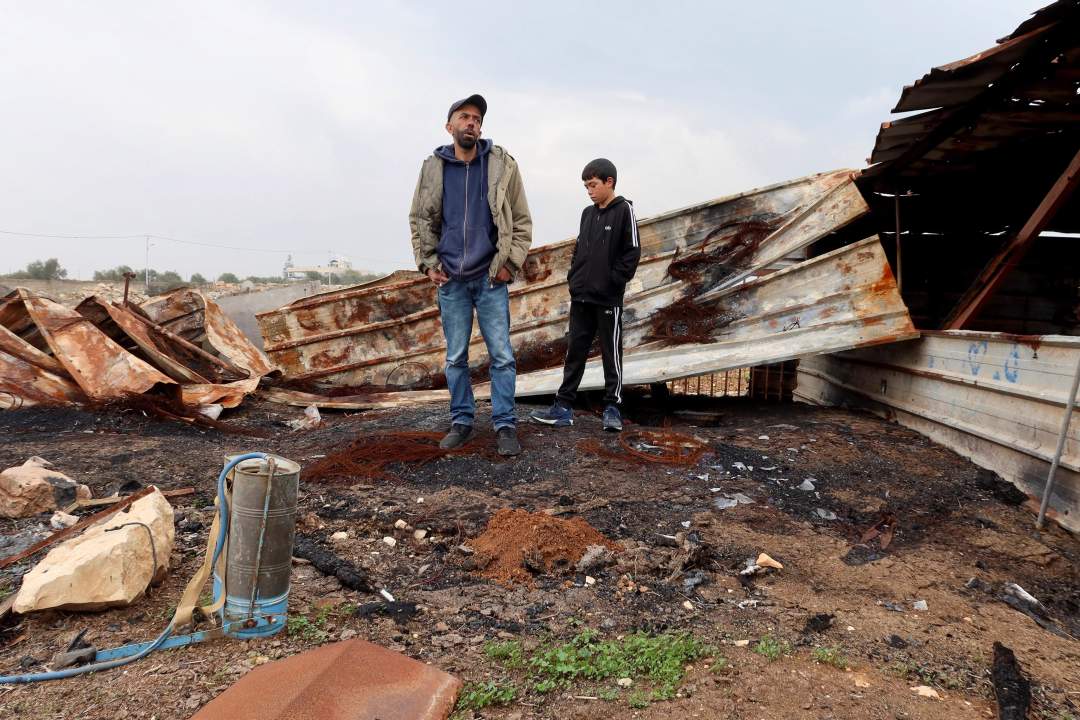
The attacks were not confined to two mosques. In Beit Furik, settlers set fire to a Palestinian home, causing damage before residents could extinguish the blaze, and sprayed racist slogans alongside calls for revenge. Near the village of al-Mughayyir, northeast of Ramallah, settlers torched several vehicles. At a stone-cutting facility in the Ein Samia area, east of Ramallah, settlers assaulted Palestinian workers and set fire to heavy equipment. Several Palestinians were reported injured.
Settlers threw stones at Palestinian vehicles across multiple roads in the West Bank. In one documented incident, settlers stood at the entrance to a Palestinian village and forced approaching vehicles to turn back — armed men imposing checkpoints on people who have lived on this land for generations.
The Palestinian prime minister's office issued a statement calling the violence what it is:
“Israeli state-backed settler terrorism is intensifying into systematic pogroms across the occupied West Bank.”
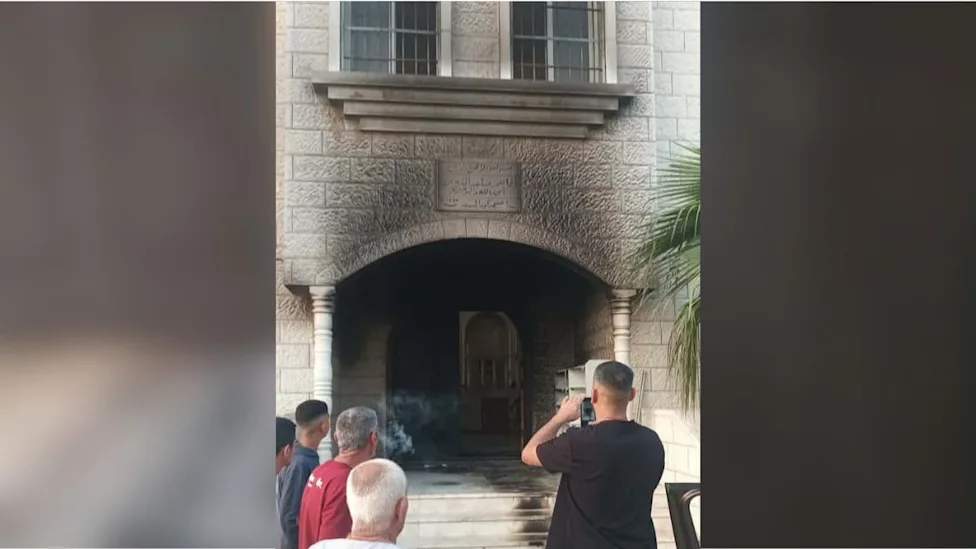
Palestinian men standing outside a mosque with visible fire damage
The Trigger: Violence Begets Violence
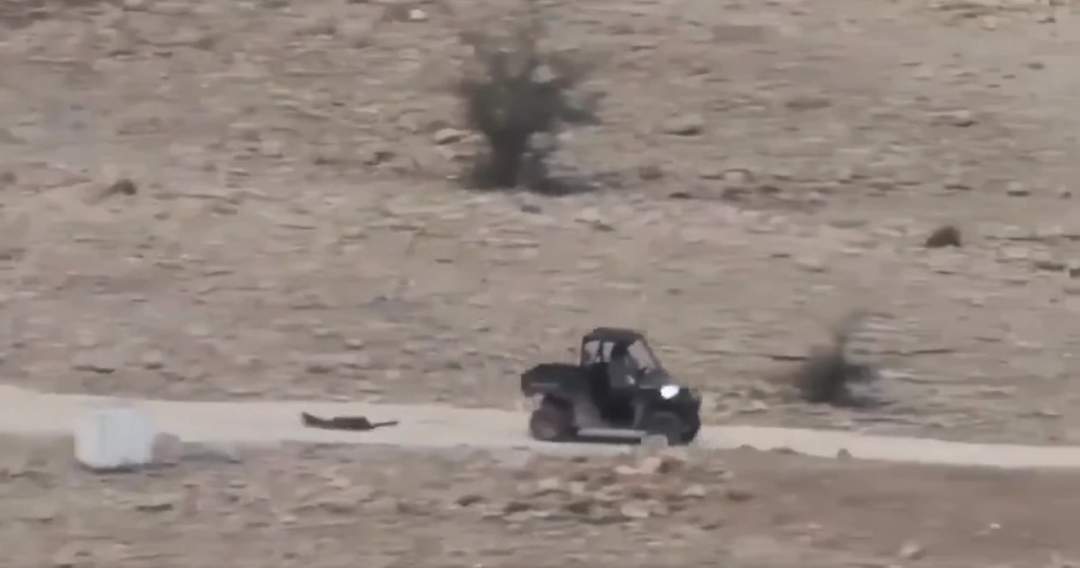
The proximate cause was Friday's confrontation in the village of Tell. According to Palestinian accounts, armed settlers — some of them minors — entered the village without military coordination. Palestinian residents came out of their homes to confront them. A standoff ensued, during which video appeared to show a Palestinian grabbing Mellet's rifle.
The Israeli military claims shots were fired by both sides. What is not disputed is that armed settlers entered a Palestinian village in a prohibited area and that the ensuing confrontation left six people dead — four of them Palestinian, whose names have been treated as an afterthought in the Israeli media apparatus.
In response, Prime Minister Benjamin Netanyahu — facing elections in October — ordered a "major security operation" against what he described as terrorism, reinforcing military units in the West Bank and canceling leave. Over the weekend, Israeli forces arrested around 130 individuals. The Palestinian Prisoners Club reported that approximately 60 of those arrested were Palestinians detained from Saturday night onward.
Finance Minister Bezalel Smotrich, one of the most extreme figures in Netanyahu's far-right government, has openly called for annexation of the West Bank. The settlers carrying out these attacks are his constituency. They are acting with the confidence that the state will protect them, the military will look the other way, and the international community will issue statements.
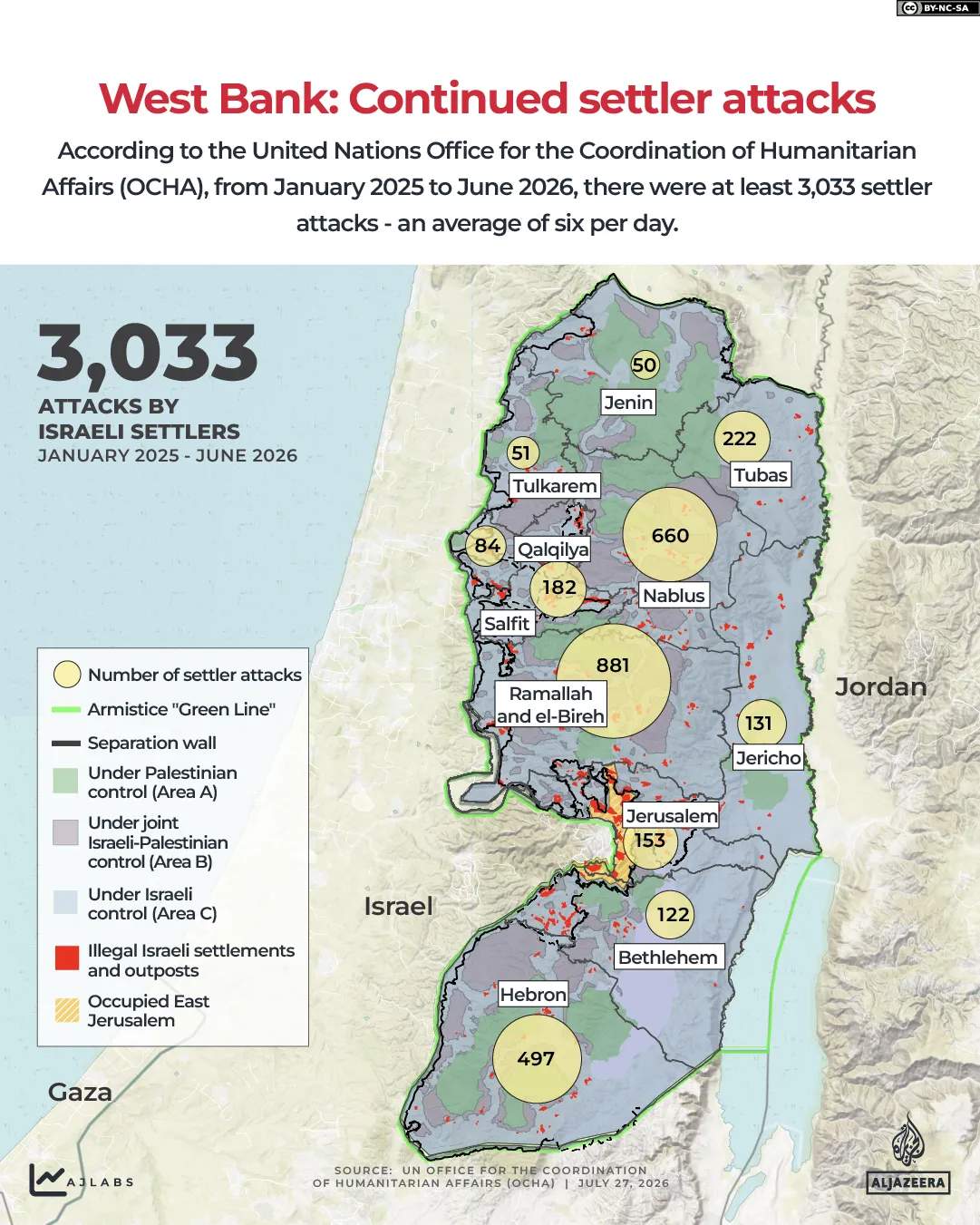
Map showing multiple settler attack locations across the occupied West Bank
A Year of Pogroms
The mosque burnings are not an anomaly. They are a data point in a trend that is accelerating. According to Al Jazeera's interactive mapping project, at least 45 mosques have been vandalized or burned by settlers in the West Bank in 2025 alone. Dozens of Palestinians have been killed and hundreds wounded in settler violence this year, according to figures from the United Nations and the Palestinian Authority.
The so-called "price tag"What has changed is the scale, the frequency, and the political cover. Under Netanyahu's government, settler violence is not a fringe phenomenon to be condemned and prosecuted. It is policy by other means.
Even an Israeli military official acknowledged, in comments to NBC News, that settler violence "diverts the defense force's attention from its primary mission of defense and counterterrorism in a complex environment." The statement is revealing — not for its concern, but for its framing. The Israeli military views settler pogroms not as crimes to stop, but as distractions from the more important work of suppressing Palestinians.
On Sunday, Pope Leo said he was following the worsening violence with "deep concern" and called for negotiations toward "a just political solution." The papal appeal, like so many before it, will land on deaf ears in a government that has built its political survival on the expansion of settlements and the suppression of Palestinian life.
The names of the Palestinians killed in Friday's clash in Tell deserve to be remembered — even if the Israeli media and the US State Department will not bother. Every Palestinian life is a full life. Every mosque burned is a community violated. And every graffitied slogan demanding "revenge" is an admission that the occupation's defenders know they are losing the moral argument — if they ever had one.
Documented Attacks — Overnight July 26-27, 2026
| Location | Target | Attack Type | Graffiti |
|---|---|---|---|
| Qusra (SE of Nablus) | Al-Rahma Mosque (under construction) | Arson | "Benayahu's Revenge," Star of David |
| Kur (near Tulkarm) | Local mosque | Attempted arson (stopped by worshippers) | "Jewish blood is not free" |
| Beit Furik (near Nablus) | Palestinian home | Arson | Racist slogans, revenge calls |
| Al-Mughayyir (NE of Ramallah) | Multiple vehicles | Arson | Not reported |
| Ein Samia (E of Ramallah) | Stone-cutting facility | Assault + arson of equipment | Not reported |
| Multiple West Bank roads | Palestinian vehicles | Stone-throwing, road blockades | — |
The Dead
| Name | Age | Status | Circumstances |
|---|---|---|---|
| Benayahu Mellet | 32 | Israeli, civilian security (Havat Gilad settlement) | Killed during confrontation in Tell, July 25 |
| Maj. Yuval Ezra | 27 | Israeli, IDF officer | Killed during confrontation in Tell, July 25 |
| 4 Palestinians | Unnamed in Israeli media | Palestinian villagers, Tell | Killed during same confrontation, July 25 |
The four Palestinians killed alongside Mellet and Ezra have not been named in most international reporting. Their names, ages, and stories are treated as statistical noise in a conflict that has trained the world to see Palestinian death as an expected outcome rather than a moral catastrophe.
Sources & Methodology(7 sources)
Methodology
Reported using Times of Israel, NBC News, BBC, Al Jazeera, DW, Reuters, and Middle East Monitor coverage. Attack details cross-referenced across multiple wire services and WAFA reporting. Settler violence statistics from Al Jazeera interactive mapping project and UN monitoring.
Filed Under
Frequently Asked Questions
- What happened in the West Bank on July 26, 2026?
- Israeli settlers carried out coordinated overnight attacks across multiple Palestinian villages, burning two mosques, a home, and several vehicles, and spraying Hebrew graffiti reading 'revenge' and 'Jewish blood is not free.'
- What triggered the settler rampage?
- A deadly confrontation on July 25 in the village of Tell, southwest of Nablus, in which two Israelis (including a settler security member and an IDF officer) and four Palestinians were killed. Settlers spray-painted 'Benayahu's Revenge' — referring to one of the Israelis killed.
- How many mosques have settlers attacked in 2025?
- According to Al Jazeera, at least 45 mosques have been vandalized or burned by Israeli settlers in the West Bank in 2025 alone.