Between 2020 and 2024, five defense contractors — Lockheed Martin, RTX, General Dynamics, Boeing, and Northrop Grumman — collected $771 billion in Pentagon contracts. [S1] The entire U.S. budget for diplomacy, development, and humanitarian aid — military aid excluded — came to $356 billion over the same period. [S1] Five companies took in more than double what the country spent on every peaceful, non-military tool it has.
That comparison rarely surfaces in political debate, because it complicates a story politicians prefer to keep simple: that war spending is a matter of security, not economics. It is both. The way America finances its wars — through debt rather than taxation, through appropriations that bypass the scrutiny routine spending receives — has consequences that extend into education, policing, and foreign policy long after the fighting ends.
Financed on Credit
The post-9/11 wars have cost the United States roughly $8 trillion, according to the Costs of War Project at Brown University's Watson Institute, the most comprehensive academic accounting available. [S1] More than $1 trillion of that figure is interest — the cost of borrowing rather than taxing to pay for the wars as they happened. [S1] Congress financed two decades of conflict the way a household finances a purchase it can't afford: on credit, with the bill arriving later and the interest compounding in the meantime.
A war funded through taxation generates an immediate, visible cost, and voters who feel it can act on it right away. A war funded through debt defers the cost for years, at which point it has merged into a national debt large enough that no single year, and no single vote, ever confronts it directly. That is how the war machine has continued to operate as long as it has.
What the Money Did Instead
Economist Heidi Garrett-Peltier modeled what a dollar of federal spending produces in jobs depending on where it lands — defense, education, healthcare, or clean energy. Education produced roughly three times the employment of an equivalent dollar spent on defense. [S2] The explanation is straightforward: a teacher's salary is a payment to a person, while a fighter jet's cost is mostly materials and a comparatively small number of specialized engineers.
That finding isn’t an outlier. The Federal Reserve Bank of Richmond surveyed the literature on local spending multipliers — the standard measure of how much activity a dollar of spending generates beyond itself — and found that defense procurement reliably lifts regional output but buys little work with it: roughly four jobs per $1 million, against 10 to 30 for most other public spending. [S3] National estimates point the same way. Economists Valerie Ramey and Sarah Zubairy, studying more than a century of American military spending in the Journal of Political Economy, found multipliers below one whether the economy carries slack or runs hot. [S13] The Mercatus Center, a free-market think tank with no institutional stake in that conclusion, reviewed four decades of research and arrived at multipliers between 0.4 and 0.7 — still below 1. [S4] A university labor economist, a regional Federal Reserve bank, the Journal of Political Economy, and a libertarian research center converging on the same answer isn’t ideological agreement. It’s arithmetic.
The Domestic Transfer
Since 1997, the Department of Defense has transferred more than $7.6 billion in surplus military equipment — armored vehicles, rifles, grenade launchers — to local police departments through the federal 1033 program. [S5] Equipment built for combat deployments now equips municipal police forces, including in towns with populations in the thousands. The connection between foreign war spending and domestic policing isn’t a metaphor. It’s a documented transfer of physical inventory, tracked by serial numbers.
Federal rules governing the 1033 program require recipient police departments to place equipment into active use within one year or return it. [S6] That deadline creates a built-in incentive to deploy military-grade gear rather than let it sit unused, and the consequences are documented. A 2014 ACLU investigation, “War Comes Home: The Excessive Militarization of American Policing,” found that nearly 80 percent of the SWAT raids it studied were conducted to serve routine search warrants, most often in low-level drug cases, rather than the hostage or active-shooter scenarios SWAT teams were originally built for. [S7] The report documented a resulting pattern of property damage, injuries to bystanders including children and the elderly, and in some cases deaths. That same investigation identified a “warrior” mindset taking hold among the officers involved — language that treats American neighborhoods as battlefields and the people in them as combatants rather than the public they’re sworn to serve. [S7]
Aid Without a Ballot
Total U.S. foreign aid ran approximately $72 billion in fiscal 2023, the most recent fully reported year — about 1.2 percent of the federal budget. [S8] Public perception badly overstates that figure: polling published in 2015 by the Kaiser Family Foundation found the average American estimates foreign aid at roughly 25 percent of federal spending. [S9] When respondents are told the actual figure, the share who believe the U.S. spends too much on foreign aid falls from 56 percent to 28 percent. [S9]
That the real number is smaller than assumed doesn’t resolve the underlying objection, which is less about magnitude than about consent. Congress appropriates foreign aid; the public typically learns of specific commitments — $3.8 billion annually to Israel under a ten-year agreement — after they’re already in effect. [S10] A significant share of that aid, moreover, is legally required to be spent on American-made weapons under the Arms Export Control Act of 1976, meaning the money is routed through a foreign government and returned largely intact to the same contractors named above. [S11]
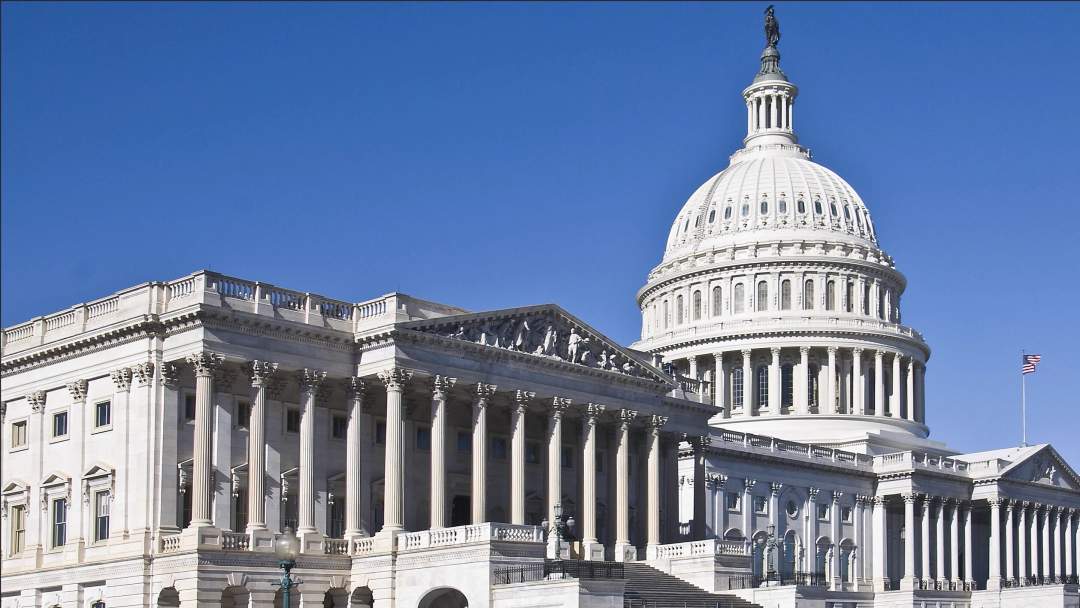
The same dynamic is visible in how new defense spending itself gets authorized. The fiscal year 2027 National Defense Authorization Act, still moving through Congress as of mid-2026, envisions $1.15 trillion in the base defense budget — with the administration requesting an additional $350 billion routed through a budget reconciliation bill rather than the standard appropriations process. [S12] Reconciliation bills face fewer floor debates and fewer opportunities for amendment than ordinary appropriations. A growing share of defense spending is moving through a process built for speed rather than scrutiny.
The Common Thread
The KFF finding on foreign aid perception is useful beyond foreign aid: it demonstrates how quickly public opinion shifts once people are shown the actual number. The same dynamic governs war financing. No taxpayer received an itemized bill for Iraq or Afghanistan. The cost was absorbed into a deficit large enough to be abstract, paid down through interest so gradual that no single year ever registered as the year the country paid for a war. Concealment, in each case, does the work that argument would otherwise have to do.
The result is a federal budget that spends more on five contractors than on all diplomacy and foreign aid combined, finances that spending through debt rather than taxation, routes a portion of what remains back to the same contractors through foreign military assistance, and increasingly authorizes new spending through a process with less public scrutiny than the one it's replacing. Roads, schools, and hospitals compete for what's left over.
Sources
[S1] Watson Institute for International & Public Affairs, “Costs of War: US Federal Budgetary Costs,” Brown University, accessed September 27, 2026 — https://costsofwar.watson.brown.edu/costs/economic/us-federal-budget
[S2] Heidi Garrett-Peltier, “Job Opportunity Cost of War,” Political Economy Research Institute (PERI), UMass Amherst — hosted via Costs of War Project, May 23, 2017 — https://costsofwar.watson.brown.edu/sites/default/files/papers/Peltier-Job-Opportunity-Cost-of-War-2017.pdf
[S3] Federal Reserve Bank of Richmond, “Impacts of Government Spending Changes on Local Economies,” Economic Brief No. 25-28, July 16, 2025 — https://www.richmondfed.org/publications/research/economic_brief/2025/eb_25-28
[S4] Mercatus Center research staff, “Defense Spending and the Economy,” Mercatus Center, George Mason University, May 7, 2013 — https://www.mercatus.org/research/research-papers/defense-spending-and-economy
[S5] Citizens for Responsibility and Ethics in Washington (CREW), “Shedding Light on the Pentagon’s 1033 Program,” CREW, March 14, 2023 — https://www.citizensforethics.org/news/analysis/shedding-light-on-the-pentagons-1033-program/
[S6] Tennessee Department of General Services, “Law Enforcement Support Office (LESO) / 1033 Program,” State of Tennessee — https://www.tn.gov/generalservices/vam/leso.html
[S7] American Civil Liberties Union (ACLU), “War Comes Home: The Excessive Militarization of American Policing,” ACLU, June 2014 — https://www.aclu.org/news/criminal-law-reform/war-comes-home
[S8] Pew Research Center, “What the Data Says About US Foreign Aid,” Pew Research Center, February 6, 2025 — https://www.pewresearch.org/short-reads/2025/02/06/what-the-data-says-about-us-foreign-aid/
[S9] Kaiser Family Foundation (KFF), “Data Note: Americans’ Views on the U.S. Role in Global Health,” KFF, January 22, 2015 — https://www.kff.org/global-health-policy/data-note-americans-views-on-the-u-s-role-in-global-health/
[S10] Statista (data compiled via Council on Foreign Relations), “U.S. Military Aid to Israel,” Statista, December 9, 2025 — https://www.statista.com/statistics/1625044/us-military-aid-to-israel/
[S11] Congressional Research Service, “Transfer of Defense Articles: Foreign Military Sales (FMS)” (IF11437, hosted via EveryCRSReport.com), July 27, 2026 — https://www.everycrsreport.com/reports/IF11437.html
[S12] Congressional Research Service (hosted via EveryCRSReport.com), “FY2027 NDAA: Summary of Funding Authorizations,” July 24, 2026 — https://www.everycrsreport.com/reports/IN12703.html
[S13] Valerie A. Ramey and Sarah Zubairy, “Government Spending Multipliers in Good Times and in Bad: Evidence from US Historical Data,” Journal of Political Economy, Vol. 126, No. 2 (May 2018), pp. 850–901 — https://www.journals.uchicago.edu/doi/10.1086/696277
Sources & Methodology(13 sources)
Methodology
Sources for this piece include primary government data (Congressional Research Service, Federal Reserve, State Department, and state-level 1033 program administrators) and nonpartisan research organizations (Pew Research Center, Kaiser Family Foundation, the ACLU, and the Costs of War Project at Brown University). Two figures cited here vary slightly by source and reporting period: the total value of equipment transferred under the Department of Defense's 1033 program (estimates range from $5.1 billion to $7.6 billion depending on the cutoff year measured; this piece uses the $7.6 billion figure reported by CREW), and the specific survey wave behind the 56%-to-28% shift in public attitudes on foreign aid (Kaiser Family Foundation). The FY2027 NDAA figures reflect the House-passed version as of mid-2026 and remained subject to change pending Senate action at time of publication. The author discloses no financial or personal conflicts of interest related to any organization named in this piece. The Richmond Fed Economic Brief cited here (No. 25-28) surveys the literature on local spending multipliers; the national multiplier claim rests on Ramey and Zubairy in the Journal of Political Economy (2018) and on Barro and Redlick (2011) as reviewed by the Mercatus Center.
Filed Under
Frequently Asked Questions
- How much have the post-9/11 wars cost the United States?
- Roughly $8 trillion, according to the Costs of War Project at Brown University — and more than $1 trillion of that is interest on borrowing rather than direct war spending.
- What is the 1033 program?
- A Department of Defense program, created by Congress in 1997, that transfers surplus military equipment — armored vehicles, rifles, grenade launchers — to local police departments. More than $7.6 billion in equipment has been transferred since it began.
- What share of the federal budget goes to foreign aid?
- About 1.2 percent — roughly $72 billion in fiscal 2023. Polling consistently finds Americans estimate it near 25 percent of the budget.
- Does military spending help the economy?
- Estimates of the military spending multiplier run below one — between roughly 0.4 and 0.7 in recent reviews — and defense dollars produce fewer jobs per dollar than education, health care, or clean energy spending.