103 House Democrats. $3.3 billion. One vote. The amendment failed — but the Democratic Party's illusion of unity on Israel died with it.
The Numbers
The Massie Amendment vote (H.R. 8595, July 16, 2026):
| Vote | Republicans | Democrats |
|---|---|---|
| Yes | 1 (Massie) | 103 |
| No | 215 | 98 |
| Present | 0 | 10 |
More Democrats voted to cut Israel aid than voted to keep it. The Democratic leader found himself on the losing side of his own caucus. His own whip broke with him publicly. This is not a split. This is a rupture.
The $3.3 billion at stake represents annual Foreign Military Financing under the Obama-era Memorandum of Understanding — a ten-year commitment totaling $38 billion. Israel has received $310 billion in inflation-adjusted aid from American taxpayers since 1948, making it, as Massie put it on the floor, "the biggest welfare recipient of the United States."
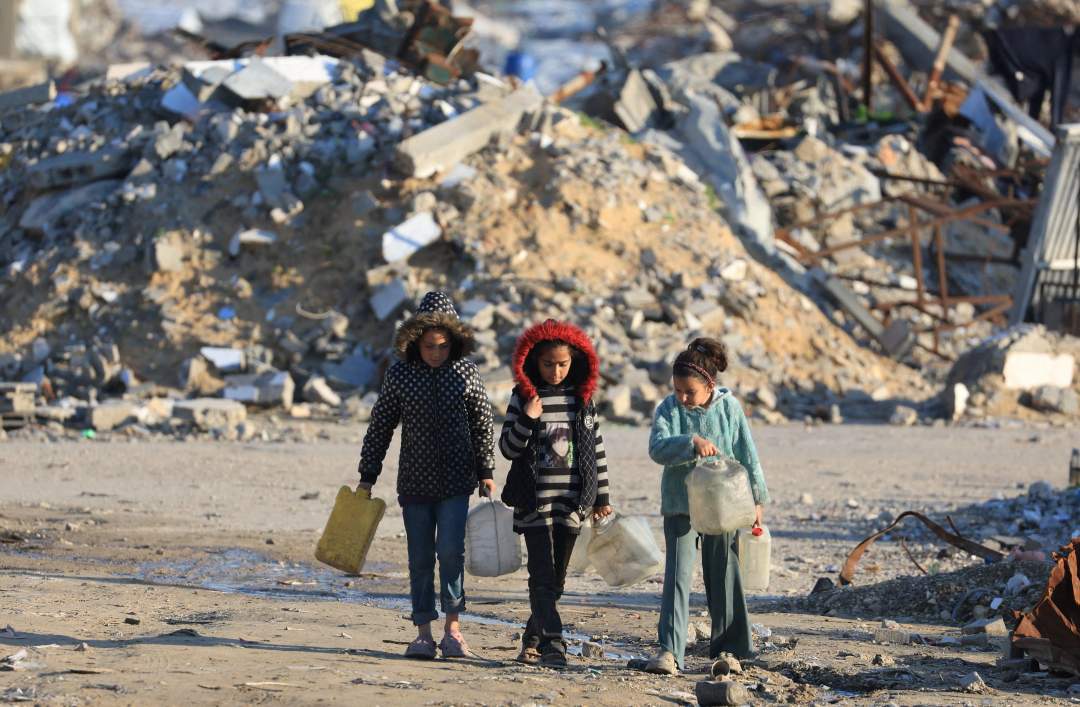
As we documented when covering Israel's deliberate targeting of Palestinian children — a finding the UN confirmed in June — U.S.-supplied weapons are not abstract policy. They are the munitions dropped on Gaza for nearly three years. 900 Palestinians have been killed since the so-called "ceasefire", and the killing hasn't stopped. That's the context 103 Democrats were responding to.
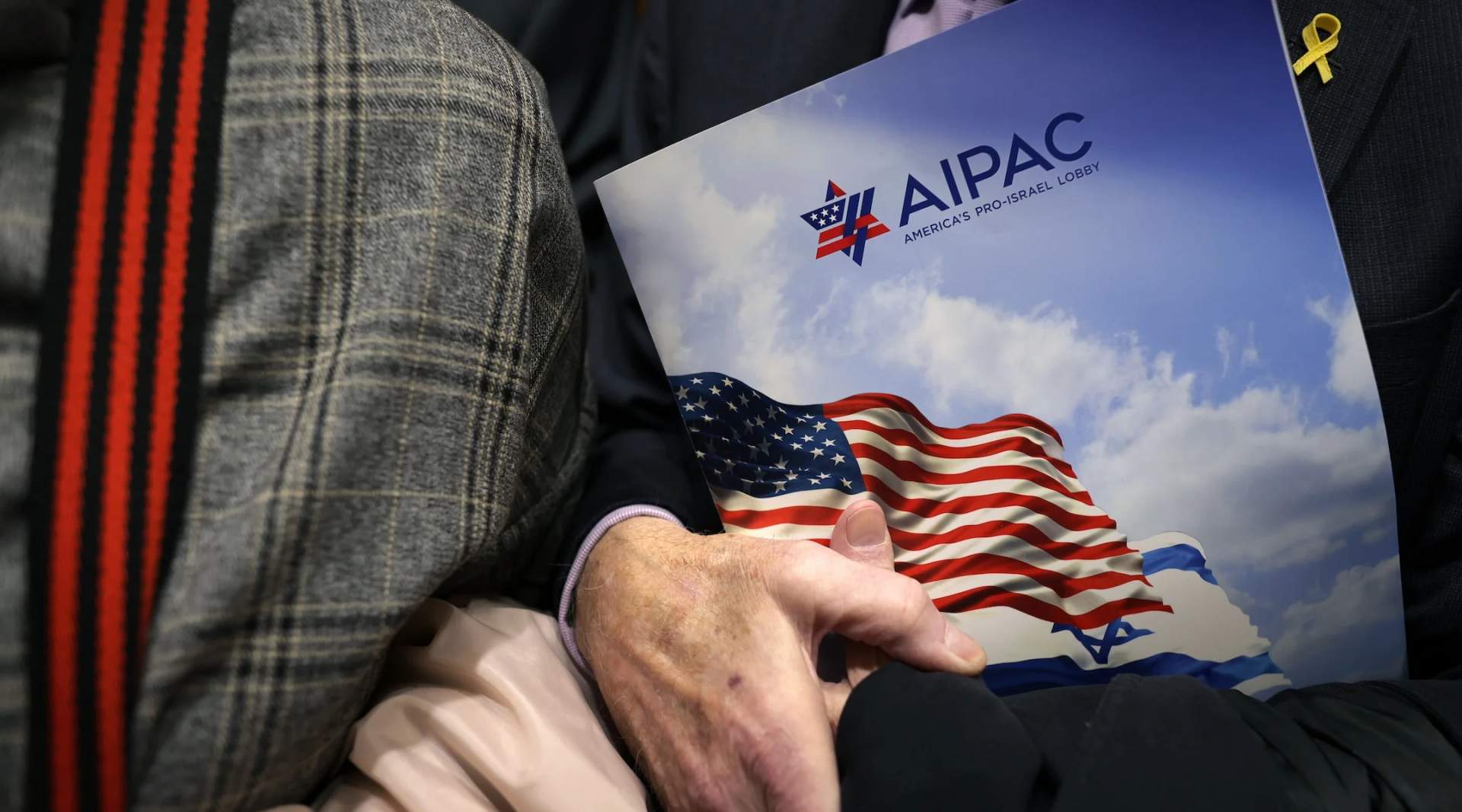
APIAC propaganda Image
A Party That Can't Corral Itself
Jeffries tried to prevent what happened. He circulated a "Dear Colleague" letter calling Massie's amendment "overly broad" and warning it could jeopardize humanitarian aid, embassy operations, and counterterrorism efforts. His argument was procedural — not moral. But leadership didn't whip the vote. They knew they couldn't.
House Democratic Whip Katherine Clark — the party's actual vote-counter — broke with Jeffries and voted yes:
*"It is clear that the status quo is not tenable. We should not provide a blank check for military aid to any country that does not comply with U.S. law, interests, and values. The Netanyahu government has failed to meet that standard."
Nancy Pelosi voted yes too, calling the amendment "an unfortunate choice" — a remarkable concession from the former Speaker who spent decades enforcing bipartisan Israel orthodoxy.
The floor debate exposed two parties operating under one banner. Steny Hoyer, the party's institutional anchor, warned:
*"This amendment would embolden the enemies of peace, those pursuing the complete elimination of Israel and those who seek the death of Jews."
Joaquin Castro fired back:
*"If we hope to change Israel's behavior, we must use our leverage. The American people have seen this tragedy with their own eyes. They do not support giving Israel more weapons."
Rep. Robert Garcia didn't bother with diplomatic framing:
*"Netanyahu, like Donald Trump, is a corrupt authoritarian who should face criminal courts — not receive billions more for weapons."
Even Democrats who voted no scrambled to distance themselves. Rep. Alma Adams (D-NC), who opposed the amendment, felt compelled to announce she had co-sponsored the Block the Bombs Act — legislation that now has 77 Democratic co-sponsors — to end offensive weapons transfers to Israel. The party's old guard is losing the vote count. The new guard is already writing the next bill.
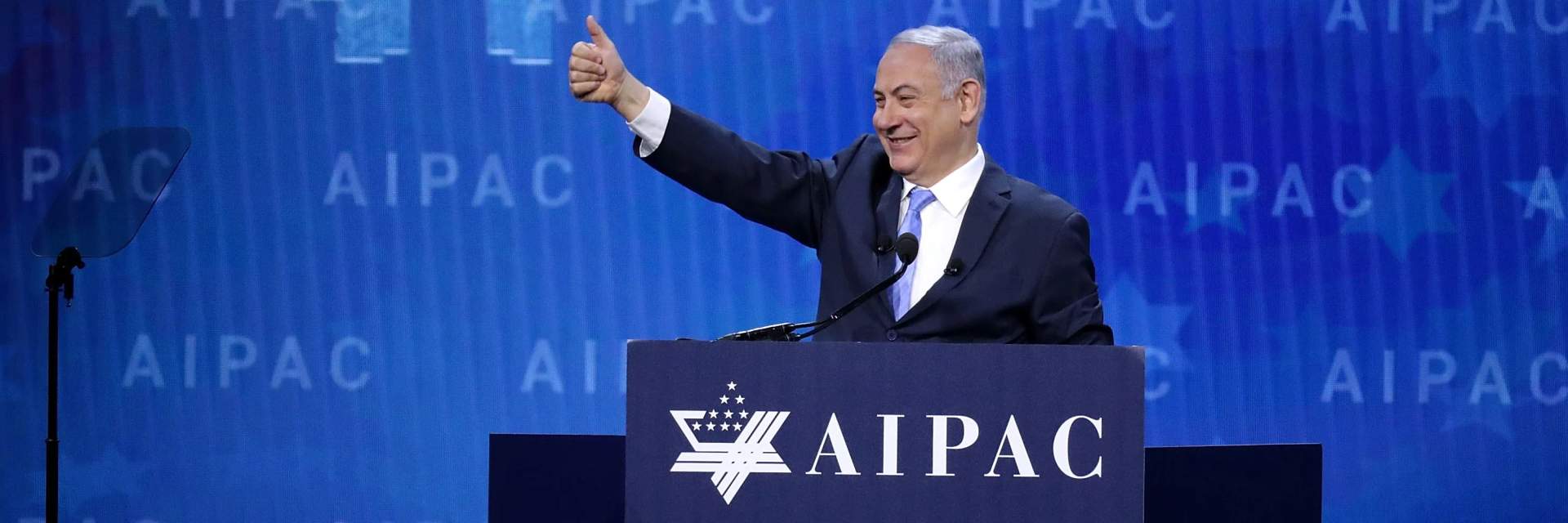
Benjamin Netanyahu speaking from a podium at the AIPAC policy conference before a large audience with Israeli and American flags on stage
AIPAC Panics
Within hours of the vote, AIPAC scrubbed donation links from its campaign portal for more than two dozen endorsed Democrats who voted yes:
- Nancy Pelosi — removed
- Katherine Clark — removed
- Jake Auchincloss — removed
- Jeffries and Aguilar, who voted no — still active
This isn't discipline. It's damage control from a lobby that's been losing ground for two straight election cycles.
AIPAC by the numbers:
- $100M+ — United Democracy Project (AIPAC's super PAC) spent in the 2024 cycle alone
- #1 — Largest external spender in Democratic primaries, period
- $5M+ — Direct spending already deployed in 2026
- $219M — Total tracked AIPAC spending across 540 members of Congress
- 16+ — Endorsed Democrats stripped of fundraising access after this vote
And it's not working. As we reported in our investigation of the Slaughter Pipeline, the flow of American weapons to Israel operates through channels that no single congressional vote can shut off. But the symbolic ground has shifted.
In New York last month, primary voters ousted two sitting Democrats and replaced a retiring incumbent with democratic socialists who ran explicitly against Israel aid. In Colorado, 28-year incumbent Diana DeGette lost to Melat Kiros — a political newcomer whose critique of Israel policy defined her campaign. The lobby's money couldn't save any of them.
AIPAC is doing what every declining power structure does: tightening the grip, cutting off the money, making an example. It's the behavior of an institution that can feel the floor giving way.
The Base Has Already Moved
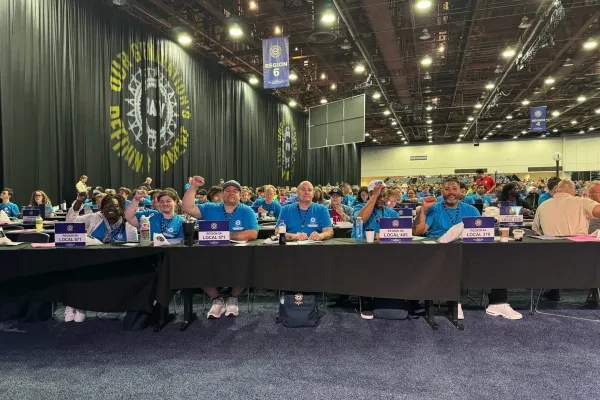
An AP-NORC poll this month found roughly half of Democrats believe Israel has committed genocide in Gaza. A UN inquiry in June concluded Israel has "deliberately targeted" children. The UAW became the first major U.S. union to divest from Israel bonds — a rupture that would have been unthinkable three years ago.
Jeffries himself acknowledged the shift while trying to manage it: "For the good of Israel and the Palestinian people, American policy in the Middle East must change." The language concedes the progressive premise even while rejecting the progressive vehicle. That straddle is what a leader looks like when his conference is walking away and he has nothing to offer but procedural objections.
This isn't a debate about Israel. It's a debate about what the Democratic Party is. Our previous reporting documented how Israel's colonial expansion follows the exact blueprint of the Yinon Plan — and the American public is no longer willing to fund it without question.
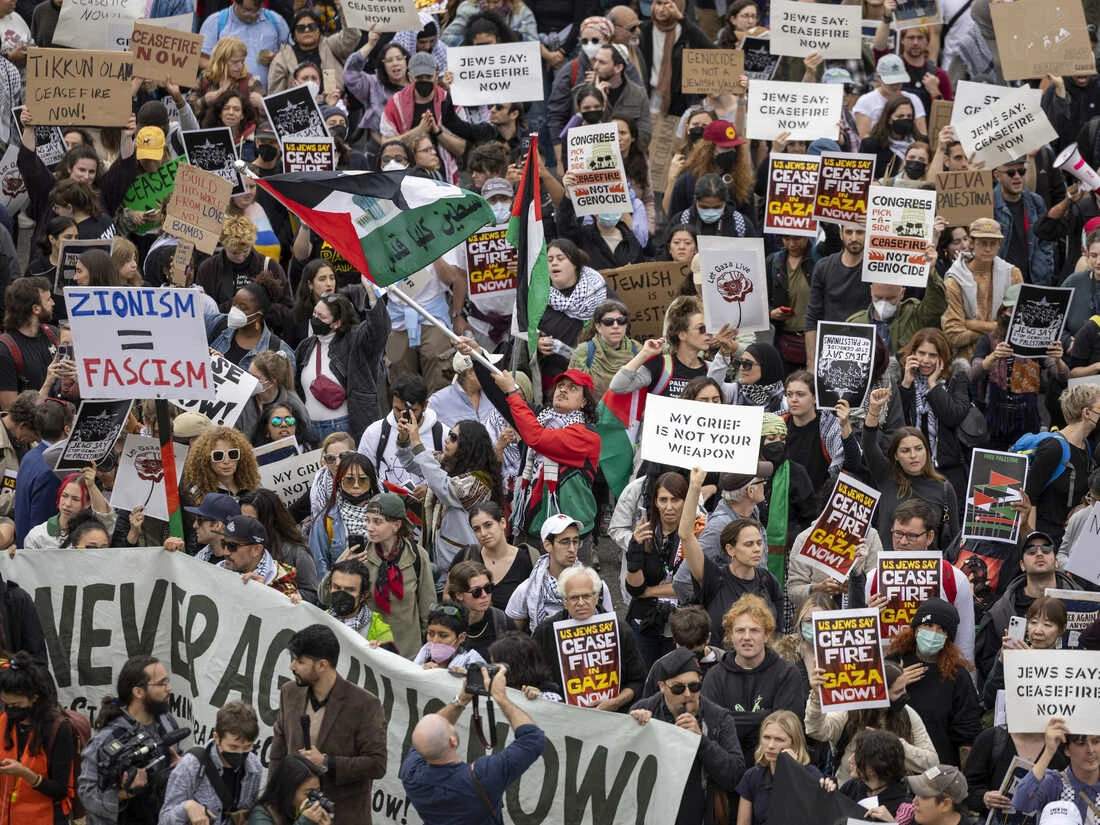
Crowd of protesters gathered outside the U.S. Capitol holding signs demanding a ceasefire in Gaza, with the Capitol dome visible in the background
AIPACs Days are Numbered
AIPAC's playbook worked when the cost of defiance was surgical: target one Cori Bush, one Jamaal Bowman, make them the warning. But you can't primary 103 members of Congress. The math doesn't work.
- 77 House Democrats now co-sponsor the Block the Bombs Act
- More than half the Democratic caucus voted to cut all $3.3B in military aid
- 10 more voted "present" — meaning over 53% of Democrats refused to defend Israel funding
- The amendment's sole Republican backer, Thomas Massie, just lost the most expensive House primary in U.S. history after Trump funded his challenger
The vote failed 104-314. The amendment died. But something else died with it: the illusion that uncritical support for Israel is a settled question in American politics. 103 Democrats put it on the record. AIPAC put its retaliation on the record. The internal war between the party's base and its captured leadership is now in the open.
The lobby can buy votes. It can't buy a movement. The only question is who blinks first.
Sources & Methodology(10 sources)
- Rep. Robert Garcia — Floor StatementStatement
Methodology
Reported from Washington, D.C. Sources include roll call vote records (104-314-10 on Massie amendment to H.R. State Department appropriations), AIPAC campaign contribution portal records, statements from Reps. Katherine Clark, Robert Garcia, and Joaquin Castro, reporting from The Hill, The Guardian, Los Angeles Times, CNN, New York Times, and Capitalism Institute. AIPAC spending data from Gen Us spending tracker. Polling data from AP-NORC, July 2026.
Filed Under
Frequently Asked Questions
- What was the Massie amendment?
- Rep. Thomas Massie (R-Ky.) proposed an amendment to the fiscal 2027 State Department appropriations bill that would have stripped $3.3 billion in Foreign Military Financing from Israel. It failed 104-314 with 10 voting present.
- How did AIPAC respond to the vote?
- Within hours, AIPAC removed donation links from its online campaign portal for more than two dozen endorsed House Democrats who voted yes, including Nancy Pelosi, Katherine Clark, and Jake Auchincloss. Links for members who voted no, like Hakeem Jeffries, remained active.
- How significant was this vote for the Democratic Party?
- It was the most substantial public split on Israel in Democratic Party history. More than half the caucus voted to cut aid — with the party whip, Katherine Clark, breaking openly with Minority Leader Hakeem Jeffries. Leadership declined to whip the vote, an admission they couldn't control their own members.
- How much has AIPAC spent on elections?
- AIPAC's super PAC, the United Democracy Project, spent over $100 million in the 2024 cycle — making it the single largest external spender in Democratic primaries. In 2026, the lobby has already deployed at least $5 million in direct spending.