The bombing is so close now that you don't hear it as a sound anymore. You feel it in your chest. A vibration that starts in the ground beneath your feet and rises through your bones until it sits in your ribcage like a second heartbeat — irregular, violent, uncertain. That is Gaza today. That is what "ceasefire" looks like from the inside.
I am writing this from Deir al-Balah. At 2:15 this afternoon, the strikes came so near that the walls shook and the children didn't scream — they've stopped screaming. They just press themselves flat against the ground, hands over their ears, eyes closed, waiting. Waiting for either the shaking to stop or the shaking to become the last thing they ever feel. A journalist friend, Muhannad Qashta, sent a warning: a heavy airstrike near Al-Aqsa Martyrs Hospital. The area that had been warned about was bombed. He wrote that it is expected to be targeted again, that everyone should take extreme precautions, that he wishes everyone safety. In Gaza, we know what "take extreme precautions" means. It means gather your children, grab nothing — because nothing you own is worth your life — and run. Again. Again. Again.
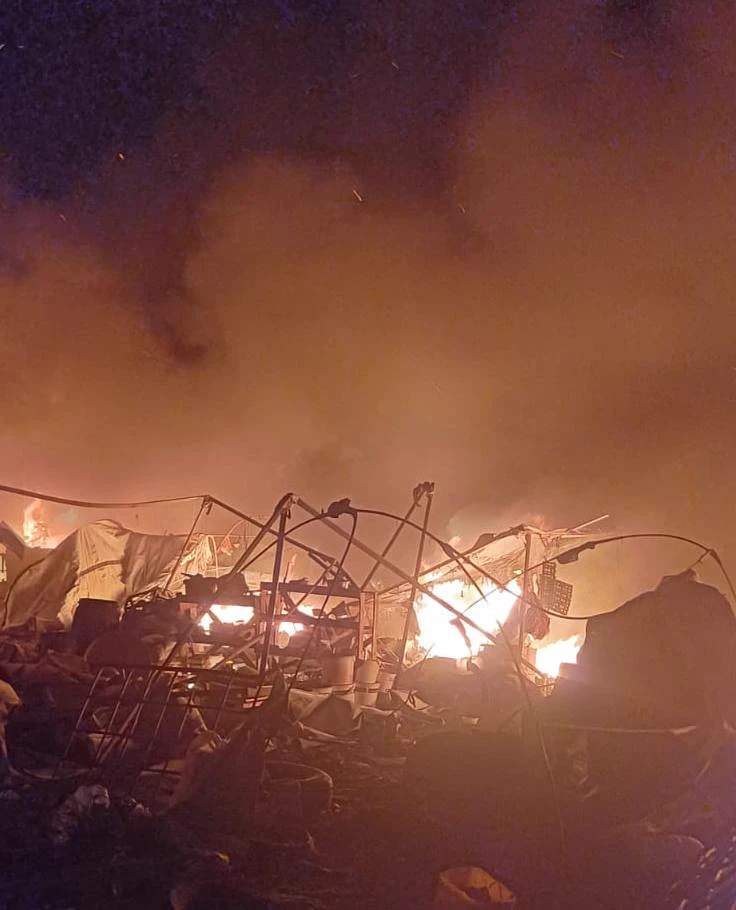
By 3:00 in the afternoon, the tents were on fire.
By 4:23, the war had returned to Gaza with a brutality I have not seen in weeks. Heavy shaking in every area. Fires raging across the Strip. A bloody escalation, the most violent in weeks — and the world will call it a ceasefire.
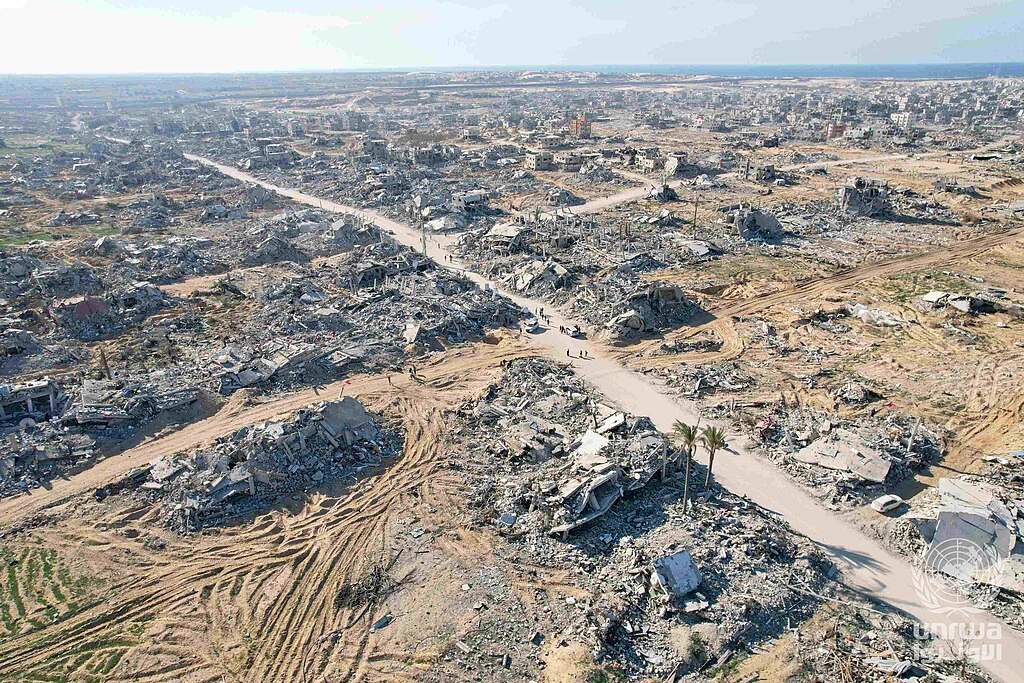
Aerial photograph showing vast destruction of buildings in Rafah, Gaza
The 30% That Will Become 5%
I need you to understand something that the headlines will not capture, because the headlines are written by people who do not sleep in tents and do not count their survival in hours. What is happening today in Gaza is bigger than a military operation. It is more dangerous than any round of fighting we have survived before.
The occupation has come out and spoken openly about controlling 70% of Gaza's area. This is not just a number. This is not a military tactic. This is a declaration — gradual, deliberate, undeniable — that the Strip is entering a new phase. A phase of forcibly reshaping Gaza. A phase of imposing a long-term reality unlike anything we have endured in any previous war.
Today, with the leaks from Israel's Channel 13 about the Southern Command's pressure to carry out what they call a "decisive war" operation — with their explicit talk of plans to occupy Gaza City and administer the Strip for two full years — it has become clear: the occupation is no longer thinking about temporary strikes or lightning operations. They are talking about complete administration. They are talking about direct rule.
Do you understand, or not yet?
They want to transform Gaza into an area under complete security control while the people are pushed step by step towards total exhaustion. People's exhaustion is part of the battle. Psychological pressure is part of the battle. The daily struggle — the searching for water, the standing in lines, the breathing of toxic fumes just to eat a piece of bread — this is all part of the battle.
So, you ask, "Are the people of Gaza going to give up?"
The truth — and I say this as someone who lives this truth every single day — is that we have all already given up. All the speeches from Hamas and the factions, all the posturing, the appeals for sympathy, the dreams of alliances hoping that Iran will defeat America and liberate Palestine — these are just words. The natural explanation is simpler and crueler than any political slogan: when Gaza becomes only 30%, it will not stop there.
A Closed Circle
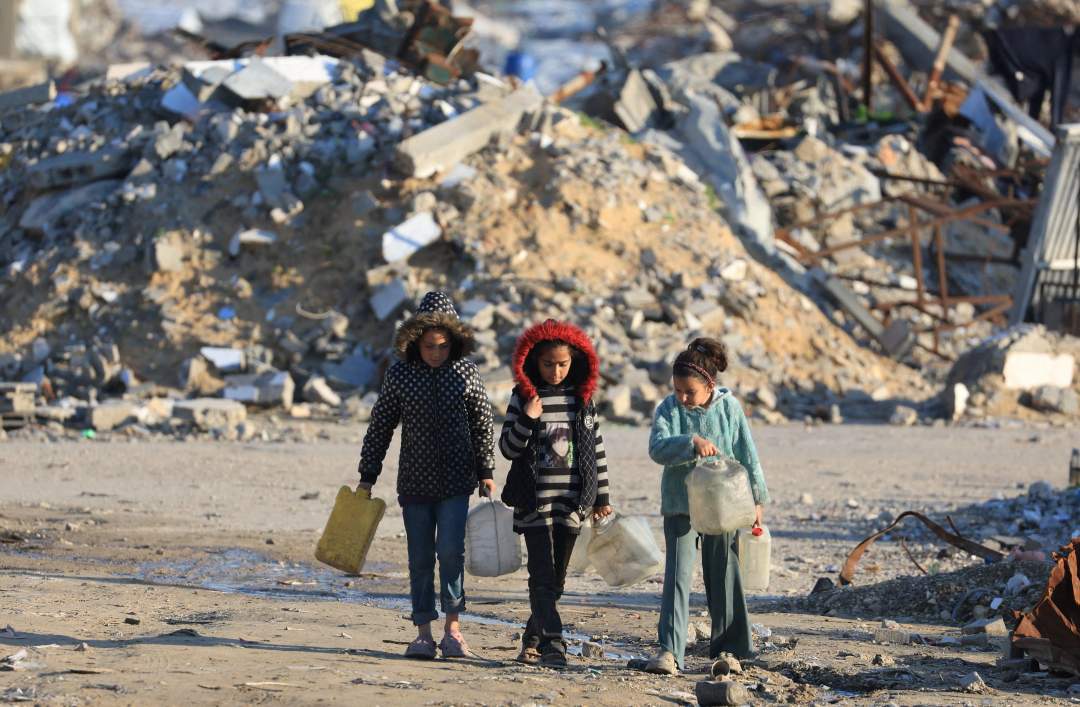
The sector is shrinking, my friend, and the tents are expanding. People are moving within a closed circle — from one disaster to another, from one tent to another, from one fear to an even greater one. And every hour, we lose someone we know. A colleague. A relative. A neighbor. A friend.
All of this is happening while the world talks about "humanitarian solutions," as if the people of Gaza still have a normal life to begin with, let alone the ability to solve their problems. The world made its position clear some time ago. The message is unmistakable: Gaza without weapons, without the rule of armed factions, by any means necessary. Sometimes they call it security arrangements. Sometimes a peace plan. Sometimes a transitional administration. But the meaning is the same. There is an international decision to reshape the entire landscape, and the people alone are paying the price — with their blood, with their nerves, with their lives.
Even the aid entering today is entering with meticulous political calculations. A morsel is enough to keep you alive, but not enough to restore your ability to stand. And the institutions, too, have entered a phase of vetting. Some entities will remain because they are "trusted," while others will disappear because they are considered part of the organizational, funding, or influence environment.
Amidst all this, the Gazan citizen lives in a state of terrifying exhaustion. A truce collapses. Rhetoric escalates. An open war rages. And leaders speak the language of defiance while the people themselves have nothing left to lose.
The problem is that everyone is stubbornly clinging to power over the city's corpse. The occupation is stubborn with force, and the factions are stubborn with equally foolish slogans. Even the organizations have become hereditary leaders. The poor people are stubbornly clinging to their pain because they are afraid to admit that they cannot even confront themselves — because they are defeated internally and powerless to do anything. They are waiting for anyone to save them, even if that person is Buddhist.
The Trap of Voluntary Emigration
The talk of "voluntary emigration" came as no surprise to anyone on the ground. It is a very gentle word for a very harsh meaning.
When life closes in around you, when homes disappear, when the land shrinks beneath your feet and survival itself becomes a daily struggle, then opening the door to escape will later seem to many like the only salvation. And therein lies the catastrophe. That is the design. They do not need to force you out at gunpoint. They just need to make staying unbearable — and then offer the exit as a kindness.
And then they will call it "voluntary."
A new decision will come, talking about 80%. Then the phase of consuming what remains of the displacement areas will begin. The camps that have turned into a sea of tents — those fragile nylon structures baking in the sun by day and freezing by night — will come under pressure. The camps will be removed, swept aside like garbage from the road, as if the dilapidated tents families are living in are five-star hotels.
People will discover that the term "safe zone" is just a temporary title that expires with the first Israeli military decision. In Gaza today, evacuation orders are no longer a military warning. They have become a way of life. You hear the bombardment in the neighborhood next to you — the one where people were living moments ago — and you know what it means. It means you sleep with your bags beside you. It means your children sleep in their clothes. It means you have stopped asking "Where do we go?" because the question has changed.
The question now is: Is there anywhere left to go?
What the World Calls Peace
They call this a ceasefire. In the language of the occupation and its backers, a ceasefire means Israel continues to bomb residential buildings and displacement tents, continues to assassinate people in their homes, continues to issue evacuation orders that give families minutes to flee, continues to expand its territory while the world debates semantics and appoints committees that produce reports no one enforces.
A ceasefire means 900 Palestinians killed in eight months. A ceasefire means 120 aid trucks per day instead of the 600 promised. A ceasefire means the Knesset legalizes the death penalty for Palestinians and a Trump-appointed Board of Peace blames Hamas for Israel's violations while Israel openly announces it will seize 70% of our homeland.
This is not a ceasefire. This is annexation at gunpoint, dressed in the language of diplomacy.
The Land Itself Is Shrinking
I remember Rafah. I remember Al-Junayna, my neighborhood, the streets where my uncle Saeed walked before they killed him. I remember my friends Mohammed, Abdullah, Ahmed, and Ibrahim, their names carved into my memory like epitaphs on a cemetery wall that stretches from one end of this Strip to the other. I remember the sun of Gaza caressing the sea, the markets that smelled of spices and fresh bread, the football matches we played in the streets until dark. We were building our lives in the eleventh hour, stealing joy from the jaws of the siege. We didn't know we were living in paradise before we were forcibly expelled from it.
Now the land itself is shrinking beneath our feet. Every time the line moves, another family loses their home. Every time a tent is burned — and I watched tents burn this afternoon, the blue fabric curling into black, families standing in the smoke with nothing but the clothes on their backs — another piece of Gaza disappears.
Our friend Dr. Ahmed Hamdan wrote today that the people of Gaza have reached a point where they no longer dream of a complete homeland or a grand future. They dream only of a normal life. A stable bed. A wall that won't collapse on their children. A morning that doesn't begin with an evacuation order or the loss of more loved ones.
The future holds immense hardship, and the heaviest burden is this: Gaza is being slowly drained while the world watches with indifference, as if the people are merely numbers in a long report about an endless war.
From where I stand — from the ground, in the smoke, in the shaking — the difference between a ceasefire and a war is this: in a war, at least they admit what they are doing.
---
Salah Akram is a writer and software engineering student from Rafah, Gaza. He is the author of "Between Life and Death in Gaza."
You can buy Salah’s book in our bookstore
You can directly support Salah from his profile
100% of proceeds go directly to Salah
Sources & Methodology(6 sources)
Methodology
This article is written from direct field notes and communications sent by Salah Akram from Deir al-Balah, Gaza, on 28 May 2026. Source material includes Salah's real-time observations of Israeli strikes near Al-Aqsa Martyrs Hospital, eyewitness accounts of burning displacement tents, and analytical commentary on Israel's territorial expansion plans. Additional reporting from journalist Muhannad Qashta and analysis by Dr. Ahmed Hamdan (@Ishara) are incorporated.
Filed Under
Frequently Asked Questions
- Where is Salah Akram reporting from?
- Salah is reporting from Deir al-Balah in central Gaza, where heavy Israeli strikes hit near Al-Aqsa Martyrs Hospital on 28 May 2026, and fires burned through displacement tent camps.
- What does Israel's 70% control plan mean for Gaza?
- Israel's Prime Minister Netanyahu announced on 28 May 2026 that he ordered the military to seize control of 70% of the Gaza Strip — up from 53% at the time of the October 2025 ceasefire. According to leaked Channel 13 reports, the Southern Command is pressing for a 'decisive war' operation to occupy Gaza City and administer the Strip for two full years.
- What is happening on the ground in Gaza right now?
- As of 28 May 2026, heavy shaking and fires are raging across Gaza in what correspondents describe as the most violent escalation in weeks. Displacement tents have been set on fire. Strikes hit near Al-Aqsa Martyrs Hospital in Deir al-Balah. Evacuation orders have become a way of life rather than emergency warnings.
- Who is Dr. Ahmed Hamdan?
- Dr. Ahmed Hamdan (@Ishara) is a Palestinian analyst whose commentary on Gaza's shrinking territory and the exhaustion of its people was cited in this article. He writes that people in Gaza have reached a point where they no longer dream of a homeland but only of a normal life.
- What does 'voluntary emigration' mean in context?
- Israel's Defense Minister Israel Katz announced plans for large-scale Palestinian departure from Gaza, described as 'voluntary migration.' Salah Akram writes that when life becomes unbearable — homes destroyed, land shrinking, survival a daily struggle — the 'voluntary' exit will feel like the only salvation, which is by design.
- How is this article sourced?
- This article is ghostwritten from Salah Akram's field notes and communications sent to UnTelevised Media on 28 May 2026, including his direct observations from Deir al-Balah, reporting from journalist Muhannad Qashta, and analysis from Dr. Ahmed Hamdan. It is written in Salah's voice.
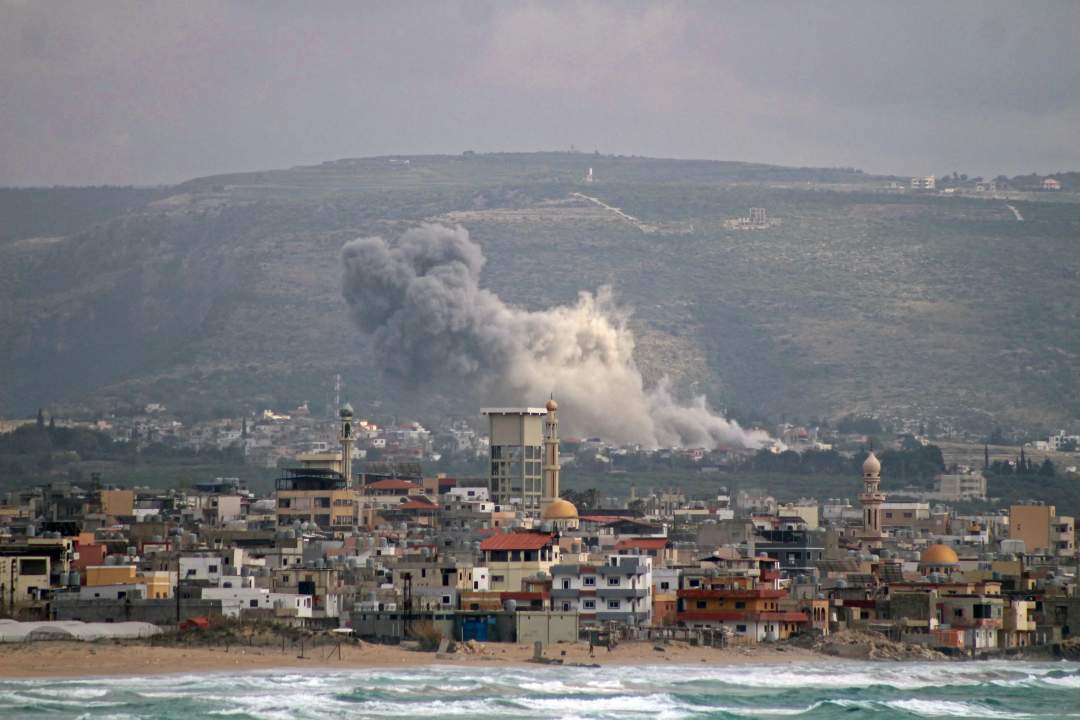
![Gaza, May 15, 2026. Residential building burns after IOF airstrike on Nakba Day. [Salah Akram - UnTelevised Media]](https://cdn.sanity.io/images/ypejdt32/articles/73637edaca9933504355656af342356bd3e8b682-1080x703.webp?fit=max&auto=format&w=1080&q=65)