On Tuesday morning, Lorenzo Salgado Araujo, 52, said goodbye to his wife, kissed his dog, and climbed into his white work van. He picked up three of his construction crew — one of them his brother — and headed to a job site in Houston's Magnolia Park neighborhood to build homes, the same routine he'd followed for more than 30 years in the United States.
He never made it.
U.S. Immigration and Customs Enforcement agents shot Salgado Araujo dead on the 6800 block of Canal Street during what the Department of Homeland Security described as a "targeted enforcement operation." Except Salgado Araujo wasn't the target. DHS itself admitted this two days after his death. Agents were looking for two people from Guatemala. Instead, they killed a Mexican man who had lived in the U.S. for 35 years, who was in the process of obtaining his work permit, and who had no criminal record in Harris County.
His family found out about his death from the news. Not from ICE. Not from local police. From television.
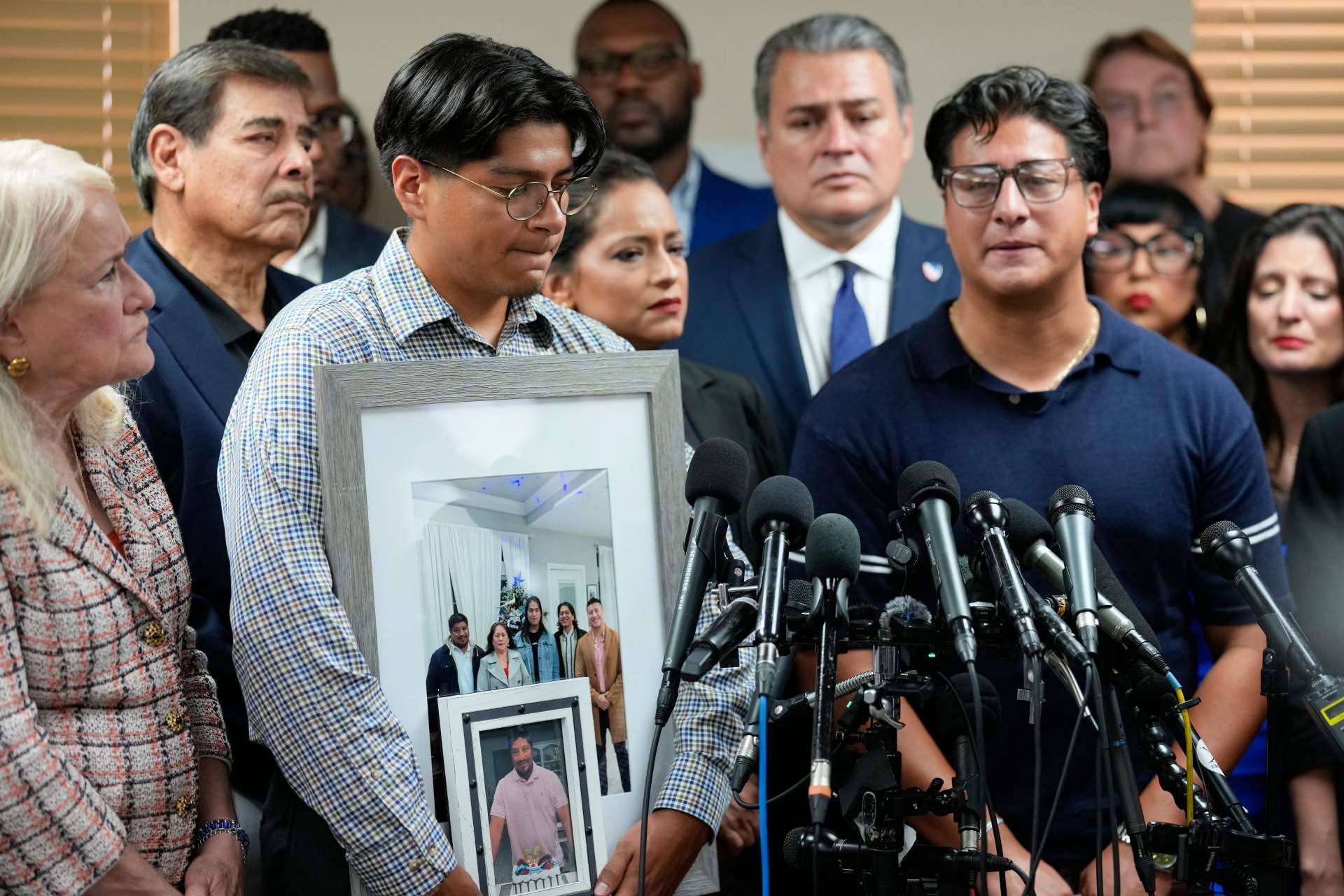
Ronaldo Salgado, son of Lorenzo Salgado Araujo, holds up a photograph of his father during a press conference alongside his brother in Houston
"He Did Not Deserve to Die"
Salgado Araujo's three sons — all U.S. citizens — held a press conference on Wednesday alongside the League of United Latin American Citizens. Ronaldo Salgado, the eldest, wiped away tears as he held a photograph of his father.
"He did not deserve to die," Ronaldo said. "He did not deserve to be reduced to a headline of 'Mexican man shot and killed by ICE.' He deserved to take his workers to the job site, finish the houses, and go back home to his loving wife."
Ronaldo described a father of routine who woke early every morning to pick up his crew and head to construction sites. The van — the one he was driving when he was killed — had been stolen before, along with his tools. He'd never recovered them. Ever since, he was cautious about who was near his vehicle and where he drove.
When unmarked vehicles began pursuing his white van on Canal Street, Ronaldo said his father likely believed he was being carjacked, not that he was being stopped by federal agents.
"If my dad had known they were law enforcement, he would have pulled over immediately," Ronaldo said. "All three men were rounded up. We have not heard from them, but I hope they are able to provide their own statements to prove that my father feared for his life as unmarked cars followed my dad, who only wanted to get back to work and back to us."
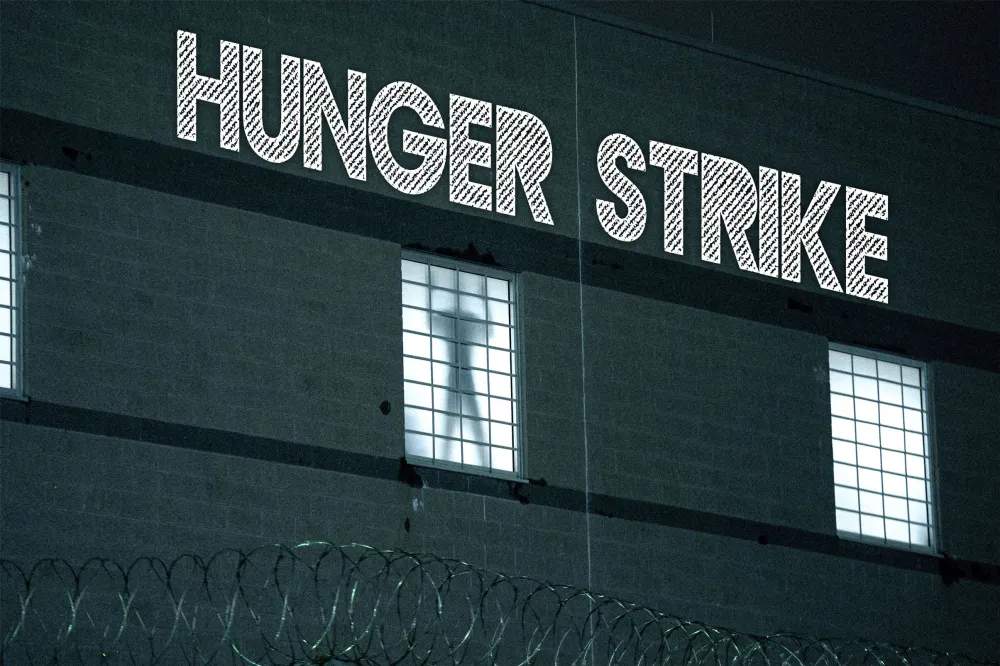
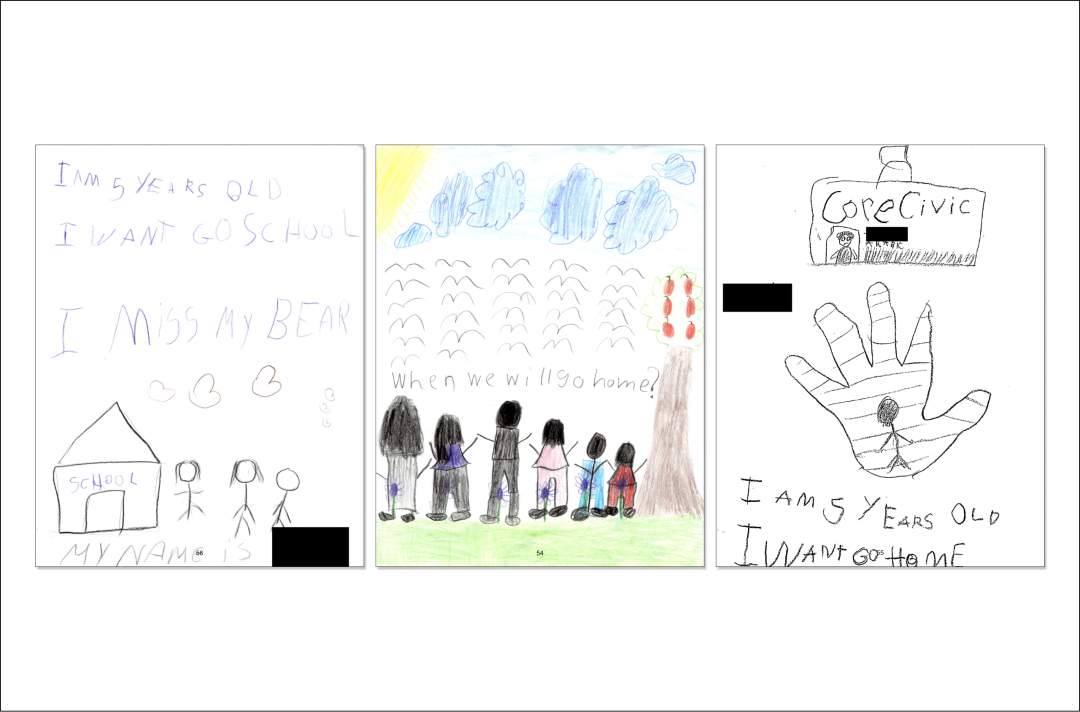
The three passengers were arrested by ICE. One was Victor Hugo Salgado Araujo, Lorenzo's brother, who remains in immigration detention — the same system that produced the hunger strike at Delaney Hall, where detained immigrants staged a desperate protest against the conditions ICE maintains behind closed doors.
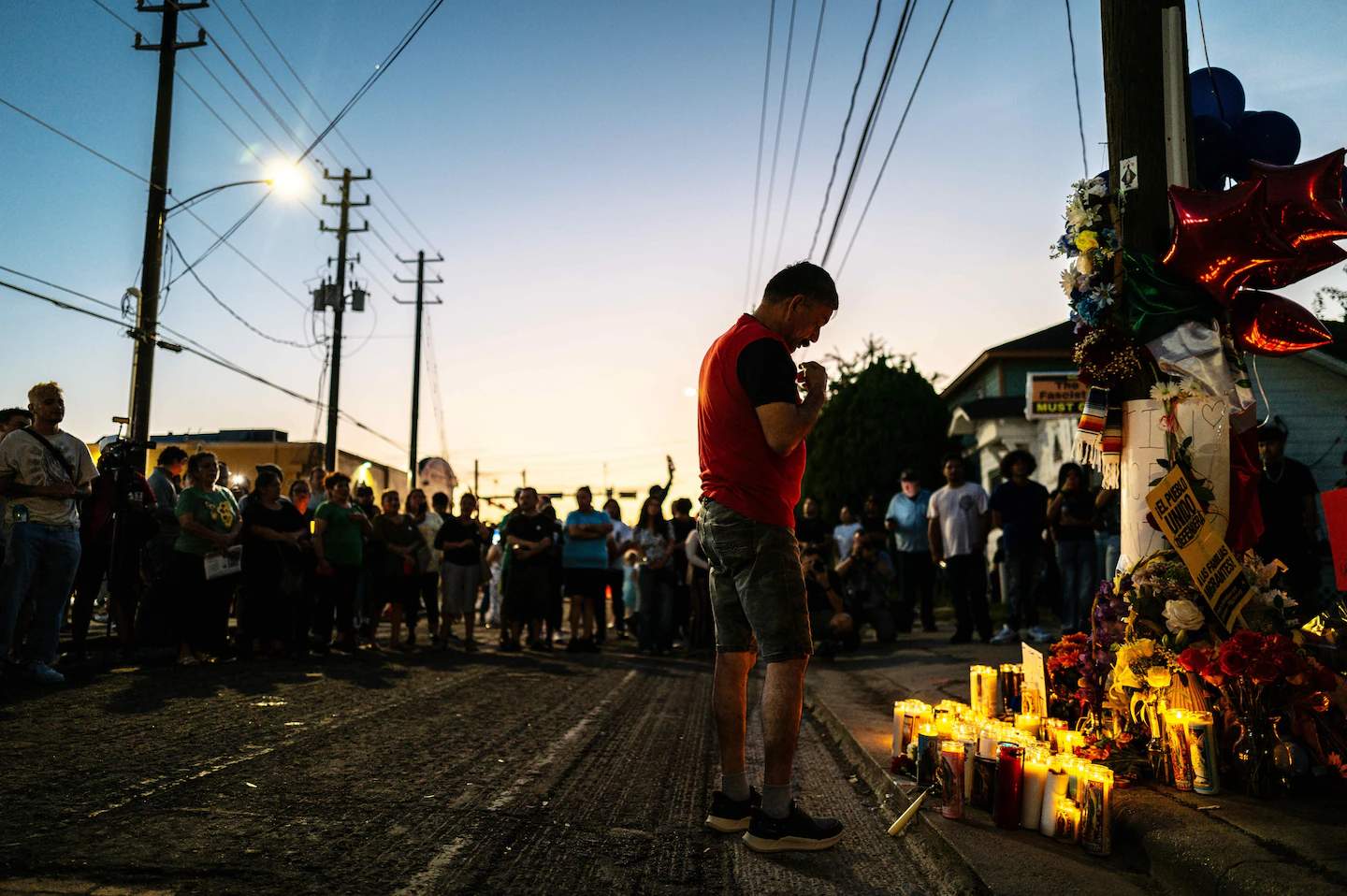
Community members honor Lorenzo Salgado Araujo at vigil.
The "Weaponized Vehicle" Playbook
DHS claims Salgado Araujo "weaponized his vehicle in an attempt to run over an ICE law enforcement officer," prompting the agent to fire in "self-defense." DHS has provided no evidence to support this claim. The agents involved were not wearing body cameras.
It is, by now, a familiar script. DHS has used the exact same language to justify at least four vehicle-related fatal shootings by immigration agents since Trump's second term began. In January, the agency said Renee Good "weaponized her vehicle" against an ICE officer in Minneapolis. Video evidence later contradicted that claim entirely. Good was a U.S. citizen.
In another Minneapolis case, ICE agent Luis Paiz-Ferrer chased Julio Cesar Sosa-Celis, fired his gun into the man's front door, and claimed he was beaten with a shovel and acted in self-defense. Video again contradicted the official story. Paiz-Ferrer was charged with assault and falsely reporting a crime in May.
In March 2025, ICE shot and killed 23-year-old Ruben Ray Martinez in Texas. Martinez was also a U.S. citizen. His death was kept from the public for nearly a year. Congressional Democrats later confirmed that DHS "falsely" claimed Martinez struck a federal agent with his vehicle.
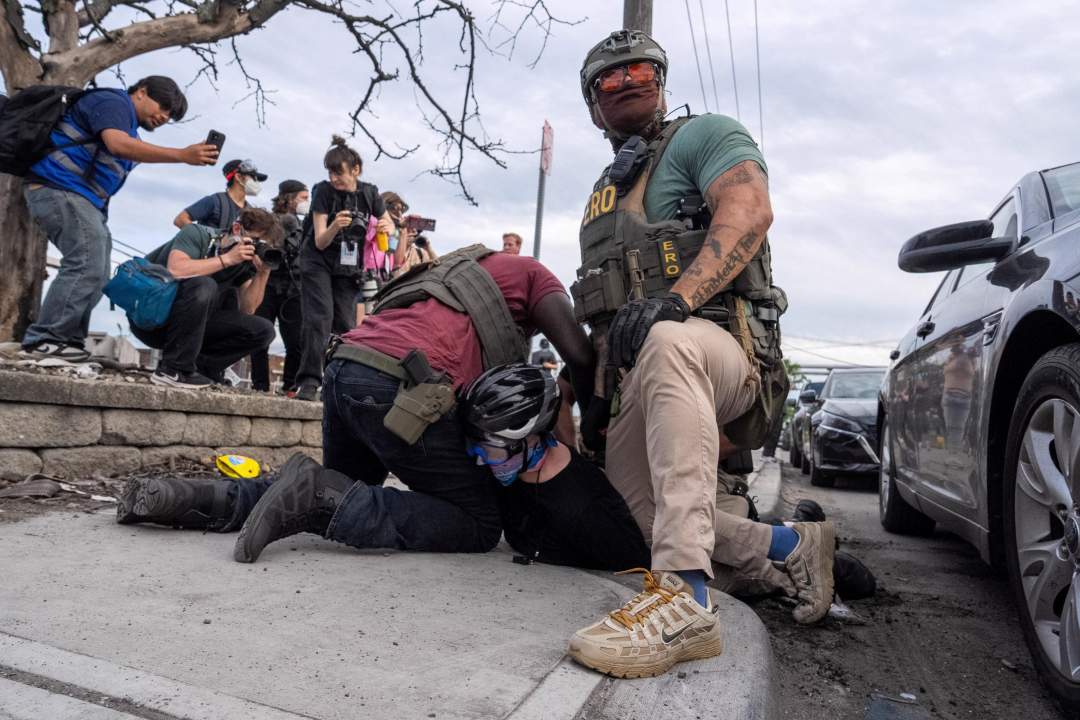
Salgado Araujo's killing marks the 10th fatal shooting by federal immigration officials since Trump's second administration took office. Human Rights Watch and Physicians for Human Rights have reported that 52 people died in ICE custody during the administration's first 500 days. Twenty-one people have died in ICE detention this year alone. As we documented when ICE raids descended on Oregon communities, federal enforcement operations have increasingly moved from detention centers into streets, workplaces, and neighborhoods — with deadly results.
The United Nations high commissioner for human rights has raised alarm about the escalating death toll in U.S. immigration custody.
A Pattern of Impunity
Congresswoman Sylvia Garcia, who represents the district where Salgado Araujo was killed, called for an independent investigation, demanding that "all available footage, communications, and other evidence should be preserved and reviewed as part of a full and impartial investigation."
"The victim's family, my constituents, and the entire community deserve a complete and transparent accounting of what happened," Garcia wrote.
The Harris County District Attorney's Office has said it will explore investigative avenues, though jurisdiction remains with federal authorities. Houston Mayor John Whitmire stopped short of calling for a city-led probe, saying only that he wanted a "transparent, independent investigation" by federal authorities.
LULAC national president Roman Palomares was less diplomatic.
"We do not believe you, you have not earned that trust," Palomares said of ICE and DHS at Wednesday's press conference. "ICE has not earned that trust from the American people." The organization is offering a $5,000 reward for information, video, or testimony related to the shooting.
Mexico's government has responded as well. President Claudia Sheinbaum announced that the Mexican Foreign Ministry is preparing legal action in U.S. courts over the killing, saying the shooting reflects a broader pattern of abuse against Mexican nationals under the Trump administration.
"Our objective is to go beyond diplomatic notes," Sheinbaum said.
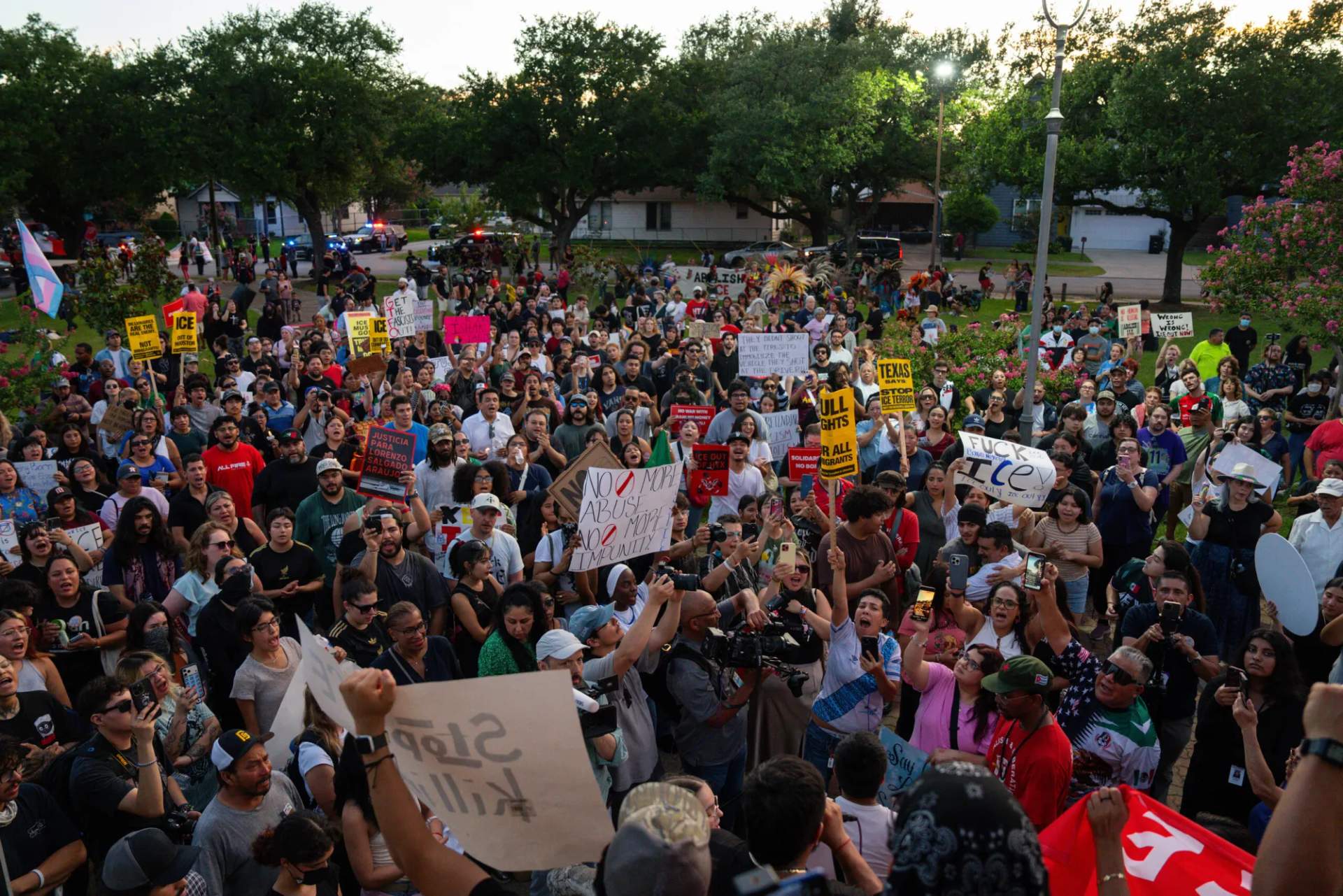
Hundreds of protesters march through Houston's Magnolia Park neighborhood protesting the ICE shooting of Lorenzo Salgado Araujo
Hundreds Take to the Streets
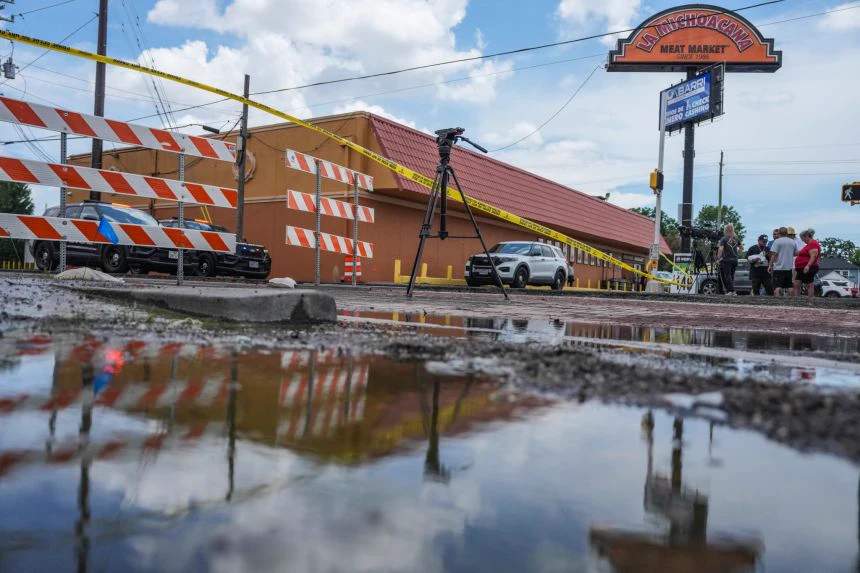
Thirty-six hours after the shooting, hundreds of Houstonians marched through Magnolia Park to the very block where Salgado Araujo was killed. The protest was organized by FIEL Houston and the Houston branch of the Party for Socialism and Liberation. A memorial of flowers, candles, and written messages grew at the site.
"This is the exact spot that Lorenzo took his final breath," said Cesar Espinosa, executive director of FIEL Houston. "And in the spirit of solidarity, I don't know about you, but I say, if they come for one of us, they come for all of us."
More than 100 people remained after the march for a candlelight vigil, conducted mostly in Spanish. Conchita Reyes, reading from a family statement, said: "He lay here in pain and in fear for his life and with the fear of leaving his family behind."
The family's demands are clear: an independent investigation, a reform of ICE operations — specifically ending "ambush-style tactics and unmarked vehicles" — and financial assistance for Salgado Araujo's wife, Maria.
As Ronaldo Salgado put it: "This is outrageous to me, and this is ridiculous to hear that no one in that van was a target of any sort of investigation."
No one in that van was the target. The man ICE agents killed was on his way to work, picking up his crew, building houses — doing the labor that Texas runs on. For that, he was shot in the abdomen on a Houston street and left to bleed out. His family learned about it from the evening news.
Congress has given ICE and CBP $70 billion in a single bill passed last month. Accountability has not been part of the package. Killer cop Sean Grayson already showed the country how little justice looks like for victims of state violence. Lorenzo Salgado Araujo's family is bracing for more of the same.
Sources & Methodology(9 sources)
Methodology
Reported using verified accounts from the victim's family, DHS and ICE official statements, local and national media coverage, and community response. Sources cross-referenced across The Guardian, CNN, AP News, Houston Public Media, ABC13 Houston, and Click2Houston.
Filed Under
Frequently Asked Questions
- Who was Lorenzo Salgado Araujo?
- Lorenzo Salgado Araujo was a 52-year-old Mexican immigrant and construction worker who had lived in the United States for 35 years. He was on his way to work when he was shot and killed by an ICE agent in Houston on July 7, 2026.
- Was Salgado Araujo the target of the ICE operation?
- No. DHS admitted two days after the shooting that ICE agents were looking for two people from Guatemala, not Salgado Araujo. None of the four men in the van were the intended targets.
- What does DHS claim happened?
- DHS claims Salgado Araujo 'weaponized his vehicle' by attempting to run over an ICE agent, prompting the agent to fire in self-defense. No evidence has been provided, and the agents were not wearing body cameras. This is the same justification DHS has used in at least four other fatal immigration shootings.
- How many people have been shot and killed by immigration agents under the second Trump administration?
- Salgado Araujo's death marks the 10th fatal shooting by federal immigration officials since Trump's second term began, according to a Guardian review. Twenty-one people have died in ICE detention this year alone, and 52 people died in ICE custody during the administration's first 500 days.
- What has the community response been?
- Hundreds protested in Houston's Magnolia Park. LULAC is offering a $5,000 reward for witness information. Congresswoman Sylvia Garcia, the Mexican government, and the Harris County DA have all called for investigations.