Starving for Dignity
They found worms in the food. The air conditioning didn't work. A flu virus circulated untreated for weeks. Pregnant women were denied OB-GYN care. One miscarried inside the facility — alone. Another woman was hospitalized for two weeks, and when her family asked about her condition, they were told to file a Freedom of Information request.
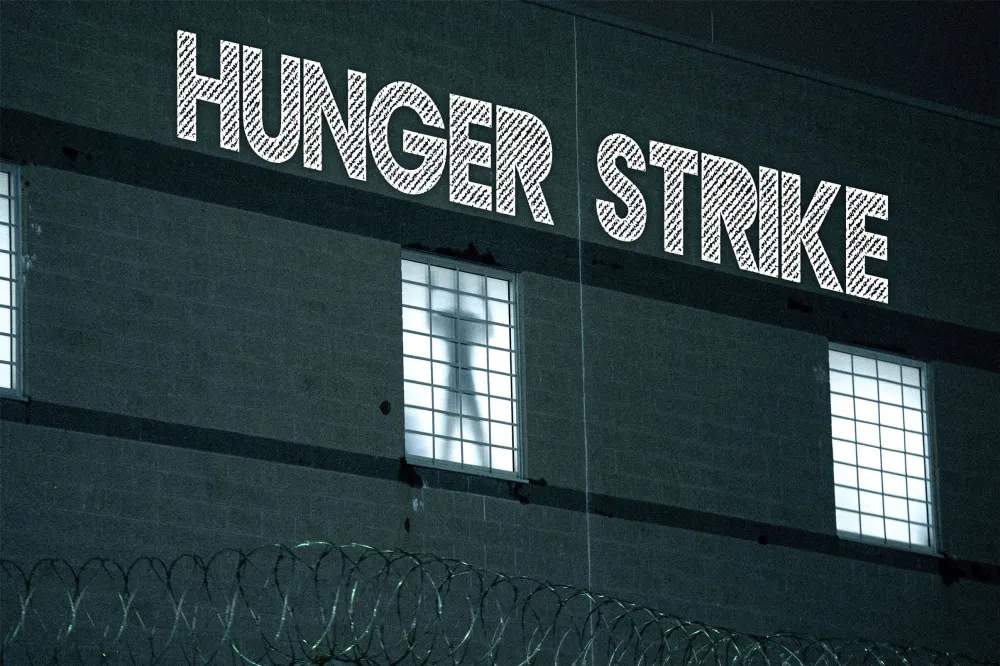
This is Delaney Hall, a 1,000-bed immigration detention center in Newark, New Jersey, operated by the GEO Group under a 15-year, $1 billion contract with ICE. It sits in an industrial stretch of Newark surrounded by factories and packaging plants, the air reeking of sewage and chemicals. And right now, between 300 and 400 of the roughly 700 to 900 detainees inside are on hunger and labor strike — refusing food and refusing to work until someone with power actually sees what's happening.
The GEO Group's billion-dollar contract is just one node in a sprawling network of private prison companies profiting off human caging. The Immigrant Prison Boom: Billions for Detention, Nothing for Justice documents how the detention industry has ballooned into a multi-billion-dollar enterprise — one that requires a steady supply of bodies to fill beds and justify contracts.
The Trump administration's response has not been to investigate. It has been to deny, deflect, and lock the doors tighter.
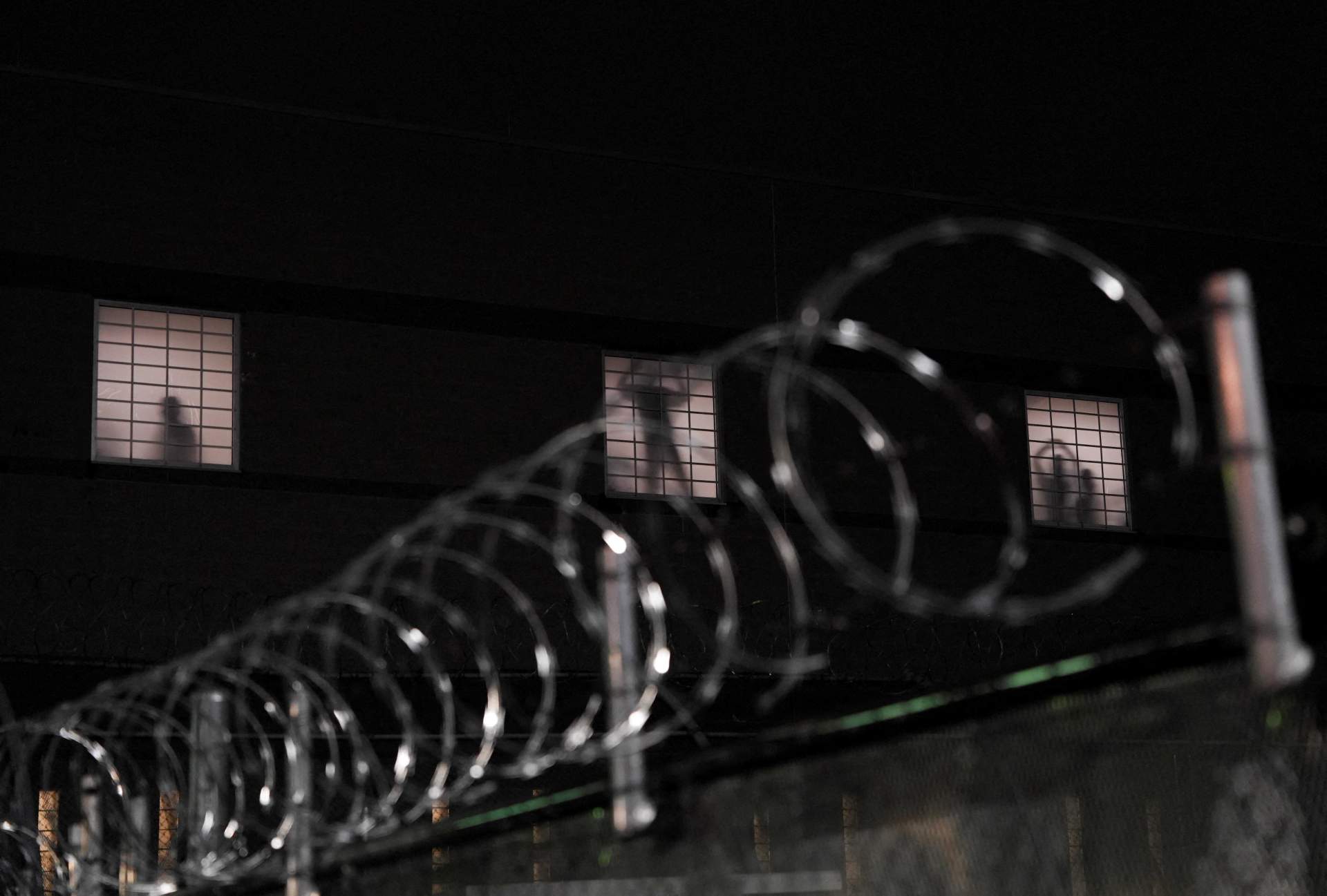
Silhouette of a person visible through a window behind a chain-link fence with razor-wire.
"We Are Not Criminals"
On Friday, May 23, detainees inside Delaney Hall launched a coordinated hunger and labor strike. The announcement came during a rally organized by Gabriela Soto, whose husband Martin — a Peruvian immigrant detained since February while out buying diapers — is one of the strike's lead organizers.
Nearly 300 detainees signed an open letter addressed to the public, outlining conditions that amount to what one advocate called "physical and psychological torture." The letter, published by advocates, reads in part:
"We feel vulnerable and, in a way, kidnapped — detained without justification — not to mention that we are being tortured physically and psychologically due to the poor food resources provided in these detention centers."
They signed it: S.O.S.
Two men recently released from Delaney confirmed their participation in the strike to The Guardian, despite Homeland Security Secretary Markwayne Mullin's insistence that "there is NO hunger strike at Delaney Hall" and that "there are no subprime conditions."
One of the men, who asked to be called Luis and spoke through a face covering for fear of retaliation, had been detained for three and a half months — seized during a routine immigration check-in, a practice that has become increasingly common under the second Trump administration for people with active legal cases. His hands trembled as he spoke.
"If they freed us, they wouldn't generate profit for this business," Luis said, referring to the GEO Group. "If we are going to be detained for months so this company can profit, they should at least provide a better service."
Another man released from the facility that day was too shaken to give his name. "I was in there for three and a half months. It's heavy, we're still not eating. I hope they help the ones inside," he said, his voice cracking. "I don't want to say anything more because then they'll take me back."
The strike at Delaney Hall echoes a wave of prison resistance sweeping the country. In New York, detainees launched their own wildcat strike over similarly degrading conditions — a story told in Behind Bars, Forgotten by Design: New York's Wildcat Prison Strike. The same refusal to be treated as less than human. The same desperate calculus: starve yourself because the system won't feed you dignity any other way.
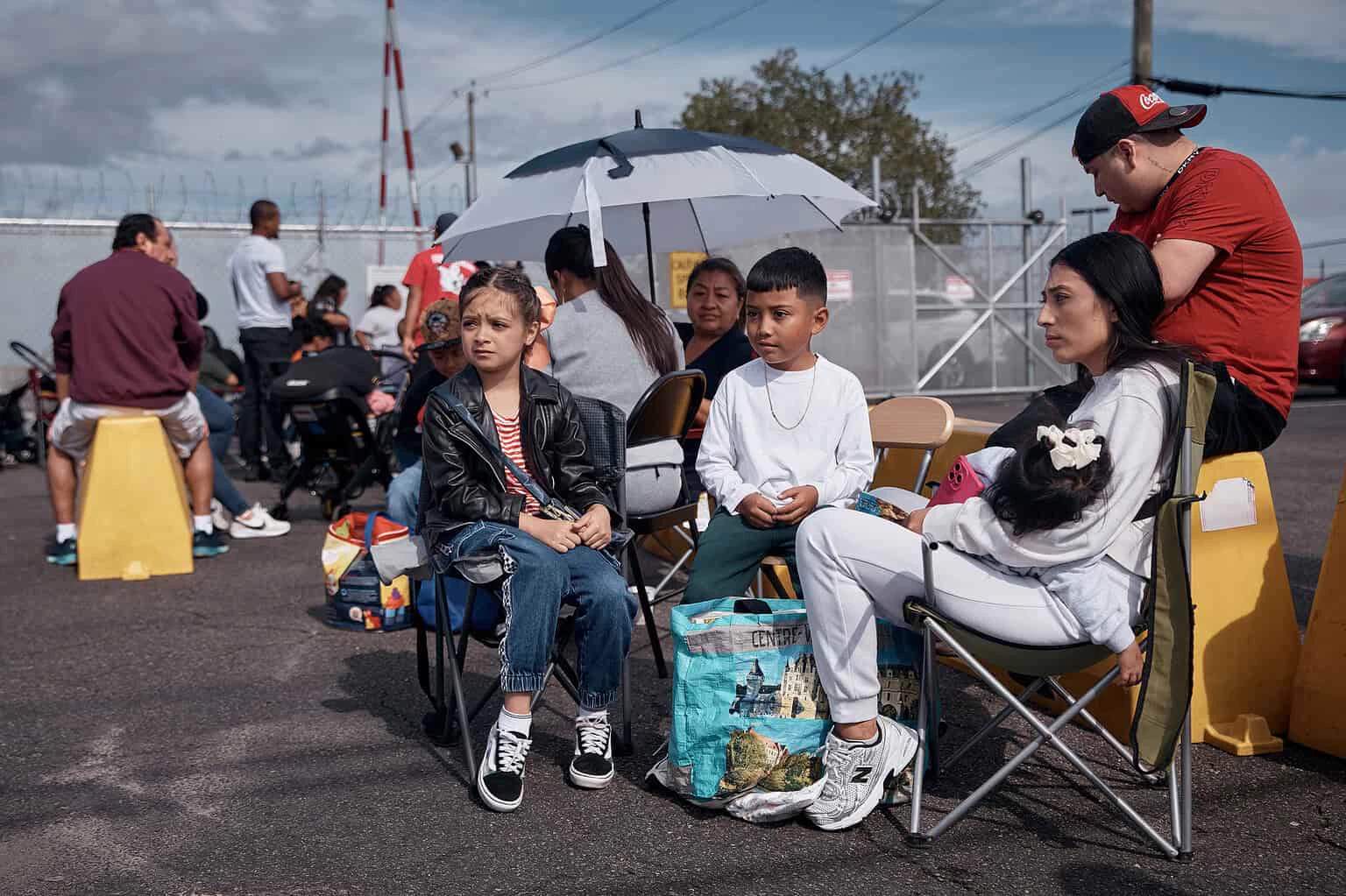
People line up outside the Delaney Hall Detention Center to visit their relatives and friends on Monday, Sept. 1, in Newark.
The Conditions That Drove Them to Starve Themselves
The detainees' letter and corroborating accounts from released individuals, family members, and congressional visitors paint a picture of systemic neglect that goes far beyond inconvenience:
Food:
- Meals containing live worms and regularly spoiled food
- Small portions, often inedible
- Detainees perform cooking, cleaning, and laundry work for as little as $1/hour — and now they've refused to do it
Medical Care:
- A persistent flu and other viruses spreading untreated throughout the facility
- A pregnant woman denied full OB-GYN support
- A woman who suffered a miscarriage inside Delaney Hall, left to cope alone
- Another woman hospitalized for two weeks; her family could not obtain any information about her condition and was told to file FOIA requests
- Lice infestation reported
- At least one prior death in custody — a Haitian man who died in December 2025 of "suspected natural causes"
Facilities:
- No air conditioning in crowded rooms during late May heat
- Poor ventilation
- Filthy bathrooms
- Inadequate bedding — some detainees forced to sleep on floors during prior overcrowding
Due Process:
- Immigration judges allegedly ignoring or snubbing cases
- Bonds denied to pressure detainees into self-deportation
- People detained during scheduled interviews for permanent residency (green cards)
- Detainees pressured to accept deportation to far-flung nations, including the Democratic Republic of Congo — where an Ebola outbreak is active
- Immigration cases stalled for months with no progress
Amy Torres, executive director of the New Jersey Alliance for Immigrant Justice, summarized it plainly:
"One thing about this entire chaotic situation has been consistent, and that is what people inside are reporting about their experience and what our federal representatives have witnessed. Conditions were bad enough for people to lose their pregnancies. They were bad enough to start a lice infestation, to have a strain of flu that has been going around untreated. That's what got people to strike."
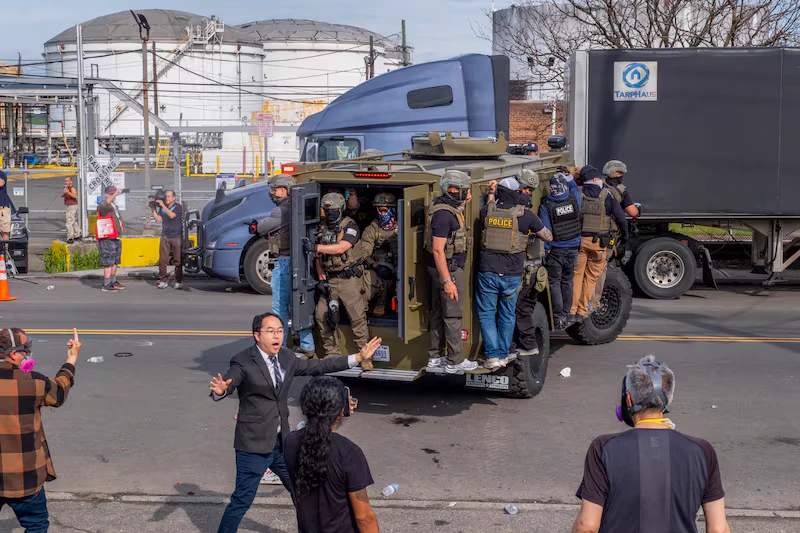
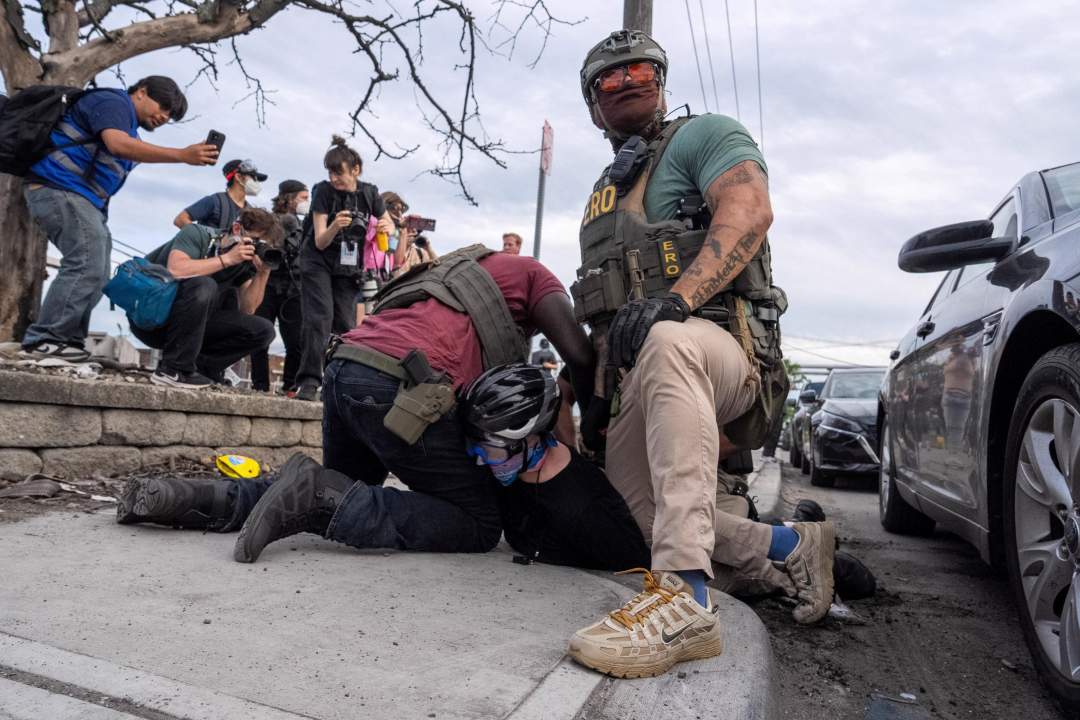
U.S. Sen. Andy Kim (D., N.J.) (center left) attempts to de-escalate tensions between protesters and ICE agents outside Delaney Hall in Newark, N.J., as a hunger strike by immigration detainees there entered its fourth day on Monday.
The Politicians They Let In — and the Ones They Didn't
The battle for access to Delaney Hall has itself become a news story, with ICE turning away elected officials while selectively admitting others. It's a dynamic that has played out before — officials denied entry, others used for photo ops — a pattern of containment and control over who gets to see what the state is doing to people in its custody.
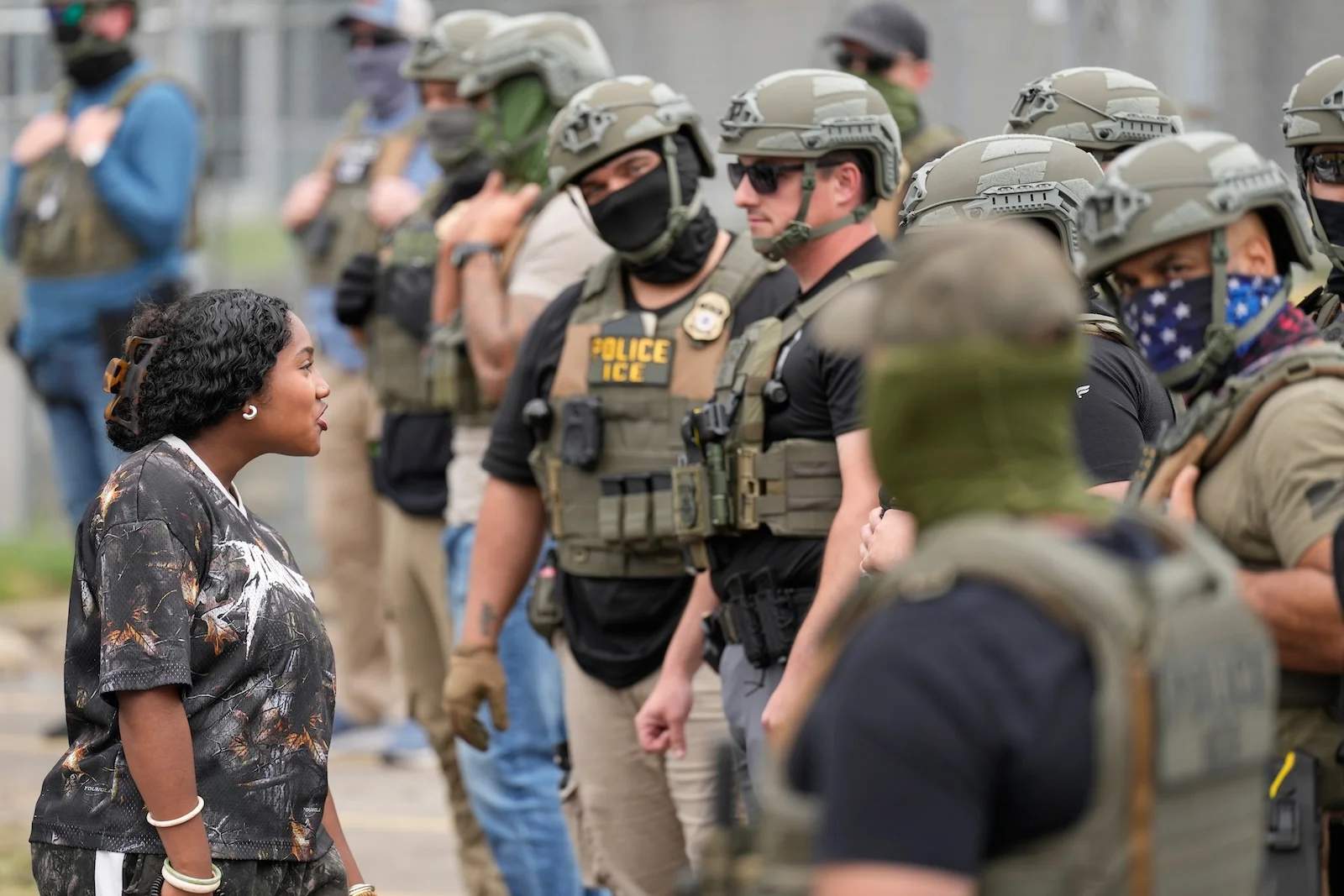
Masked ICE agents form a line outside Delaney Hall during the hunger strike protests
The Lockout
Sunday, May 25 — Rep. Rob Menendez waits 12+ hours
Menendez arrived at Delaney Hall around 8:15 PM to conduct an oversight visit and meet with Martin Soto. He paced in a fenced-in parking lot through the night, occasionally speaking with Soto's pregnant wife Gabriela through the fence. ICE gave shifting reasons for denying entry: the late hour, "security concerns" over protests. Menendez offered every compromise — meeting Soto in an isolated room, speaking over video, even receiving a recorded message. They refused everything.
"The only option is staying here to make sure that at 4:00 in the morning, 5:00 in the morning, they don't try to move him," Menendez said at 2 AM.
At 1 AM, ICE agents suddenly blocked the road outside the back gate to move a caravan of vehicles out of the facility. Protesters rushed to confront them, attempting to block the vehicles with traffic barrels and barricades. Agents responded by shoving protesters onto sidewalks, pepper-spraying at least one person, and leaving another with a leg injury requiring medical attention.
Monday, May 26 — Governor Sherrill and Sen. Kim denied
Governor Mikie Sherrill arrived Monday morning alongside Menendez, Sen. Andy Kim, Rep. Nellie Pou, Rep. LaMonica McIver, and Rep. Analilia Mejia. Sherrill was denied entry — she does not have the legal authority to enter unannounced, but the refusal itself raised questions.
"The fact that she was denied entry is concerning," said Amol Sinha, executive director of the ACLU of New Jersey. "The federal government has denied her repeatedly, and it makes you question, 'What is the federal government trying to hide?'"
Sen. Andy Kim, who had previously visited the facility in his congressional capacity and declared conditions "inhumane," was caught in a cloud of pepper spray during Monday's clashes outside.
Kim is not alone among officials who have put their bodies on the line to bear witness. The Moment Is Too Big For Silence: Veterans Arrested Protesting Iran War documents how veterans and elected officials are increasingly crossing the line from speech to direct action — because the machinery of the state leaves them no other option.
The Surprise Entry
Tuesday, May 27 — NY congressional delegation gets in
The day after New Jersey officials were turned away, Democratic members of Congress from New York City were permitted to tour the facility. They confirmed the worst:
- Detainees being fed small portions of often spoiled food
- Medical needs going ignored
- Dire, inhumane conditions throughout
Wednesday, May 27 — Sen. Cory Booker enters
Sen. Cory Booker posted on social media that he was permitted inside to meet with facility operators and those being held.
"After seeing who is being held and the conditions under which they're detained, I believe most Americans would agree that this facility is a moral stain on our community," Booker wrote. "In fact, the majority of the people we encountered have no criminal charges or the kind of violence or criminality that Donald Trump said he was going to be focusing his attention on."
He demanded Delaney Hall be shut down.
Thursday, May 28 — Health inspectors given limited access
Gov. Sherrill sent the New Jersey Department of Health to conduct an inspection. They were only allowed to inspect a limited portion of the facility. Sherrill called it unacceptable. DHS Secretary Mullin, contradicting the governor, claimed health inspectors had been allowed inside — though details of their findings have not been released.
The Retaliation: Removing Organizers and Cutting Communications
The crackdown inside has been swift and systematic.
Martin Soto — transferred despite court order
On Sunday, Gabriela Soto saw Delaney Hall staff placing her husband in a van heading for the main gate. He was shackled, banging furiously on the van walls. She could see him. She ran. Advocates formed a human chain to block the van. It retreated — temporarily.
By Monday, ICE had transferred Soto to the Elizabeth Detention Center — despite an existing court order preventing his transfer. Amol Sinha of the ACLU confirmed the order had been obtained through Soto's attorney and the U.S. Attorney's office. DHS offered no explanation for violating it.
This is not an isolated pattern. The Courts Said They Were Free. ICE Said They Weren't. documents how ICE has repeatedly ignored judicial orders — re-arresting people a court has ordered released, transferring detainees in defiance of judges, operating as though the judiciary simply does not exist. Delaney Hall is another chapter in that playbook.
"The only reason to remove him to Elizabeth Detention Center is to get him away from the people that he's been around for the last several months, who he's been organizing with to raise awareness of the conditions," Menendez said.
At Elizabeth, Menendez, McIver, and Mejia attempted to meet with Soto. ICE officials refused.
Communication blackout
Following the strike announcement, Delaney Hall staff reportedly removed tablets from housing units — cutting off detainees' primary means of communicating with the outside world. DHS suspended all family visitations, claiming "riots outside the facility" made visits impossible.
Clara Linhares, an 18-year-old from Hillside, said her mother and the women housed with her are all participating in the strike. Detainees who had been communicating conditions to family members via phone and video calls suddenly went silent.
Families threatened
Gabriela Soto was told Delaney Hall would threaten her visitation rights because of her advocacy. Detainees' families say their loved ones have been subjected to pepper spray and physical force in retaliation for the hunger strike and the protests outside.
The Violence Inside: Thursday, May 28
The situation escalated dramatically on Thursday, May 28, when reports emerged of ICE agents attacking hunger strikers inside the facility.
Nedia Morsy, director of Make the Road New Jersey, released a statement saying multiple sources inside confirmed ICE agents were "violently beating the hunger strikers."
"Someone will be killed if no one intervenes and shuts this down," Morsy said. "These masked agents are acting as if they're above the law. This is a modern-day concentration camp, and history will not forgive silence in this moment."
Resistencia en Accion, another immigrant rights group, released a statement:
"Reports at approximately 1:40 PM reveal that ICE agents attacked the hunger strikers inside with batons and tear gas. Family members outside received calls from inside, confirming that there were people screaming, and according to their loved ones inside, unconscious detainees and blood on surfaces."
DHS acknowledged an "incident" but claimed staff used "the minimum amount of force to safely deescalate the situation" following a "physical altercation involving detainees." All affected detainees were "promptly evaluated by on-site medical personnel and cleared with no serious injuries," according to the department.
Families who received panicked phone calls from inside tell a different story.
The scene inside was mirrored by intensifying clashes on the streets outside. The Siege of Delaney Hall chronicles how protesters faced pepper spray, batons, and Taser fire from ICE agents in tactical gear — including the pepper-spraying of a sitting U.S. senator.
The Denial Machine
The Trump administration's response to the crisis at Delaney Hall has followed a familiar playbook: deny everything, attack the messengers, and redirect the narrative.
What DHS claims:
- "There is NO hunger strike at Delaney Hall"
- "There are no subprime conditions"
- All detainees receive three meals daily, "evaluated by certified dietitians"
- Clean water, clothing, bedding, showers, soap, and toiletries provided
- "Comprehensive medical care" including 24-hour emergency response
- Phone access for family and legal communication
- "ICE has higher detention standards than most U.S. prisons that hold actual U.S. citizens"
What multiple independent sources — released detainees, family members, congressional visitors, advocacy organizations — confirm:
- Spoiled food containing worms
- No air conditioning, poor ventilation
- Untreated illnesses spreading through the facility
- Denied or delayed medical care, including for pregnant women
- Miscarriage without medical support
- Communication blackouts and suspended visitation
- Physical retaliation against strikers
- Transfer of organizers in violation of court orders
Mullin called the visits by Democratic officials "a political stunt by New Jersey sanctuary politicians for fundraising clicks." He accused them of "peddling falsehoods" and "spreading smears about ICE law enforcement."
The man overseeing this denial is part of a broader rot at the top of the Justice Department. Acting Attorney General Todd Blanche — profiled in Todd Blanche: The Pedophile Protector Running the Justice Department — has used his office not to investigate the credible allegations pouring out of Delaney Hall, but to post photos of officer injuries on social media and threaten protesters with federal charges.
Seton Hall University law professor Lori Nessel, who directs the Immigrants' Rights Clinic and works directly with detainees, called the DHS characterizations of detainees as "the worst of the worst criminal illegal aliens" completely false.
"This is the myth that the administration constantly tries to perpetuate about Delaney, about any other detention centers," Nessel said. Over 70% of immigrants detained do not have criminal convictions, according to verified data.
The criminalization extends beyond the facility walls. The Liberal Handbrake Slips: Why 11 Mainstream Protesters Crossing the Line Matters examines how the state is steadily expanding the definition of "criminal" to encompass anyone who dissents — from mainstream protesters to families standing outside a detention center asking to see their loved ones.
The Facility They Weren't Supposed to Have
Delaney Hall's very existence is the result of a legal battle that overturned New Jersey's democratic will.
In 2021, New Jersey passed a law banning the use of privately-owned facilities for immigration detention. The private prison industry sued, with support from the Biden administration. The law was struck down. ICE entered into the 15-year contract with GEO Group, estimated at $1 billion, and reopened Delaney Hall — which had been operating as a halfway house until its closure in 2023.
The city of Newark filed a lawsuit in April 2025 alleging GEO Group opened the facility without necessary permits and inspections. The case was sent to mediation, with a deadline of June 15, 2026.
In May 2025, Newark Mayor Ras Baraka was arrested outside the facility for requesting entry. The charges were later dropped. Rep. LaMonica McIver was charged with assaulting officers during Baraka's arrest — charges she has denounced as politically motivated.
In June 2025, detainees pushed down a wall inside the facility and four people escaped during an uprising over conditions. In December 2025, a Haitian man died in custody.
Now, a year later, hundreds are starving themselves rather than endure another day. And the federal government's response is to say it isn't happening.
What the Strike Demands
The hunger strikers' demands are not radical. They are the bare minimum of human decency:
- Improved food — edible, nutritious, without worms or spoilage
- Functional ventilation and air conditioning
- Adequate medical care — including for pregnant women
- Due process — immigration judges attending to their cases, bonds being considered fairly
- The release of detainees who have no criminal record and are being held without justification
- An end to retaliation against those who speak out
The strike will continue, Luis said, until Governor Sherrill is permitted inside to meet with detainees.
"If this is what federal agents are willing to do to the public, what are they doing to the people they have in detention?" asked Torres.
It's a question that should keep every American awake.
Sources & Methodology(12 sources)
- TIME — What to Know About Delaney Hall ProtestsNews Article
- WHYY — Escalating Violence at Delaney HallNews Article
- CBS New York — Dueling Rallies at Delaney HallNews Article
- ABC7 New York — State Police Set Up Protest ZoneNews Article
- NBC New York — Protesters Clash with ICE AgentsNews Article
- CNN — Flashpoints and Fury at NJ ICE FacilityNews Article
Methodology
Reported using open-source intelligence including on-scene reporting from The Guardian, Gothamist, CBS New York, WHYY, CNN, ABC7, NBC, TIME, The Independent, and the American Immigration Council. Congressional statements from Sen. Andy Kim, Sen. Cory Booker, Rep. Rob Menendez, and Gov. Mikie Sherrill. Advocacy organizations including ACLU-NJ, Make the Road New Jersey, and the New Jersey Alliance for Immigrant Justice. DHS official statements. Reporting period: May 23–30, 2026.
Filed Under
Frequently Asked Questions
- What is Delaney Hall?
- Delaney Hall is a 1,000-bed immigration detention center in Newark, New Jersey, operated by the private prison company GEO Group under a 15-year, approximately $1 billion contract with ICE. It reopened in May 2025 after operating as a halfway house until its closure in 2023.
- What are the detainees demanding?
- The hunger strikers are demanding improved food, functional ventilation and air conditioning, adequate medical care including for pregnant women, due process for their immigration cases, the release of detainees without criminal records, and an end to retaliation against those who speak out.
- Who has been denied access to the facility?
- New Jersey Governor Mikie Sherrill was denied entry on Monday, May 26. Rep. Rob Menendez waited over 12 hours and was refused. State health inspectors were given only limited access on Thursday. However, a NY congressional delegation and Sen. Cory Booker were permitted to enter on Tuesday and Wednesday.
- What has the Trump administration's response been?
- DHS Secretary Markwayne Mullin has denied that a hunger strike is occurring and claimed there are 'no subprime conditions.' He called Democratic officials' visits 'political stunts' and accused them of 'spreading smears.' ICE has transferred strike organizers in violation of court orders and cut off family visitation.
- What happened on May 28 inside the facility?
- Multiple advocacy organizations reported that ICE agents attacked hunger-striking detainees with batons and tear gas. Family members received phone calls from inside reporting screaming, unconscious detainees, and blood on surfaces. DHS acknowledged an 'incident' but claimed minimum force was used and no serious injuries occurred.