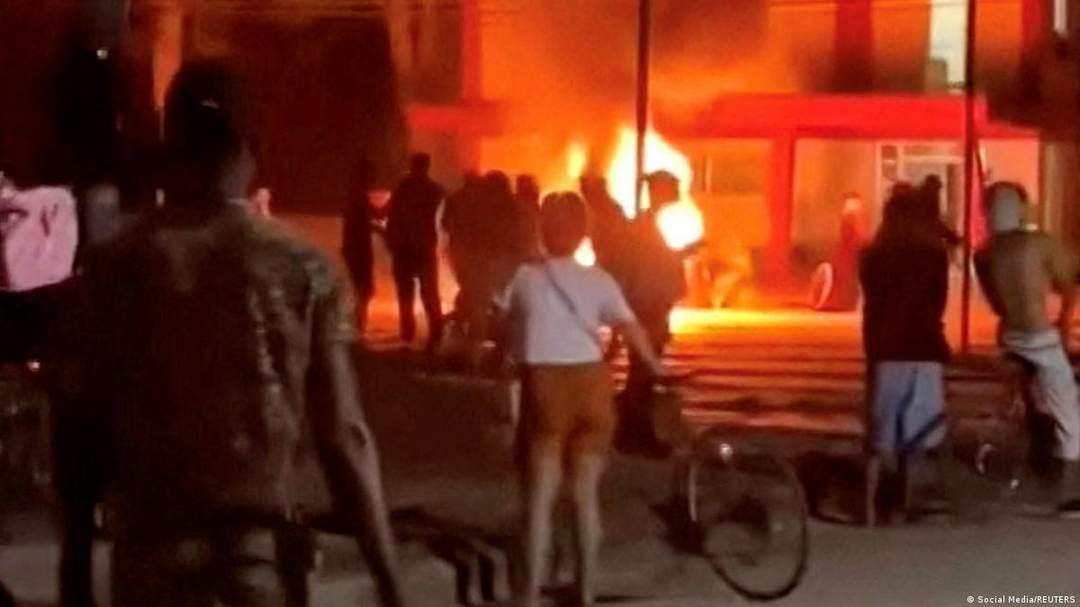
While the world's attention is fixed on other crises, a revolution has been unfolding in the mountains of Pakistan-administered Kashmir — and the state is killing people to keep it quiet. For over a month, hundreds of thousands of Kashmiris have brought their homeland to a grinding halt in a mass movement that has defied bullets, blockades, and every instrument of state terror the Pakistani establishment can deploy. The media is barely covering it. The state has shut down the internet. And the bodies keep piling up.
A Movement Born From Betrayal
The Jammu Kashmir Joint Awami Action Committee (JAAC) is not a fringe group — it is a broad civil society coalition representing trade bodies, religious organizations, and community groups across Azad Jammu and Kashmir. Their demands are basic: subsidized electricity, affordable flour, an end to the corruption that has enriched a political class living at public expense, and the abolition of 12 reserved legislative seats for refugees that effectively allow Pakistan's political parties to rig the region's elections from Islamabad.
These are not radical demands. They are the minimum conditions for human dignity. And for three years, the governments of both Azad Kashmir and Pakistan have formally accepted them — only to refuse implementation once the protests dispersed.
This time, the JAAC called a long march to Muzaffarabad scheduled for June 9th. They would not be fooled again.
The Funeral Massacre
Four days before the march, on June 5th, the state made its move. The AJK government declared the JAAC a terrorist organization and banned it under anti-terror laws — the same playbook used by every authoritarian regime that fears its own people. That same day, police at a checkpoint near Rawalakot attempted to assassinate Sardar Umar Nazir, one of the movement's central leaders. The bullet grazed his ear. Shahzeb Habib, a longtime activist driving his car, was killed.
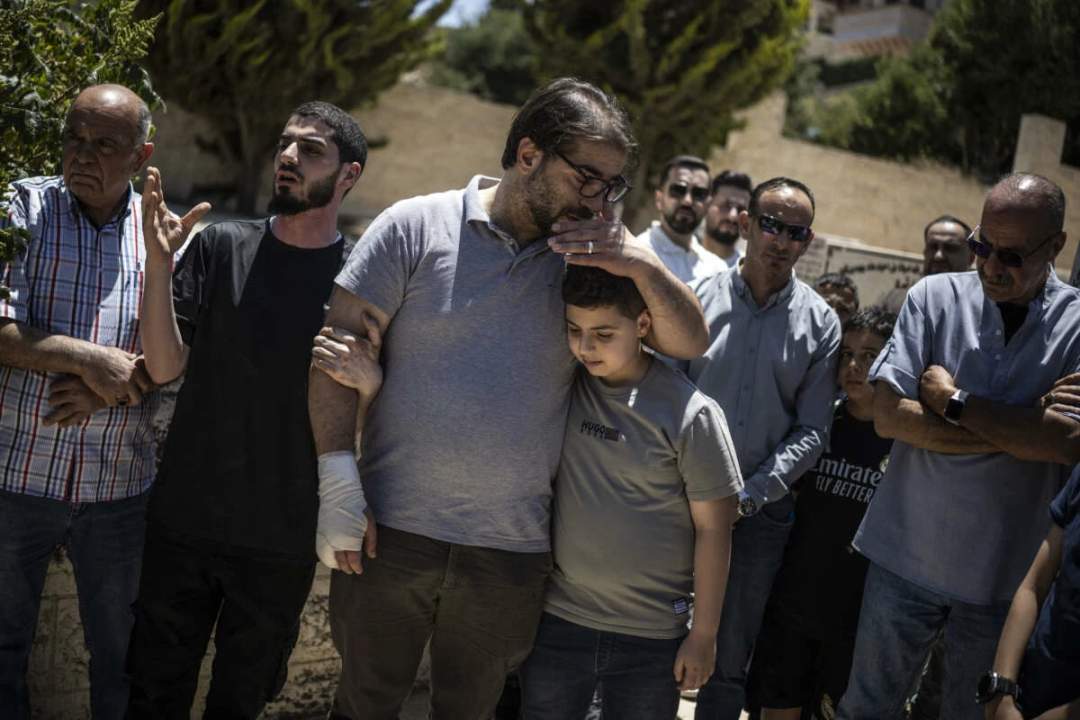
That night, thousands gathered for Shahzeb Habib's funeral in Rawalakot. What happened next should haunt every conscience. Paramilitary forces — Pakistan Rangers, Punjab Constabulary, and Frontier Constabulary — opened indiscriminate fire on the mourners. Official figures claim 11 dead. Multiple reports from the ground suggest the number exceeds 100.
Then, in a practice that has become the gruesome signature of this crackdown, authorities seized the dead bodies and dumped them at undisclosed locations. Families who went to hospitals to retrieve their loved ones were told to sign papers declaring the deceased a terrorist — only to be informed the body had already been buried somewhere unknown. This is not counterinsurgency. This is disappearances. This is state terror.
The pattern bears an ugly familiarity. As we have documented in our reporting on Gaza, where Israel has systematically confiscated Palestinian bodies as a weapon of psychological warfare, the theft of dead bodies is a calculated tactic — designed to compound grief with uncertainty, to deny families closure, to erase the evidence of state violence.
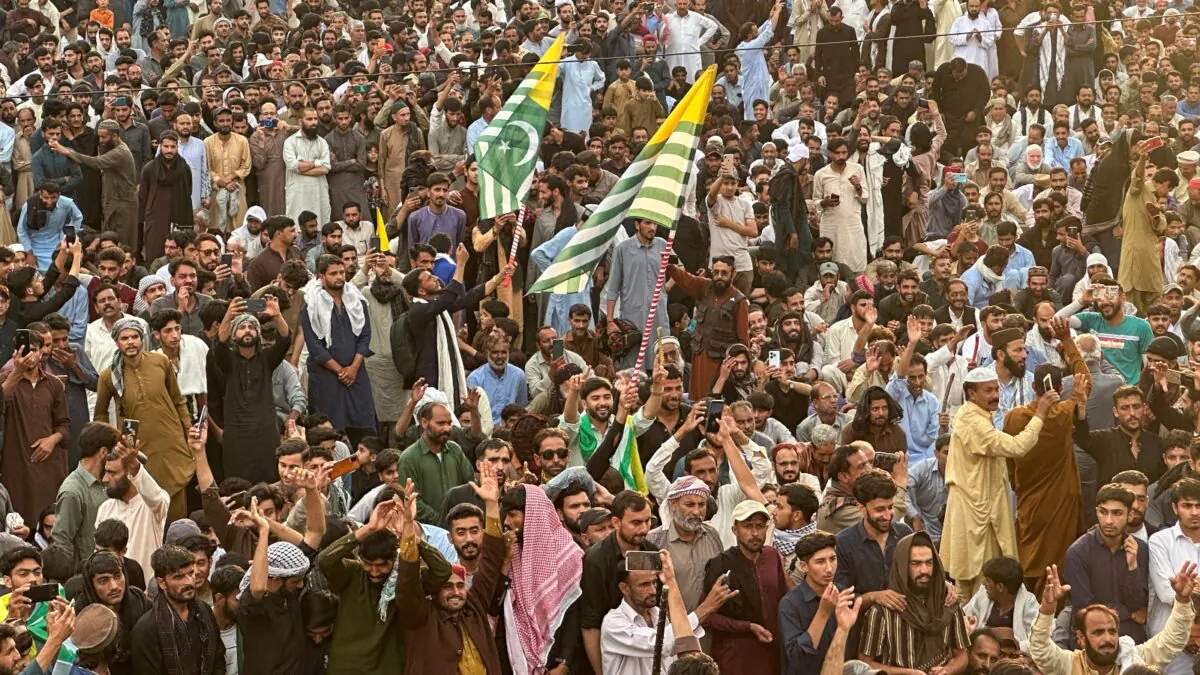
Thousands of Kashmiri JAAC supporters gathered at a mass sit-in during the historic long march in Azad Kashmir
The Long March and the People's Blockade
Despite the massacre, the long march began on June 9th as planned. Caravans from across Azad Kashmir fought pitched battles against security forces at multiple points. In Kotli, at least six people were killed when forces opened fire on a gathering. When people rushed the injured to the hospital, security forces followed them inside and opened fire again — killing and wounding more people, including women.
This is the reality of the "counter-terrorism" operation Pakistan is running against its own population. They are shooting people in hospitals.
At several other locations, similar battles erupted. Yet tens of thousands reached the outskirts of Rawalakot and established a sit-in at Darek. The movement declared they would not leave until all security forces withdrew and all measures against the JAAC were rescinded.
What followed was something the Pakistani state has never faced in Azad Kashmir: a total popular shutdown. All activity across the region came to a halt. No traffic on the roads. Every shop, every office, closed. A general strike that has continued uninterrupted for over a month — defying every threat, every threat of consequence, every attempt to starve people back into submission.
The protesters also did something remarkable: they closed every entry point from Pakistan into Azad Kashmir. The state, unable to force them open, responded with its own blockade — cutting off food, medicine, and essential supplies to the region's four million people. The same collective punishment Israel uses against Gaza, applied by Pakistan against Kashmiris. The parallels are no accident. They are the universal language of states that view occupied populations as hostages.
Women on the Front Lines
From June 14th onward, something shifted. Thousands of women began joining the protests in cities across Azad Kashmir, and they reached the main sit-in at Darek in waves. Their speeches were among the most militant of the entire movement — women openly declaring their willingness to die for this struggle, their readiness to fight state brutality head-on.
This is not a footnote. In a region where conservative social norms have historically limited women's public political participation, the sight of thousands of women flooding into a sit-in that the state has already tried to crush with live ammunition is transformative. The Pakistani state's reliance on patriarchal structures to maintain control has been dealt a devastating blow.
Comrade Hina Zain of the Inqalabi Communist Party addressed the massive gathering, telling the crowd that the working class of Pakistan and the world stands with them — that their victory would be a victory for workers everywhere.
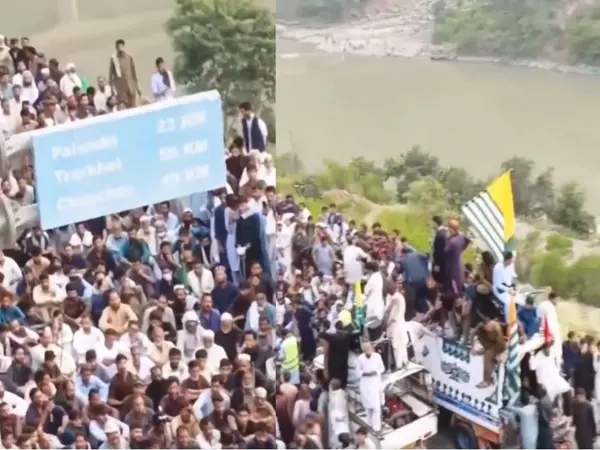
Kashmiri protesters demonstrate during intensifying protests in Pakistan-administered Kashmir
The July 5th Uprising and the Point of No Return
On July 3rd, in the dead of night, the state launched its most ambitious assault yet. Thousands of security personnel, backed by dozens of armored vehicles, marched from Rawalakot toward the sit-in at Darek. The goal was clear: smash the movement in a single overwhelming blow.
The activists felled trees across the roads. The armored column, unable to advance, was forced to retreat. But on the way back, security forces fired their weapons into the air for over an hour.
Here is what happened next, and it tells you everything about the character of this movement: people sleeping in the surrounding areas, hearing the gunfire, did not flee. They ran toward the sit-in to defend it. One hundred thousand people in a month-long encampment heard a state army trying to slaughter them and they ran to meet it.
On July 5th, the response came. Hundreds of thousands poured into the streets across Azad Kashmir for mass protests and sit-ins. In Dadyal alone, more than 150,000 people gathered at the main sit-in — the speeches were the most radical of the entire month. Everyone present vowed to fight to the end.
In the clashes that followed, dozens more were killed. Reports say an infant was shot dead in his mother's arms during a protest in Mirpur. A longtime activist was killed. In Muzaffarabad, heavy fighting erupted. Shaukat Nawaz Mir, a central JAAC leader, was arrested and disappeared — his whereabouts remain unknown.
The State's Desperation
The Pakistani state has exhausted its playbook. Political propaganda hasn't worked — every mainstream politician and media personality has spent weeks denouncing the movement, calling it an Indian conspiracy, offering "evidence" of RAW funding that grows more absurd by the day. The JAAC has been offered a bounty of Rs. 10 million on its four central leaders. Sham elections have been announced for July 27th, despite the JAAC's prior demand that electoral reforms be implemented before any vote.
None of it has broken the movement.
What it has broken is the ideological foundation of Pakistani claims to be the defender of Kashmiri rights. For seven decades, Pakistan has positioned itself as the champion of Kashmiris suffering under Indian occupation. Now, the Pakistani state is deploying pellet guns against protesters in Rawalakot — the same weapons Pakistan condemned India for using in Srinagar in 2019. Activists in Indian-occupied Kashmir, once labeled "pro-Pakistan," have publicly condemned Pakistan's brutality.
The same colonial logic that drives state violence against protest movements worldwide — from Standing Rock to BLM demonstrations to anti-genocide encampments — is at work here. The state does not negotiate with movements that threaten its power. It tries to destroy them.
Which Way Forward?
This movement has reached its decisive moment. The Pakistani state has thrown everything it has at the people of Azad Kashmir and failed. The question now is whether the JAAC leadership will seize the initiative or hesitate at the threshold of power.
The masses are pushing forward. They want the leadership to march on Rawalakot, confront the security forces, and take the city. From there, Muzaffarabad. The JAAC already commands the popular legitimacy to form a government — but it has not yet announced it. The leadership pleads for peaceful negotiation. The state responds with bullets, disappearances, and body snatching.
There is no negotiation to be had. The state has demonstrated, with absolute clarity, that it will massacre mourners at funerals, shoot people inside hospitals, steal corpses, blockade an entire population, and label four million people terrorists before granting them the right to affordable electricity.
If the movement retreats now, the reprisals will be catastrophic. Houses of activists are already being raided and bulldozed. Women in those homes are being humiliated. Bounties are posted on leaders. If the sit-in dissolves without winning, hundreds will be killed and thousands imprisoned on terrorism charges.
The only path forward is to march. To enter Rawalakot at the head of hundreds of thousands, to take the city, to announce a people's government, and to declare free healthcare, education for all, employment for all, and universal pensions — the very measures that would draw the overwhelming support of Pakistan's working class and change the political equation across the entire country.
The people of Azad Kashmir have shown they are willing to die for this. The question is whether their leadership is willing to lead.
Solidarity From Afar
On July 5th, an estimated 10,000 members of the Kashmiri diaspora gathered in London, marching from Parliament Square to the Pakistan High Commission. Trade unionists, MPs, and activists of Kashmiri origin joined in solidarity. Similar diaspora mobilizations have occurred worldwide. Brazilian deputies have called for solidarity with the JAAC. Amnesty International has condemned Pakistan's actions as a "grave deterioration of fundamental rights."
The Kashmiri diaspora has demonstrated that this is not a local grievance. This is a people's movement against colonial-style domination, and it deserves the support of every person who believes in self-determination.
The Inqalabi Communist Party — our comrades — are on the ground in Azad Kashmir, organizing logistics, facing the same state brutality, and taking the message of revolutionary struggle to the people. They have called for international solidarity.
We answer that call. The people of Azad Kashmir are fighting the same fight as every oppressed people on this planet: the fight to be treated as human beings, to have their basic needs met, to govern themselves, and to live free from the terror of states that claim to represent them while murdering them in the streets.
Forward to victory in Azad Kashmir. The world is watching — even if its media isn't reporting it.
Sources & Methodology(8 sources)
- Inqilabi Communist Party — Kashmir Revolution VideoVideo / Audio
- News18 — JAAC Writes to Pak PM Seeking ActionNews Article
- Republic World — Violence Escalates in PoKNews Article
Methodology
Reported using a combination of firsthand video documentation from the Inqilabi Communist Party on the ground, detailed reporting from Marxist.com, Frontline (The Hindu), Countercurrents, Kashmir Times, and wire sources including News18 and Republic World. Claims of state violence cross-referenced across at least 4 independent sources. Diaspora reporting and Amnesty International condemnation used for additional verification.
Filed Under
Frequently Asked Questions
- What is the JAAC?
- The Jammu Kashmir Joint Awami Action Committee (JAAC) is a broad civil society coalition in Azad Jammu and Kashmir representing trade bodies, religious organizations, and community groups. It has been leading mass protests for subsidized electricity, affordable food, and political reforms since 2023.
- Why did the protests escalate in June 2026?
- The JAAC announced a long march to Muzaffarabad for June 9th. Days before, the government banned the JAAC as a terrorist organization. Security forces shot a JAAC leader and opened fire on a funeral gathering, killing dozens. The massacre triggered the ongoing mass uprising.
- How has the Pakistani state responded?
- Pakistan has deployed paramilitary forces, imposed internet blackouts, issued bounties on JAAC leaders, seized dead bodies, blocked food and medicine supplies, and used live ammunition — including firing inside hospitals and at funerals. Amnesty International condemned the 'grave deterioration of fundamental rights.'
- How long has the general strike lasted?
- A total shutdown across Azad Kashmir has continued since June 9th — over a month of no traffic, closed shops and offices, and a population-wide strike that the state has been unable to break despite threats, coercion, and a blockade of essential supplies.
- What are the JAAC's demands?
- Subsidized electricity, affordable flour, abolition of 12 reserved legislative seats that allow Pakistan's political parties to rig elections from Islamabad, restoration of political and economic rights, and an end to corruption among government officials living at public expense.