- Twenty-six days.
- No video.
- No press conference.
- No photograph.
- No public statement in his own voice.
Just the word of three Republican loyalists and an office that says he's "continuing to improve." However we have seen his health declining for years now. So improving is not the best term overall.
Mitch McConnell, the longest-serving party leader in Senate history, has vanished from public life. And the American political system — the one he spent decades bending to his will — is pretending everything is fine.
It's not fine. After 40 years of corruption, this is McConnell's final ratfuck, and the Senate seat is the hostage.
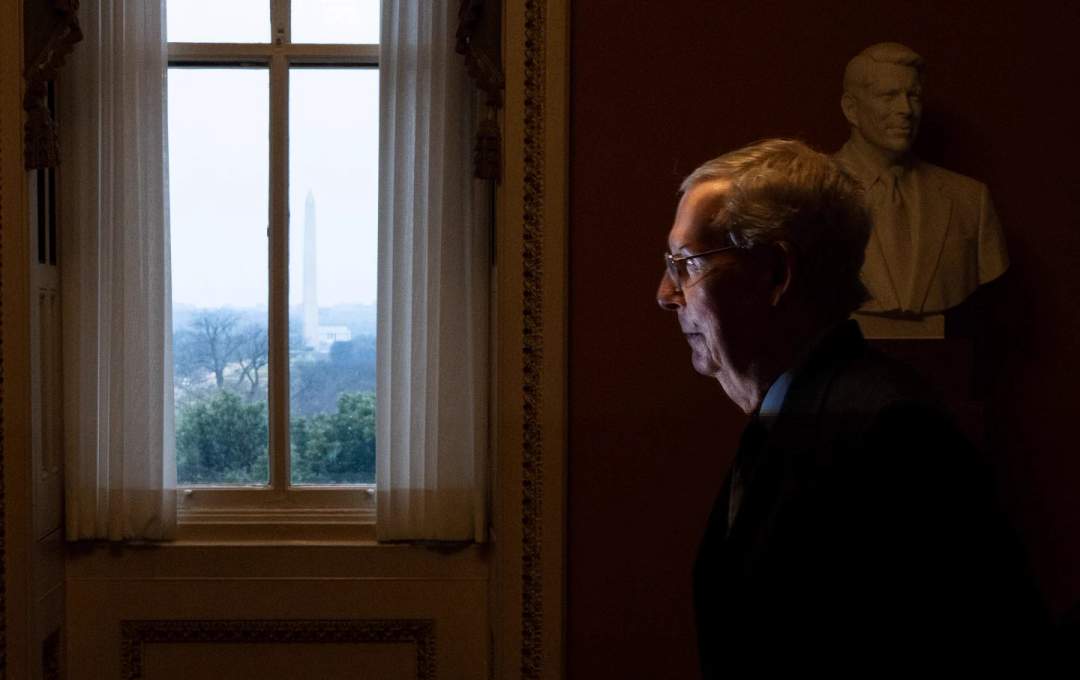
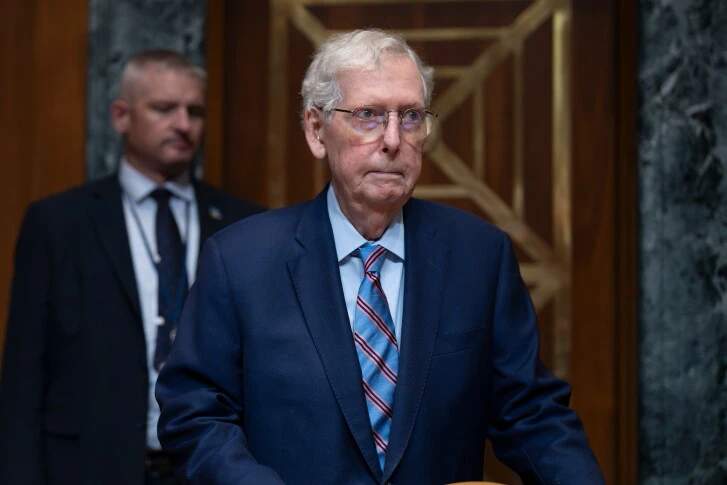
Mitch McConnell arriving at a Senate hearing at the U.S. Capitol
The 911 Tape Tells a Different Story
On June 14, emergency dispatch audio obtained by NBC News, WLKY, and multiple other outlets revealed what actually happened at McConnell's Washington, D.C. home that morning. A dispatcher can be heard reporting a "cardiac arrest" at his address. A paramedic radios in: "CPR in progress." An "unconscious person." Advanced life support dispatched to the caller's own home.
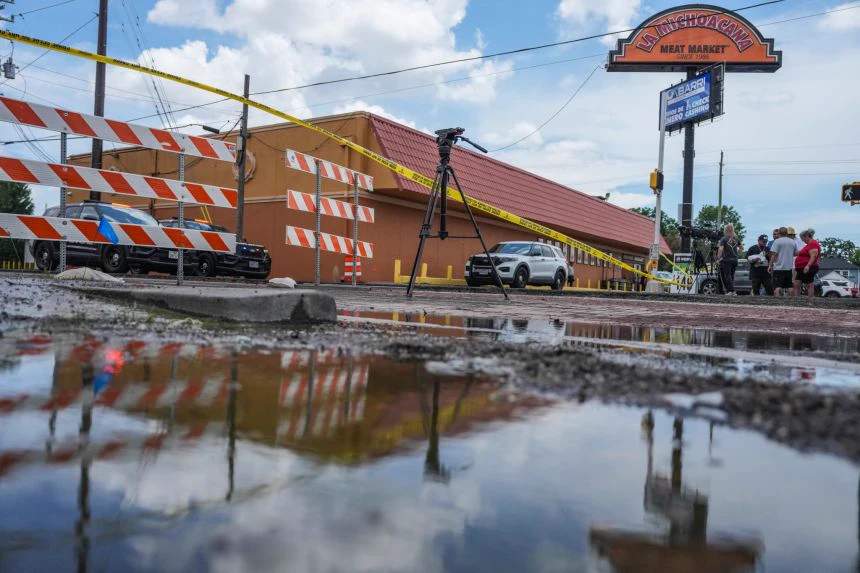
Four days later, CNN released neighbor video showing a person on a stretcher being loaded into an ambulance outside McConnell's house. The footage, shot the morning of June 14, shows no identifying features — just a body, a stretcher, and an ambulance driving away. In the back of the ambulance an orange vinyl bag can be seen. Speculators online believe this to be a body bag, however it is likely a quick deploy kit that is both used to carry equipment and to move people(or bodies) down something like a steep stairwell.
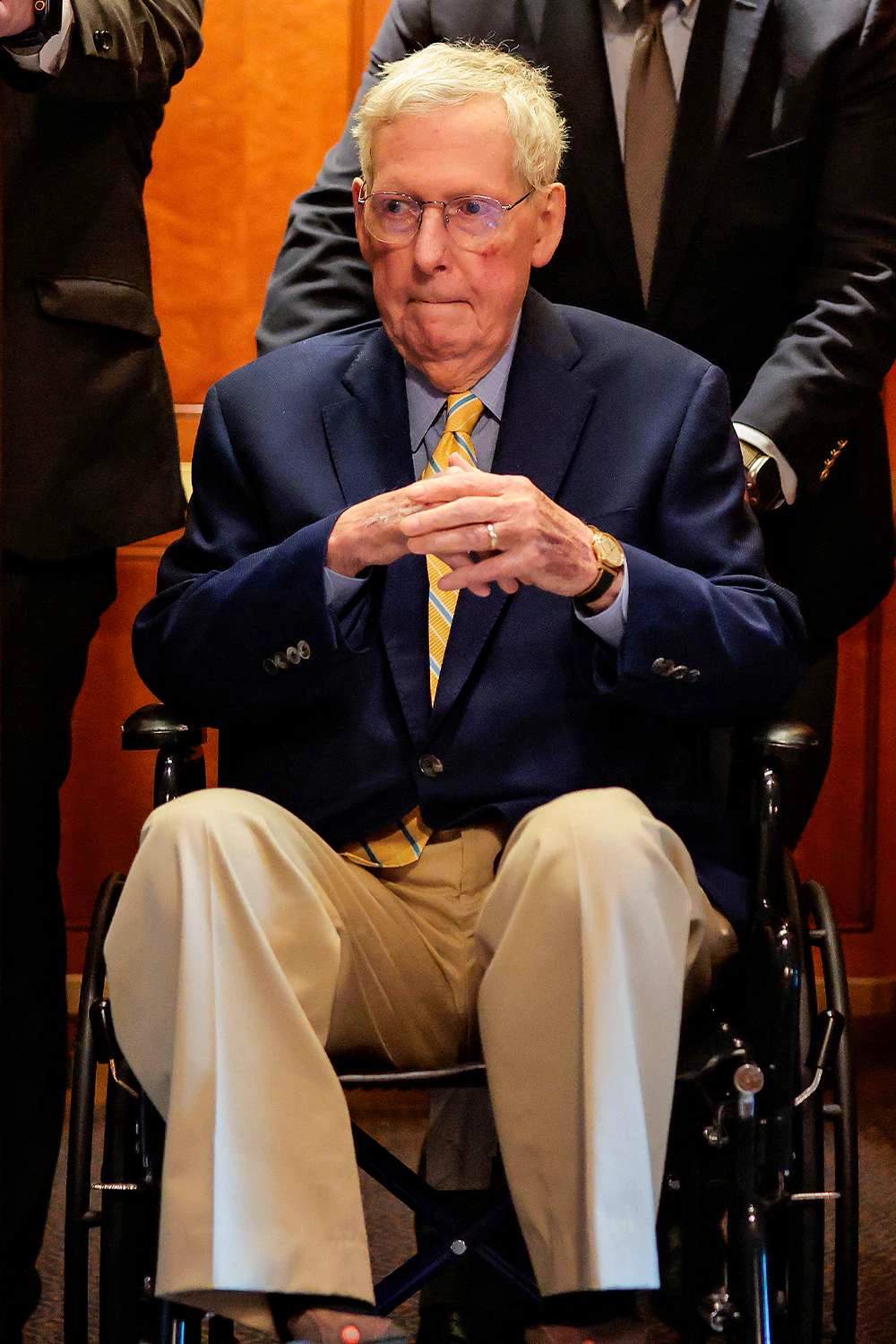
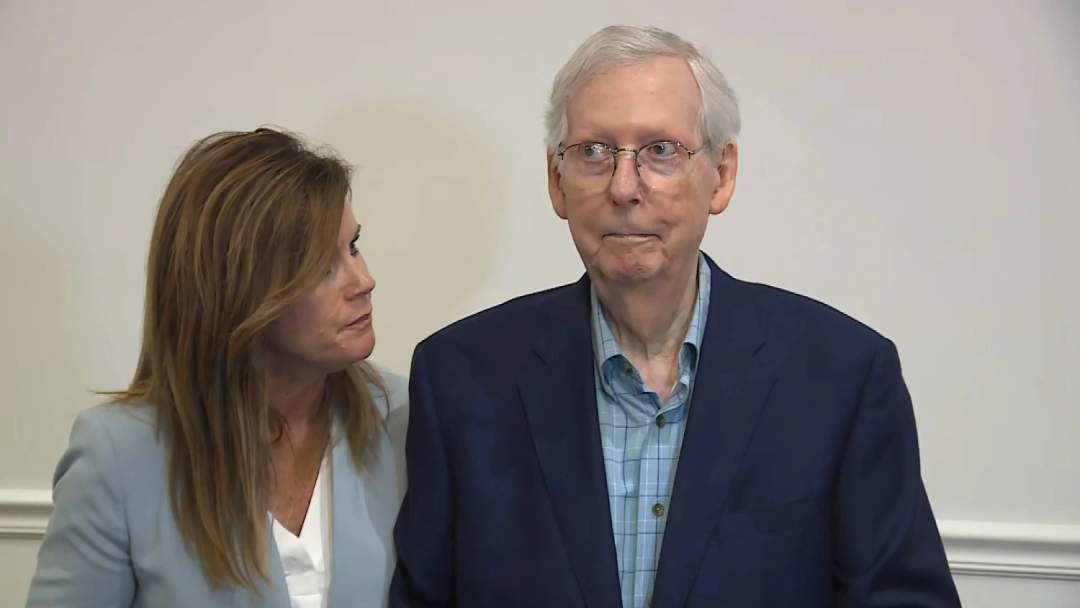
McConnell's office has neither confirmed nor denied any of it. They have refused to disclose the nature of his illness. They have refused to explain why an 84-year-old senator who suffered cardiac arrest with CPR in progress remains hospitalized nearly a month later. They have refused to release any independent verification that he is alive, conscious, or capable of fulfilling the duties of his office.
Malcolm Nance, a former military EMT and career counter-terrorism intelligence officer, listened to the 911 audio and drew a blunt conclusion on the Truth in the Barrel podcast: "I think he's dead." As Nance explained, the survival probability for an 84-year-old who requires CPR after cardiac arrest is, in his medical experience, "very, very, very small."
We don't know if Nance is right. We don't know anything. That's the point. That is exactly what the GOP wants. We support Nance in this call. McConnell is dead, and the GOP is desperate to keep that quite.
"Proof of Life" by Phone Call
The Republican establishment's response to the mounting crisis has been to offer exactly the kind of assurance that proves nothing. Senate Majority Leader John Thune, Senate Republican Whip John Barrasso, and former McConnell aide Scott Jennings all went public within hours of each other to say they had spoken with McConnell on the phone. Detailed conversations, they claimed. Twenty minutes each. He's alert, they said. He's engaged.
Three men with deep political incentives to maintain the status quo, offering unverifiable claims about phone calls with a man the public has not seen in nearly a month. This is not proof of life. This is a chain of custody that no serious journalist would accept.
Even Donald Trump, when asked aboard Air Force One how McConnell was doing, replied: "I have no idea how he's doing." If the president doesn't know, the public is being asked to trust a political machine that has spent decades manufacturing consent.

The United States Senate chamber
The Power Vacuum They're Hiding
The question isn't just whether McConnell is alive. The question is who benefits from the uncertainty — and the answer is the same Republican apparatus he built.
The GOP holds the Senate by the narrowest of margins: 53 to 47. McConnell chairs the Senate Rules Committee and the Defense Appropriations Subcommittee, where Republicans hold a one-seat advantage. His absence directly weakens their ability to pass defense spending, national security legislation, and government funding bills ahead of the October 1 shutdown deadline.
But the vacancy question is where the real leverage lives.
Kentucky's Republican-controlled legislature rewrote the state's Senate succession law in 2024, stripping Democratic Governor Andy Beshear of the power to appoint a temporary replacement. They overrode Beshear's veto specifically to prevent a scenario where a Democratic governor could fill a Republican Senate seat — even briefly, even pending a special election.
Under the new law, if McConnell's seat becomes vacant, the seat remains empty until a special election winner is certified. The earliest possible special election outside the November general would be September 15 — and the practical deadline to fold a special election into the November ballot is September 1. That leaves a window of approximately seven weeks before the opportunity to fill the seat through special election effectively closes, and Kentucky voters simply choose his permanent successor in the regular November election.
Every day McConnell's office refuses to provide proof of life, that clock keeps ticking. Every day the seat stays occupied by a ghost, the GOP avoids the chaos of a vacancy — and avoids the unpredictable outcome of a special election, which political scientists warn tends to produce "outcomes at odds with the overall orientation of the state's electorate," according to University of Kentucky professor Stephen Voss.
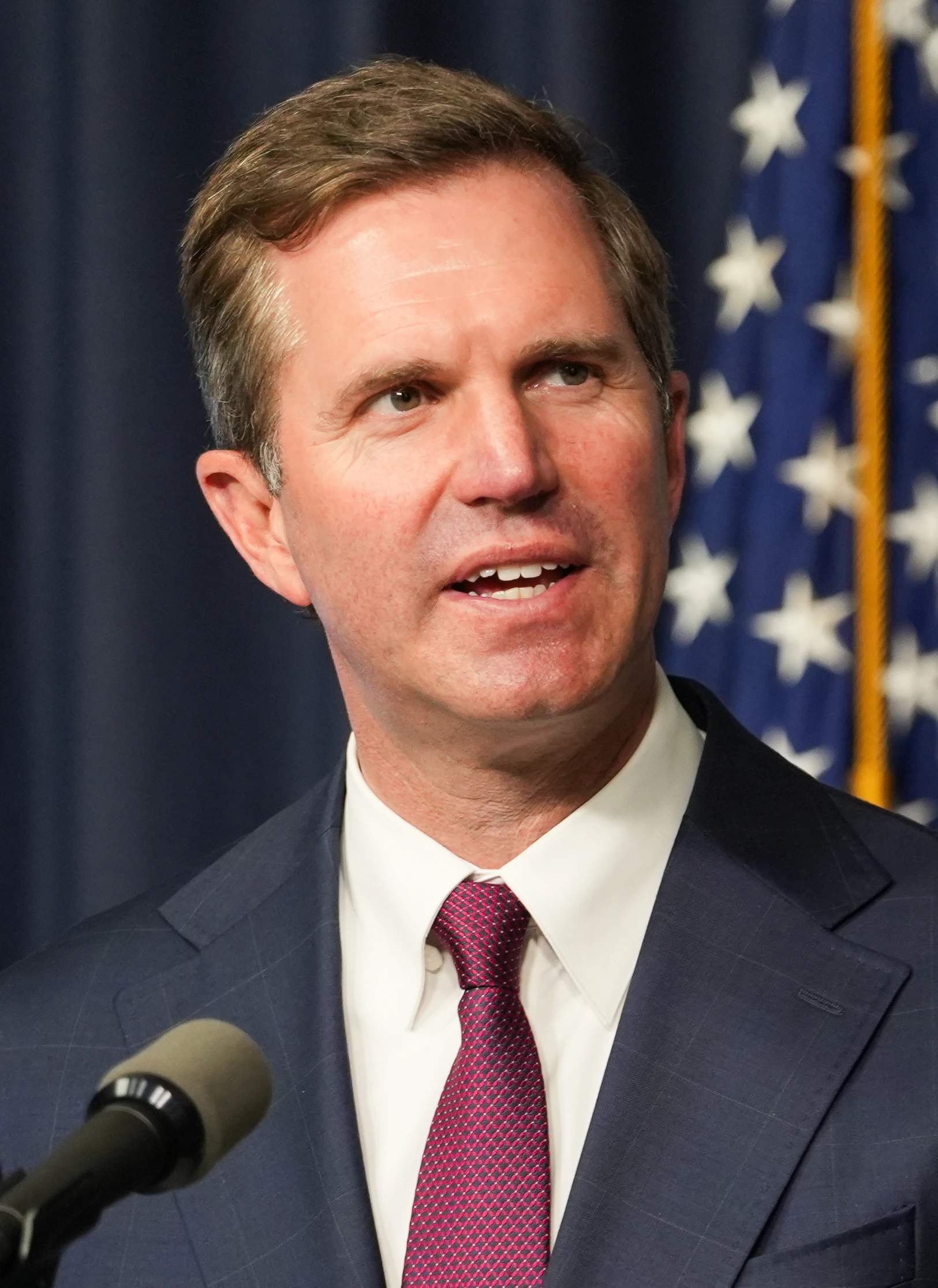
Kentucky Governor Andy Beshear
Beshear Breaks the Silence
On July 8, Governor Andy Beshear broke ranks with the national Democratic establishment's quiet tolerance of the situation. In a public letter to McConnell's office, Beshear wrote that Kentuckians had grown "increasingly concerned" about both McConnell's health and "ability to hold office."
"As public officeholders, we have made a commitment to our constituents to do our best to represent them and to always be transparent," Beshear wrote. "I believe this requires clear communication about one's ability to serve."
Beshear's intervention matters because it moves the question from online speculation into official government correspondence. A sitting governor is now on record demanding a health update that McConnell's office has not provided. His own office, Beshear noted, has been "peppered with questions."
But where are the rest of the Democrats? Where is the Senate Democratic caucus demanding answers? Where is Chuck Schumer calling for transparency? The silence from the Democratic leadership is almost as damning as the cover-up itself — a political class that has normalized the disappearance of its own institutional adversary because confronting it would mean confronting the fragility of a system that serves all of them.
The Machine McConnell Built
This is not a new play. It is the play that defined Mitch McConnell's entire career — the weaponization of institutional procedure to hold power by any means necessary.
He held Antonin Scalia's Supreme Court seat open for 293 days after Scalia died in February 2016, refusing to hold hearings on Merrick Garland on the grounds that "the American people should have a voice" in the selection. Then, when Ruth Bader Ginsburg died 41 days before the 2020 election, McConnell rammed Amy Coney Barrett's confirmation through the Senate in 38 days. The people's voice, it turned out, only mattered when it served the Republican agenda.
He has blocked voting rights legislation, gutted campaign finance rules, packed courts, and systematically dismantled democratic norms — all while presenting himself as an institutionalist who merely follows the rules he himself wrote.
Now the rules he didn't write — the ones about death, vacancy, and succession — are threatening to undo the grip he maintained. And so the machine he built is doing what it was designed to do: protecting itself.
The SAVE Act Wildcard
The vacancy calculus is further complicated by the SAVE America Act, Trump's signature voter suppression legislation. McConnell has been one of the key Republican "no" votes against the bill, joining Democrats to block it in April and June. His absence from the Senate removes one of the obstacles to the bill's passage — meaning that even if McConnell is alive but incapacitated, the GOP benefits from his disappearance in this specific legislative fight.
Senate Republicans are now pursuing the SAVE Act through reconciliation, which requires only a simple majority. McConnell's absence removes one of the key "no" votes that had previously blocked the bill when it required 60 votes. The man who built his career on procedural obstruction has, in his absence, become the enabler of the very agenda he sought to slow.
What the Constitution Doesn't Cover
Here is the terrifying structural reality: there is no constitutional mechanism to remove an incapacitated senator who refuses to step aside. The 25th Amendment provides a process for the presidency. The Constitution is silent on the question of a senator who is medically unable to serve but whose staff refuses to acknowledge it.
Senate rules do not permit proxy voting. If McConnell is alive but incapacitated, Republicans simply lose one vote every time legislation comes to the floor. If he is dead and his staff is covering it up, they are maintaining the illusion of a full Republican caucus — 53 votes on paper, 52 in reality, and no way for the American people to know the difference.
Reed Galen, president of the pro-democracy coalition JoinTheUnion.us, compared the situation to the final months of Dianne Feinstein's life, when staff effectively made decisions on behalf of a senator the public rarely saw. "These are all people with pretty significant political equities of their own," Galen told The Guardian. "We saw this, frankly, with Justice Ginsburg."
The pattern is the same. A powerful figure declines. Staff and party apparatus maintain the fiction. Institutional procedure becomes a shield for the powerful rather than a mechanism of accountability. And the public is expected to accept "he's improving" the way they accepted "she's fine" — without evidence, without question, and without recourse.
The Crime of the Century
Call it what it is. If Mitch McConnell died on June 14 and the Republican Party has spent the last 26 days covering it up to maintain a Senate seat, it is the most brazen institutional fraud in modern American political history — a heist of democracy conducted in plain sight, enabled by a press corps that prints "his office declined to comment" and moves on.
If he is alive but severely incapacitated, unable to fulfill the constitutional duties of his office, and his staff is concealing that fact from the public, it is an ongoing violation of the social contract between elected officials and the people they serve.
In either case, the seat matters more than the senator. The vote matters more than the man. And the machine McConnell spent four decades building is now protecting itself from the very vacancy that his own ruthlessness made inevitable.
The American people deserve to see their senator. They deserve to hear his voice. They deserve to know whether the man who holds one of the most powerful positions in the federal government is alive, dead, or incapacitated — and if he is the latter two, they deserve to know who is actually making the decisions that affect their lives.
Twenty-six days is not privacy. Twenty-six days without proof of life from a sitting United States senator is a crisis of democratic legitimacy. And every day it continues, the hostage — a Senate seat, a vote, a shred of institutional credibility — gets closer to the point of no return.
Sources & Methodology(12 sources)
Methodology
Reported using verified 911 dispatch audio obtained by NBC News, WLKY, and WCNC; neighbor video released by CNN; official correspondence from Kentucky Gov. Andy Beshear; statements from Republican senators John Thune and John Barrasso; and analysis from legal experts, political scientists, and medical professionals including Malcolm Nance. Kentucky succession law reviewed via CNBC, AP News, and LinkNKY reporting. Legislative history sourced from Fox News, MSNBC, and congressional records.
Filed Under
Frequently Asked Questions
- What happened to Mitch McConnell on June 14?
- Emergency dispatch audio obtained by NBC News and other outlets revealed a 'cardiac arrest' at McConnell's D.C. home, with a paramedic radioing 'CPR in progress' and an 'unconscious person.' CNN later released neighbor video showing a person on a stretcher being loaded into an ambulance near his home. McConnell's office has neither confirmed nor denied these reports.
- Is Mitch McConnell dead?
- McConnell's office maintains he is alive and recovering in a hospital. Three Republican senators — John Thune, John Barrasso, and Scott Jennings — claim to have spoken with him by phone. However, no independent verification has been provided: no video, no photograph, no public statement in his own voice, and no doctor or family member has appeared publicly in 26 days.
- What happens to his Senate seat if he dies or resigns?
- Kentucky's 2024 succession law, passed by Republicans over Democratic Gov. Andy Beshear's veto, strips the governor of appointment power and requires a special election. The earliest possible special election would be September 15. Until a winner is certified, the seat remains empty — meaning Republicans lose a vote in their narrow 53-47 majority. Legal experts say the 2024 law could face constitutional challenges under the 17th Amendment.
- How does this affect the SAVE Act?
- McConnell has been a consistent 'no' vote against the SAVE Act, voting with Democrats to block it. His absence removes one of the key Republican obstacles to the bill. Senate Republicans are now pursuing it through reconciliation, which requires only a simple majority, meaning McConnell's missing vote actually helps the bill's passage.
- What did Gov. Andy Beshear say?
- On July 8, 2026, Beshear published an open letter demanding McConnell provide a health update to Kentuckians, citing 'increasingly concerned' constituents and the need for 'clear communication about one's ability to serve.' Beshear's office has been 'peppered with questions' about McConnell's condition.