![Gaza, May 15, 2026. Residential building burns after IOF airstrike on Nakba Day. [Salah Akram - UnTelevised Media]](https://cdn.sanity.io/images/ypejdt32/articles/73637edaca9933504355656af342356bd3e8b682-1080x703.webp?fit=max&auto=format&w=1920&q=65)
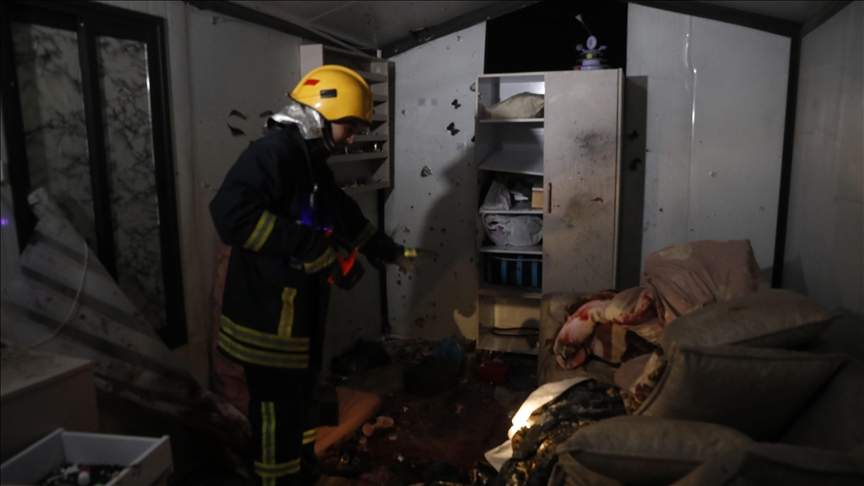
Israel says it killed one Hamas official with 13 bombs dropped by three warplanes. On the ground in Gaza, we count eight martyrs, six apartments destroyed, and a six-story building rendered uninhabitable — all while dozens of tents belonging to displaced families burn.
"The bombing continues, death does not leave, the destruction grows, and people are being killed daily," Salah writes from Gaza City. "Nothing has calmed down here."
Gaza, May 15, 2026. The Al-Mu'taz building burns. A man sits alone before the wreckage of his neighborhood. [Salah Akram - UnTelevised Media]
The Airstrike
Salah is on the ground in Gaza City. He is watching it happen.
![Black smoke rises from Gaza residential neighborhoods following IOF airstrikes, May 15, 2026. [Salah Akram - UnTelevised Media]](https://cdn.sanity.io/images/ypejdt32/articles/6a9afd8740b7034d87f20c1250adb3a36176dd2f-960x1280.webp?fit=max&auto=format&w=1920&q=65)
Black smoke rises from Gaza residential neighborhoods following IOF airstrikes, May 15, 2026. [Salah Akram - UnTelevised Media]
12:59 PM — Heavy bombing begins. The sky over Gaza fills with smoke.
1:30 PM — Seven martyrs confirmed. Four civilians killed when a residential floor in the Al-Mu'taz building was bombed. Three more killed when Israeli warplanes struck a civilian vehicle on Al-Wahda Street.
1:45 PM — The toll climbs to eight martyrs, including three women. Medical teams on the ground are working to identify dismembered remains they cannot piece back together.
2:11 PM — Gaza is not calm. The bombing does not pause. The death count climbs. The destruction spreads.
3:28 PM — The full picture emerges.
Six apartments have been completely destroyed. A six-story residential building is now uninhabitable. Forty-five people are injured — mostly children and the elderly. Eight others are dead.
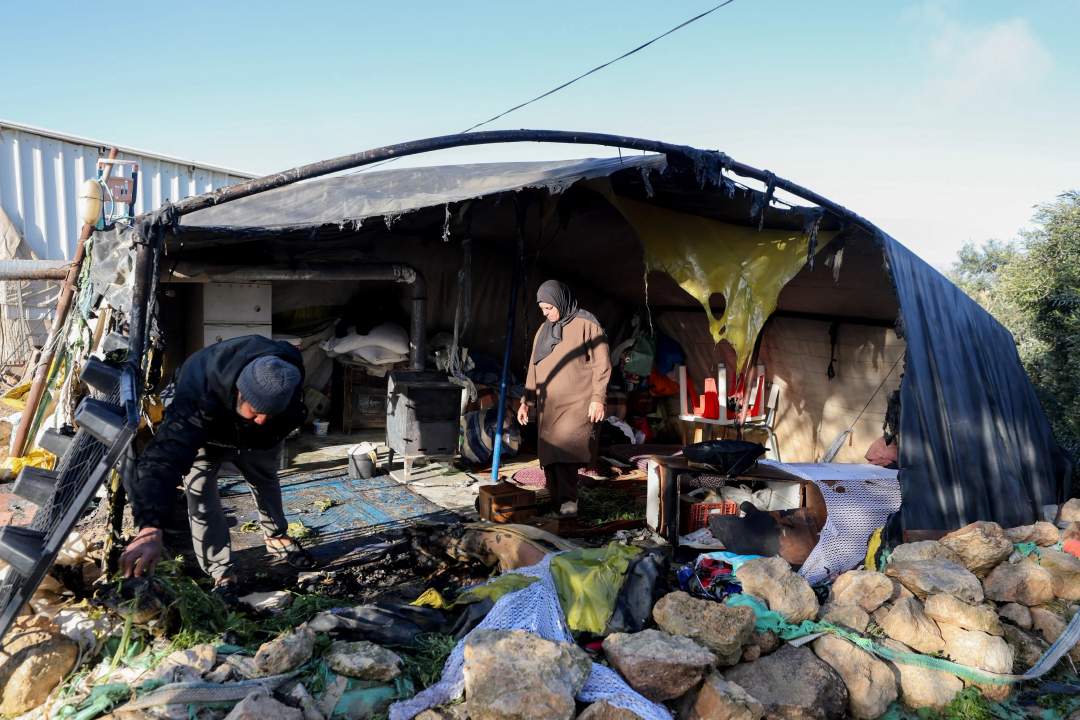
In the vicinity of the targeted building, dozens of tents belonging to displaced people have been burned and torn apart.
![The targeted building fully engulfed in fire, every floor burning, Gaza, May 15, 2026. [Salah Akram - UnTelevised Media]](https://cdn.sanity.io/images/ypejdt32/articles/372ba9c9baeff85171a13d907748327adf0e62a8-1045x2123.webp?fit=max&auto=format&w=1920&q=65)
The targeted building fully engulfed in fire, every floor burning, Gaza, May 15, 2026. [Salah Akram - UnTelevised Media]
One Hamas Official, or Eight Martyrs?
Israel's official narrative: this was a successful military assassination operation. The target: one Hamas commander. The method: 13 bombs from three warplanes.
The reality: eight people are dead. Their names are not one Hamas official. They are:
- Four civilians killed when a residential floor in the Al-Mu'taz building was bombed
- Three civilians killed when a civilian vehicle on Al-Wahda Street was hit
- One more, among the three women confirmed dead, whose remains medical teams could not fully identify
Three of the eight are women. Their families are mourning. Their names will be reported. Their stories will be buried in casualty numbers that keep growing.
"Israel is attempting to downplay by claiming it was a successful military assassination operation," Salah writes. "This is the gist of the event."
It is not a downplay. It is a lie dressed in military language.
Nakba Day. Again.
Today is May 15 — the 78th anniversary of the Nakba, the catastrophe in which more than 700,000 Palestinians were expelled from their homeland in 1948. Today, the Israeli military dispatched three warplanes, dropped thirteen bombs on a residential building, and burned the tents of people who had already been displaced.
This is the Nakba as ongoing policy. The same project. The same objective. A different method.
The War on Displaced People
The most telling detail in Salah's report is not the dead. It is the burned tents.
Dozens of tents belonging to displaced families — people who have already fled their homes, people who have nowhere else to go — have been burned and torn apart in the vicinity of the airstrike.
This is a war on refugees. Israel is forcing Palestinians out of their homes. It is dropping bombs on their makeshift shelters. It is burning their tents. It is killing their children.
Gaza is not a battlefield between two equal armies. It is a besieged strip of land populated by over two million people who have no army, no air force, no ability to strike back at the cities of those who bomb them. What they have is their presence. Their survival. Their witnesses.
Salah is one of those witnesses. He was there. He documented this. He is naming the dead. He is showing us what Israel's "targeted killings" actually look like.
Eight people are dead. Their names are not Hamas officials. Their names are human beings.
Sources & Methodology(2 sources)
- Salah Akram — Eyewitness, Gaza City (May 15, 2026)Source
First-hand real-time testimony from UnTelevised Media correspondent Salah Akram, on the ground in Gaza City during the IOF airstrike on the Al-Mu'taz building and Al-Wahda Street. All timestamps Central Time.
Israeli military statement claiming a "successful assassination operation" targeting one Hamas commander, deploying three warplanes and 13 bombs. Used to contrast official framing with ground-level civilian toll.
Frequently Asked Questions
- What happened in Gaza on May 15, 2026?
- Israeli Occupation Forces dispatched three warplanes and dropped thirteen bombs on the Al-Mu'taz residential building in Gaza City. Eight civilians were killed — including three women — and more than 45 people were wounded, the majority of them children and the elderly. Six apartments were completely destroyed and the six-story building was rendered uninhabitable. In the blast radius, dozens of tents belonging to already-displaced Palestinian families were burned and torn apart. All documented in real time by UnTelevised Media correspondent Salah Akram, on the ground in Gaza City.
- What is Nakba Day and why does it matter for this story?
- May 15 is Nakba Day — the annual commemoration of the Palestinian catastrophe of 1948, when more than 700,000 Palestinians were expelled from their homeland, their villages depopulated and their land seized. The date matters because the IOF airstrike occurred on this anniversary, burning the tents of people who had already been displaced — people living as refugees within their own land. The Nakba is not a historical event. Today's bombing is evidence it is ongoing policy.
- What is Israel's official justification for the strike?
- The Israeli military described the strike as a "successful military assassination operation," claiming it killed one Hamas commander using thirteen bombs dropped by three warplanes. Our reporting — sourced directly from Salah Akram on the ground — documents eight civilian deaths including three women, 45+ wounded mostly children and elderly, six apartments destroyed, a six-story building uninhabitable, and displaced people's tents burned. Israel's framing erases every one of those facts.
- Where exactly were the civilians killed?
- Four civilians were killed in the bombing of a residential floor inside the Al-Mu'taz building in Gaza City. Three more were killed when a civilian vehicle on Al-Wahda Street was struck. A third location, confirmed by medical teams who could not identify dismembered remains, accounts for an eighth victim — one of three confirmed women killed in the strike.
- Who is Salah Akram and how was this reported?
- Salah Akram is an UnTelevised Media correspondent on the ground in Gaza City. He is a Palestinian journalist and survivor who has reported from inside the siege throughout the genocide. All information in this article comes directly from his first-hand, real-time testimony transmitted on May 15, 2026 — timestamps in Central Time. He is an eyewitness. His account is primary source reporting.
- What is the humanitarian situation for displaced Palestinians in Gaza?
- More than 1.9 million Palestinians — nearly the entire population of Gaza — have been displaced, many multiple times, since October 2023. The majority are living in makeshift tents, shelters, and camps, often in areas Israel previously designated as "safe zones." The burning of displaced tents in the May 15 strike is not an aberration: it fits a documented pattern of targeting civilian infrastructure and displacement camps that UN agencies and human rights organizations have repeatedly characterized as collective punishment and violations of international humanitarian law.