

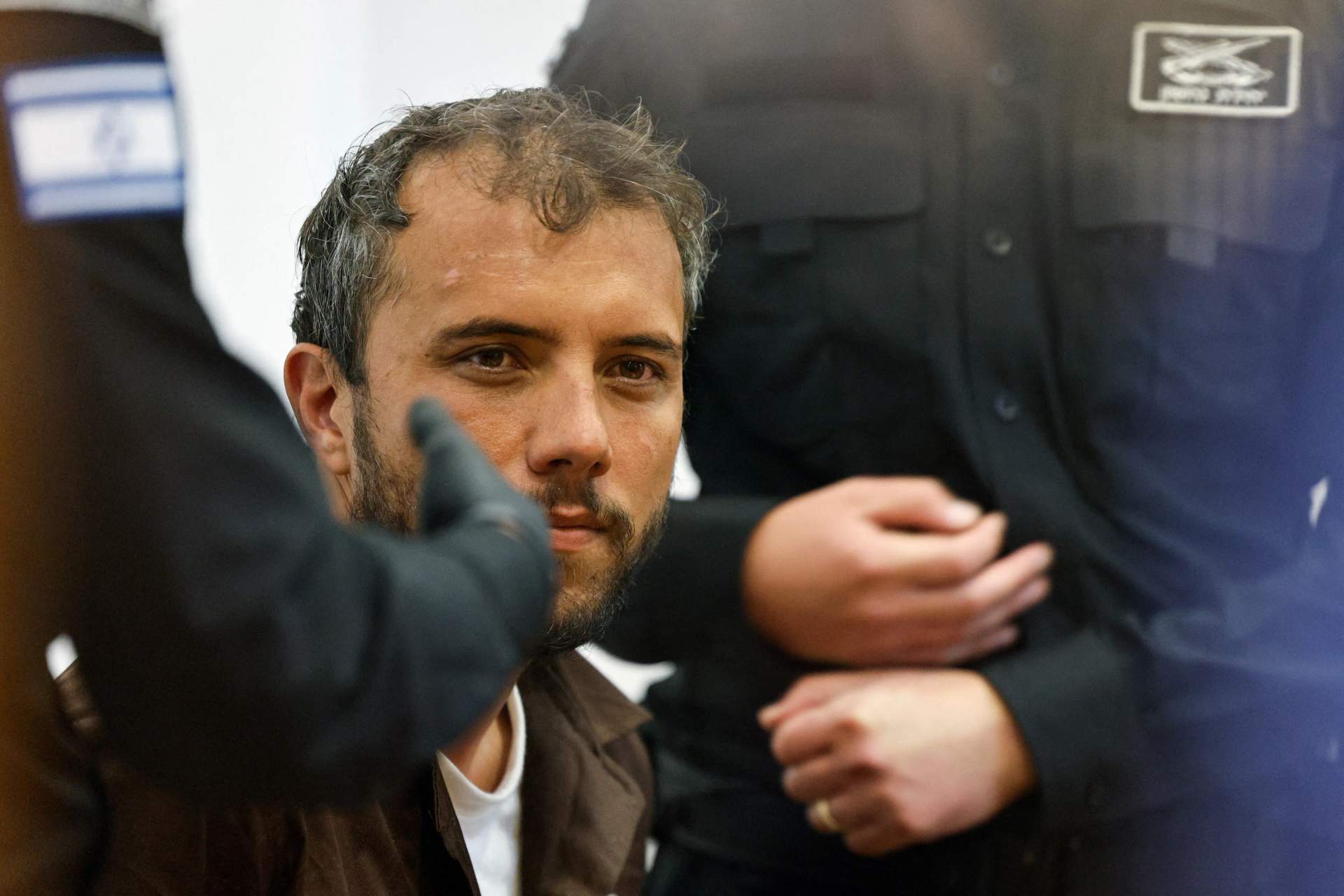
BEERSHEBA — Teresa Regina de Avila e Silva died in Brazil on Tuesday. Her son Thiago, imprisoned in an Israeli cell thousands of miles away, doesn't know.
He wasn't there to say goodbye. He wasn't there to hold her hand. He wasn't even allowed to know she was gone — his isolation from the outside world so complete that the Global Sumud Flotilla coalition warns the news may ultimately be delivered to him by Israeli soldiers overseeing his detention.
"Thiago was forcibly absent, denied even the chance to hear her voice one last time," the flotilla coalition said in a statement. "This is unfathomable cruelty."
Ávila is one of two human rights defenders abducted by Israeli forces on April 30 in international waters more than 620 miles from Gaza. He and Spanish activist Saif Abu Keshek were aboard an Italian-flagged vessel attempting to deliver humanitarian aid to the besieged Palestinian territory when Israeli naval forces intercepted the Global Sumud Flotilla off the Greek coast, dragged them off the boat, and transported them to Israel for interrogation.
On Wednesday, an Israeli court extended their detention until at least May 10. The ruling relied on secret evidence that defense lawyers were unable to review or challenge.
Ávila's mother died three days later.
"A Clear Violation of International Law"
The arrest itself was illegal.
Adalah, the legal rights group representing the pair, argued that Israeli forces had no legal authority to arrest the men after intercepting an Italian-flagged vessel in international waters. Under the United Nations Convention on the Law of the Sea, only the flag state — in this case, Italy — has jurisdiction to detain or investigate a vessel on the high seas.
"The operation is a clear violation of international law," Adalah said. The Italian government has also condemned the interception as illegal.
Spain and Brazil issued a joint statement condemning what they described as the "abduction of two of their citizens in international waters by the government of Israel." Both governments demanded the immediate return of their citizens, adding that Israel's action "flagrantly violates international law" and could be brought before international courts.
But the Beer Sheva District Court didn't care. Judge Yaniv Ben-Haroush ruled there was "reasonable suspicion" of criminal activity and extended the detention — based on evidence the defense couldn't see.
Torture, Hunger Strikes, and Solitary Confinement
What happened to Ávila and Abu Keshek wasn't just a legal violation. It was brutality.
According to Adalah, Ávila told lawyers he was "subjected to extreme brutality" when the vessels were seized. He was "dragged face-down across the floor and beaten so severely that he passed out twice." Since arriving in Israel, he has been "kept in isolation and blindfolded."
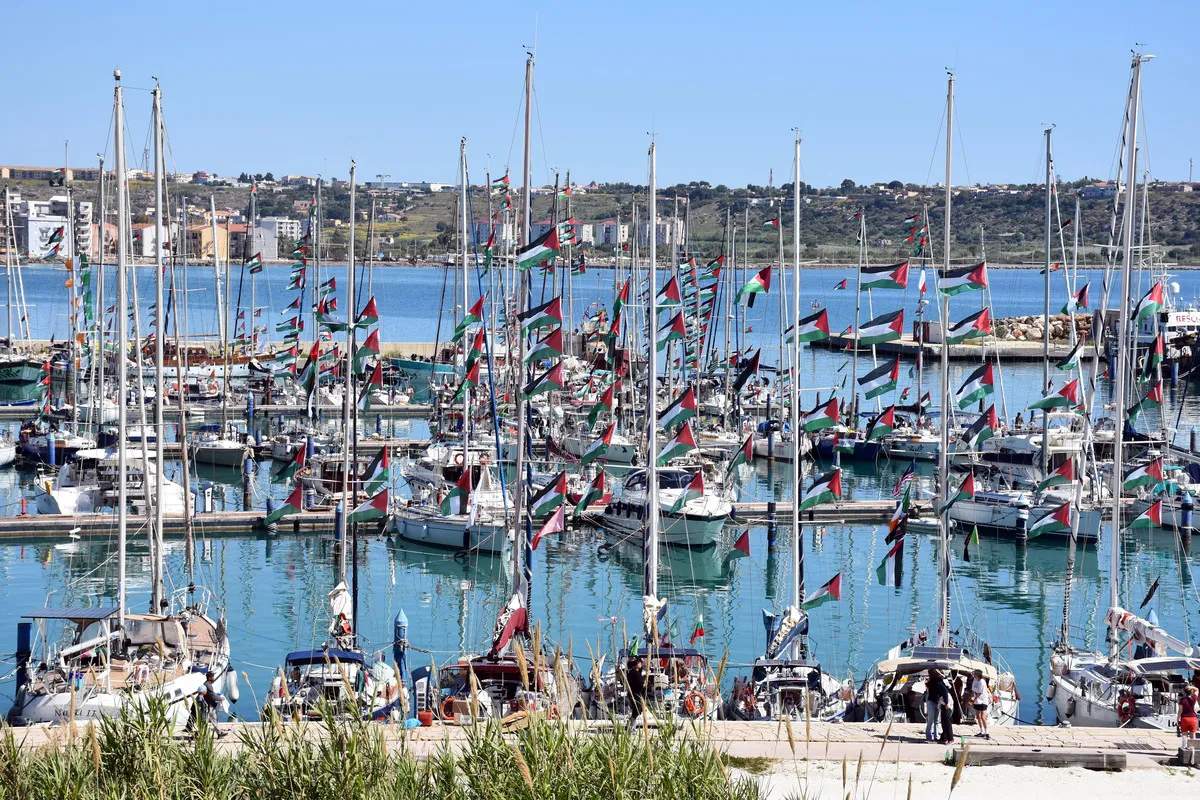
A fleet of boats sails across the open sea as part of the Global Sumud Flotilla's spring 2026 mission to Gaza. Multiple vessels, including larger ships and smaller craft, navigate the waters together in a coordinated effort to deliver humanitarian aid to Palestinians under siege.
Abu Keshek was "hand-tied and blindfolded … and forced to lie face down on the floor from the moment of his seizure" until reaching Israel. Both men remain in solitary confinement under what Adalah described as punitive conditions.
Both activists have been on hunger strike for nearly a week in protest of their unlawful detention and ill-treatment. Abu Keshek is now also refusing water.
Israel's foreign ministry has denied torture allegations, claiming that "following violent physical obstruction" by the activists, "staff were compelled to act in order to stop these actions." But the accounts of extreme violence and mistreatment are consistent and detailed — and Israel has provided no evidence to substantiate its counterclaims.
The court has ordered Israel's Prison Service to monitor the detainees' medical condition due to the hunger strikes.
Secret Evidence and No Formal Charges
Israel accuses Ávila and Abu Keshek of "aiding the enemy," "contact with a foreign agent and a terrorist organization," "prohibited activity involving a terrorist component," and "providing means to a terrorist organization."
The allegations center on their alleged links to the Popular Conference for Palestinians Abroad (PCPA), which the U.S. Treasury claims "clandestinely" acts on behalf of Hamas. Israel's foreign ministry says the flotilla "is another provocation designed to divert attention from Hamas' refusal to disarm."
But no formal charges have been filed. The detention is for ongoing interrogation — and now that interrogation stretches into its second week, with no end in sight.
The case rests on secret evidence that defense lawyers cannot review, a hallmark of authoritarian justice systems. The prosecution presents claims the defense cannot challenge, the judge accepts them, and the detainees sit in cells waiting for a trial that may never come.
UN: "Aid Delivery Is Not a Crime"
On Wednesday, the United Nations human rights office called for the immediate and unconditional release of both men, delivering a direct rebuke to Israel's narrative.
"It is not a crime to show solidarity and attempt to bring humanitarian aid to the Palestinian population in Gaza, who are in dire need of it," OHCHR spokesperson Thameen Al-Kheetan said.
The UN also raised alarm over the allegations of abuse in detention, calling for investigations into the "disturbing accounts of severe mistreatment." It called for an end to "Israel's use of arbitrary detention and of broadly and vaguely defined terrorism legislation."
The UN renewed its call for Israel to end its blockade on Gaza and "allow and facilitate the entry of humanitarian assistance to the besieged Palestinian strip, in sufficient amounts."
That blockade — described by the UN as "a direct contravention of international human rights and humanitarian law" — has been in place since 2007. Israel's war in Gaza, triggered by the Hamas attack on October 7, 2023, has killed more than 72,500 Palestinians and created severe shortages of food, water, medicine, and fuel. About 1.8 million people — almost the entire population of Gaza — are displaced and dependent on aid.
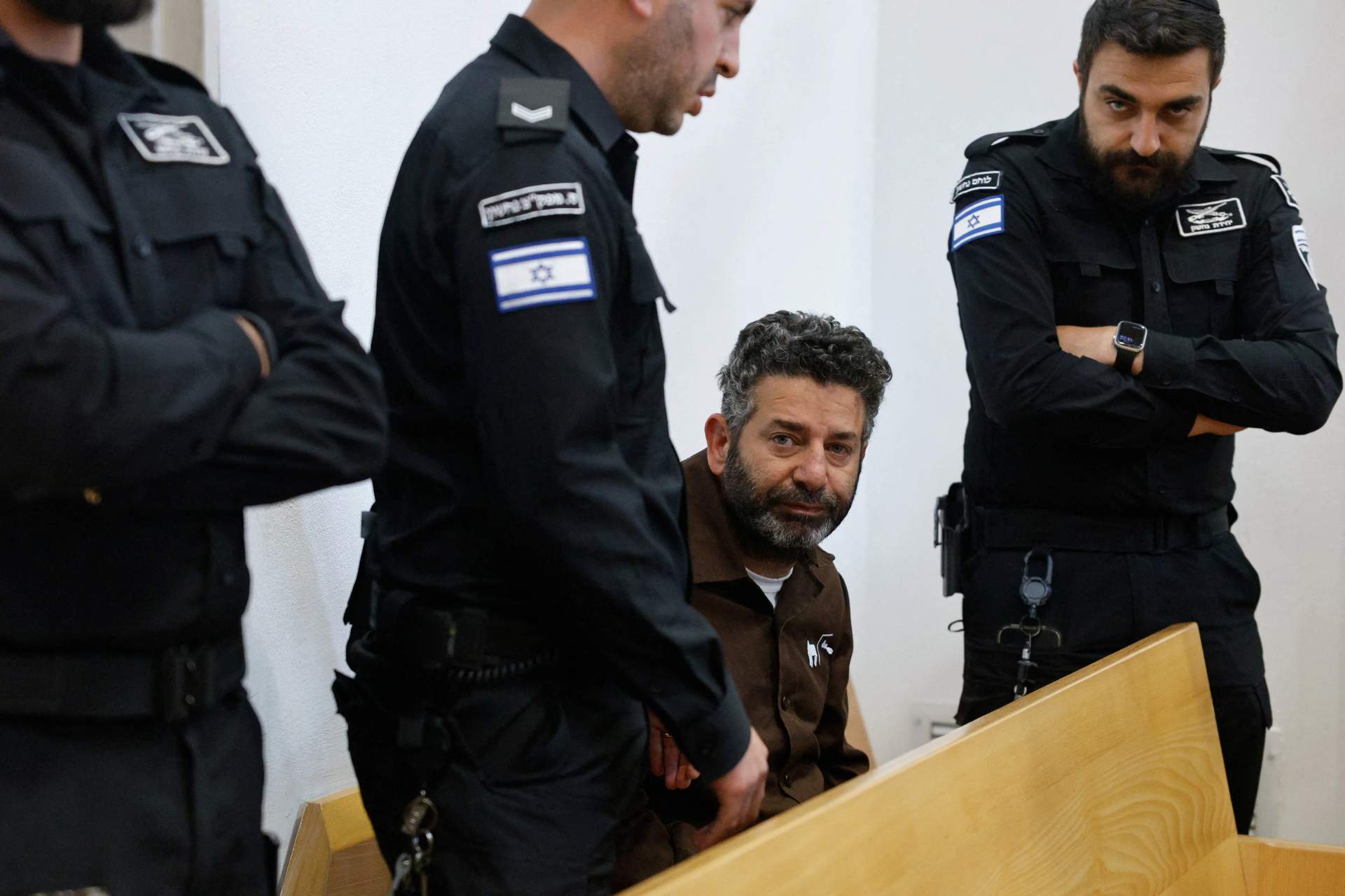
Saif Abu Keshek, in a white shirt and black pants, and Thiago Ávila, in a black t-shirt and jeans, walk alongside Israeli police officers outside a courthouse in Beersheba, Israel on May 5, 2026. Both activists were detained in international waters while participating in a humanitarian aid flotilla to Gaza.
That's why the Global Sumud Flotilla exists.
A Peaceful Mission to Break Genocide
The Global Sumud Flotilla is a civil society initiative seeking to deliver aid to Gaza by sea. Nearly 80 vessels from multiple countries set sail from Barcelona on April 12, 2026. Greenpeace's iconic ship, the Arctic Sunrise, joined the flotilla, providing technical and operational support.
"At a time when the world has failed to stop atrocities in Gaza or uphold international law, the 2026 Global Sumud Flotilla stands as a peaceful act of international solidarity and moral courage," said Ghiwa Nakat, Executive Director of Greenpeace MENA. "Greenpeace is joining this people-led mission to demand safe, unhindered humanitarian access to Gaza and to challenge the illegal blockade that continues to devastate civilian life."
Greenpeace explicitly framed the mission as a response to "genocide, engineered starvation, and a humanitarian blockade" in Gaza. The organization said it stands "firmly against war crimes, deliberate starvation, ethnic cleansing, genocide, and ecocide."
This was not a military operation. This was not a terrorist plot. This was a humanitarian convoy attempting to break a starvation siege that the UN itself has condemned as illegal.
For that, Thiago Ávila and Saif Abu Keshek were beaten, dragged off a boat in international waters, and thrown into prison cells. One is now mourning a mother he wasn't allowed to say goodbye to.
The Personal Becomes Political
The death of Teresa Regina de Avila e Silva is not just a personal tragedy. It's a window into what Israel's system of detention does to human beings.
The flotilla coalition linked Ávila's case to "a broader pattern experienced by Palestinian detainees and their families over decades of Israeli imprisonment policies." Palestinian political prisoners routinely die while their families are denied the right to visit, to say goodbye, to grieve together.
Now that pattern extends to international activists. Now the cruelty isn't reserved for Palestinians alone — it's being exported to anyone who dares challenge Israel's blockade.
Brazilian President Luiz Inácio Lula da Silva has condemned Ávila's detention as "unjustifiable." Spanish Prime Minister Pedro Sánchez has called it "a new violation of international law." Spanish Foreign Minister Jose Manuel Albares demanded Abu Keshek's immediate release, saying there was no evidence linking him to Hamas.
But condemnations aren't getting these men out of prison. Secret evidence and indefinite detentions are keeping them there.
Thiago Ávila sits in a cell in Beersheba, on hunger strike, in isolation, unaware that his mother is dead. He was arrested while on a humanitarian mission to deliver aid to people starving under an illegal blockade. His crime was showing up.
The world has failed to stop the atrocities in Gaza. Now it's failing to stop the atrocities against those who try to help.
Teresa Regina de Avila e Silva died without her son. The question is whether the world will let her be the last casualty of Israel's lawlessness — or whether her death will finally force the international community to act.
Sources & Methodology(5 sources)
May 6, 2026 - Reports on Israeli court extending detention of Thiago Ávila and Saif Abu Keshek, mother's death while son in custody, hunger strikes, and solitary confinement.
May 5, 2026 - Details on court extending detention of Saif Abu Keshek and Thiago Avila, accusations of aiding enemy and Hamas links, denials of torture, demands from Spain and Brazil.
- The Guardian - Spain demands release of Gaza flotilla activists 'held illegally' by IsraelNews Article
May 3, 2026 - Reports on Spain's foreign ministry demanding immediate release, accounts of extreme brutality and torture during capture, details on interception in international waters.
May 6, 2026 - UN OHCHR statement calling for immediate and unconditional release, stating solidarity with Palestinians and aid delivery 'is not a crime', raising alarm over abuse allegations.
- Greenpeace MENA - Joins the 2026 Global Sumud Flotilla to Support a Humanitarian Mission to GazaStatement
April 6, 2026 - Statement on Greenpeace's Arctic Sunrise joining the flotilla, framing mission as response to 'genocide, engineered starvation, and humanitarian blockade' in Gaza.
Frequently Asked Questions
- Who are Thiago Ávila and Saif Abu Keshek?
- Thiago Ávila is a Brazilian human rights activist and Saif Abu Keshek is a Spanish activist. Both were part of the Global Sumud Flotilla, a humanitarian mission attempting to break Israel's blockade of Gaza and deliver aid to the besieged Palestinian territory.
- Where and how were they arrested?
- They were arrested by Israeli forces on April 30, 2026, in international waters more than 620 miles from Gaza. Israeli naval forces intercepted an Italian-flagged vessel from the flotilla off the Greek coast, dragged the activists off the boat, beat them, and transported them to Israel for interrogation.
- Why was their arrest illegal?
- Under the United Nations Convention on the Law of the Sea, only the flag state (Italy, in this case) has jurisdiction to detain or investigate a vessel on the high seas. Israel had no legal authority to arrest the men in international waters. Both Spain and Brazil have condemned the action as abduction and a violation of international law.
- What happened to Thiago Ávila's mother?
- Teresa Regina de Avila e Silva died in Brazil on May 5, 2026. Her son Thiago, imprisoned in Israeli custody, was not informed of her death and remained unaware due to his isolation. He was denied the chance to say goodbye or even learn she had died.
- What are the allegations against them?
- Israel accuses them of 'aiding the enemy,' 'contact with a foreign agent and a terrorist organization,' 'prohibited activity involving a terrorist component,' and 'providing means to a terrorist organization.' The allegations center on claimed links to the Popular Conference for Palestinians Abroad (PCPA), which the U.S. Treasury claims acts on behalf of Hamas. However, no formal charges have been filed, and the court extended their detention based on secret evidence defense lawyers could not review.
- What has the international response been?
- The UN human rights office called for their immediate and unconditional release, stating 'aid delivery is not a crime.' Brazilian President Lula condemned the detention as 'unjustifiable,' and Spain's government demanded the immediate release of its citizen, calling the detention illegal. Italy also condemned the interception as illegal.
- What is the Global Sumud Flotilla?
- The Global Sumud Flotilla is a civil society initiative seeking to deliver aid to Gaza by sea. The spring 2026 mission featured nearly 80 vessels from multiple countries, including Greenpeace's Arctic Sunrise. The flotilla aims to break Israel's illegal blockade and deliver humanitarian assistance to Palestinians suffering under siege.