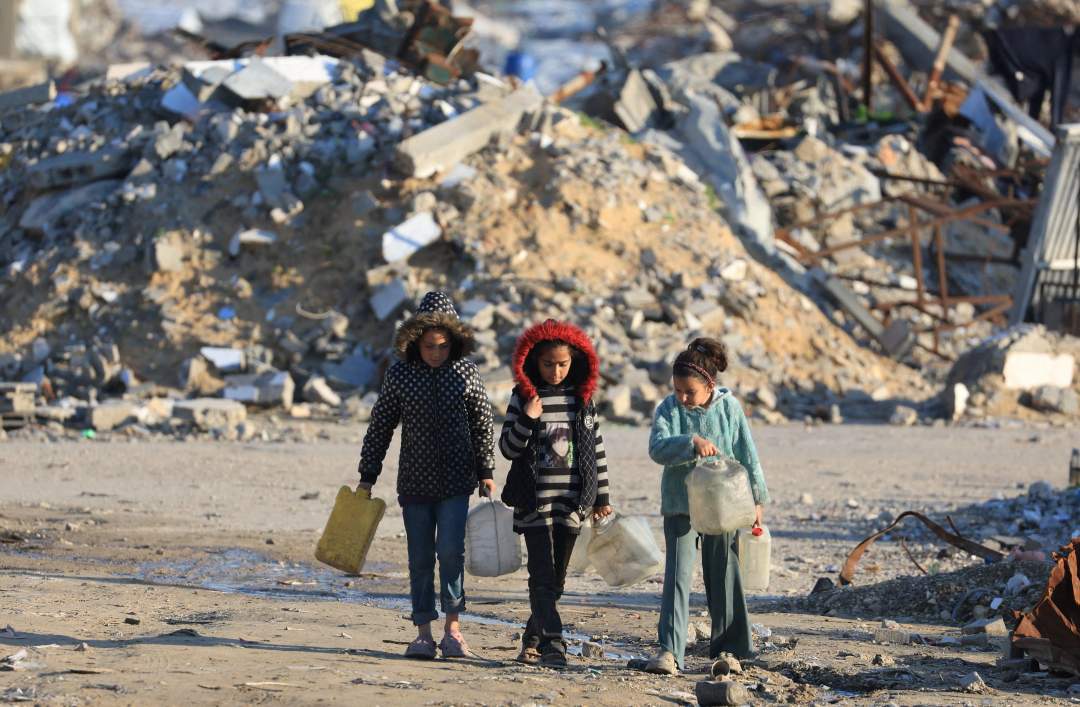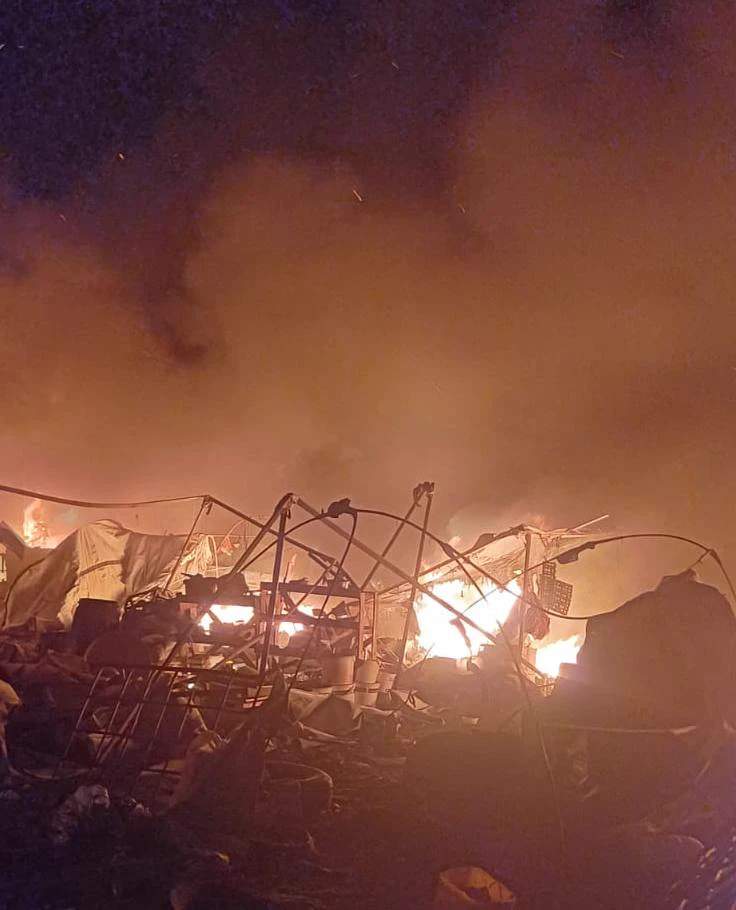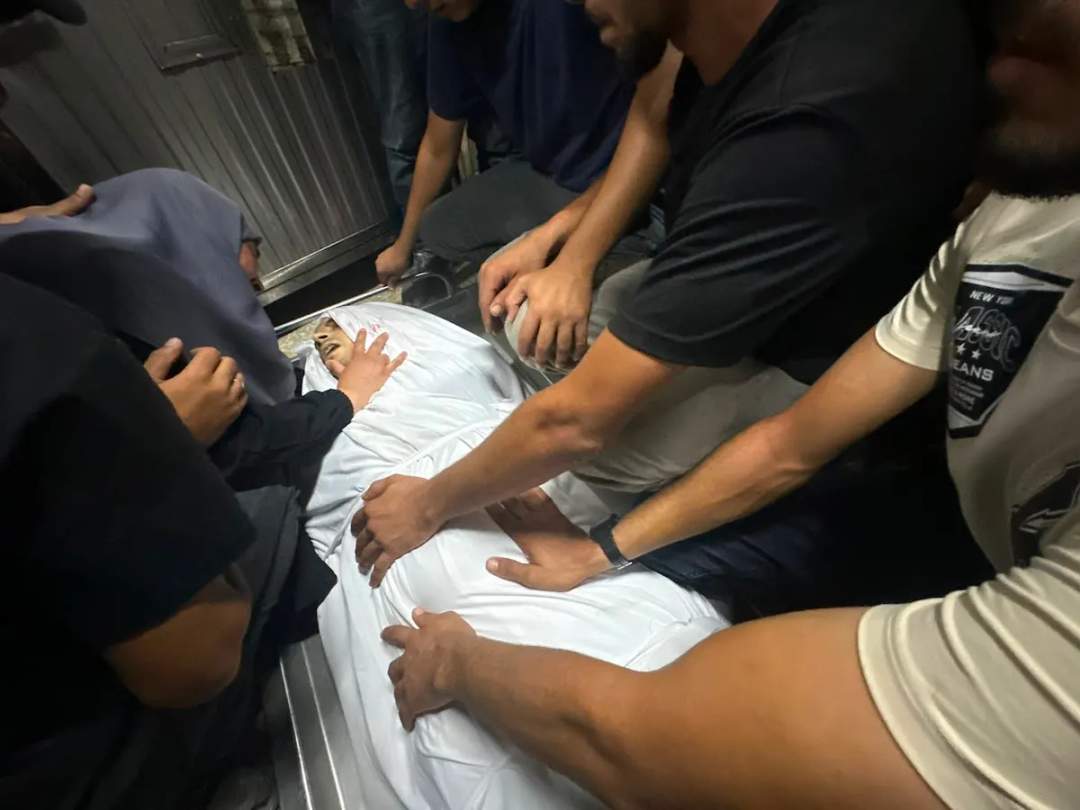
Half a million people are trapped in El-Obeid, the capital of North Kordofan state in central Sudan, as the Rapid Support Forces (RSF) paramilitary closes in for what the United Nations warns could become the next genocide. The city has been under relentless drone strikes for months. Food prices have surged 300 percent. Water has doubled in cost. Power stations have been destroyed, blacking out hospitals. Fifty civilians have been killed by drone strikes in just ten days.
If this sounds familiar, it should. Seven months ago, the RSF laid siege to El-Fasher — the capital of North Darfur — for 500 days before storming the city in October 2025. What followed was one of the worst massacres of the 21st century: thousands executed, women subjected to systematic sexual violence, children murdered in hospitals and schools, bodies burned in mass cremation pits so large they were visible from space. British MPs were briefed that at least 60,000 people were killed. As many as 150,000 residents remain unaccounted for. The UN's independent fact-finding mission concluded the assault bore the "hallmarks of genocide." Amnesty International called it ethnic cleansing.
Now the same paramilitary — armed, funded, and diplomatically shielded by a constellation of foreign powers — is preparing to repeat the playbook in El-Obeid. And once again, the international community is issuing warnings it has no intention of acting on.
Anatomy of a Proxy Army
The RSF is not a homegrown Sudanese militia. It is a project of foreign patronage, built from the remnants of the Janjaweed — the genocidal Arab supremacist militias that the Sudanese government deployed against Darfur's non-Arab populations between 2003 and 2005, killing an estimated 300,000 people and displacing millions.
Under the command of Mohamed Hamdan Dagalo, known as Hemedti, the RSF was formally incorporated into Sudan's security apparatus in 2013. But its real transformation came through its service as a mercenary force for Gulf kingdoms. The RSF fought on behalf of Saudi Arabia and the UAE in Yemen's civil war as part of the Saudi-led coalition, where Hemedti forged deep relationships with Gulf intelligence services and the Emirati royal family.
That mercenary history is not incidental — it is foundational. The RSF's network of foreign backers, arms pipelines, and financial channels were built during those years. The same routes used to move fighters to Yemen are now used to move weapons into Darfur. The same Gulf patrons who paid Hemedti's men to fight in Sanaa are now paying them to besiege Sudanese cities.
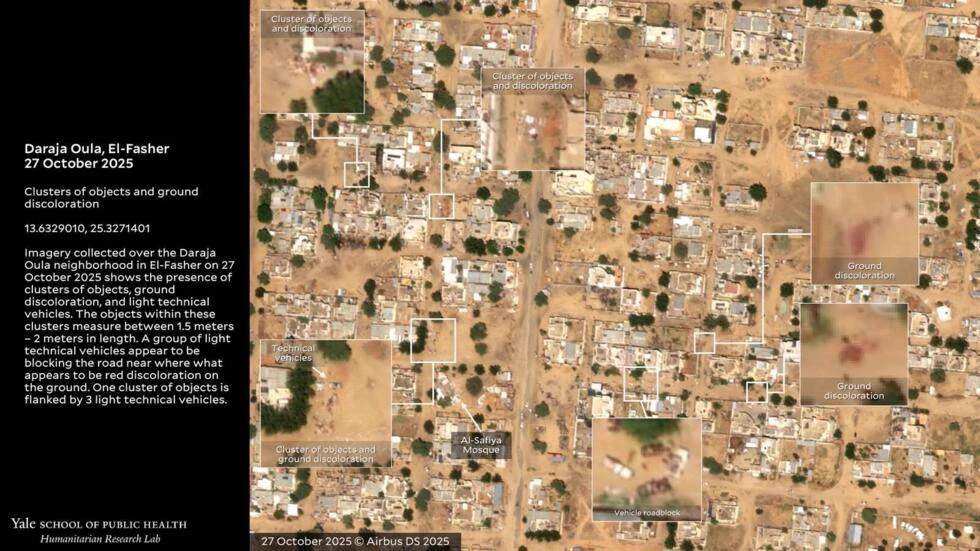
Satellite evidence from Yale Humanitarian Research Lab shows mass killing sites in El-Fasher October 27 2025
The UAE: Arms Supplier to a Genocidal Force
The United Arab Emirates is the single most significant external backer of the RSF, and the evidence is overwhelming, documented, and continues to mount.
A January 2024 report by the UN Panel of Experts on Sudan found that the UAE was transferring weapons to the RSF through an airbridge at Amdjarass airport in Chad. Several times a week, weapons and ammunition were unloaded from Emirati planes and trucked across the 50-kilometer border to RSF fighters. The UAE has denied the allegations, claiming the flights carried humanitarian aid — a claim debunked by intercepted arms shipments, leaked customs documents, and satellite imagery.
In November 2024, Amnesty International revealed that UAE-manufactured Nimr armored vehicles, produced by the EDGE Group and equipped with French Galix weapons systems, were being used by the RSF in direct violation of the UN arms embargo on Darfur.
But the most damning evidence came in April 2026, when the Conflict Insights Group (CIG) released a report — supported by Refugees International — that placed UAE-supplied Colombian mercenaries inside El-Fasher during the October 2025 massacre. The report found that the UAE provided enhanced drone capabilities that enabled the RSF's deadly strikes on civilians. Their conclusion was unequivocal: "Without this assistance, the siege, takeover, and resulting atrocities would likely not have occurred."
In May 2026, Human Rights Watch published its own investigation, "From Bogotá to El-Fasher," documenting how a UAE-based company recruited Colombian fighters who transited through Emirati military bases before deploying alongside RSF forces in Darfur. Bulgarian-made mortar shells, originally purchased for the UAE military, were found diverted to the RSF — a violation of end-user agreements.
The UAE's stated rationale — countering Islamist influence — mirrors its posture across the region, from Libya to Yemen. But in Sudan, this "counter-terrorism" has produced a far more predictable outcome: genocide against African populations carried out by Arab supremacist militias armed with Emirati weapons and Emirati mercenaries.
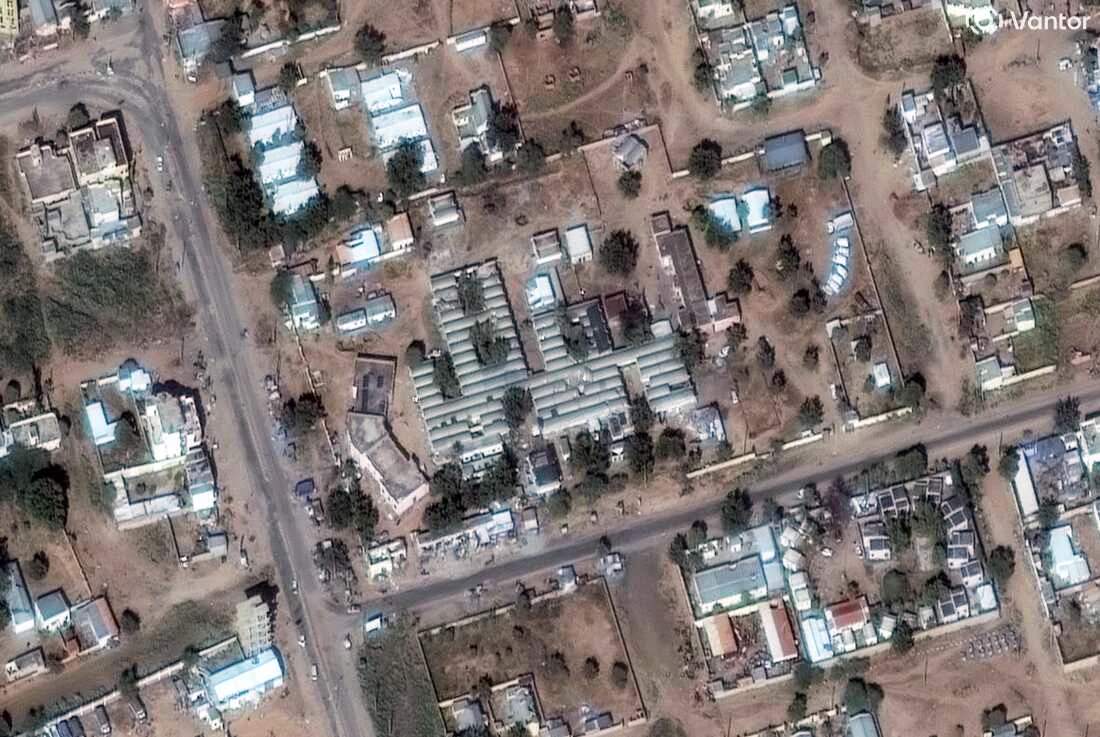
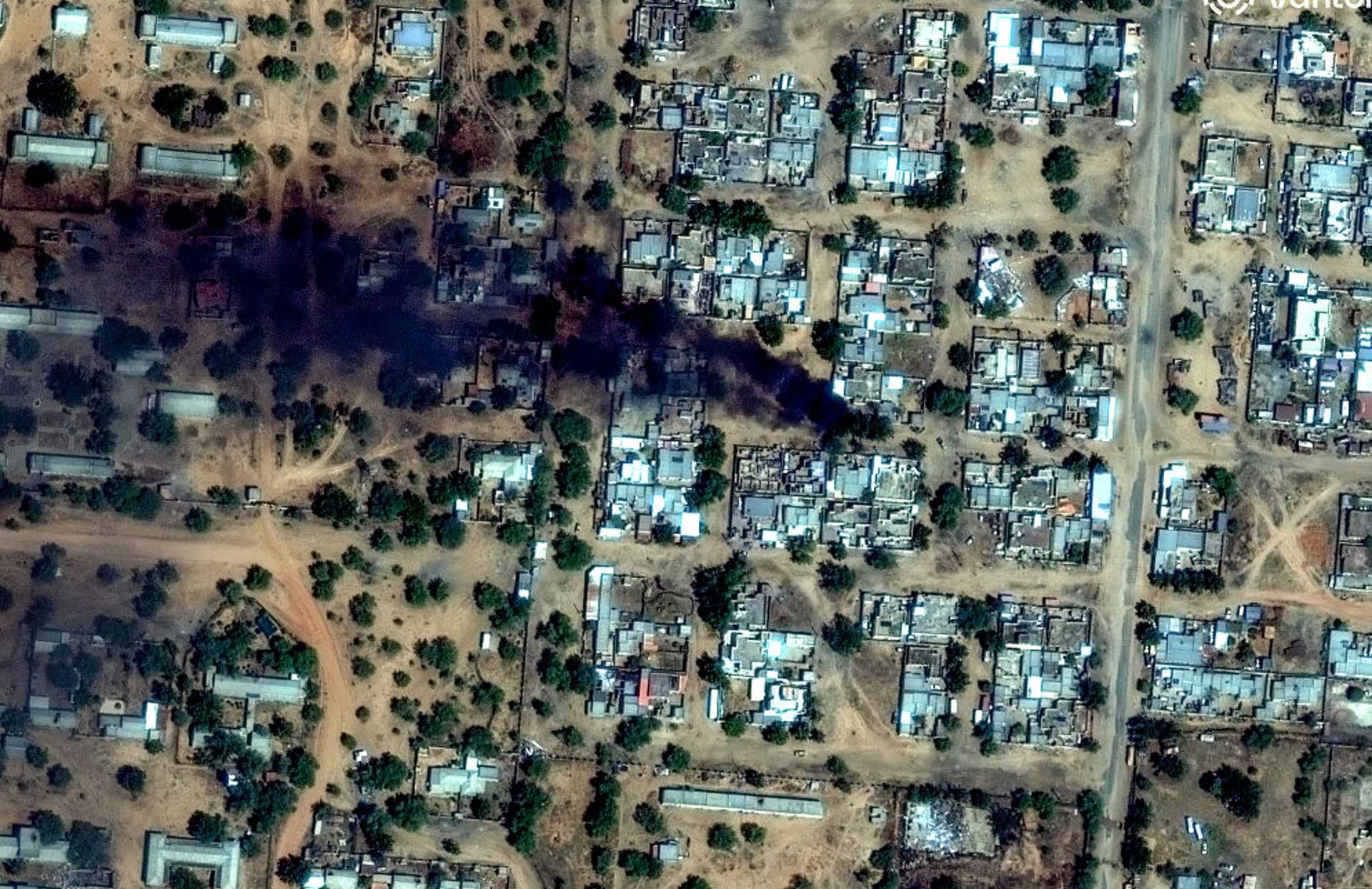
Satellite image of Saudi hospital in El-Fasher showing damage after RSF attack October 2025
Israel: The Silent Hand Behind Both Sides
Israel's role in Sudan's devastation is less visible but no less consequential. Tel Aviv has maintained ties with both sides of the conflict — a calculated strategy of hedging bets and expanding influence on the African continent.
The connection begins with the Abraham Accords. In October 2020, Sudan became the third Arab-majority country to normalize relations with Israel, in a deal brokered by the UAE and the Trump administration. The price for Sudan: removal from the US State Sponsors of Terrorism list. The consequence for Sudanese democracy: the deal enriched and emboldened the military components of the transitional government, helping to pave the way for the October 2021 coup that derailed Sudan's revolution and eventually led to the current war.
Israel's intelligence service, Mossad, developed a particularly close relationship with Hemedti and the RSF. In June 2021, Israeli media reported that a private plane from Tel Aviv — the same aircraft used by former Mossad chief Yossi Cohen for covert visits — landed in Khartoum, where Mossad officials met with RSF-affiliated generals. In October 2021, Axios reported secret meetings between Mossad and Hemedti, cementing direct intelligence cooperation.
In November 2022, Haaretz revealed that the RSF had obtained advanced Israeli surveillance technology — tools capable of breaching smartphones and communications infrastructure — secretly flown into Khartoum via a plane linked to a former Mossad official and then moved to Darfur. This technology shifted the military balance in Hemedti's favor, enabling the RSF to monitor, track, and target civilians and opposition figures.
Hemedti's brother and RSF deputy commander, Abdel Rahim Dagalo, made open visits to Tel Aviv, meeting senior Israeli security officials. Hemedti himself tasked his brother with managing the Israel relationship — a sign of how central it was to the RSF's strategic calculus.
Israel's interest in Sudan is geopolitical: controlling a country that sits along the Nile, commands a lengthy Red Sea coastline, and serves as a gateway to expanding influence across Africa. Israel views Sudan through a security lens — as a potential corridor for Iranian weapons to reach Palestinian resistance factions, and as a foothold for intelligence operations across the continent.
As Hemedti told Israeli officials through intermediaries: Sudan "needed Israel" to achieve prosperity. What Sudan got instead was genocide.
The Saudi Pivot and the Regional Proxy War
Saudi Arabia's position in the Sudan conflict is more nuanced but no less complicit. Riyadh initially tried to play mediator but has increasingly tilted toward the Sudanese Armed Forces (SAF) led by General Abdel Fattah al-Burhan. Saudi Arabia worries about the UAE's destabilizing role in the Red Sea, which it considers its strategic backyard.
But Saudi backing of the SAF is not neutral. Egypt provides the SAF with drone bases. Qatar and Turkey have supplied weapons to the army. Iran has provided military support to al-Burhan's forces — a reality that has pushed Israel closer to the RSF, creating a perverse feedback loop in which the region's rivalries are being projected onto Sudanese soil at the cost of Sudanese lives.
The broader picture is of a proxy war layered on top of a civil war layered on top of a genocide. Every major regional power — Saudi Arabia, the UAE, Egypt, Qatar, Turkey, Iran, and Israel — has picked a side and poured in weapons. None of them are motivated by the welfare of the Sudanese people. All of them are using Sudan as a chessboard for their own rivalries.
The Gold Pipeline: Funding Genocide Through Extraction
Beyond state sponsorship, the RSF funds itself through Sudan's gold reserves — and the UAE serves as the primary buyer and launderer.
Hemedti's network controls gold mines across Sudan, particularly in Darfur and Kordofan. Gold extracted from these mines — often through forced labor and at the point of a gun — is smuggled to the UAE, where it enters the formal market through Dubai's gold refineries. The Revolutionary Communist Group estimates the UAE invested over $97 billion across Africa in mining, infrastructure, logistics, and agriculture between 2022 and 2023 alone.
This gold-for-arms pipeline completes the circuit: RSF fighters seize gold from Sudanese land, sell it to Emirati buyers, and use the proceeds to buy the weapons they use to seize more gold and kill more people. The UAE's role is not passive — it is the financial engine that makes the genocide possible, even as Abu Dhabi pledges $500 million in humanitarian aid for the very crisis it is fueling.
El-Obeid: The Next Catastrophe
El-Obeid sits at the heart of a network linking Darfur, Kordofan, and central Sudan. Whoever controls it controls a key gateway for goods, people, and supplies. The city hosts the army's 5th Infantry Division and airbase, an oil pipeline, and a major Arabic gum market. If it falls to the RSF, it would connect the paramilitary's western strongholds in Darfur to the rest of the country, giving Hemedti a strategic corridor to rebuild his political project after losing Khartoum in March 2025.
The parallels to El-Fasher are unmistakable. In both cities, the RSF has used drone warfare to create siege-like conditions without full encirclement — cutting off power, water, food, and medical supplies. In both cities, the international community has issued warnings it has failed to back with action. In both cities, the result is the same: slow starvation of a civilian population while foreign powers debate whether to call it genocide.
The UN High Commissioner for Human Rights, Volker Turk, told the Human Rights Council that civilians in El-Obeid "have been subjected to siege-like conditions for 18 months, battered by relentless drone attacks." Twenty-eight countries — led by a coalition including the UK, Canada, France, Germany, the Netherlands, and 21 others — have warned of impending atrocities.
The United States has raised the alarm about "alarming indications that mass atrocities could be imminent." But the US has also supplied weapons to the UAE — the very country arming the RSF. In April 2025, US Secretary of State Antony Blinken formally determined that the RSF had committed genocide in Sudan. The US response to that determination has been sanctions on individual RSF leaders — while the arms flow from their primary state sponsor continues essentially uninterrupted.
The Architecture of Impunity
What is happening in Sudan is not a failure of the international system. It is the international system working exactly as designed.
The UN arms embargo on Darfur, imposed in 2004, has been violated continuously for over two decades. The UAE — a permanent member of no international accountability mechanism and a valued US strategic partner — faces no meaningful consequences for supplying weapons to a force the US itself has determined is committing genocide. The Security Council, where the UAE holds a non-permanent seat, cannot act against one of its own members.
The Abraham Accords framework — which normalized relations between Israel and several Arab states at the expense of Palestinian rights — has been extended to Africa, where Sudan's strategic geography made it a prize. The Sudanese revolution of 2019, which offered genuine hope for democratic governance, was strangled by the same constellation of Gulf monarchies and Western powers that now preside over its dismemberment.
As MERIP documented in their analysis of Sudan's "global counterrevolution," the Abraham Accords "prioritized the interests of transnational elites and ultimately extended the counterrevolutionary government's monopoly over Sudan's sovereignty." The popular revolution was reframed in transactional terms — aid, sanctions relief, access to global markets — while the military and paramilitary forces that would eventually destroy the country were enriched and empowered.
What the Satellite Images Tell Us
The evidence from El-Fasher is visible from space. Satellite imagery collected by the Yale Humanitarian Research Lab shows pickup trucks parked near mass burial sites on October 27, 2025 — the day after the city fell. Subsequent images show newly dug incineration and burial pits, scores of body piles, and a once-bustling city of 1.5 million rendered eerily empty. Marketplaces have become overgrown with vegetation. Livestock has disappeared.
Yale's Nathaniel Raymond called the city "a slaughterhouse." The RSF has refused to allow UN investigators or humanitarian organizations into El-Fasher since the takeover. Aid convoys remain on standby in nearby towns while the paramilitary group denies safe passage.
This is what genocide looks like when it is documented in real time — from space, from social media, from the testimonies of survivors fleeing across the border into Chad. And it is what El-Obeid will look like in a matter of weeks if the same actors, armed by the same suppliers, operating under the same umbrella of impunity, are allowed to complete their advance.
The warning signs are identical. The international response will be identical. The victims will be Sudanese civilians who had the misfortune of living on land that multiple empires — old and new, Gulf and Western, Arab and Israeli — have decided is worth fighting over.
The only question remaining is how many names the world will agree to forget this time.
Sources & Methodology(14 sources)
- Al Jazeera — El-Obeid Under SiegeNews Article
- Al Jazeera — US Raises Concern on El-ObeidNews Article
- NoonPost — What Role Is Israel Playing in Sudan?News Article
Methodology
This article draws on reporting from Al Jazeera, France 24, The Guardian, Human Rights Watch, Refugees International, BBC, NPR, and the Yale Humanitarian Research Lab. Satellite imagery analysis from Yale's Humanitarian Research Lab and open-source intelligence verified by France 24 provides visual documentation of the El-Fasher massacre. Arms transfer evidence is documented in UN Panel of Experts reports, the Conflict Insights Group investigation, and HRW's May 2026 report. Regional geopolitical analysis draws on MERIP, Responsible Statecraft, Middle East Eye, and the East African Policy Observer.
Frequently Asked Questions
- Who backs the RSF in Sudan?
- The United Arab Emirates is the primary state sponsor of the RSF, providing weapons through an airbridge in Chad, deploying Colombian mercenaries, and supplying drone capabilities. Israel has provided surveillance technology and maintained intelligence ties with RSF leadership through Mossad. The RSF also self-funds through gold smuggling to the UAE.
- What happened in El-Fasher in October 2025?
- The RSF captured El-Fasher on October 26, 2025, after a 500-day siege. The subsequent massacre involved mass executions, sexual violence, and the killing of civilians in hospitals and schools. British MPs were briefed that at least 60,000 were killed. The UN determined the assault bore 'hallmarks of genocide.' As many as 150,000 residents remain unaccounted for.
- Why is El-Obeid strategically important?
- El-Obeid sits at the crossroads linking Darfur, Kordofan, and central Sudan. It hosts the army's 5th Infantry Division and airbase, an oil pipeline, and major markets. If the RSF captures it, they would control a strategic corridor connecting their western strongholds to the rest of the country.
- What role does Israel play in Sudan's war?
- Israel has maintained ties with both sides of the conflict. Mossad developed close intelligence cooperation with the RSF, providing surveillance technology that shifted the military balance. Israel's interest in Sudan is geopolitical — controlling Red Sea coastline access and expanding African influence. The Abraham Accords normalization deal helped empower the military leaders who later led Sudan into civil war.