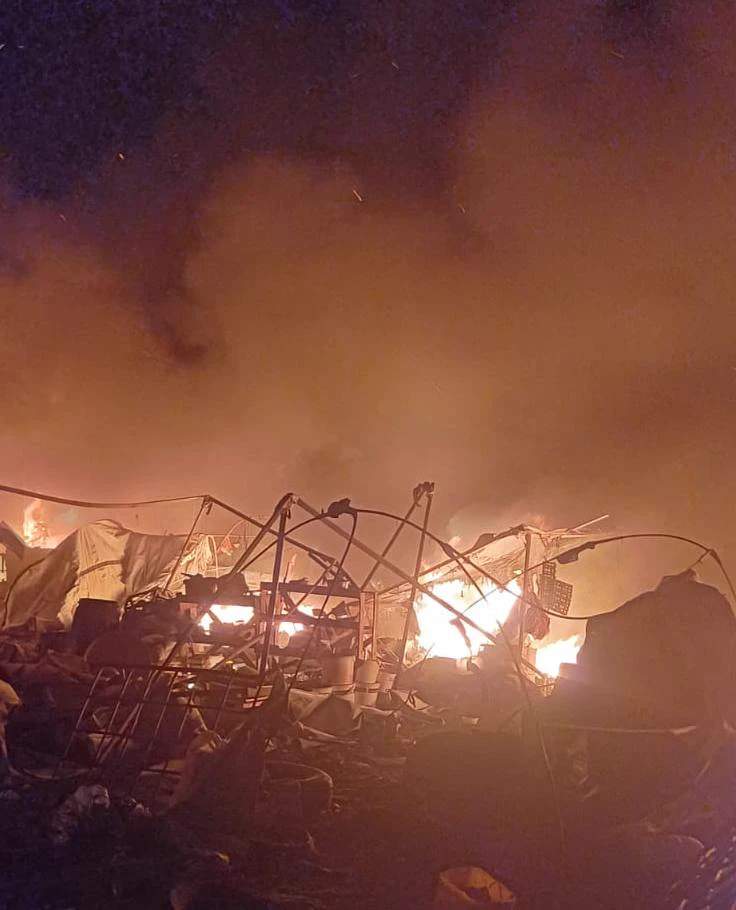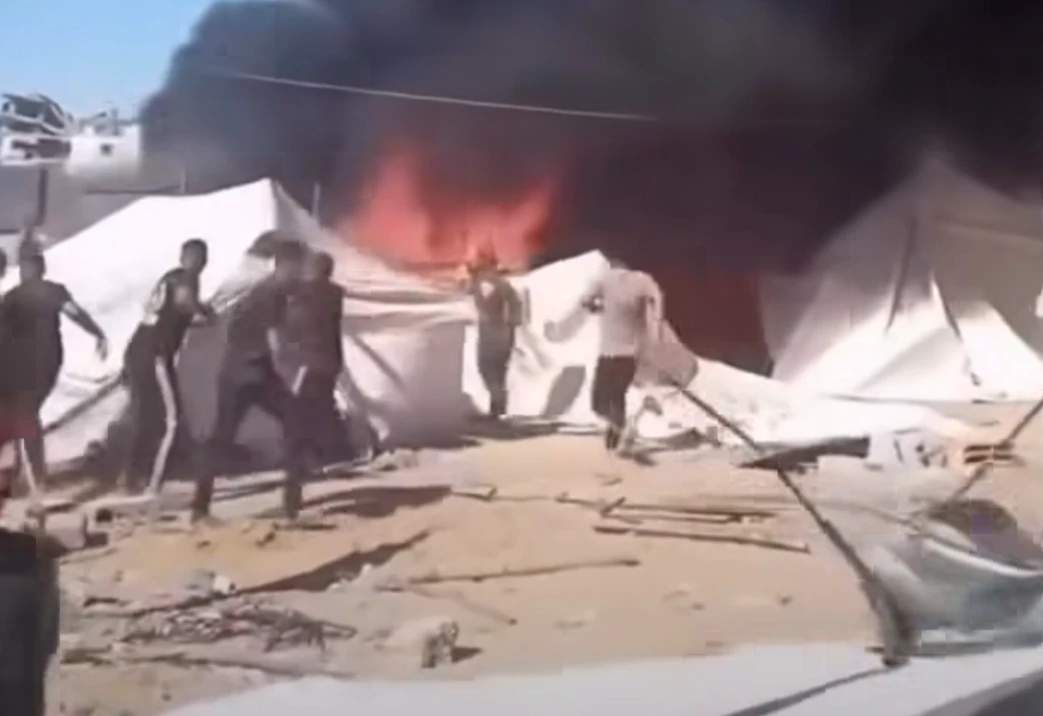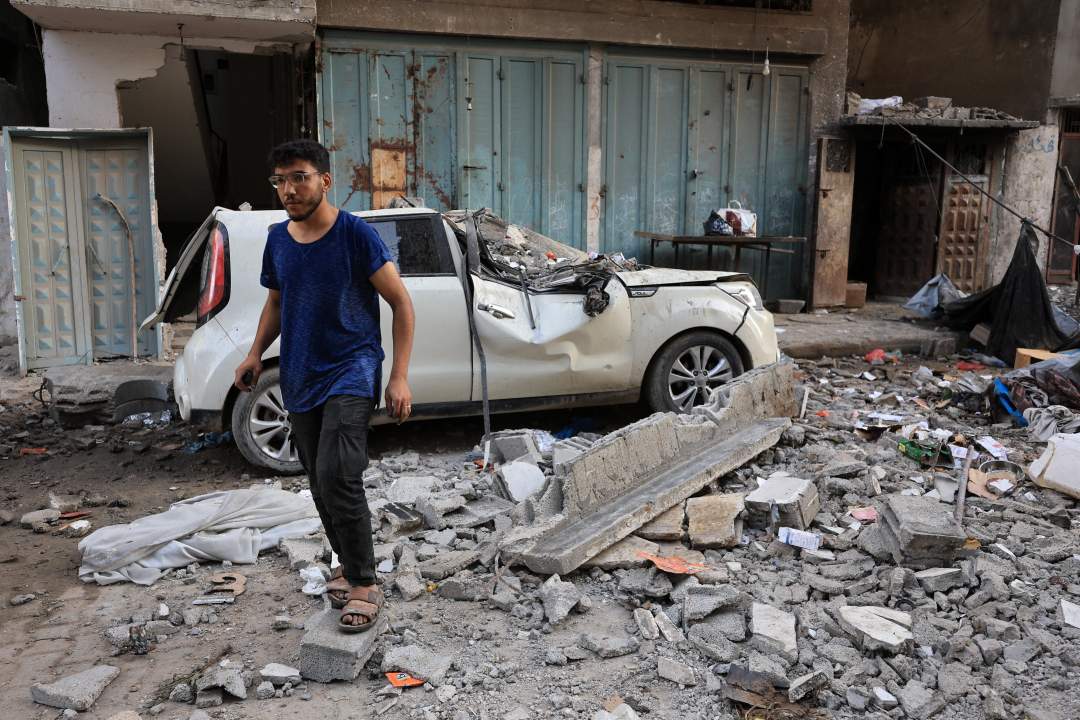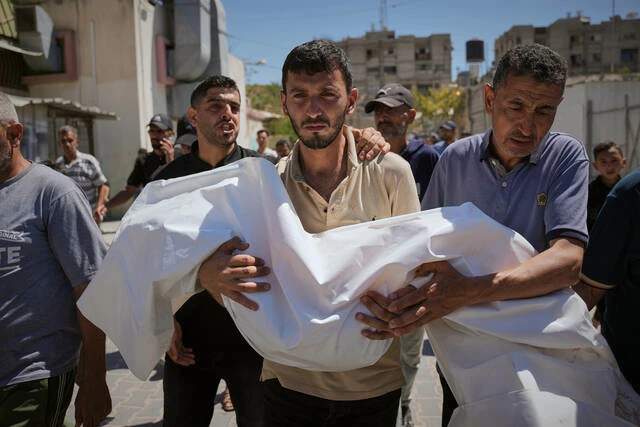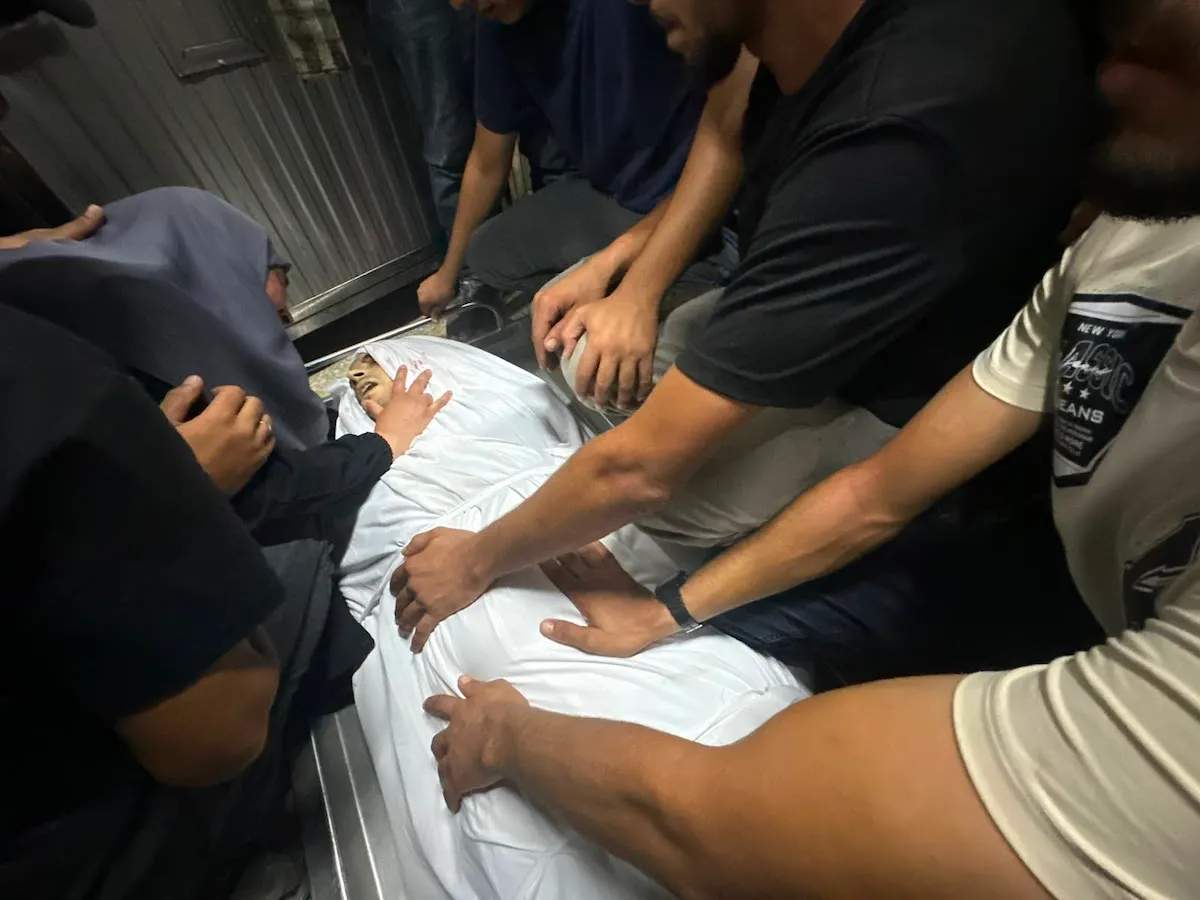
An Israeli drone struck a police post in northern Gaza on July 14, killing at least 11 Palestinians — including the director of the Jabaliya refugee camp police station, Col. Mohammed Marwan Salem. The attack hit a crowded area packed with tents sheltering displaced families and temporary evacuation centers, according to witnesses who spoke to Anadolu Agency. Seven bodies were transported to Al-Shifa Medical Complex and the American field hospital.
The Gaza Interior Ministry condemned what it called a "horrific massacre." Among the dead were six police officers and a woman. Two more Palestinians were killed in separate shelling of a tent southwest of Gaza City, and a child — Moataz Abu Shaar — was shot dead by Israeli army gunfire in the Al-Mawasi area of Rafah.
This is not an anomaly. It is the rhythm of what the international community insists on calling a "ceasefire."
Palestinian civilians grieving at the site of an Israeli airstrike on a police station in Jabalia refugee camp, northern Gaza
1,108 Dead and Counting: The Ceasefire That Never Was
Since the ceasefire agreement took effect on October 10, 2025, Israeli forces have killed at least 1,108 Palestinians and wounded 3,578 more, according to the Gaza Health Ministry. That figure — now updated past 1,100 — represents what can only be described as a sustained campaign of violence conducted under the diplomatic cover of a "truce" that exists in name alone.
As we documented when the death toll crossed 900, Israel has treated the ceasefire as a license to continue killing at a slower pace — a pattern that has only intensified since we first reported on it — a strategy of attrition dressed up as de-escalation. Each strike is framed as a "targeted operation" against militant infrastructure. Each civilian death is filed under the category of "collateral damage." And the world's governments, with rare exception, say nothing.
The total death toll since October 2023 now exceeds 73,000 Palestinians killed and more than 173,000 injured. Approximately 90% of Gaza's civilian infrastructure has been damaged or destroyed. The territory has been methodically reduced to rubble — and as Defense Minister Yisrael Katz made clear this week, that was always the plan.
"Destroyed Gaza Gives Me a Good Feeling"
On the same day the Jabaliya strike wiped out a police station and its personnel, Katz toured northern Gaza and delivered a statement that should have been front-page news in every Western capital. In an interview broadcast by Israel's Channel 14 on Monday, Katz was asked how he felt about the devastation surrounding him.
"It feels good, doesn't it?"
He went on to describe the destruction as "the result of a well-thought-out policy aimed at eliminating threats." He announced that Israel had shifted from temporary military raids to permanent occupation — establishing three Nahal outposts, military-civilian colonies at sites evacuated during the 2005 disengagement.
"Instead of the raid method — entering and exiting — the Israeli army is inside, the terrorists are outside, and the houses are destroyed," Katz said.
This is not a defense minister embarrassed by collateral damage. This is a man performing satisfaction at the sight of systematic annihilation, announcing territorial expansion while standing on the graves of the people who used to live there. The "well-thought-out policy" is genocide, articulated plainly for anyone willing to listen.
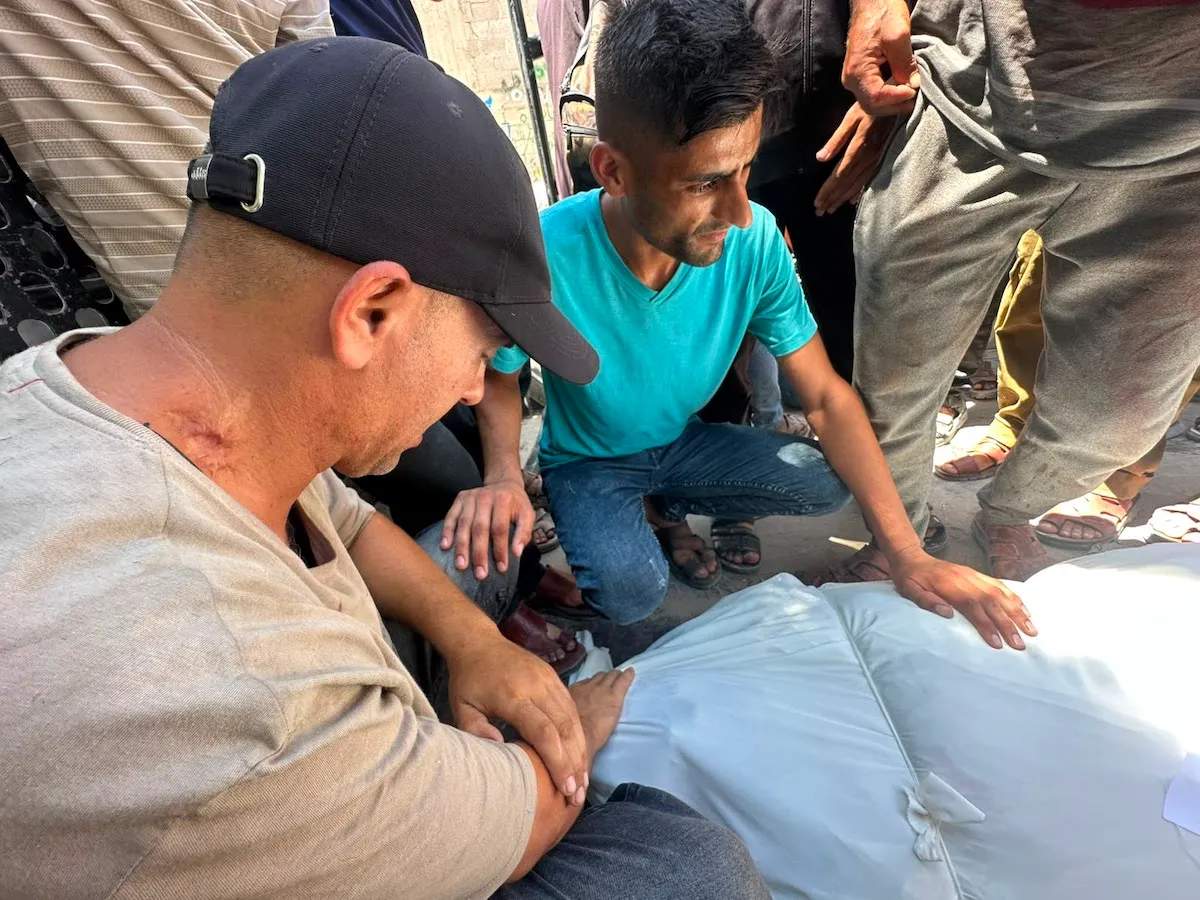
Rescue workers and civilians amid rubble following Israeli airstrike on Jabalia police station
The Yellow Zone Expands: De Facto Reoccupation Accelerates
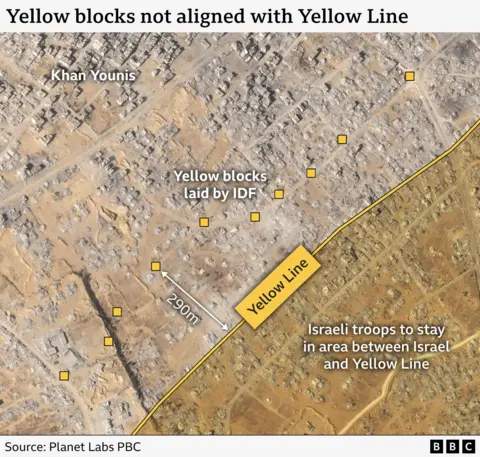
Katz's announcement of three new Nahal outposts in northern Gaza is not an isolated development. It is the continuation of a pattern we have tracked extensively — the so-called "Yellow Zone" strategy that Israel has been expanding across the territory since the ceasefire began — a de facto reoccupation we have tracked since its earliest signs.
These Nahal nuclei are military units with a historical role in establishing Israeli civilian communities. Their placement at former settlement sites in northern Gaza is not about security — it is about laying the groundwork for permanent territorial control. Combined with Israel's approval of $2.3 billion in West Bank settlement expansion, including 12,000 new housing units and $434 million for 34 entirely new settlements, the picture is unmistakable: annexation in plain sight.
The ceasefire was supposed to lead to negotiations, reconstruction, and eventually a political solution. Instead, Israel has used the breathing room to deepen its grip on every inch of Palestinian territory it can reach.
The Mechanics of Erasure
What happened in Jabaliya on July 14 is a case study in how Israel's campaign operates under the cover of truce:
- The target was civilian infrastructure. A police station in a refugee camp is not a military installation. Police officers in Gaza coordinate traffic, manage crowds at aid distribution points, and maintain basic civil order among millions of displaced people.
- The setting was a displacement zone. The drone struck an area "crowded with tents sheltering displaced Palestinians and temporary evacuation centers," according to witnesses. This was not a precision strike in a militant compound. It was a strike into a crowd.
- The follow-up was silence. No Western government issued a condemnation. No major news network led with the story. The deaths of 11 Palestinians, including a senior police official and a woman, barely registered in the international news cycle.
This is the machinery of erasure — not only of Palestinian lives, but of the fact that those lives are being taken. The death of Col. Salem and his officers will not generate a White House statement. The killing of Moataz Abu Shaar in Rafah will not prompt a UN Security Council session. And Katz's boast about feeling good amid the ruins will be treated as a colorful quote rather than an admission of criminal intent.
The Numbers Tell the Story the Media Won't
Israeli Ceasefire Violations by the Numbers:
| Metric | Figure |
|---|---|
| Palestinians killed since October 2025 ceasefire | 1,108+ |
| Palestinians wounded since ceasefire | 3,578+ |
| Total Palestinians killed since October 2023 | 73,000+ |
| Total Palestinians wounded since October 2023 | 173,000+ |
| Civilian infrastructure damaged/destroyed | ~90% |
| New West Bank housing units approved | 12,000 |
| New West Bank settlements funded | 34 |
| New Nahal outposts announced in Gaza | 3 |
Each number is a person. Each person had a name. The system that produces these numbers is not broken — it is functioning exactly as designed. We have documented individual names — Menna Allah Abu Labda, a six-year-old killed in a ceasefire airstrike, and the nine martyrs of Al-Junayna, where four apartments were destroyed and only a nine-year-old girl survived. The Jabaliya strike adds 11 more names to that list.
What "Ceasefire" Actually Means
The word "ceasefire" has become a tool of international complicity. It allows governments to claim progress while Israel continues its operations. It allows media outlets to file stories about Gaza under "post-conflict" coverage while Palestinians die every day. It allows the Biden and now Trump administrations to tout diplomatic achievements while arming the state responsible for the killings.
As we reported from the ground in Salah Akram's dispatches, Gaza is shrinking — not metaphorically, but literally. We previously documented how Israel bombed a tent camp, wiping out an entire family and killing a child at sea. The Yellow Zone expands, the safe areas contract, and the displaced are pushed into ever-smaller pockets of territory with diminishing access to food, water, and medical care. The ceasefire has not stopped the genocide. It has simply given it a different name.
The killing of 11 people in Jabaliya, including a police chief, a woman, and a child, on a single Tuesday in July is not a violation of the ceasefire. It is the ceasefire — the real one, the one Palestinians experience every day.
Sources & Methodology(6 sources)
- NPR — Over 1,000 People Killed During Gaza CeasefireVideo / Audio
Methodology
Reported using official statements from the Gaza Interior Ministry and Health Ministry, eyewitness accounts reported by Anadolu Agency, and coverage from Middle East Monitor, PBS, New York Times, NPR, and Al Jazeera. Casualty figures cross-referenced across multiple sources.
Frequently Asked Questions
- What happened in Jabaliya on July 14, 2026?
- An Israeli drone struck a police post near Shadia School in the Al-Falouja area west of Jabalia refugee camp, killing at least 11 Palestinians including the police station director, Col. Mohammed Marwan Salem. The area was crowded with tents sheltering displaced Palestinians.
- How many Palestinians have been killed since the ceasefire began?
- According to the Gaza Health Ministry, 1,108 Palestinians have been killed and 3,578 wounded in Israeli attacks since the ceasefire agreement took effect on October 10, 2025. The total death toll since October 2023 exceeds 73,000.
- What did Defense Minister Katz say about Gaza's destruction?
- During a tour of northern Gaza on July 14, Katz told Channel 14 that the widespread destruction 'feels good' and was 'the result of a well-thought-out policy.' He also announced plans to establish three permanent Nahal military-civilian outposts at former settlement sites inside Gaza.
- What is the 'Yellow Zone'?
- The 'Yellow Zone' is an Israeli strategy of expanding military-controlled areas across Gaza, effectively creating a de facto reoccupation. Combined with West Bank settlement expansion — including 12,000 new housing units and 34 new settlements — it represents a broader pattern of territorial annexation.