In the span of six days, Immigration and Customs Enforcement agents shot and killed two unarmed men — neither of whom was the target of the operation that ended their lives. The Department of Homeland Security responded by halting traffic stop arrests nationwide. Donald Trump responded by overturning that halt less than 24 hours later.
The machinery of state violence does not pause for reflection. It pauses for optics, and not even for very long.
The Killing of Lorenzo Salgado Araujo
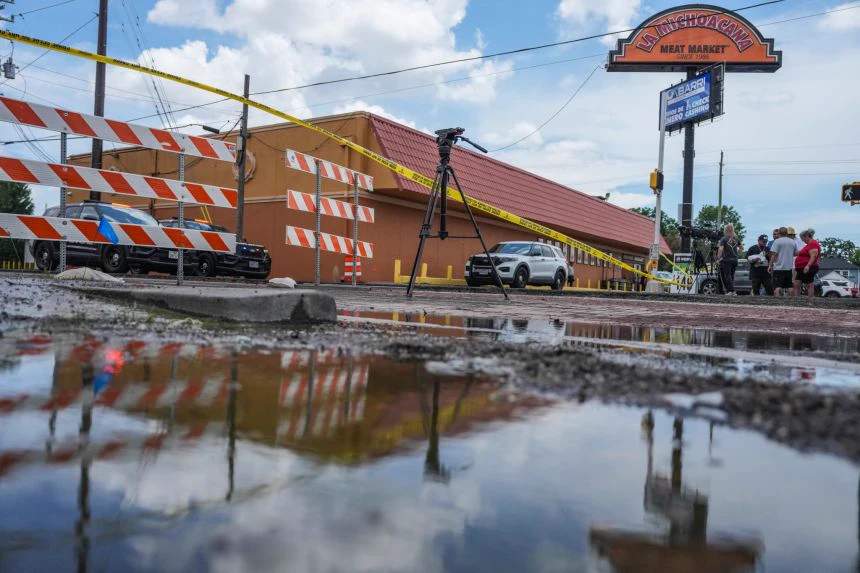
On July 7, ICE agents in Houston attempted a traffic stop on a van driven by Lorenzo Salgado Araujo. The stop ended with Salgado dead from gunfire. The men in the van with him told their attorney that no officer was ever in the vehicle's path and that shots came from its sides — directly contradicting DHS's standard claim that victims had "weaponized" their vehicles.
The Mexican Senate confirmed Salgado was a Mexican citizen, one of 17 Mexican nationals killed by U.S. immigration authorities during the current administration. This pattern — ICE agents killing the wrong person and then circling the wagons — is one we have documented before. And as the agency expands its footprint — including a new $529 million detention center in Colorado operated by a private prison company with a record of slave labor — the body count will only climb.
DHS offered the familiar script: the vehicle attempted to flee, officers feared for public safety, a weapon was discharged. But witnesses told a different story — one of agents firing on a moving vehicle from the sides, not from its path. The difference between a justified shooting and an execution is often a matter of perspective, and ICE has made clear which perspective it intends to maintain.
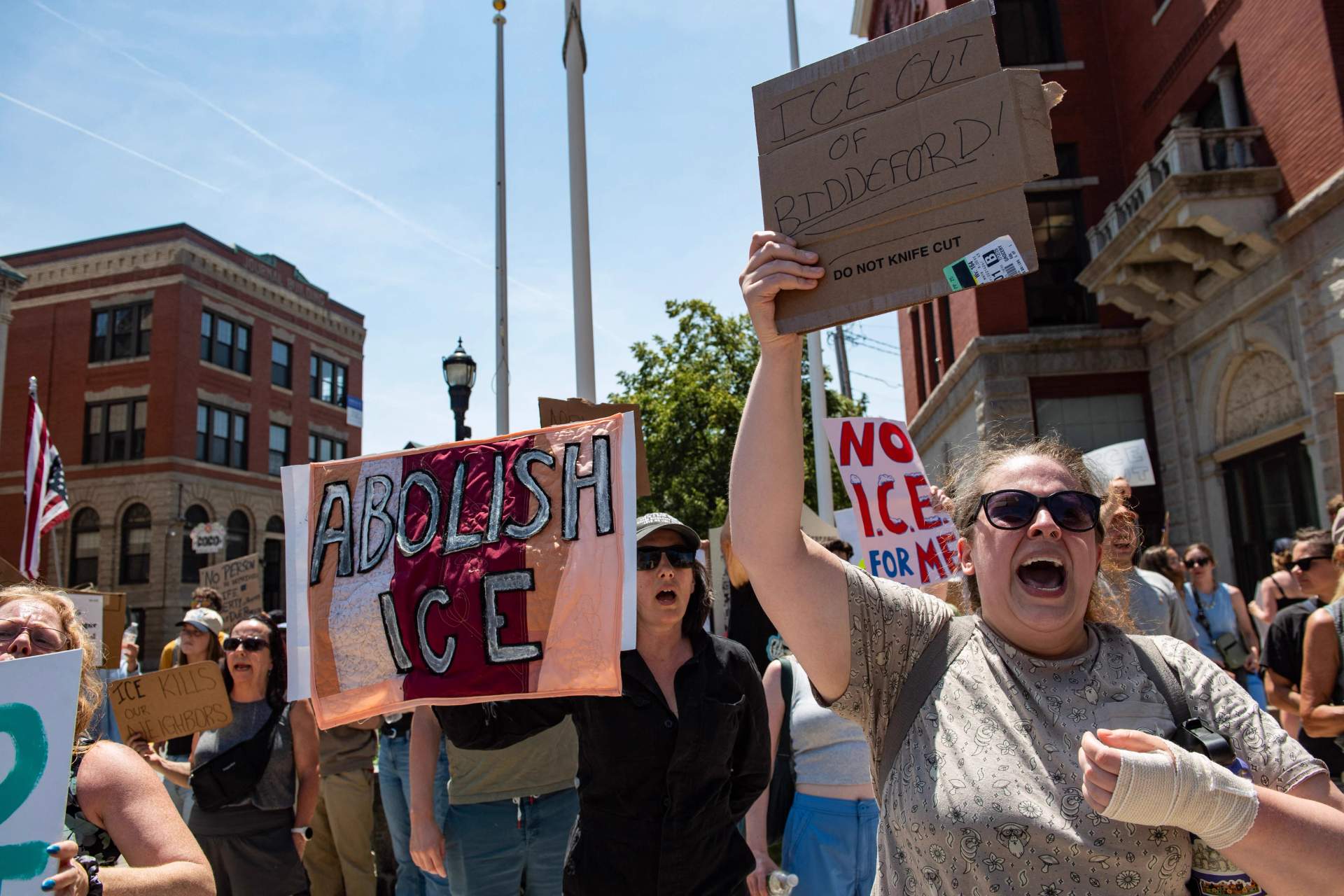
Crowd of protesters holding signs against ICE in Biddeford, Maine after a fatal shooting by immigration agents
The Killing of Joan Sebastián Durán Guerrero
Six days later, on July 13, ICE agents in Biddeford, Maine — a city of 22,000 people, 90 miles north of Boston — shot and killed Joan Sebastián Durán Guerrero at approximately 7:20 a.m. According to local immigrant rights groups, Durán was a 26-year-old Colombian man.
He was not the target of the operation. Senator Angus King confirmed this on CNN after initially suggesting otherwise at a press conference.
What happened, according to multiple eyewitnesses and the Portland Press Herald, was this: ICE agents conducting "targeted surveillance" on an address saw a vehicle leave that residence. They attempted to stop it. The driver — Durán — tried to stop the car. Witnesses saw a small white sedan slowly driving in a circle while agents in green vests chased it and tried to open the door. At least four gunshots were heard.
One witness saw Durán pulled from the car, bleeding profusely from the head. "He was talking. He said, 'I tried to stop,'" the witness told the Press Herald. Then his legs stopped moving.
Social media footage showed bullet holes in the vehicle's windshield. Another video showed officials removing a limp body from the car and handcuffing him. Neither the Houston nor Maine agents were wearing body cameras.
DHS claimed — as it always does — that Durán's vehicle had "attempted to flee the scene" and that officers discharged their weapons "fearing for public safety." A man bled out on the pavement in front of his family while wearing his pajamas in a small city in Maine, and the federal government called it public safety.
The Halt That Lasted a Day
On Tuesday, July 14, DHS responded to the two killings with what appeared to be accountability: a temporary halt to traffic-stop arrests by ICE officers nationwide. The directive carved out an exception for "the most egregious criminal aliens," meaning it was already a limited concession. Border czar Tom Homan described it as a temporary measure pending agent review and retraining.
Within hours, Trump demolished it.
"We CANNOT give up one of I.C.E.'s most important and effective Crime Fighting tools, THE TRAFFIC STOP!" he posted on Truth Social. "Once we do, we are playing right into the criminal's hands." He made no mention of either killing. He offered no reassurance to the families of the dead.
Secretary of Homeland Security Markwayne Mullin echoed the defiance: "Illegal aliens will be arrested and deported wherever they are." The department took the extraordinary step of offering $2,600 checks to undocumented people willing to self-deport — a bounty on human presence in the country.
The cycle is now predictable: ICE kills someone. DHS briefly restrains the specific tactic involved. Trump overrides the restraint. ICE returns to killing. The body count advances. Accountability is performed, then discarded, before the ink dries.
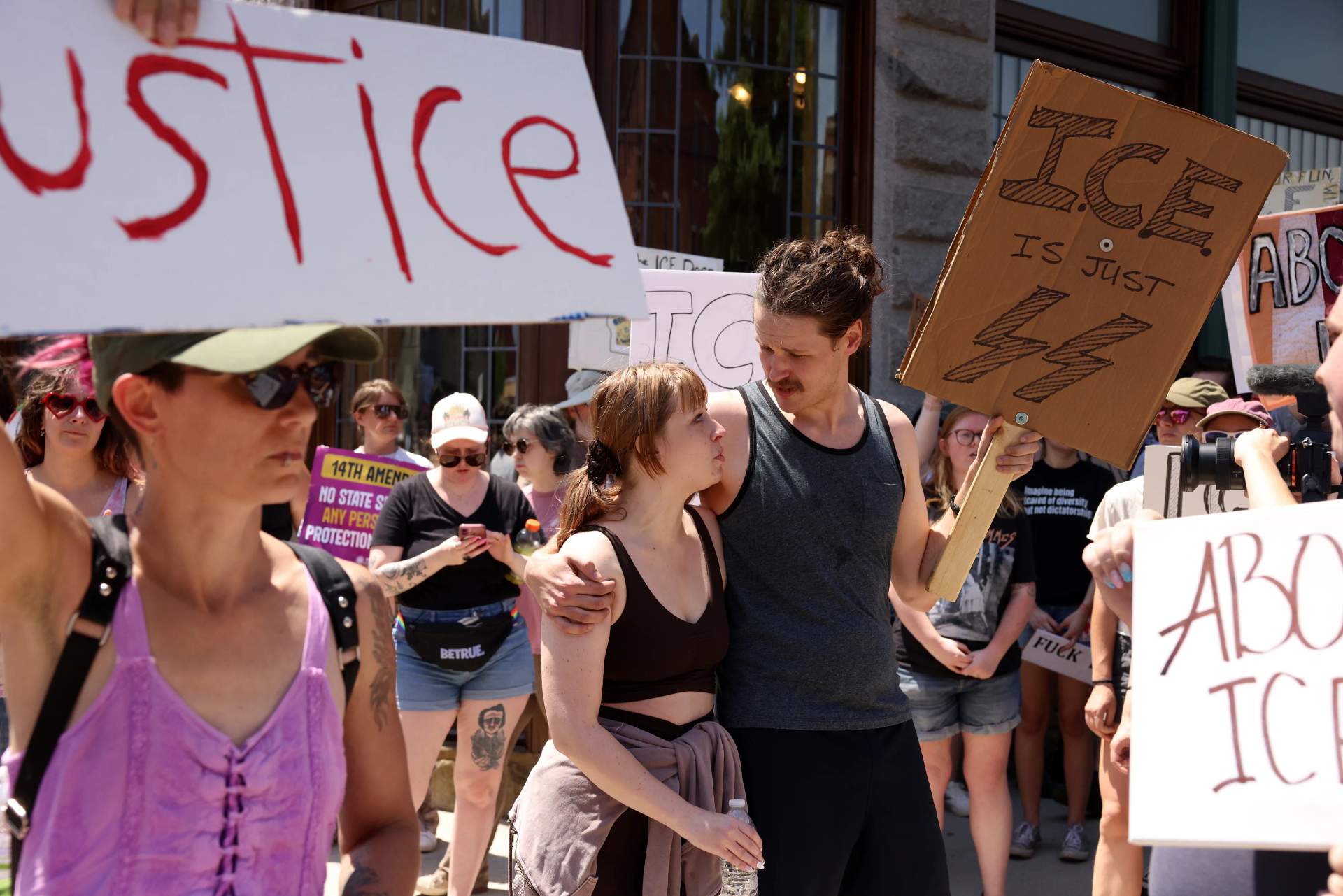
Large crowd of Maine residents protesting ICE presence after fatal shooting of immigrant in Biddeford
11 Dead Since January: A Pattern of State Violence
Durán's killing marked the 11th person fatally shot by federal immigration officers since Trump's second term began. Five of those 11 were in their vehicles at the time of the shooting. In every case, DHS has deployed the same defense — that the victim "weaponized" their vehicle — and in every case, witness footage has contradicted the official narrative.
Federal Immigration Officer Killings Under the Second Trump Term:
| Metric | Figure |
|---|---|
| Total people killed by ICE since January 2025 | 11 |
| Killings occurring during traffic stops | 5 |
| Killings where body cameras were worn | 0 |
| Killings where victim was the arrest target | Unknown |
| Days between Houston and Maine shootings | 6 |
| Duration of DHS traffic stop halt | Less than 24 hours |
| Mexican citizens killed | 17 |
Civil rights organizations have called both the Houston and Maine shootings extrajudicial killings. Lauren Bonds of the National Police Accountability Project described the Maine footage as "another extrajudicial public execution" and urged Congress to freeze ICE funding. Angelica Salas of the Coalition for Humane Immigrant Rights called the pattern "state violence with the direct intent of terrorizing communities through fear, intimidation, and deadly violence."
We've seen this same pattern of raids and state violence in Oregon, where communities that never expected to see federal agents suddenly found themselves under siege.
In Biddeford, protests formed within hours of the shooting. Maine Secretary of State Shenna Bellows declared: "It's time to get ICE off our streets." Former state senator Troy Jackson went further: the agency "must be abolished."
The Arrest Quota Machine
Behind these killings is a system designed to produce them. As The Intercept's investigation revealed, ICE arrests under the Trump administration went "quiet but more deadly." The agency operates under immense pressure to meet arrest quotas, and traffic stops became a primary tool for generating numbers — a mobile dragnet that turned every drive into a potential encounter with armed federal agents.
The stress of that quota system, NBC reported, has agents operating under conditions they themselves describe as unsustainable. But the quotas do not ease. The directives do not soften. The body count does not plateau.
When agents are told that their performance is measured in bodies detained, and when those detention encounters escalate into killings, the line between policy and murder becomes a matter of semantics.
Inside GEO Group facilities — the same company now opening a 1,200-bed prison in Hudson, Colorado — the conditions are so dire that detainees have starved themselves for dignity. The siege of Delaney Hall in New Jersey — a week of clashes, families in agony, and a machine that crushes everyone it touches — showed exactly what happens when accountability is eliminated and profit is the only metric.
The Trump administration has chosen to resolve this tension not by changing the policy but by eliminating accountability for its consequences.
What the Maine Shooting Tells Us
Biddeford is not a border city. It is not a sanctuary city flashpoint. It is a small city in southern Maine whose mayor, Liam Fountain, called immigration enforcement there "deeply unsettling" — a place, he said, that "has been shaped over time by immigrants and others who came here seeking safety, work and the opportunity to build a life."
That ICE is conducting armed surveillance operations in such a place — and that those operations are ending in fatal shootings — is not an accident of geography. It is the logical endpoint of an enforcement philosophy that treats the entire United States as a jurisdiction for immigration raids, and every undocumented person as a legitimate target for lethal force.
A 26-year-old Colombian man is dead because the United States government decided that his presence in the country was a criminal act warranting armed intervention. His wife and daughter watched him die. The agents who killed him wore no body cameras. The DHS offered no explanation beyond the template. The president, within a day, instructed those same agents to keep conducting the stops that killed him.
This is the same immigration enforcement system that re-arrested an Egyptian family after a court ordered their release, that has turned communities into hunting grounds, and that operates with the understanding that the courts and the Constitution will not constrain it. The systemic torture and cover-ups at facilities like "Alligator Alcatraz" are not anomalies — they are the operating conditions of a detention apparatus that answers to no one.
Sources & Methodology(6 sources)
Methodology
Reported using coverage from CNN, The Guardian, New York Times, Portland Press Herald, and ABC13 Houston. Eyewitness accounts cross-referenced with official DHS statements. Casualty statistics verified against Guardian tracking of ICE-involved killings.
Frequently Asked Questions
- Who were the two men killed by ICE in July 2026?
- Lorenzo Salgado Araujo was shot and killed by ICE during a traffic stop in Houston on July 7. Joan Sebastián Durán Guerrero, a 26-year-old Colombian man, was shot and killed in Biddeford, Maine on July 13. Neither man was the target of the ICE operation that resulted in their death.
- Did DHS actually halt ICE traffic stops?
- DHS issued a temporary halt to traffic stop arrests on July 14 after the two killings, with an exception for 'egregious criminal aliens.' Trump overturned the directive within 24 hours via a Truth Social post, instructing agents to continue traffic stops.
- How many people has ICE killed since Trump's second term?
- At least 11 people have been fatally shot by federal immigration officers since Trump took office. Five of those 11 were killed during traffic stops. In none of the cases were the agents wearing body cameras.
- What did witnesses say contradicted DHS claims?
- In Houston, witnesses in the van with Salgado said no officer was ever in the vehicle's path and shots came from the sides. In Maine, Durán told agents 'I tried to stop' before he died, and eyewitness video showed a car moving slowly while agents chased and fired.