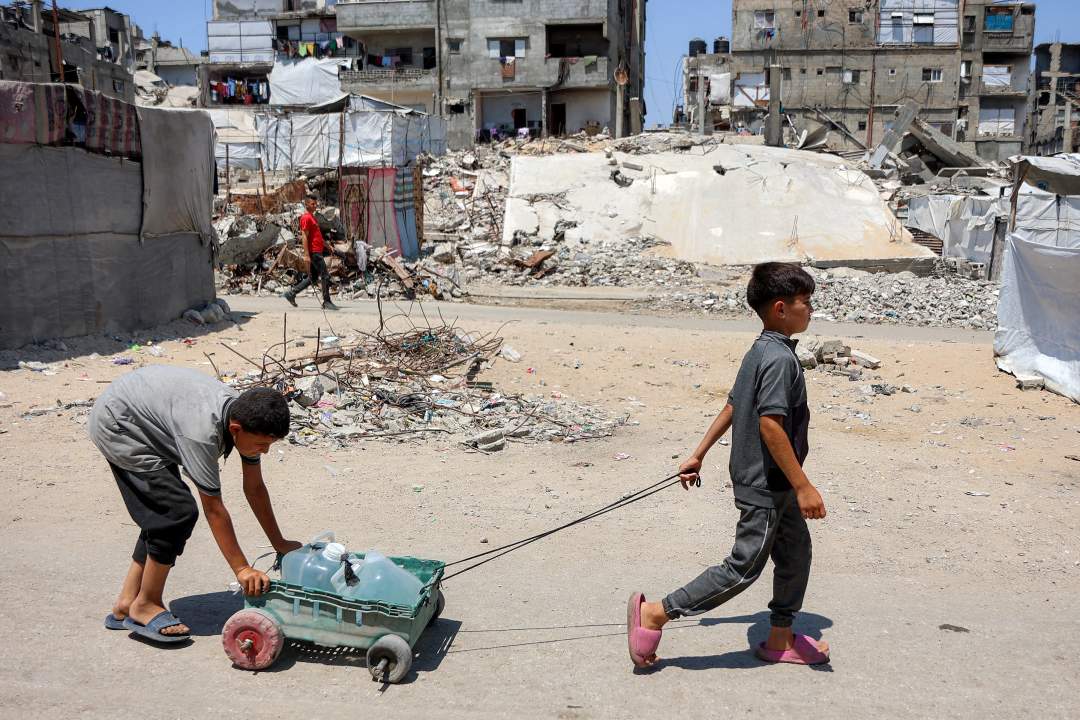
On August 7, 2026, the Atlanta Israel Coalition — a pro-Israel advocacy page operating out of Georgia — published a post on Facebook that has since been shared thousands of times. The exact same post have been made across many other pro zionist accounts on Facebook, X, Threads and likely other platforms in other forms. The claim was explosive: "There was never a famine in Gaza." The post cited a "nutrition survey commissioned by the United Nations Children's Fund (UNICEF)" reporting acute malnutrition rates among children under five between 0.2% and 0.8% — figures the post claimed were lower than neighboring countries like Egypt, Jordan, and Syria. The post concluded that these numbers "directly challenge claims that Gaza was experiencing widespread child starvation or famine-level acute malnutrition."
It was accompanied by an AI-generated map and tagged with #StopAntisemitism — a pre-emptive shield designed to make criticism of the post's claims appear as bigotry.
There's only one problem. The entire thing is a lie built on cherry-picked data, misattributed sources, and the deliberate erasure of one of the most thoroughly documented humanitarian catastrophes of the 21st century.
And the proof isn't coming from Palestinian advocacy groups. It's coming from the very institution — UNICEF — whose name was stolen to give this propaganda its veneer of credibility.
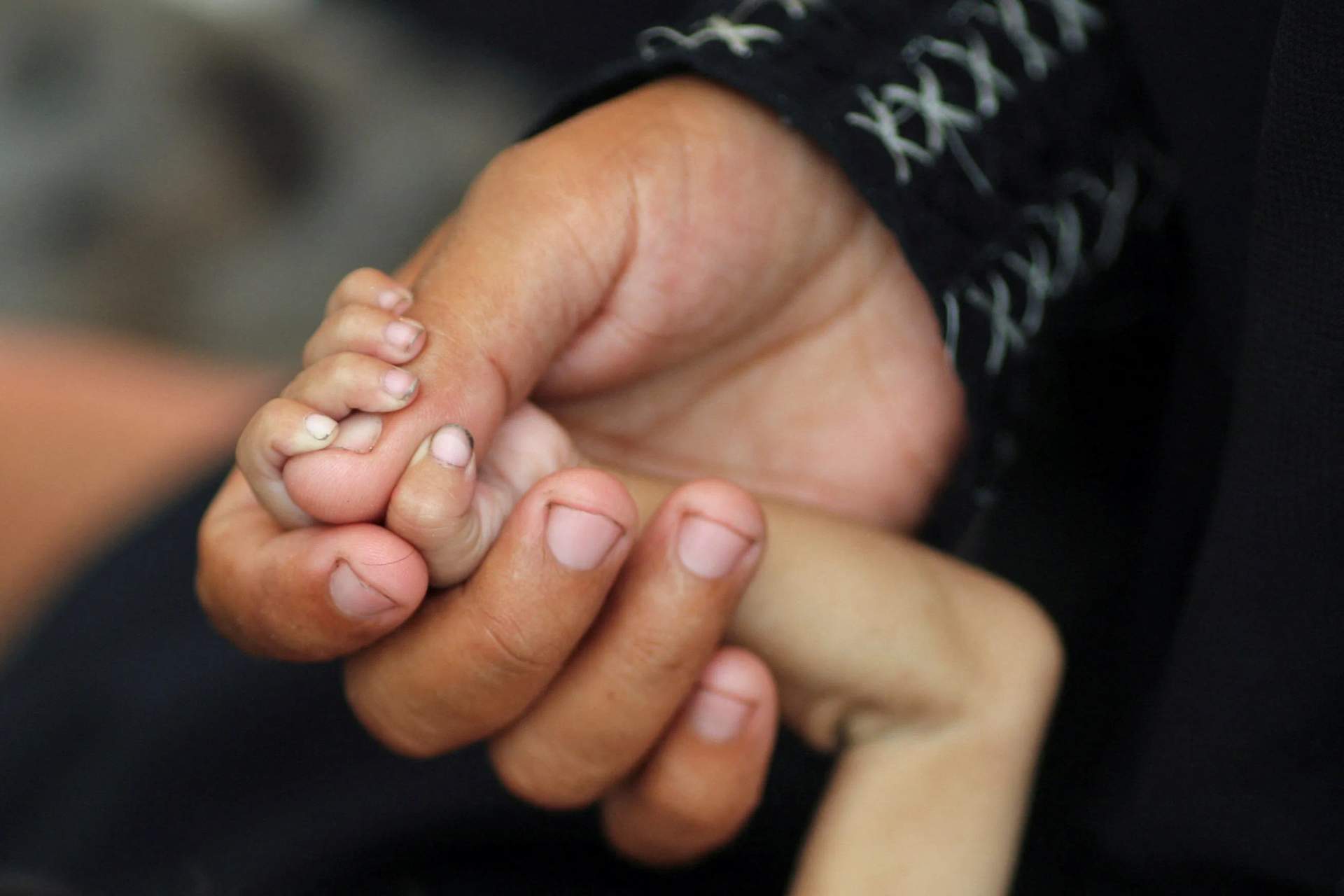
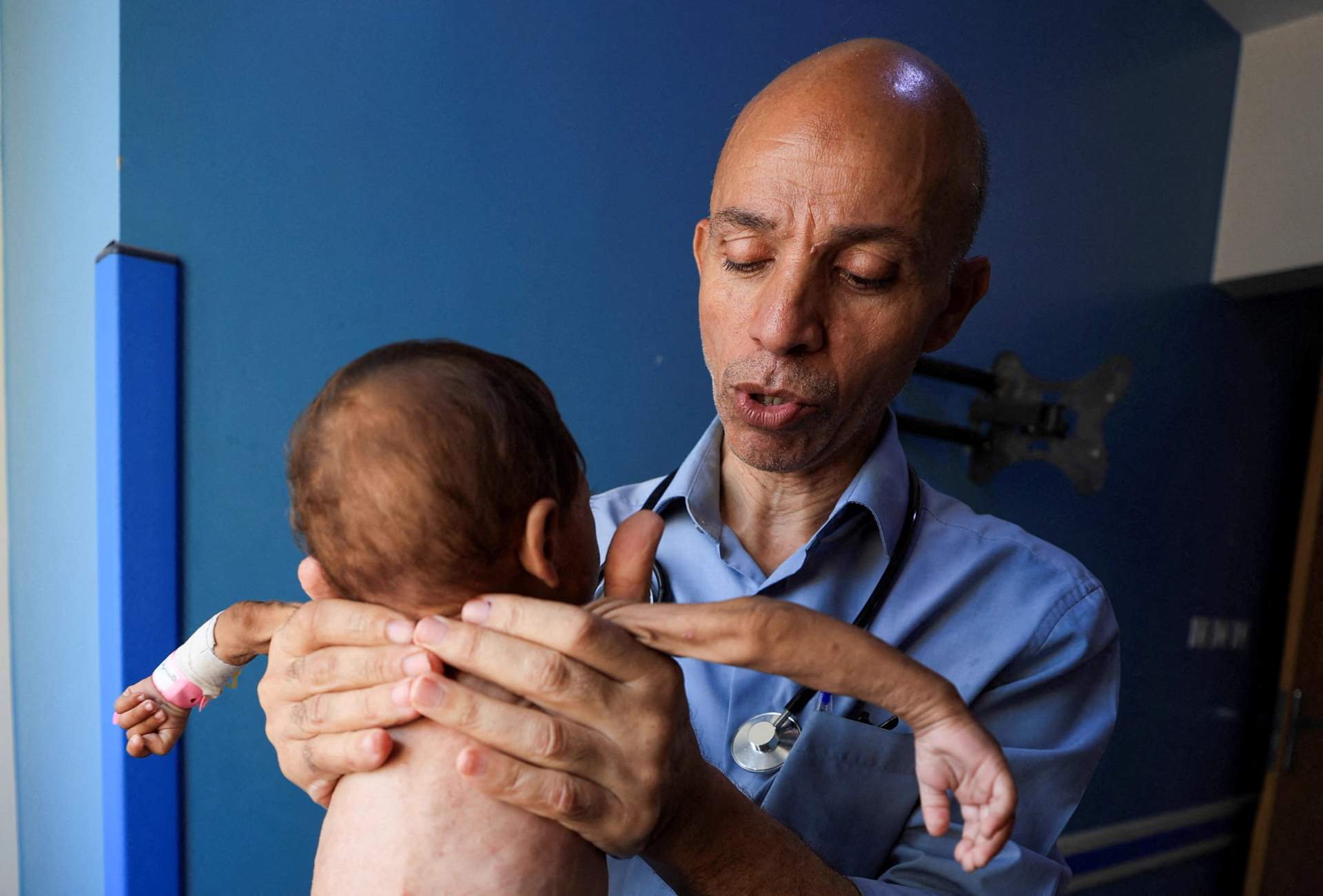
Palestinian mother cradling a severely malnourished five-month-old infant in a hospital in Gaza City during famine
The Source They Cited Doesn't Say What They Claim
The 0.2% to 0.8% figure is real. It exists. But here's what the Atlanta Israel Coalition doesn't tell you: that number comes from a single Nutrition Cluster survey conducted in mid-2026, after a ceasefire had been in place for nearly ten months, and after aid flows into Gaza had partially recovered. The survey was coordinated under the UNICEF-led Nutrition Cluster and measured child malnutrition using Weight-for-Height Z-scores (WHZ), a standard WHO methodology.
But the Atlanta Israel Coalition doesn't cite the Nutrition Cluster survey directly. Neither does the Jerusalem Post article from which these numbers originated. The JP piece, published the same day under the headline "'Facts prevail over fiction,' Danon says as new UNICEF-led survey challenges Gaza famine claims," is itself a piece of advocacy journalism that takes a narrow slice of data and inflates it into an exoneration of Israeli policy.
Here is what the JP article itself acknowledges but the Facebook post deliberately omits: the same survey found that one in eight children in Gaza shows signs of stunting — a condition caused by "longer-term nutritional stress and repeated deprivation beyond immediate wasting." The survey also found that up to 78% of children in Khan Younis and Rafah were consuming unhealthy food, and that in Gaza City and northern Gaza, some 64% of children had no access to fruits or vegetables.
These are not the markers of a well-fed population. They are the markers of a population surviving, not thriving — a population whose children are eating garbage calories because the infrastructure to provide real nutrition has been systematically destroyed.
The Numbers They Hide: Gaza's Famine Was Official, Measured, and Deadly
The Atlanta Israel Coalition wants you to believe that because malnutrition rates currently measure low, famine never happened. This is not how famine works. Famine is not a permanent state — it is an event, a period of acute deprivation that kills people, and then, if conditions change, it recedes. The question is not "what are malnutrition rates today?" The question is "did famine occur, and who caused it?"
On that question, the record is unambiguous.
On August 22, 2025, the Integrated Food Security Phase Classification (IPC) — a 21-agency partnership including UNICEF, the World Food Programme, the World Health Organization, and the Food and Agriculture Organization — officially confirmed famine in Gaza Governorate. It was the first time famine had been formally declared in the Middle East.
The IPC report, a Special Snapshot covering July–September 2025, documented the following:
- More than 640,000 people facing Catastrophic food insecurity (IPC Phase 5) across the Strip
- 1.14 million additional people in Emergency conditions (IPC Phase 4)
- 396,000 more in Crisis (IPC Phase 3)
- 132,000 children under five expected to suffer acute malnutrition — double the May 2025 estimate
- Over 41,000 children suffering severe acute malnutrition (SAM), the deadliest form, carrying both short and long-term risk of death
- 55,500 malnourished pregnant and breastfeeding women
- One in five babies born prematurely or underweight
In July 2025 alone, more than 12,000 children were identified as acutely malnourished — the highest monthly figure ever recorded in Gaza, a six-fold increase since the start of the year. Nearly one in four of those children were suffering from severe acute malnutrition.
In the Gaza City Governorate specifically, over 15% of children were acutely malnourished by the end of July 2025 — the threshold the IPC uses to formally classify famine. This figure comes from a UNRWA study published in The Lancet in October 2025, at a time when Israel was conducting the disarmament theater that killed 50 people in five days.
UNICEF's own Executive Director, Catherine Russell, stated at the time: "Famine is now a grim reality for children in Gaza Governorate, and a looming threat in Deir al-Balah and Khan Younis. As we have repeatedly warned, the signs were unmistakable: children with wasted bodies, too weak to cry or eat; babies dying from hunger and preventable disease; parents arriving at clinics with nothing left to feed their children."
WHO Director-General Dr. Tedros Adhanom Ghebreyesus said: "The world has waited too long, watching tragic and unnecessary deaths mount from this man-made famine. Widespread malnutrition means that even common and usually mild diseases like diarrhoea are becoming fatal, especially for children."
UN Relief Chief Tom Fletcher was blunter: "It is a famine, the Gaza famine."
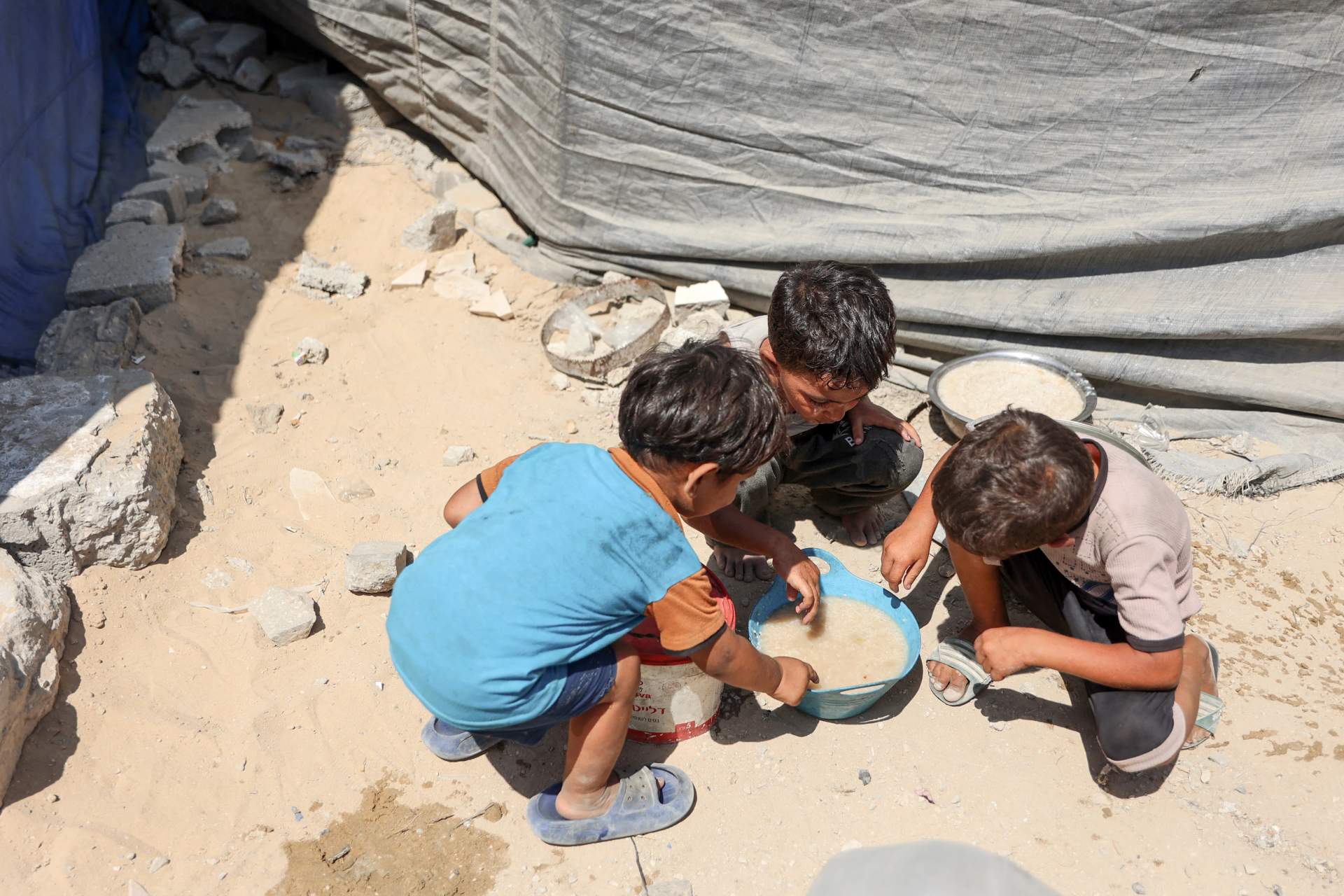
Palestinian children sharing a bowl of soup at a food distribution point in Gaza during famine
UNICEF's Own Report Destroys the "Everything Is Fine" Narrative
These are not activists. These are the heads of the world's largest humanitarian agencies, speaking on the basis of the IPC's analysis — the same multilateral system the Atlanta Israel Coalition now selectively cites when it produces numbers they like.
A Timeline the Propagandists Don't Want You to See
The attempt to erase Gaza's famine depends on the audience not knowing what happened and when. Here is the documented timeline:
| Period | Malnutrition / Food Security Status | Source |
|---|---|---|
| Pre-war (2023) | 0.8% acute malnutrition in children under 5 | IPC / Nutrition Cluster |
| January 2024 | 9 in 10 people in northern Gaza eating less than one meal per day | WFP |
| March 2024 | IPC warns of imminent famine in northern Gaza | IPC March 2024 Report |
| February–March 2024 | Flour Massacre — Israeli forces kill over 100 Palestinians seeking aid on al-Rashid Street | UN, eyewitness testimony, MSF |
| May 2025 | IPC reports 15.8% acute malnutrition in Gaza City | IPC / UNRWA |
| July 2025 | 12,000+ children identified as acutely malnourished in one month — highest ever recorded | WHO / UNICEF / WFP joint statement |
| August 22, 2025 | **Famine officially confirmed** in Gaza Governorate by IPC Famine Review Committee | IPC Special Snapshot |
| May–October 2025 | Over 2,600 Palestinians killed at aid distribution sites while seeking food | UN monitoring, Wikipedia documentation |
| October 2025 | Ceasefire begins; aid flows partially increase | Multiple sources |
| Mid-2026 | Nutrition Cluster survey finds 0.2–0.8% acute malnutrition (WHZ) — post-ceasefire, post-aid increase | Nutrition Cluster / UNICEF-coordinated |
| July 2026 | UNICEF mid-year report: 82% of families remain water insecure, 90% of WASH infrastructure destroyed, only 44% of aid trucks able to offload | UNICEF SoP Mid-Year Analysis 2026 |
The pattern is unmistakable. Famine devastated Gaza through 2024 and 2025. A ceasefire and partial aid increase brought some recovery by mid-2026. The propagandists take the recovery number and pretend the crisis never existed.
The same UNICEF that the Atlanta Israel Coalition claims vindicates them published a mid-2026 humanitarian situation update that paints a picture of ongoing catastrophe. The report, which I — a commenter on the Facebook post who actually read it — linked directly in the thread, documents conditions that make the 0.8% figure look less like proof of abundance and more like proof that the international community managed to pull Gaza back from the brink of total collapse — barely, and temporarily.
Key findings from UNICEF's 2026 Mid-Year Analysis:
- 1.9 out of 2.1 million people remain displaced
- Only 280 out of 633 UNICEF aid trucks (44%) from Egypt were able to offload during May and June 2026
- 82% of families remain water insecure
- Up to 70% of the population cannot access 6 litres of water per person per day — far below the minimum emergency standard of 15 litres
- Nearly 90% of water and sanitation infrastructure has been damaged or destroyed
- 66,412 children face disrupted access to essential services near the "Yellow Line"
- In a worst-case scenario, 282,600 people, including 133,828 children, will be affected by intensified military activity and movement restrictions
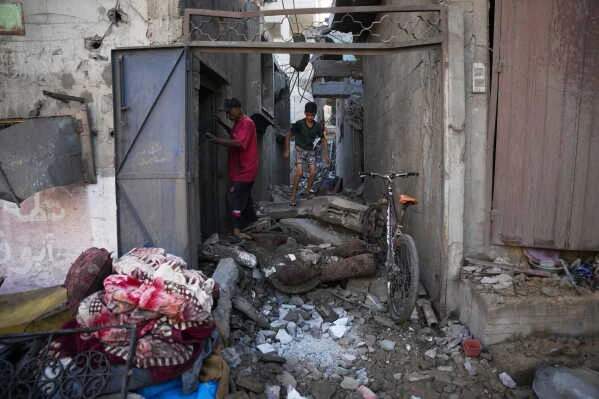
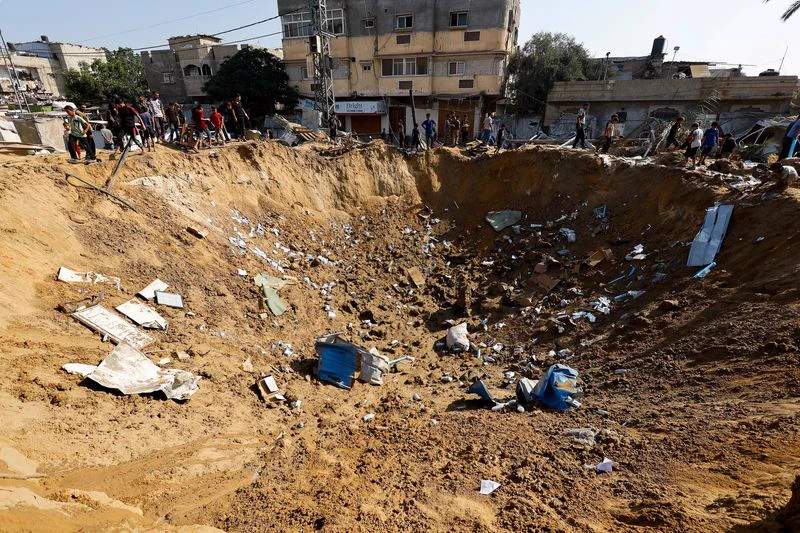
This is the context the Facebook post scrubs entirely. Children may not be starving at this exact moment at the rate they were in August 2025 — because humanitarian organizations fought to get aid in against systematic Israeli obstruction. But the infrastructure that sustains life in Gaza has been shattered. One bad month of aid blockades, one renewed military offensive, and those 0.8% figures will reverse overnight.
The Propaganda Playbook: How to Manufacture a Lie
The Atlanta Israel Coalition's post is a masterclass in hasbara — the Israeli public diplomacy apparatus that systematically distorts reality to shield the state from accountability. Here is exactly how this particular piece of propaganda works:
1. Misattribute the source. The post claims the data comes from "a nutrition survey commissioned by UNICEF." In reality, the survey was coordinated by the Nutrition Cluster, a UNICEF-led body, but the 0.8% figure was first published and amplified by the Jerusalem Post — an Israeli newspaper with a clear editorial position. UNICEF's own website does not feature this figure in any standalone report. The attribution chain is: Nutrition Cluster → Jerusalem Post → Danny Danon's UN statement → pro-Israel Facebook pages. Each step in the chain strips context and adds spin.
2. Cherry-pick a single data point from a specific moment in time. The survey measures conditions in mid-2026 — after a ceasefire, after partial aid recovery, and after the worst of the famine had already killed its victims. Compare this to the 15%+ rates in Gaza City during the famine peak, or the IPC's confirmation of famine conditions in August 2025. The propagandists don't compare across time. They freeze the frame at the most favorable moment and pretend it represents the entire war.
3. Compare Gaza's post-crisis numbers to regional averages during stable periods. Egypt's 2.9% and Jordan's 2.0% are baseline figures from countries not under siege, not under blockade, and not experiencing active military campaigns against their civilian infrastructure. Gaza's pre-war rate was 0.8% — a number the Jerusalem Post itself notes was "relatively low and comparable to rates seen in developed countries." The implicit argument — "see, Gaza is doing better than Egypt" — collapses when you realize that Gaza was doing better than Egypt before Israel destroyed its water systems, its agriculture, and its health infrastructure.
4. Erase the famine that the United Nations confirmed. The IPC's August 2025 famine declaration — backed by FAO, UNICEF, WFP, and WHO — is never mentioned. The 132,000 children expected to suffer acute malnutrition, the 12,000 children identified in a single month, the 41,000 severe cases at risk of death — none of it appears. As far as the Atlanta Israel Coalition is concerned, it simply didn't happen.
5. Shield criticism with accusations of antisemitism. The #StopAntisemitism tag on the post isn't an afterthought. It's structural. It converts factual rebuttal into moral accusation. When myself or another commenter dismantles the post's claims with actual UNICEF data, the response isn't to engage with the evidence — it's to call him a "pathetic idiot" or a "moron," as Jane Pogue did in the comments, while providing no source of her own.
6. Use an AI-generated map that subtly reshapes geography. Multiple commenters noted that the map accompanying the post appeared to be AI-generated. Simon Clark called it “a dodgy AI generated map which doesn't inspire confidence in the data." I later noticed and commented on the fact that the map appeared to redraw Egypt's border so it doesn't share one with Gaza — a cartographic change that, whether intentional or not, conveniently erases Egypt's obligations under international law to provide refuge to civilians in a neighboring war zone.
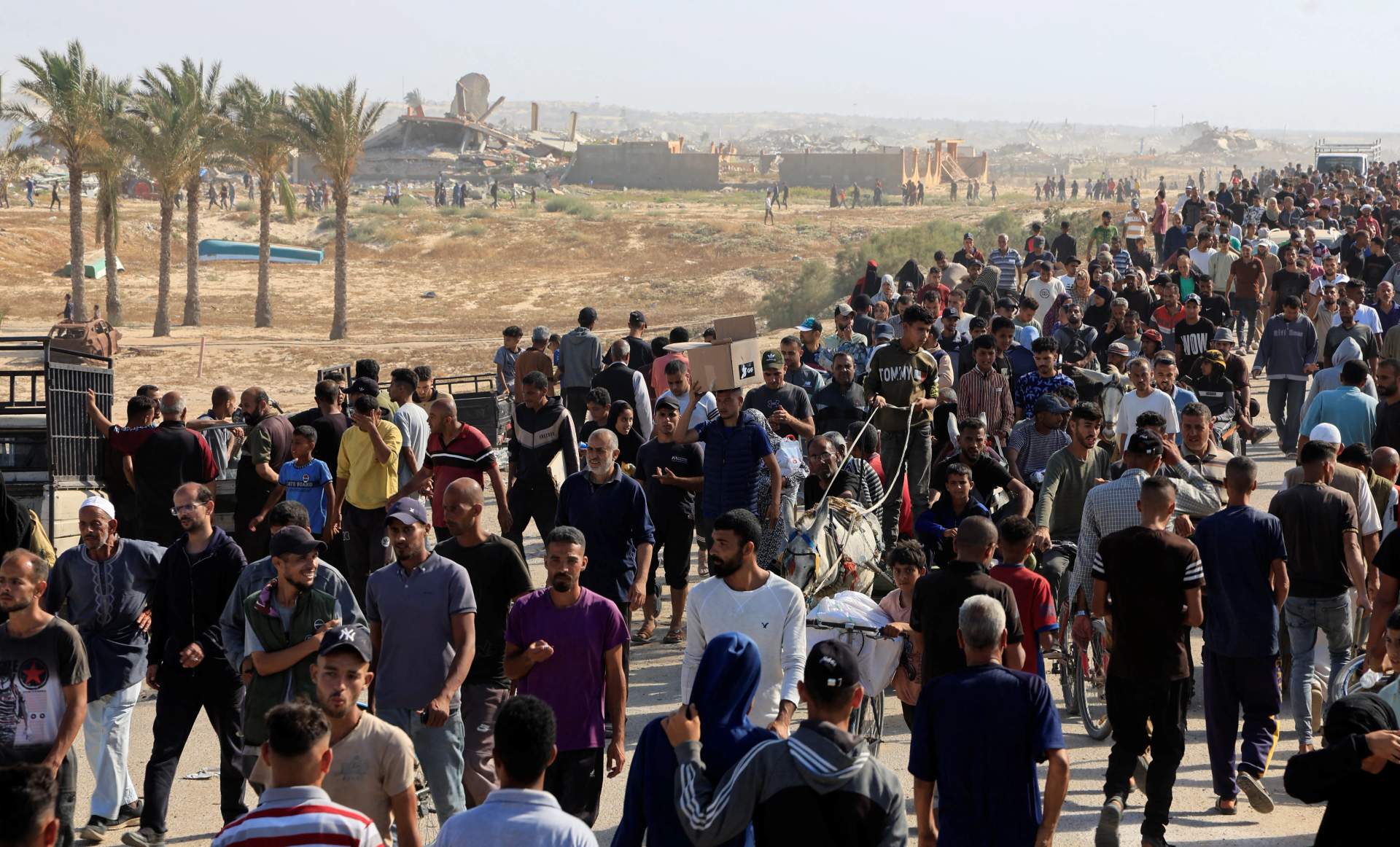
Massive crowd of thousands of Palestinians waiting at an aid distribution point in Gaza during famine conditions
The Aid Massacre They Also Don't Mention
Between May and October 2025, amid the famine the Atlanta Israel Coalition claims never happened, more than 2,600 Palestinian civilians were killed and thousands more wounded while seeking food at distribution sites operated by the Gaza Humanitarian Foundation (GHF) — a body created under the Board of Peace that engineered Gaza's surrender while the bombs never stopped. Palestinians were required to walk into active military zones, past Israeli checkpoints, for the mere chance of receiving a bag of flour.
"Aid sites were Gaza's compulsory Squid Game," wrote Logain Hamdan of Prism Reports in December 2025. Hundreds of civilians, including children, were shot dead at these sites. A Palestinian girl was photographed standing over the covered body of someone killed at a GHF distribution point on Salah al-Din Road in Nusseirat.
UNICEF USA documented that "hundreds of civilians, including children, have been killed while waiting for aid at GHF sites." The UNICEF mid-year report confirms that "access restrictions and operational constraints continue to disrupt humanitarian delivery."
This is the context in which those 0.8% malnutrition numbers must be understood. Israel didn't allow food in freely. Israel created a system where getting food required walking into a kill zone — and then used the resulting partial delivery of aid as proof that starvation was a myth.
What the Real UNICEF Data Actually Says
Let's be precise about what the data shows, because precision is how you kill a lie.
The Nutrition Cluster survey from mid-2026 found acute malnutrition (WHZ) ranging from 0.2% to 0.8% across Gaza's regions. By region:
| Region | Acute Malnutrition (WHZ) | Status |
|---|---|---|
| Gaza City / North Gaza | 0.8% | Post-ceasefire recovery |
| Deir al-Balah | 0.5% | Post-ceasefire recovery |
| Khan Younis / Rafah | 0.2% | Post-ceasefire recovery |
| **Gaza Strip-wide** | **0.5%** | **Below emergency threshold — for now** |
The IPC's July 2026 report classified nutrition at Phase 1 (less than 5% acute malnutrition) for mid-April 2026, but warned it could deteriorate to Phase 2 (5–9.9%) between July and December 2026.
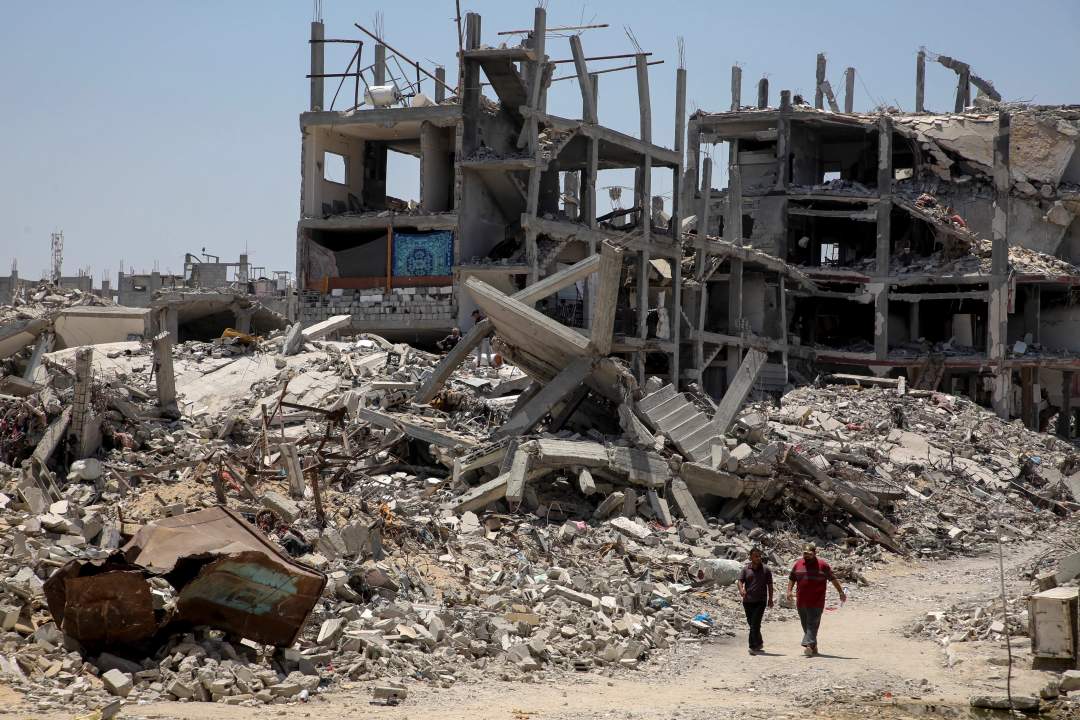
This is a snapshot of a fragile, temporary improvement — not proof that famine never existed. The famine happened. The UN confirmed it. The bodies were counted. The hospitals were overrun with malnourished children. The photographs exist. Reuters, AFP, AP — the world's major wire services documented it in real time.
A Palestinian mother holds a severely malnourished infant in a hospital bed in Gaza City during the 2025 famine
The Bodies They Cannot Erase
Photographs from Gaza in 2025 tell a story that no Facebook post can rewrite. At Al-Rantisi Hospital in Gaza City, Reuters photographed a Palestinian mother holding her severely malnourished infant, the child's ribs visible, their body failing. In August 2025, Reuters documented a mother holding her five-month-old baby, Amira Muteir, receiving treatment for malnutrition that could have been prevented if aid had been allowed to flow.
At aid distribution points across the Strip, thousands of Palestinians — including children — were photographed standing in massive crowds, waiting hours for food that might not come, in areas where Israeli forces had already killed civilians seeking the same basic necessity. AFP photographed children sharing a single bowl of lentil soup at a distribution point in August 2025 — children reduced to communal begging because the systems that should feed them have been annihilated.
UNICEF's own photographs from the period show children "with wasted bodies, too weak to cry or eat" — Catherine Russell's description, not mine.
The Verdict: Cherry-Picked Data, Manufactured Denial
The Atlanta Israel Coalition's post is not a good-faith argument. It is a deliberate, coordinated attempt to rewrite history using a real institution's name, a real methodology, and a carefully selected moment in time — while erasing the famine that killed hundreds, that stunted thousands of children, and that was confirmed by the most credible multilateral food security system in the world.
The playbook is familiar. When the UN confirms famine, deny the famine. When photographs document starving children, claim they're staged. When the data eventually shows improvement after a ceasefire, point to the improvement and say "see, there was never a problem."
It is the logic of a drunk driver who points to the fact that he's currently sober and says "I've never been drunk — look at me right now."
The famine in Gaza was real. It was documented by the IPC, confirmed by UNICEF, WHO, WFP, and FAO. It killed children — children whose names we know, whose photographs we have, whose parents buried them. As we documented in our reporting on the ceasefire that never was, Israel's bombing continued through every supposed pause. The fact that conditions have partially improved after a ceasefire does not erase the crime. It simply means the international community managed to apply a tourniquet — temporarily — to a wound that Israel inflicted.
And the people who are now using UNICEF's name to pretend none of it happened? They're not skeptics. They're accomplices to the cover-up.
Sources & Methodology(10 sources)
Methodology
This article was researched using primary source documents from UNICEF, the WHO, the IPC Famine Review Committee, UNRWA, and Reuters. The Facebook post from the Atlanta Israel Coalition was obtained directly. The Jerusalem Post article originating the 0.2-0.8% malnutrition claim was read in full. The IPC's August 2025 famine confirmation report, WHO joint agency statement, UNICEF mid-year 2026 humanitarian analysis, and UNRWA Lancet study were all consulted. Comment threads on the original Facebook post were reviewed for factual claims and rebuttals. Wire service photographs from Reuters, AFP, and AP were sourced for visual documentation.
Filed Under
Frequently Asked Questions
- Does the new UNICEF-coordinated survey prove there was no famine in Gaza?
- No. The survey, conducted in mid-2026 after nearly ten months of ceasefire, found acute malnutrition rates between 0.2% and 0.8%. This measures current conditions during a period of partial aid recovery. The IPC officially confirmed famine in Gaza Governorate in August 2025, when malnutrition rates exceeded 15% in Gaza City. The new survey shows improvement, not that famine never existed.
- What did the UN agencies actually say about famine in Gaza?
- On August 22, 2025, the IPC — a 21-agency partnership including UNICEF, WHO, WFP, and FAO — confirmed famine in Gaza Governorate. Over 640,000 people faced Catastrophic food insecurity, 132,000 children under five were expected to suffer acute malnutrition, and one in five babies were born prematurely or underweight. UNICEF's Executive Director described 'children with wasted bodies, too weak to cry or eat.'
- Where did the 0.2-0.8% malnutrition figure come from?
- The figure comes from a Nutrition Cluster survey — the UNICEF-led body that coordinates nutrition surveillance in Gaza — conducted in mid-2026. The survey was first reported by the Jerusalem Post, not by UNICEF directly. The figure measures conditions after a ceasefire and partial aid recovery, not during the famine period.
- How many people were killed while seeking food aid in Gaza?
- Between May and October 2025, more than 2,600 Palestinian civilians were killed and thousands more wounded while seeking food at distribution sites operated by the Gaza Humanitarian Foundation (GHF), a body coordinated by the United States and Israel. UNICEF USA confirmed that hundreds of civilians, including children, were killed at these sites.
- What are current humanitarian conditions in Gaza?
- According to UNICEF's mid-2026 report, 1.9 of 2.1 million people remain displaced, 82% of families are water insecure, nearly 90% of water and sanitation infrastructure has been destroyed, and only 44% of UNICEF aid trucks were able to offload in May-June 2026. Up to 70% of the population cannot access the minimum emergency standard of 6 litres of water per person per day.