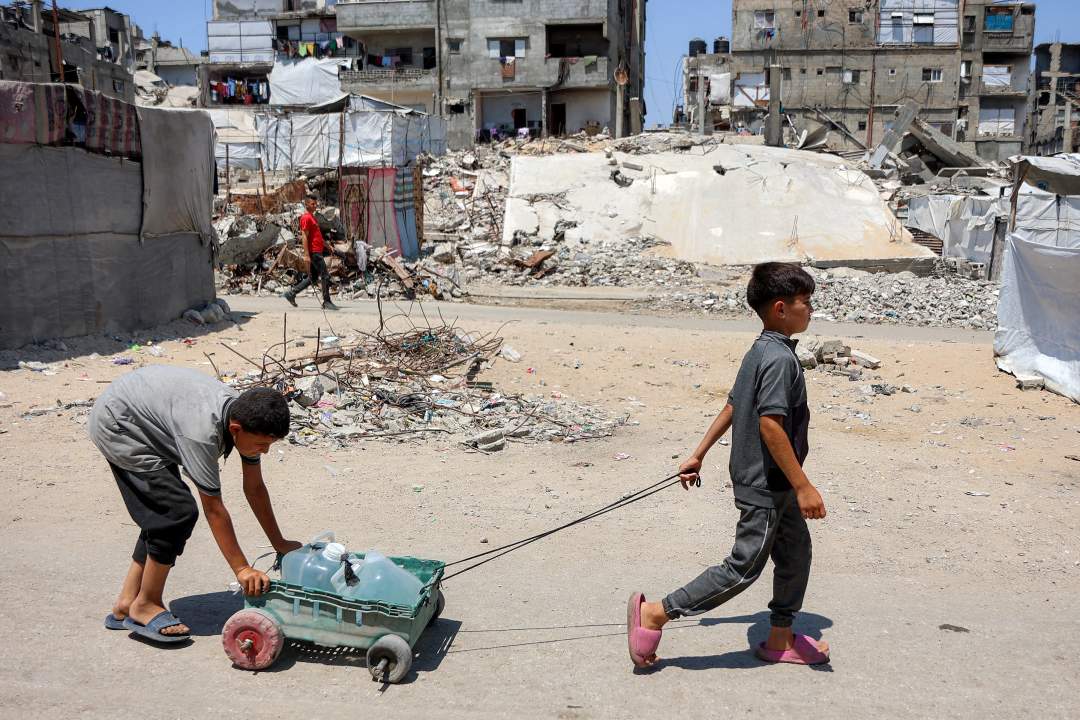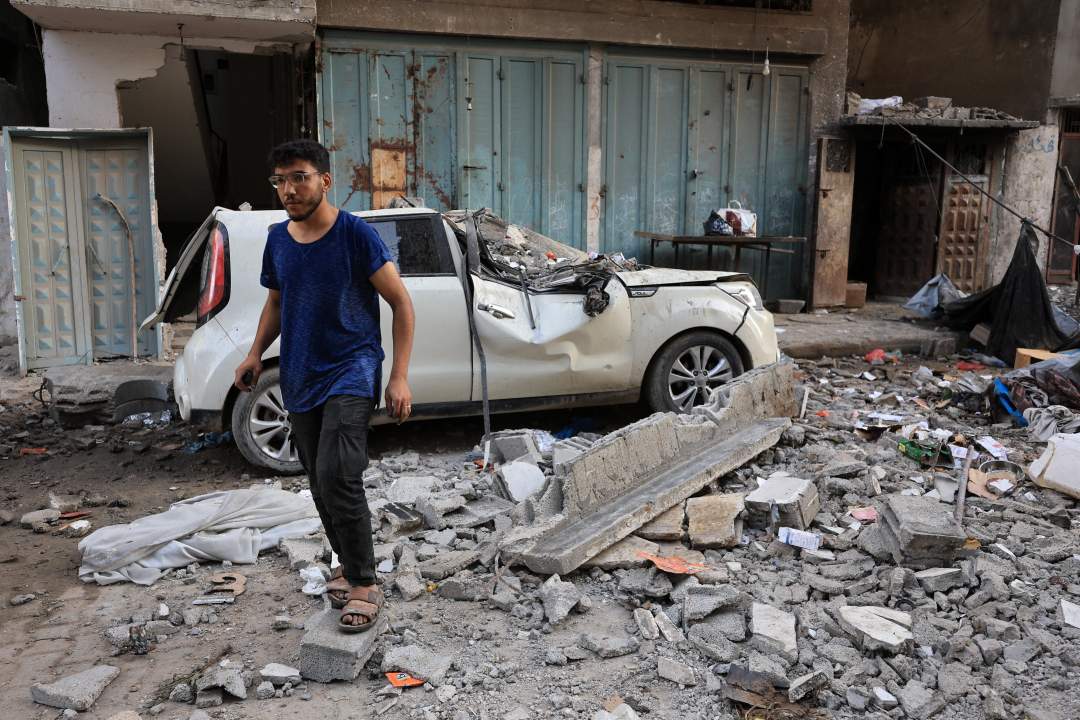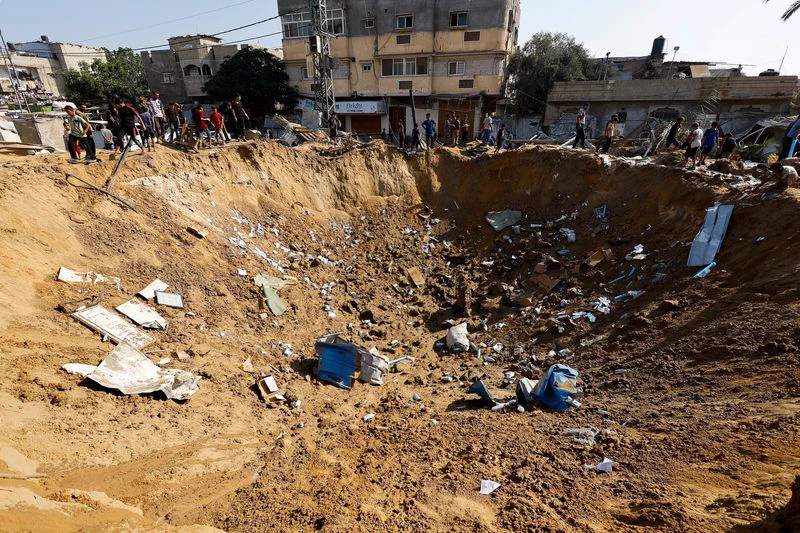
The same week Hamas signed a disarmament agreement that the White House called a "monumental step toward peace," Israel killed more than 50 Palestinians across the Gaza Strip — including entire families, pregnant women, and children as young as 18 months. Bodies are still being pulled from the rubble of homes destroyed weeks ago. Medicine warehouses attached to one of Gaza's last functioning hospitals were destroyed. Tents sheltering displaced families were bombed. A five-year-old boy named Azzam was killed alongside his pregnant mother, Abeer, who was 29 years old, and his father, Abdullah, who was 33. Their apartment in Gaza City's Al-Sousi Tower was reduced to dust on the same day Donald Trump's Board of Peace was announcing the details of a "peace roadmap" on television.
This is not a ceasefire. It is a slaughter conducted under the cover of diplomatic language — and every government that has signed off on this "process" without demanding an immediate halt to the killing is complicit in what is happening.
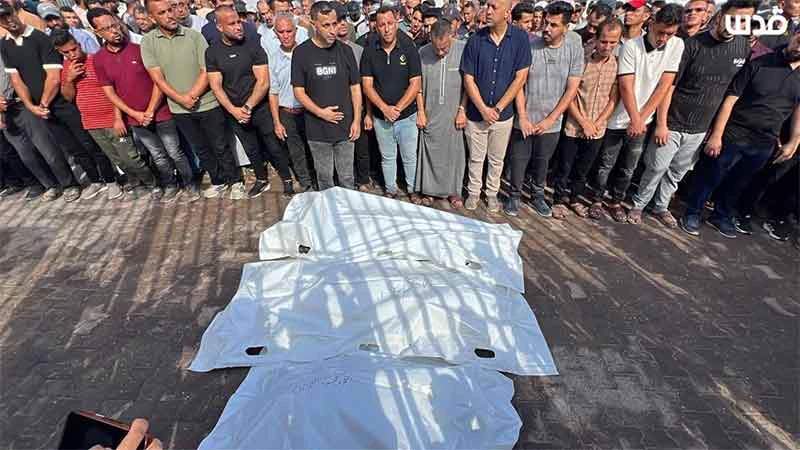
Mourners carry the body of a Palestinian killed in an Israeli airstrike in Gaza, August 2026
The Dead of the Past Week
The numbers from July 30 to August 3 tell the story that the Board of Peace does not want told.
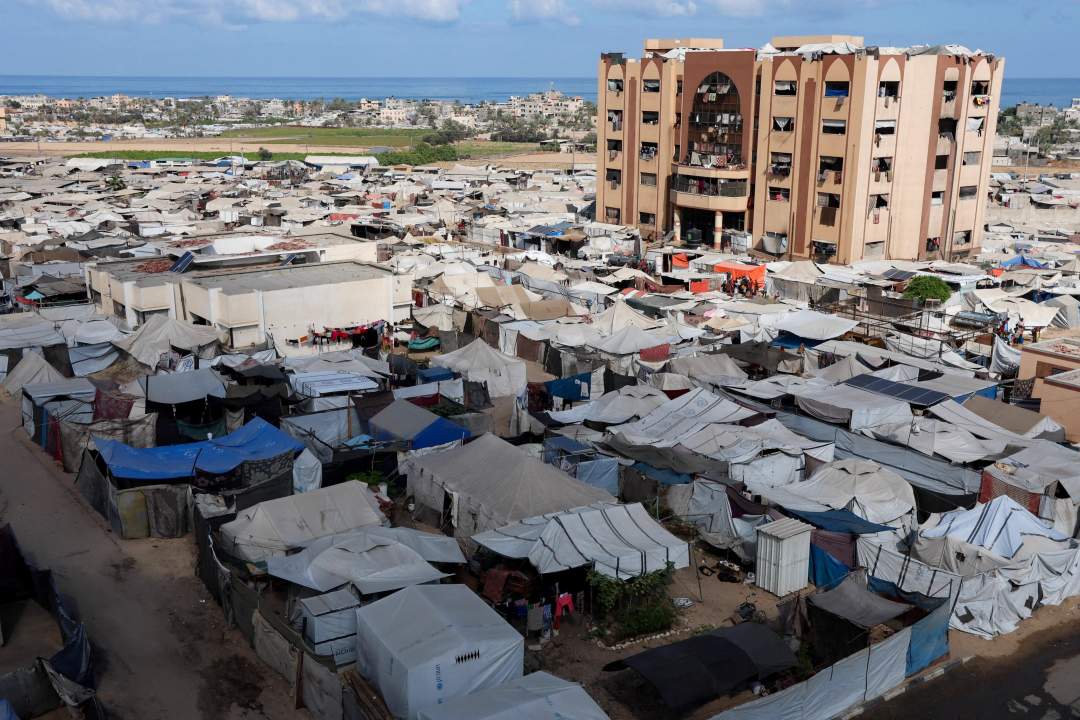
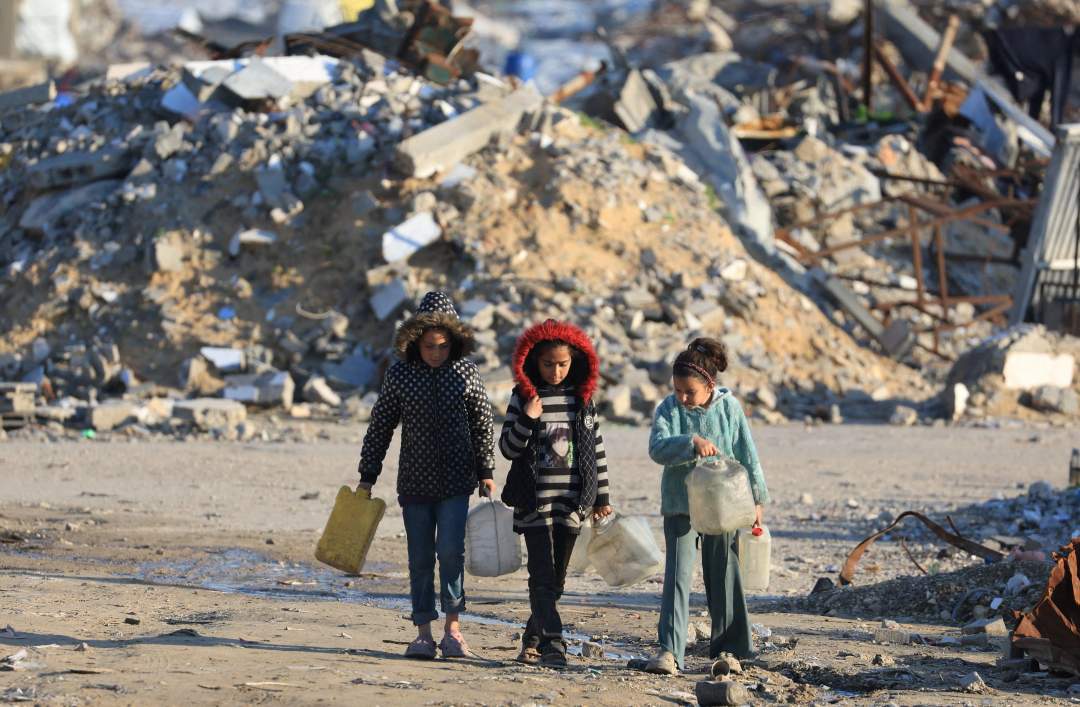
On July 30, the same day Hamas officials were meeting with Qatari, Egyptian and Turkish mediators in Cairo to discuss the ceasefire's second phase, Israeli aircraft struck a tent encampment for displaced families in Khan Younis. They killed a 20-year-old man and an eight-year-old girl whose name has not been released — because in Gaza, children are killed so frequently that their names routinely go unrecorded by the Western press. In a separate strike on Bureij refugee camp, an Israeli airstrike hit a house and killed an 18-month-old baby. Eight others were wounded. In Gaza City, a Palestinian man riding a bicycle was killed in a strike that wounded ten others. Hind Khoudary, reporting for Al Jazeera from the aftermath of an attack on Shati refugee camp, described 35 families made homeless in a single bombing — their makeshift tents shredded by explosions that came without warning.
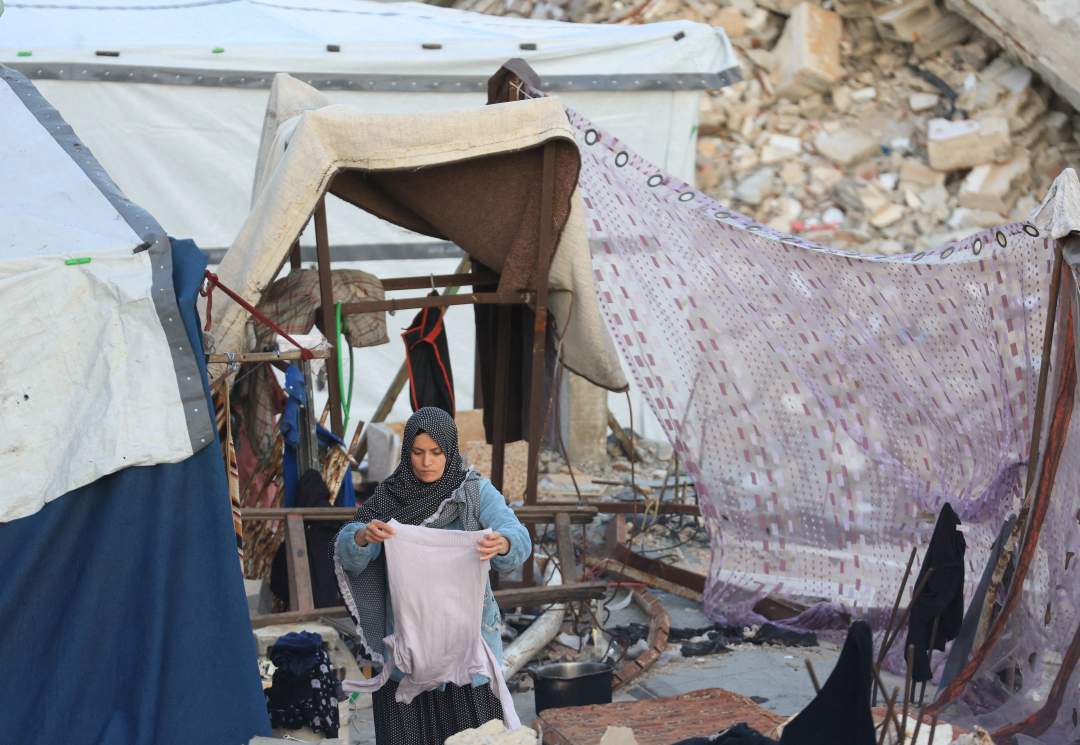
On August 1, Israeli forces killed at least seven Palestinians and destroyed four medicine warehouses attached to Al-Aqsa Martyrs Hospital in Deir el-Balah. The warehouses held intravenous fluids, dialysis supplies, and intensive care equipment — the material lifeline for a health system that Israel has spent 21 months systematically dismantling. Gaza's Health Ministry director-general, Munir al-Bursh, said destroying the supplies "turns medicine and illness itself into a tool of war." The Israeli military issued an evacuation order 15 minutes before bombing the facility. Tents housing displaced families near the hospital caught fire. Al Jazeera's Moath al-Kahlout stood beside the crater and described what he saw: destroyed medicines, burning tents, and people beginning what he called "another journey of displacement."
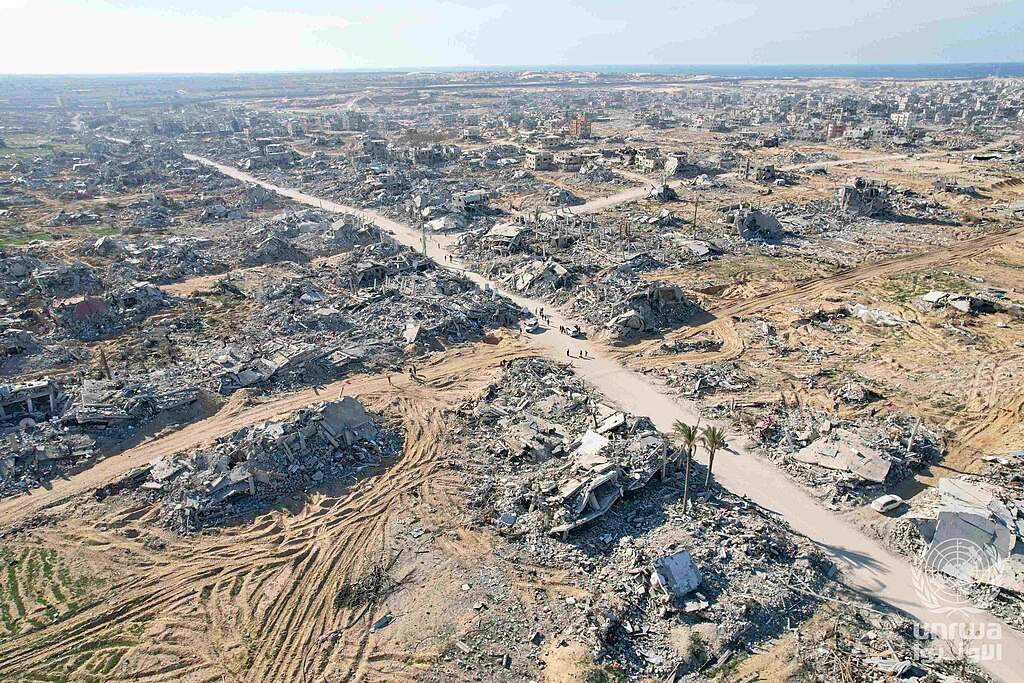
Also on August 1, Gaza Civil Defense teams completed the recovery of 112 bodies from the ruins of the al-Hasayna and Abu Sharia family homes in the Sabra neighborhood of Gaza City. The dead included 40 children, 38 women, and seven people with disabilities. The operation took 136 hours — crews worked largely with their bare hands because Israel has denied Gaza the heavy equipment needed to lift concrete slabs from flattened buildings. Mohammed Abu Dan, who oversaw the recovery, said 157 bodies were still missing from that site alone. Some remains had been fused into concrete and rebar by the heat of the explosions. One week earlier, the same crews had recovered 99 bodies from the Abu Shariah and al-Hasayna homes in the same neighborhood. Two hundred members of the al-Hasayna family were killed when Israel bombed their homes earlier in the genocide. They were buried where they sheltered, and it took months to dig them out — not because the technology doesn't exist, but because Israel would not allow it in.
On August 2, Israel killed 19 Palestinians in a single day — the largest daily death toll in weeks. Among the named dead: Abdullah Abu Taif, 33; his wife, Abeer Anan, 29, who was pregnant, and their unborn child; and their son, Azzam, who was five years old. They were killed in their apartment in Al-Sousi Tower in western Gaza City. In al-Qarara, northwest of Khan Younis, the al-Hams family was destroyed: Mahmoud al-Hams, 38; his wife, Fatima, 37; and their young daughter were all killed. Three others were wounded. Kamu Abu Muailiq, 68, and his wife, Huda, 59, were killed in their home near Deir el-Balah. In Jabalia refugee camp, a Palestinian was killed in a direct strike. In al-Mawasi, one person was killed and five wounded when Israel bombed a tent for displaced families. In the Remal neighbourhood of Gaza City, a drone strike on another tent killed two Palestinians. Four more were killed in a strike on a vehicle in Gaza City.
On August 3, the killing continued: another 19 Palestinians were killed, bringing the weekend death toll to 26. Israeli warplanes operated at low altitude without issuing prior warnings, targeting residential buildings, apartments, and civilian gatherings across the entire strip.
In five days, Israel killed more than 50 Palestinians — the vast majority of them civilians, many of them children, some of them still in their mothers' wombs.
The Disarmament That Wasn't
On July 30, Trump's Board of Peace and the International Stabilization Force announced that Hamas had accepted a 15-point roadmap for Gaza's next phase — a plan that links Hamas's phased disarmament to Israel's withdrawal from the territory. Trump called it a "monumental step." Nickolay Mladenov, the Board of Peace's lead envoy, said mediators were working "around the clock."
Israel's response was immediate and unmistakable: more bombing, more dead, and a set of demands designed to ensure the deal never materializes.
Doron Spielman, spokesperson for Benjamin Netanyahu's office, said Israel would not withdraw its forces until Hamas had "fully surrendered" its weapons — a condition that does not appear in the roadmap as published. Israeli Energy Minister Eli Cohen told Army Radio that no agreement required Israel to suspend its attacks during negotiations. Israel demanded that weapons collected from Hamas be handed over to a Western state — not a Palestinian entity. It demanded the exclusion of Qatar and Turkiye from the verification mechanisms. It demanded complete freedom to continue conducting military operations across Gaza. It refused to withdraw from the so-called "Yellow Line," a zone comprising 52 percent of the Strip that Israel has occupied in defiance of the ceasefire agreement — the same expanding occupation line we documented in our investigation of Israel's de facto reoccupation of Gaza.
Palestinian political analyst Eyad al-Qarra summarized what this means: "Freedom of Israeli action in Gaza means, in practice, a full occupation. An administrative committee cannot operate in thin air; it needs heavy machinery, open border crossings and a suitable environment to rebuild infrastructure and schools. If an administrative committee operates in areas under Israeli military control, it will be viewed by the people as nothing more than a collaborating militia."
Expert Mtanes Shehadeh was more direct: "Israel seeks to continue the killing, starvation and siege in the Strip, and to obstruct any actual, practical progress in the second phase of the agreement, without explicitly announcing its rejection of the roadmap." He said Netanyahu's government would continue "procrastination, evasion, and disruption" until the Israeli elections on October 27, because "any serious implementation of the agreed-upon roadmap will lead to electoral damage for Netanyahu."
This is what the disarmament deal actually is: a framework for Israel's continued violence, dressed in the language of peace. Hamas agrees to surrender its weapons. Israel demands the right to keep bombing. The Board of Peace pretends both positions are compatible. And the bodies keep piling up.
The Ceasefire That Never Was
Since the "ceasefire" took effect on October 10, 2025, Israel has killed at least 1,250 Palestinians and wounded more than 4,110, according to Gaza's Health Ministry and the Gaza Government Media Office. The ceasefire is now in its tenth month. In that time, Israel has violated it more than 3,690 times — an average of more than 12 violations per day, every single day, for 300 days straight.
But the numbers the media keeps recycling are already stale. Consider the gap between what gets reported and what has actually happened:
- 73,349 — the death toll figure most Western outlets were still citing as of July 2026
- 73,500+ — the revised cumulative toll after factoring in July's 152 killed plus the first days of August
- 1,250 — Palestinians killed under the ceasefire since October 2025 (it was 1,222 three days ago; it will be higher by the time you read this)
- 4,110+ — wounded under the ceasefire (up from 4,053 days ago)
- 21,000+ — children killed since October 2023, according to UNICEF — roughly 30% of all deaths
- 250,000+ — total Palestinians killed and wounded since the genocide began, according to the Palestinian Ministry of Health
The numbers are moving targets because the killing never stops. Every outlet that prints a death toll without a date stamp is publishing a number that was already wrong by the time the article went live. Israel kills an average of four to five Palestinians per day under this "ceasefire" — more on some days, fewer on others, but the machinery of death runs continuously.
In July alone — the single deadliest month of the year under the truce — Israel killed 152 Palestinians. That is more than five people per day, every day, for 31 days, in a "ceasefire."
These are not abstractions. These are the Husseiniya family, 112 bodies pulled from a single neighborhood. These are the al-Hasayna family, 200 members killed in one bombing. These are Abdullah and Abeer and Azzam Abu Taif, a family erased from the fourth floor of an apartment tower while diplomats in Washington were calling the week a breakthrough. This is the same pattern we documented when Israel bombed a tent camp and wiped out an entire family, and when four apartments became nine martyrs, and when 900 Palestinians had been killed under the *"ceasefire"* — a number that seemed staggering in June and is now a footnote to the 1,250+ dead since.
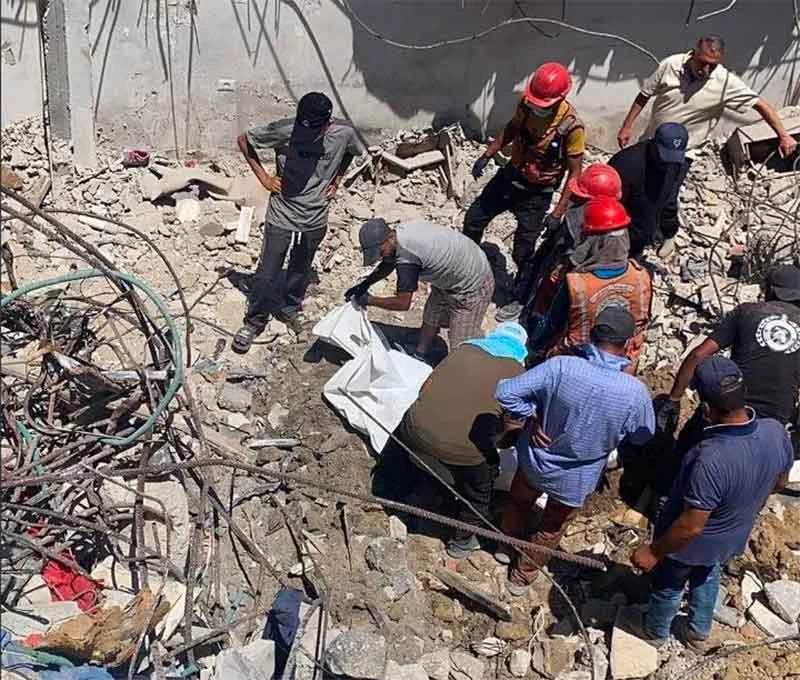
Gaza Civil Defense teams work to recover bodies from the rubble of the al-Hasayna family homes in Sabra neighborhood, Gaza City, August 2026
The Scale of Slaughter
The genocide in Gaza did not begin on October 7, 2023. But the speed of killing in the past 22 months is unprecedented in modern history. Here is what the data tells us:
Total Palestinian Deaths Since October 2023:
- Killed: 73,500+ (Gaza Health Ministry, August 2026, with UTM extrapolation for unreported deaths)
- Wounded: 174,000+
- Combined killed and wounded: 250,000+
- Children killed: 21,000+ (UNICEF)
*Deaths Under the"Ceasefire"(October 10, 2025 – Present):*
- Killed: 1,250+
- Wounded: 4,110+
- Duration: ~300 days
- Daily average: 4.2 Palestinians killed per day
- Ceasefire violations documented: 3,690+
- Deadliest month: July 2026 (152 killed)
The July–August Escalation:
- July 30: 6 killed, including 8-year-old girl and 18-month-old baby
- August 1: 7 killed, Al-Aqsa Hospital medicine warehouses destroyed, 112 bodies recovered from Sabra
- August 2: 19 killed in single day (largest daily toll in weeks)
- August 3: 19 more killed
- 5-day total: 50+ Palestinians killed
*Infrastructure Destroyed Under"Ceasefire":***
- 4 medicine warehouses at Al-Aqsa Martyrs Hospital (IV fluids, dialysis, intensive care supplies)
- Residential apartments in Gaza City, Khan Younis, Deir el-Balah
- Tent encampments for displaced families in al-Mawasi and Remal
- Civilian vehicles and a man on a bicycle
United Nations human rights chief Volker Turk condemned the "unrelenting pattern of killings" in Gaza, saying it reflected Israel's "sweeping impunity." "Palestinians are still being killed and injured in what is left of their homes, shelters and tents of displaced families, on the streets, in vehicles, at a medical facility and a classroom," he said.
Doctors Without Borders was blunter: "It has been over 1,000 days since Israel's genocide in Gaza began, and the collective punishment of Palestinians continues to this day. Amidst a so-called ceasefire, the world has normalised seeing Palestinians being maimed and killed daily in their tents, in hospitals, and on the street. This is not a ceasefire."
Fikr Shalltoot, Gaza director at Medical Aid for Palestinians, said: "Thousands more people who were told the worst was over are still burying their loved ones."
The Erasure Continues
What is happening in Gaza this week is not a complication of the peace process. It is the peace process. As we documented in our investigation of Israel's AI concentration camps and the machinery of erasure, and as we reported when Trump's Board of Peace moved to complete the Nakba by dissolving UNRWA's refugee registry, and as we showed when Israel began building settlements on Gaza's graves, the entire diplomatic architecture surrounding Gaza has been designed to accomplish through paperwork what Israel has been accomplishing through bombs: the elimination of Palestine as a political entity and the subjugation — or elimination — of its people.
The 15-point roadmap does not mention Palestinian self-determination. It does not mention the right of return. It does not mention the occupation, the settlements Israel is building on Gaza's rubble, or the 52 percent of the Strip that Israel currently occupies in defiance of the ceasefire it signed. It does mention "reconstruction" — the rebuilding of infrastructure that Israel destroyed — but only under conditions that amount to full Israeli military control. As we documented when the Board of Peace engineered Gaza's surrender, this was the plan from the beginning: a technocratic administration operating as a shell authority under Israeli guns.
Hamas signed the disarmament agreement. Israel bombed Gaza harder. The Board of Peace announced a "monumental step." Nineteen Palestinians were killed that same day. Then 19 more the next day.
The pattern is not hidden. It is performed in full view of the international community, which continues to fund, arm, and diplomatically shield the state carrying out the killings. The United States, which chairs the Board of Peace, also provides the weapons and the political cover that make the bombing possible. The European states that condemn the attacks in press statements continue to sell Israel the components of those attacks. The Arab states that mediate the ceasefire do not sanction the state that violates it thousands of times.
This is what genocide looks like in its late stages: not the sudden eruption of violence, but the routinization of mass death, the normalization of atrocity, the transformation of murder into a background condition of diplomatic life. Israel does not kill Palestinians despite the ceasefire. Israel kills Palestinians because the ceasefire was never meant to stop the killing. It was meant to rebrand it.
The dead of this past week — the eight-year-old girl in Khan Younis, the 18-month-old baby in Bureij, Abdullah and Abeer and Azzam Abu Taif, Mahmoud and Fatima al-Hams and their daughter, Kamu and Huda Abu Muailiq, the 112 members of the Husseiniya and Abu Sharia families pulled from the ground in Sabra, the 99 recovered the week before, the hundreds still unrecovered beneath the rubble — are not statistics. They are the human cost of a "peace process" that was designed from the beginning to facilitate their destruction.
Their names matter. Their lives mattered. The world that agreed to a ceasefire and then watched Israel kill 1,250+ people under its protection does not deserve to look away.
Sources & Methodology(10 sources)
Methodology
Reported using wire service reports from Al Jazeera, Reuters, Anadolu Agency, Quds News Network, and Countercurrents. Named victims sourced from Al Jazeera medical source reporting and Gaza Health Ministry data. Ceasefire violation statistics from Gaza Government Media Office and Gaza Health Ministry. UN statements from OHCHR. Israeli government positions sourced from Times of Israel and Al Jazeera reporting.
Filed Under
Frequently Asked Questions
- How many Palestinians has Israel killed since the 'ceasefire' began?
- Since the ceasefire took effect on October 10, 2025, Israel has killed at least 1,222 Palestinians and wounded more than 4,053, according to Gaza's Health Ministry. The Gaza Government Media Office has documented over 3,690 ceasefire violations.
- What is the Board of Peace disarmament agreement?
- On July 30, 2026, Trump's Board of Peace and the International Stabilization Force announced Hamas had accepted a 15-point roadmap for Gaza's second phase, linking Hamas's phased disarmament to Israel's withdrawal. Israel has rejected key provisions and continued bombing.
- What happened in Sabra neighborhood?
- Civil Defense teams recovered 112 bodies from the ruins of the al-Hasayna and Abu Sharia family homes in Sabra, south of Gaza City. The dead included 40 children and 38 women. Around 200 family members were killed when Israel bombed their homes. The recovery took 136 hours, mostly using bare hands.
- What is the total death toll from Israel's war on Gaza?
- As of August 2026, the overall death toll has surpassed 73,349 Palestinians, with more than 174,000 wounded, according to Gaza's Health Ministry.