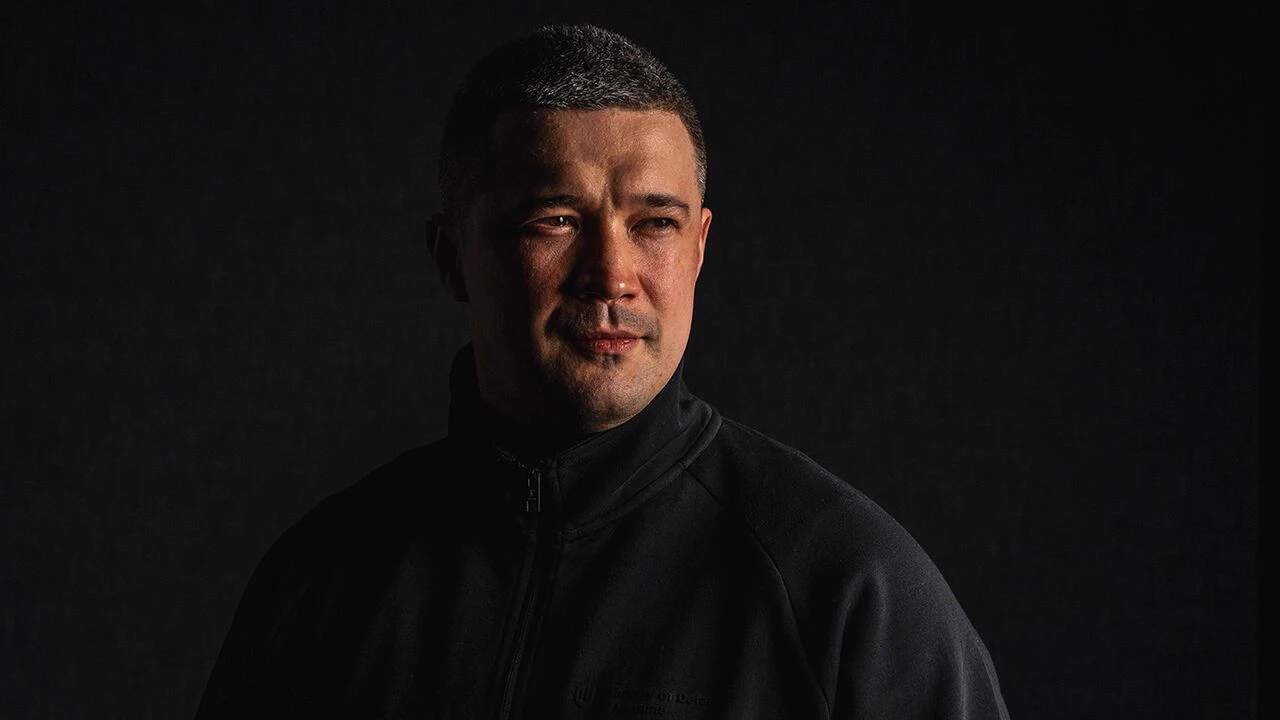
For a week in July, the streets of Kyiv belonged to a 29-year-old technocrat who wasn't there. Every evening, hundreds — then thousands — of Ukrainians gathered outside the Ivan Franko Theater and the Presidential Office, holding cardboard signs torn from shipping boxes, demanding the same thing: bring back Mykhailo Fedorov.
Volodymyr Zelensky had dismissed Fedorov as defense minister on July 15, 2026, replacing him with Yevhen Khmara, a former special operations commander, as part of a broader cabinet reshuffle. The official explanation was a feud between Fedorov and Gen. Oleksandr Syrskyi, the commander-in-chief of the armed forces, that Zelensky said had become "irresolvable."
The country said otherwise. Protests erupted within hours across Kyiv, Kharkiv, Dnipro, Odesa, Lviv, and Mykolaiv — the largest domestic unrest since Russia's full-scale invasion in February 2022. They were dubbed the "Cardboard Maidan," a reference to the 2014 revolution that drove a corrupt president from power. The signs read: "Fedorov is innovation, old grandpas are degeneration." "Stupid decisions are paid for with human lives." "WE ARE NOT FINISHED TALKING."
By July 21, Zelensky had fired Syrskyi and appointed the popular Gen. Mykhailo Drapatyi as the new commander-in-chief. But the protests continued. Fedorov had rejected Zelensky's offer of a "prominent position" — reportedly deputy prime minister for technological development — and protesters were not satisfied with half measures. On July 24, thousands returned to the streets of Kyiv, their signs now reading: "If you made a mistake — fix it."
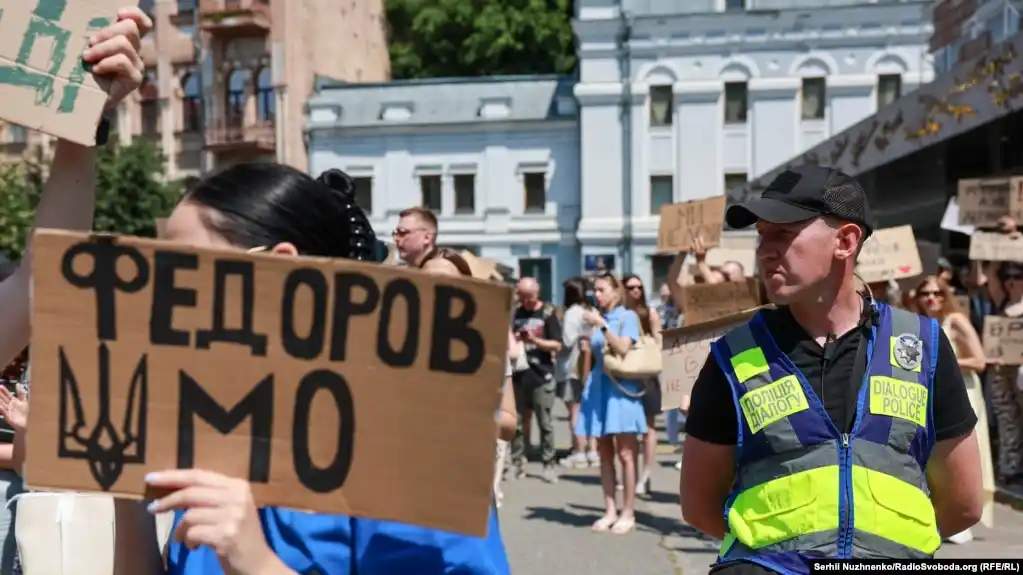
Crowd of protesters in central Kyiv holding cardboard signs near Ivan Franko Theater
The Technocrat Who Built Ukraine's Digital Army
Mykhailo Fedorov did not come from the military. He came from social media marketing — Zelensky's 2019 presidential campaign, to be precise — and from the Ministry of Digital Transformation, where as Ukraine's first digital minister he built the Diia app: digital passports, driver's licenses, government services delivered to a phone instead of a window with a bribe behind it.
When Russia invaded in 2022, Fedorov founded the IT Army of Ukraine, a volunteer cyber operation that coordinated mass hack attacks on Russian infrastructure. In January 2026, Zelensky appointed him defense minister. Fedorov brought the same philosophy to the war: technology over manpower, drones over meat assaults, automation over the Soviet officer culture that had dominated Ukraine's military for decades.
Under his six-month tenure, Ukraine dramatically expanded its medium-range strike drone program, hitting Russian oil refineries, arms depots, and infrastructure hundreds of kilometers behind enemy lines. These attacks gave Ukraine leverage in a war of attrition — a way to impose costs on Russia that didn't require sending more soldiers into trenches. He pushed for digital and competitive procurement systems that moved large weapons contracts away from discretionary, corruptible arrangements.
But Fedorov had enemies. His approach threatened the entrenched military bureaucracy and the old guard of officers trained in Soviet doctrine. Chief among them was Oleksandr Syrskyi.
The Butcher of Bakhmut
Oleksandr Syrskyi was born in Russia, trained at a Moscow military academy during the Soviet era, and commanded some of the most consequential — and most brutal — operations of Ukraine's war. He led the defense of Kyiv in 2022 and the Kharkiv counteroffensive that liberated thousands of square kilometers. But it was Bakhmut that defined him.
The battle for Bakhmut, fought from August 2022 to May 2023, became the war's bloodiest engagement. Months of grinding urban combat consumed entire Ukrainian brigades. Syrskyi ordered positions held at any cost, long past the point where military logic suggested withdrawal. Soldiers nicknamed him "Butcher." When he replaced the beloved Valerii Zaluzhnyi as commander-in-chief in 2024, he inherited an exhausted army with little to show for it.
The clash between Fedorov and Syrskyi was not just personal — it was ideological. Fedorov wanted to rebuild the military around technology and asymmetric warfare. Syrskyi represented the Soviet-style high-command culture that accepted mass casualties as the price of holding ground. Their differences grew so severe that, as Zelensky acknowledged, the two would only cooperate under his direct mediation.
On July 15, Zelensky chose Syrskyi. The country chose Fedorov.
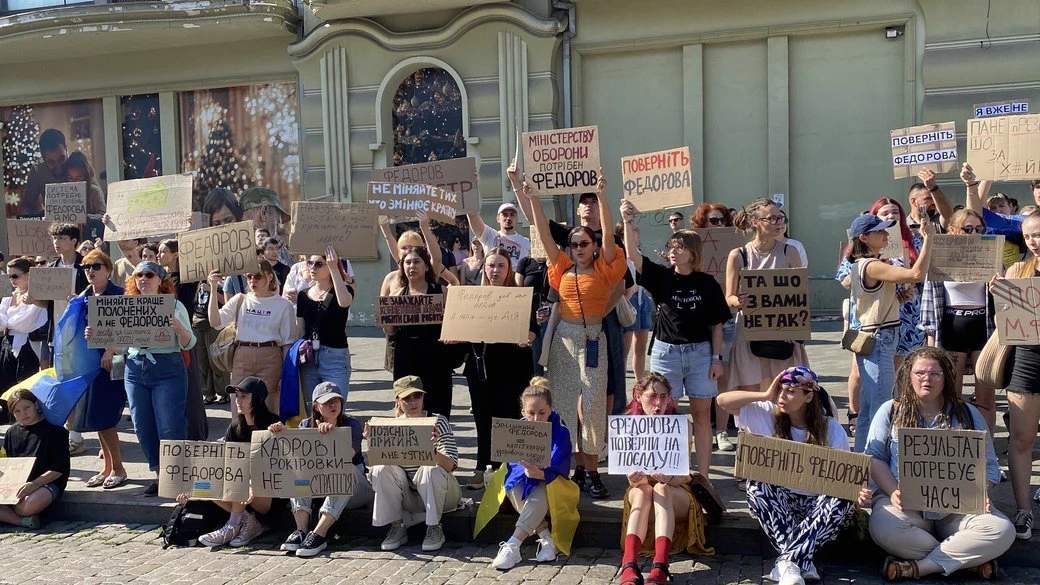
Protesters in Odesa holding signs and Ukrainian flags in support of Fedorov
A Generation Takes the Streets
The protests were unmistakably generational. The crowds in Kyiv and Kharkiv were young — university students, drone pilots on leave from the front, tech workers, veterans of the 2022 defense. They held signs made from cardboard, the signature of what became a parallel to the cardboard protests of 2025, when Ukrainians took to the streets to defend the independence of anti-corruption agencies.
"I want our minister of defense back because I like it when I wake up and see Russian refineries on fire," said Yulia Korniienko, a 20-something videographer at a protest in Kharkiv, speaking to the Christian Science Monitor. "Because Fedorov has a technological approach, he prefers to fight the war with drones, not at the cost of people's lives."
The military rank and file agreed. Drone pilots in Sloviansk told reporters they were shocked by Fedorov's dismissal. "If it wasn't for Fedorov, we wouldn't have such a well-developed system of drone defense, the system of air reconnaissance," said one pilot called Vanya. "This whole sphere would be underdeveloped."
The resignations came quickly. Pavlo Yelizarov, deputy commander of the Ukrainian Air Force, quit in protest the day after Fedorov's firing, calling it a "great evil for the country's defense capability." Serhii Sternenko, a prominent drone fundraiser, and Serhii Beskrestnov, a military technology expert, also resigned. Statements of support poured in from parliament member Yaroslav Yurchyshyn, EU commissioner Andrius Kubilius, and former U.S. ambassador Michael McFaul.
Col. Sviatoslav Palamar, deputy commander of the 1st Corps Azov of the National Guard, wrote on Facebook: "History teaches: countries lose not only because of an external enemy. Sometimes they lose much more when they turn the internal fatigue of society into a tool for political manipulations."
Zelensky Bends, But Not Enough
On July 21, six days after Fedorov's dismissal, Zelensky went on television to announce that he was firing Syrskyi and appointing Mykhailo Drapatyi — a popular battlefield commander known for driving an infantry fighting vehicle over a militant barricade in Mariupol in 2014 — as the new commander-in-chief. He offered Fedorov a "prominent position" to "unify the technological sector of our state."
It was not enough. Fedorov reportedly insisted on returning to his old job. Protesters gave Zelensky until July 24 to reinstate him as defense minister and promised "indefinite protests" if ignored. Thousands turned out that evening, their cardboard signs amplified by a generation that had grown up expecting more from its government than the one it was fighting to preserve.
"He made the digital passport, digital everything," a source close to Zelensky told Foreign Policy. "This is the only good thing that remains after we are out of power. So, I think he's become untouchable to some extent."
The formal offer — deputy prime minister for technological development — would have placed Fedorov above a minister in the bureaucratic hierarchy. But in Ukraine's political reality, real power flows through ministries, not deputy prime ministers. The defense ministry controls the budget, the procurement, the drone contracts. A "prominent position" without the defense portfolio was a consolation prize dressed as a promotion.
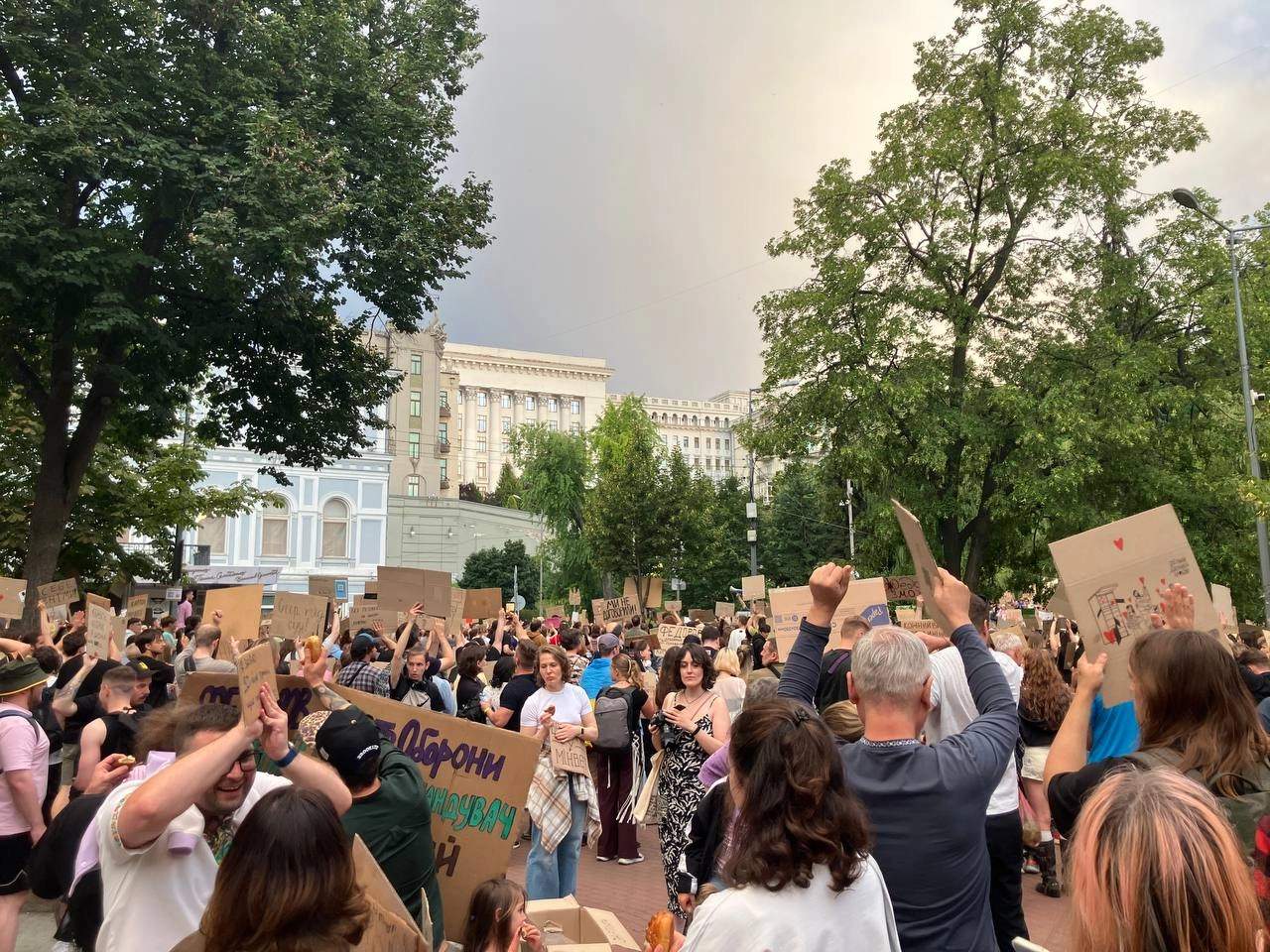
Large crowd of young protesters holding cardboard signs outside the Presidential Office in Kyiv at night
What the Cardboard Maidan Means
This is the second time since the full-scale invasion that Ukrainians have taken to the streets in significant numbers, and both times Zelensky has been forced to reverse course. In July 2025, he signed a law gutting the independence of anti-corruption agencies; protests followed, and he retreated within days. The streets have learned that Zelensky listens — that even under martial law, with elections suspended, protest remains the one check on executive power that works.
But the deeper story is about what Ukraine's wartime society expects from itself. Fedorov did not merely represent a set of policies; he represented a generational break from the post-Soviet military culture that Ukrainians have been fighting to escape since 2014. The young protesters in Kyiv and Kharkiv — born after the Soviet Union collapsed, after the Orange Revolution, after Maidan — have never known anything other than a country at war with its own institutional rot as much as with Russia.
Their demand was not just about one minister. It was about whether Ukraine would fight the war with drones and data, or with the meat-grinder doctrines of the old general staff. It was about whether a civilian technocrat who tried to reform a corrupt procurement system could be fired at the request of a Soviet-trained commander who spent soldiers like ammunition.
As of July 27, the protests continue. Zelensky has dismissed one general and offered a younger, more innovative one. He has offered Fedorov a government role with an impressive title and no real power. The streets are not finished talking.
Sources & Methodology(8 sources)
Methodology
This article draws on reporting from Foreign Policy, the Christian Science Monitor (with on-the-ground interviews in Kharkiv), the Guardian, Meduza, Kyiv Post, CBS News, Euromaidan Press, and the Wikipedia article on the Fedorov dismissal protests. All quotes are from named sources or attributed reporting. No fabricated data.
Filed Under
Frequently Asked Questions
- Who is Mykhailo Fedorov?
- Fedorov, 29, was Ukraine's defense minister from January to July 2026. He previously served as the country's first Minister of Digital Transformation, creating the Diia government services app. He founded the IT Army of Ukraine after the 2022 Russian invasion and pushed for drone-centric warfare and digital procurement reform at the Defense Ministry.
- Why was he fired?
- Zelensky dismissed Fedorov on July 15, 2026, citing an 'irresolvable' feud between Fedorov and Gen. Oleksandr Syrskyi, the commander-in-chief of the armed forces. Fedorov had pushed for Syrskyi's removal, advocating for younger, tech-oriented commanders.
- What happened as a result of the protests?
- On July 21, Zelensky fired Syrskyi and appointed Gen. Mykhailo Drapatyi as the new commander-in-chief. However, Fedorov rejected Zelensky's offer of a 'prominent position' (reportedly deputy PM for technology), and protests continued demanding his full reinstatement as defense minister.
- What is the 'Cardboard Maidan'?
- The nickname given to the protests because demonstrators used handmade cardboard signs — echoing the 2025 cardboard protests against anti-corruption agency gutting and referencing the 2014 Maidan Revolution that drove Ukraine's corrupt president from power.