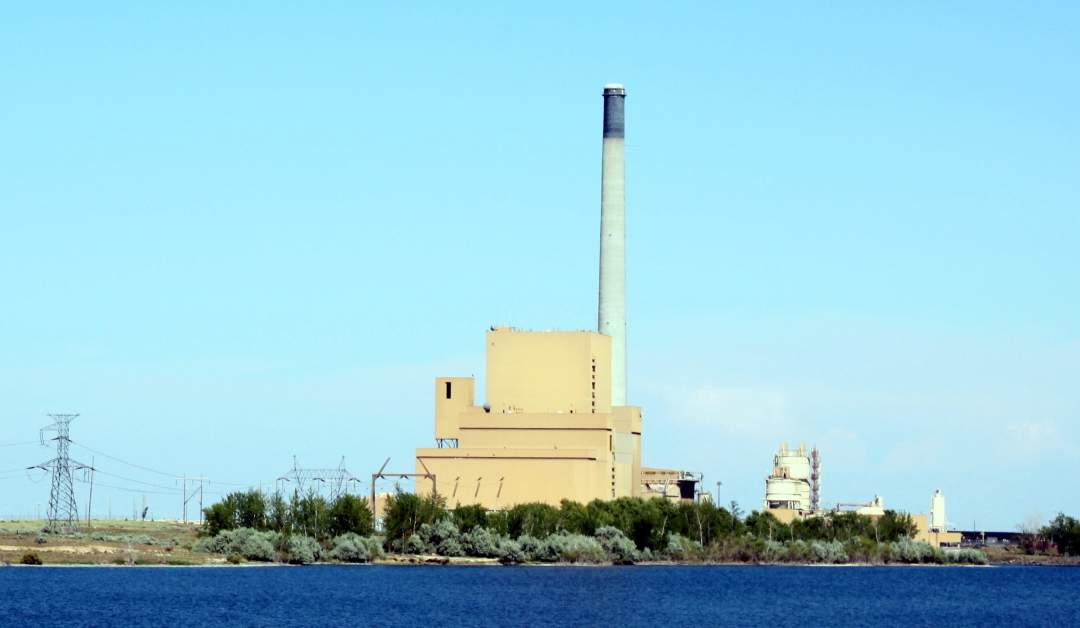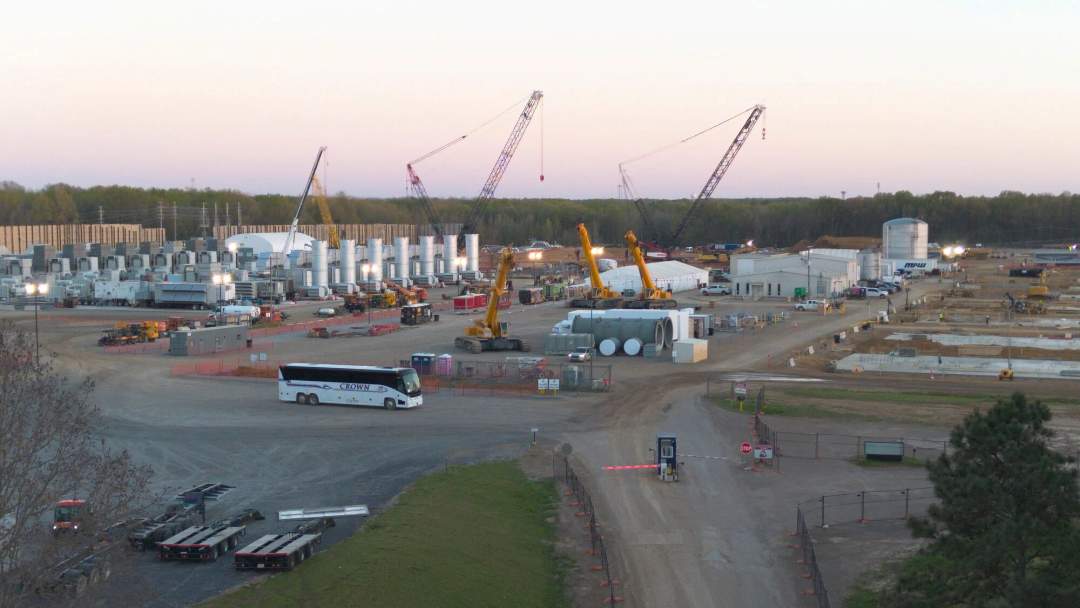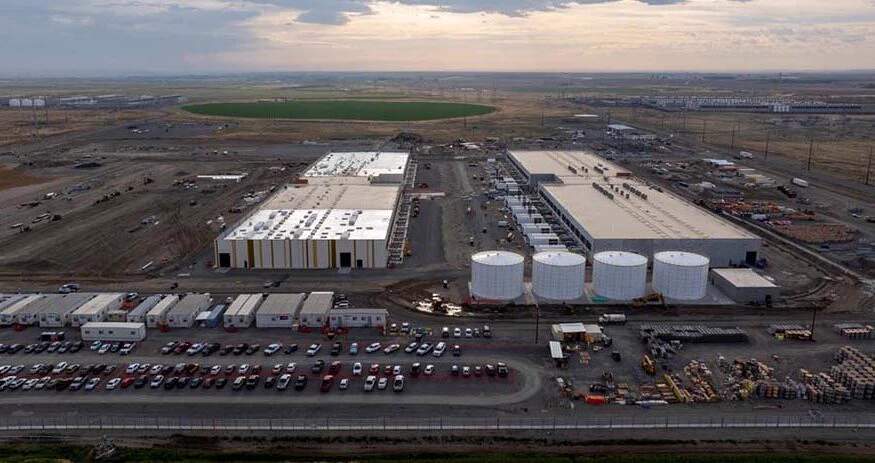
In the tiny eastern Oregon town of Boardman — population 4,000, no stoplights — the air crackles with the hum of high-capacity electrical lines. Amazon data centers stretch across the horizon, each building the size of five Portland city blocks, cooling thousands of servers that run 24 hours a day, seven days a week.
It looks like progress. It tastes like poison.
More than 600 domestic drinking water wells in Morrow and Umatilla counties have tested at unsafe nitrate levels — some nearly ten times the federal limit. Residents have been drinking contaminated water for decades, unaware, until nonprofit groups helped them test their wells. Nitrates are colorless, odorless, and tasteless. They cause miscarriages, respiratory infections, thyroid dysfunction, and cancer. Infants are especially vulnerable.
And while Amazon's data centers didn't create this crisis, a novel legal theory argues they supercharged it — concentrating nitrate-laden wastewater through evaporative cooling and discharging it back into a system that's been poisoning the groundwater for a generation.
This is the story of what happens when a trillion-dollar corporation sets up shop in a farm town, drains and contaminates the water supply, gets billions in tax breaks, pays a settlement that amounts to pocket change — and keeps expanding.
The "Concentrator" Theory: How Data Centers Supercharge Pollution
Here's how it works. The Lower Umatilla Basin — a 562-square-mile area in northern Morrow and northeastern Umatilla counties — sits above groundwater already contaminated by decades of fertilizer runoff from industrial agriculture. Nitrate levels hover near or above the federal safe limit of 10 milligrams per liter.
Amazon's data centers draw nearly 284 million gallons of water per year to cool their servers. Much of it comes through the Port of Morrow, which collects wastewater from food processors and farms. That water is already nitrate-laden when it arrives at Amazon's cooling towers.
Here's where it gets ugly: the evaporative cooling process leaves pure water behind as vapor. The nitrates don't evaporate. They stay. They concentrate. The wastewater Amazon discharges back through the Port of Morrow carries a far more concentrated nitrate load than what went in. The port then sprays that water onto local farm fields, where it seeps into the groundwater that feeds residents' private wells.
The data center isn't just using water. It's distilling pollution.
Amazon denies playing any role in the contamination. In a March 2026 statement, spokesperson Kylee Yonas said, "Communities in Eastern Oregon have faced groundwater quality issues for decades — long before we opened our data centers." The company agreed to a $20.5 million settlement without admitting guilt.
That's $20.5 million — for a company worth nearly $2 trillion, that's roughly what Amazon earns in about four hours.
A Town That Can't Drink Its Own Water
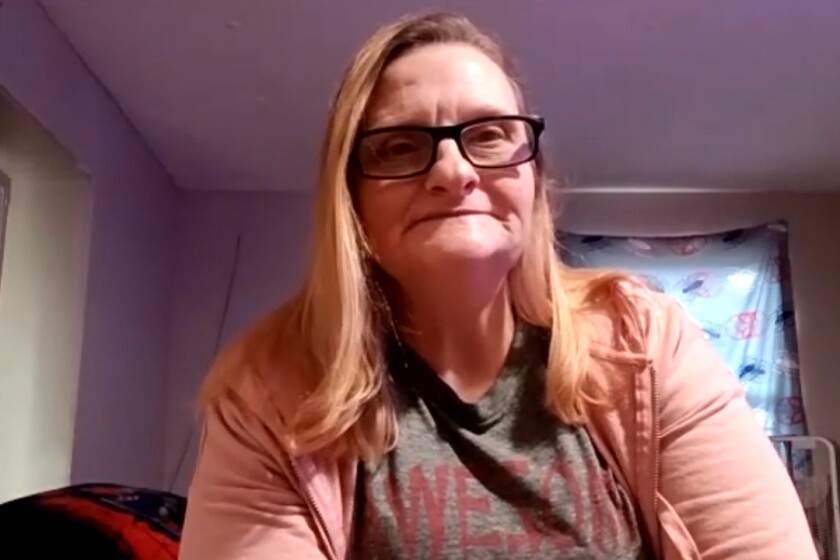
Jim Klipfel moved to Morrow County from Vernonia, drawn by the quiet dirt roads and room for his goats. He was watering trees out back one day when he took a drink from the hose. A neighbor driving by warned him: don't drink that water.
Klipfel tested his well. The results came back at 47 parts per million — nearly five times the federal safe limit.
Now he gets his water in five-gallon blue jugs delivered to his door, paid for by the state. He buys small bottles at Walmart for cooking. The pump house for his contaminated well sits right outside his kitchen.
He's not alone. Mike Pearson drank his well water for 30 years before testing revealed it contained more than four times the safe nitrate limit. The Suter family discovered their well water had nearly quadrupled in nitrate concentration since 1999. When they looked into drilling a new well deep enough to hit clean water, the estimate was $24,000.
Guadalupe Martinez, a Boardman resident, has a reverse-osmosis filter under her sink that doesn't work properly and a whole-house filter that's been broken for years. Her family drinks bottled water.
More than 634 domestic wells in the area contain unsafe nitrate levels. Another 420 show elevated concentrations that could cause long-term health problems. Many of the affected residents are low-income and Latino — nearly half of Morrow County's population.
The state first acknowledged the contamination problem over 30 years ago. The Oregon Department of Environmental Quality designated the area a "groundwater management area" in 1990. The Morrow County Commission declared an emergency in 2022. Governor Tina Kotek visited residents in 2023 and promised swift action.
Nothing moved fast enough.
$20.5 Million: The Cost of Poisoning a Community
On March 31, 2026, Amazon agreed to pay $20.5 million to settle its portion of the lawsuit — Pearson v. Port of Morrow — filed in February 2024 by several Morrow County residents. The case seeks class action status on behalf of all affected residents in both counties.
The settlement money is earmarked for private-well and public water-infrastructure projects, not distributed as direct compensation to victims. Lawyers will take their cut too — typically 25% to 30% in class actions.
Nella Parks, an organizer with Oregon Rural Action, captured the frustration: "These billion-dollar companies pollute with impunity, without regard for the human cost. We have stood at people's doorsteps as they realize nitrate may have caused their miscarriages or cancers. People can't sell or refinance their homes. They are stuck and sick; they are tired of polluters getting away with the theft of their health and wealth."
The lawsuit continues against the remaining defendants: Lamb Weston, Madison Ranches, Threemile Canyon Farms, Portland General Electric, Columbia River Processing, and the Port of Morrow itself. On June 9, 2026, a federal judge denied motions to dismiss, clearing the case for trial — now scheduled for May 2027.
Judge Michael Simon allowed claims of negligence, trespass, nuisance, and civil conspiracy to proceed. He found it plausible that the defendants "acted in concert with the Port by generating and sending high-nitrate wastewater that they knew would be improperly disposed of."
Amazon Web Services data center in Boardman, Oregon, with massive industrial buildings under construction against a cloudy sky
The Tax Breaks That Built the Empire
While Amazon poisons the water, Morrow County showers it with incentives.
Data center tax breaks in Morrow County total nearly $100 million this year alone. Amazon pays a fraction of what it would owe without the abatements — and in return, it has reshaped the physical landscape of the county without residents having any meaningful say.
Oregon's data center industry receives $450 million in tax breaks statewide this year, fueled by available land, cheap power, and a regulatory environment that prioritizes corporate growth over community health. Morrow County, with its remote location and proximity to the Columbia River's hydropower, has become the epicenter.
Amazon occupies 700 acres in Boardman, with 300 more under construction. County planners anticipate 4,000 additional acres of data centers — quadrupling the industry's local footprint. Amazon just bought 1,300 acres near the Boardman airport for Oregon's first "exascale" data center campus — a $12 billion project the size of 1,000 football fields with up to 20 buildings. It will consume as much electricity as a midsized city.
Local wages have risen — construction workers earn over $111,000 annually, and Amazon employs about 900 people full-time at its Morrow County facilities. The company has donated $9 million to local organizations.
But as county commissioner Joe Armato put it: "It does create that situation of haves and have mores."
Small businesses and farms can't compete with data center wages. Utilities run high-voltage lines through agricultural fields, sometimes exercising eminent domain to seize rights of way. Rural residents live in fear that their neighbors will sell land to Amazon and a data center will appear at their doorstep.
"How can a tiny, rural community bargain with a trillion-dollar corporate giant?" Armato said. "We just can't have a fair negotiation in that. The economic power imbalance there is tremendous."
The Regulatory Vacuum: When Government Gets Out of the Way
The Boardman crisis didn't happen in a vacuum. It happened because every level of government that was supposed to protect these residents failed them — and is still failing.
In 2025, the Trump administration issued Executive Order 14318, "Accelerating Federal Permitting of Data Center Infrastructure," streamlining environmental review for massive new facilities. The message from Washington is clear: build faster, ask fewer questions.
EPA inspections under the Resource Conservation and Recovery Act — the statute at the center of the Boardman lawsuit — have fallen to the lowest levels in two decades. Administrator Lee Zeldin has announced a sweeping deregulatory agenda that hands more authority to states, many of which lack the resources or political will to challenge corporations like Amazon.
When federal enforcement recedes, the statutory gap doesn't disappear. It shifts to courtrooms. The citizen-suit provision in RCRA allows affected residents to sue when regulators won't. In Boardman, that's exactly what happened.
And now, even that backstop is under threat. In February 2026, the EPA proposed a "prior notice" rule requiring plaintiffs to serve their intent-to-sue notices on the agency electronically — giving regulators more time to open their own enforcement actions, which can then block private suits under the "diligent prosecution" bar. A deregulating administration could use this procedural rule to crowd out the very citizen suits that are currently the only avenue for accountability.
This Is Corporate Colonialism
Call it what it is. A trillion-dollar corporation descends on a rural, majority-Latino farming community. It uses their water to cool servers that generate profit for shareholders in Seattle and New York. It contaminates that water further through industrial processes. It discharges concentrated pollution into the groundwater that residents depend on for drinking, cooking, and bathing. It pays a settlement worth less than one-tenth of one percent of its annual revenue. It receives nearly $100 million in annual tax breaks from the same county whose residents it's poisoning. It buys more land — 1,300 more acres — and plans to quadruple its footprint.
And it never once asks the people of Boardman if they want any of this.
The residents can't sell their homes — nobody wants property with poisoned water. They can't afford to drill new wells. They drink from plastic jugs delivered by the state while the towers of a data center empire hum outside their windows. They got sick. They buried family members who got sick. And the company responsible paid less than what it spends on lobbying in a single quarter.
This isn't a complicated story. It's an old story. It's the story of every extraction colony in history, updated for the digital age. The resource is water. The colonizer is Amazon. The victims are the people of Morrow County.
And the settlement — $20.5 million, no admission of guilt — is just the latest chapter in an American tradition: corporations take everything, pay nothing, and call it progress.
The trial against the remaining defendants begins May 2027. The people of Boardman will have their day in court.
They've already been waiting 30 years.
Sources & Methodology(8 sources)
Methodology
Reported using investigative reporting from The Oregonian, OPB, Oregon Capital Chronicle, Central Oregon Daily, and Rain Intelligence. Court documents from Pearson v. Port of Morrow (U.S. District Court) reviewed. Settlement details and legal theory cross-referenced across plaintiff attorney press releases and federal judge rulings. All claims verified against at least two independent sources.
Filed Under
Frequently Asked Questions
- What is happening to the water in Boardman, Oregon?
- More than 600 domestic drinking water wells in Morrow and Umatilla counties have tested at unsafe nitrate levels, some nearly ten times the federal safe limit. Nitrate contamination has been linked to fertilizer runoff and industrial wastewater disposal in the Lower Umatilla Basin over decades.
- How are Amazon's data centers connected to the water contamination?
- Amazon uses nearly 284 million gallons of water per year to cool its data centers through evaporative cooling. This process concentrates nitrates in the wastewater, which is then discharged through the Port of Morrow onto farm fields, where it seeps into the groundwater. Plaintiffs allege Amazon supercharged an existing contamination crisis.
- How much did Amazon pay to settle the lawsuit?
- Amazon agreed to a $20.5 million settlement in March 2026 without admitting guilt. The settlement money is earmarked for private-well and public water-infrastructure projects, not direct compensation to victims. The lawsuit against other defendants, including Lamb Weston and the Port of Morrow, continues and is scheduled for trial in May 2027.
- What tax breaks does Amazon receive in Morrow County?
- Data center tax breaks in Morrow County total nearly $100 million this year alone. Oregon's data center industry receives $450 million in tax breaks statewide. Amazon occupies 700 acres in Boardman with 300 more under construction, and plans to quadruple its footprint to 4,000 acres.
- What health effects does nitrate contamination cause?
- Excessive nitrate exposure can cause miscarriages, respiratory infections, thyroid dysfunction, and cancer. Infants are especially vulnerable to a condition called methemoglobinemia, or 'blue baby syndrome.' Many affected residents in Morrow County are low-income and Latino.