The numbers are so grotesque they read like satire. In 2025 alone, the world's billionaires added $2.5 trillion to their collective fortunes — pushing total billionaire wealth to $18.3 trillion, the highest figure in human history. That single year's gain is nearly equivalent to the total wealth held by the poorest 4.1 billion people on Earth.
This is not a coincidence. It is not the result of harder work or smarter innovation. It is the product of a system designed to extract from the many and concentrate in the hands of the few — and according to Oxfam's latest report, Resisting the Rule of the Rich, the machinery of that extraction is accelerating.
The Numbers: A System Built on Extraction
| Metric | Figure |
|---|---|
| Total billionaire wealth (2025) | $18.3 trillion |
| Annual increase (2025) | $2.5 trillion (+16%) |
| Wealth increase since 2020 | 81% |
| Billionaire population | 3,000+ (first time ever) |
| Richest individual | Elon Musk — first to exceed $500 billion |
| Equivalent wealth of bottom 4.1 billion people | $2.5 trillion |
| Times the 2025 gain could eradicate extreme poverty | 26x |
| Likelihood of billionaires holding political office vs. ordinary people | 4,000x |
The growth rate in 2025 was three times faster than the five-year average. The surge was not evenly distributed — US billionaires saw the sharpest gains, driven by Trump administration policies that slashed taxes for the ultra-rich, shielded multinational corporations from international pressure, reversed attempts to address monopoly power, and fueled an AI stock boom that handed windfall gains to already-wealthy investors worldwide.
The Tax System: Rigged From the Start
Billionaires do not pay taxes the way you do. The entire architecture of global taxation is designed to ensure they never will.
- The wealthiest 400 Americans pay an effective income tax rate of just 24% — lower than the average rate for all other taxpayers, according to IRS data analyzed by economists in 2025.
- US billionaires pay approximately 11% of their true economic income in taxes when all income sources are accounted for — including unrealized capital gains that form the vast majority of their wealth.
- In some European countries, personal holding companies allow even greater avoidance, pushing effective rates below the US figure.
The tax code doesn't just allow this — it encourages it. Income from labor is taxed at higher rates than income from capital. Billionaires don't earn salaries in any meaningful sense; they hold assets that appreciate, borrow against those assets to fund their lifestyles, and pay minimal capital gains taxes only when they choose to sell.
"Billionaires in the U.S. often pay a lower tax rate than teachers and nurses." — Oxfam America
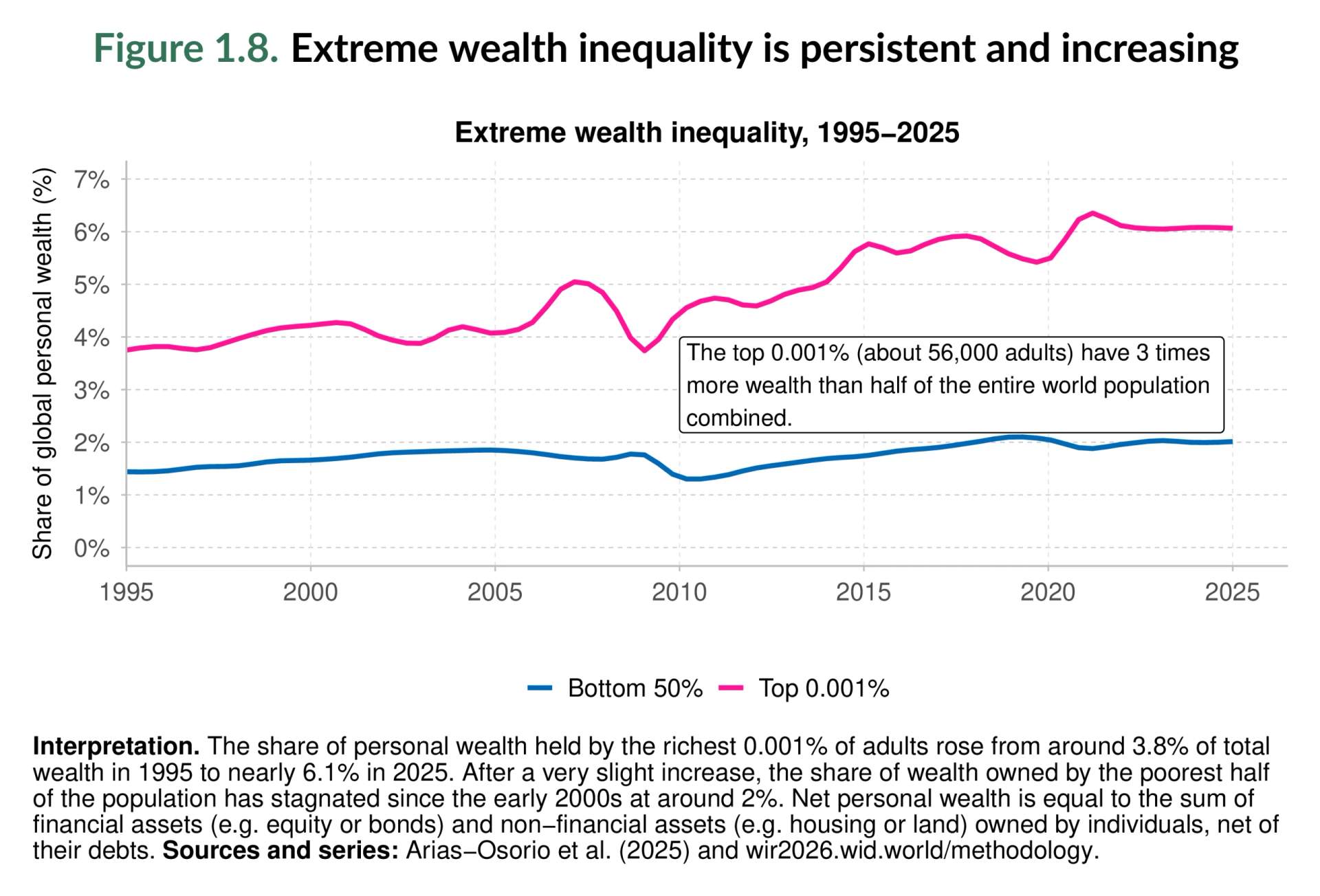
Chart from the World Inequality Report 2026 showing persistent and increasing extreme wealth inequality globally
How They Got So Rich: The Extraction Machine
1. Tax Avoidance as Business Strategy
This is not about clever accounting. It is about systemic privilege. Billionaires have access to tax avoidance strategies unavailable to wage earners: offshore structures, carried interest loopholes, charitable foundations that function as wealth preservation vehicles, and stock-based compensation that is taxed at a fraction of the rate applied to ordinary income.
When Jeff Bezos sells Amazon stock, he pays long-term capital gains rates — currently 20% in the US. When an Amazon warehouse worker earns $15 an hour, they pay income tax, payroll tax, and Social Security — often a combined effective rate higher than 20% on a fraction of the income.
2. Regulatory Capture: Rewriting the Rules
The system is not broken. It is working exactly as designed — by the people who designed it.
- Billionaires are 4,000 times more likely to hold political office than ordinary citizens (Oxfam, 2026)
- Almost half of people in 66 countries surveyed say the rich often buy elections in their country
- The Trump administration's agenda reads like a billionaire wishlist: slashed taxes for the super-rich, undermined global corporate minimum tax efforts, eased antitrust enforcement, and championed AI deregulation that directly boosted the tech fortunes of Musk and others
3. Media Ownership: Controlling the Narrative
Billionaires now own more than half of the world's largest media companies and all major social media platforms.
| Media Asset | Owner |
|---|---|
| Washington Post | Jeff Bezos |
| X (formerly Twitter) | Elon Musk |
| Los Angeles Times | Patrick Soon-Shiong |
| CNews (France) | Vincent Bolloré |
| The Economist (large shares) | Billionaire consortium |
| UK newspapers (75% of circulation) | Four super-rich families |
The consequence is not subtle. In the months following Elon Musk's acquisition of X, a University of California study found hate speech increased by approximately 50%. Authorities in Kenya have used X to track, punish, and abduct government critics. Only 27% of top editors globally are female; just 23% belong to racialized groups. Dissenting voices are marginalized while immigrants and people of colour are scapegoated.
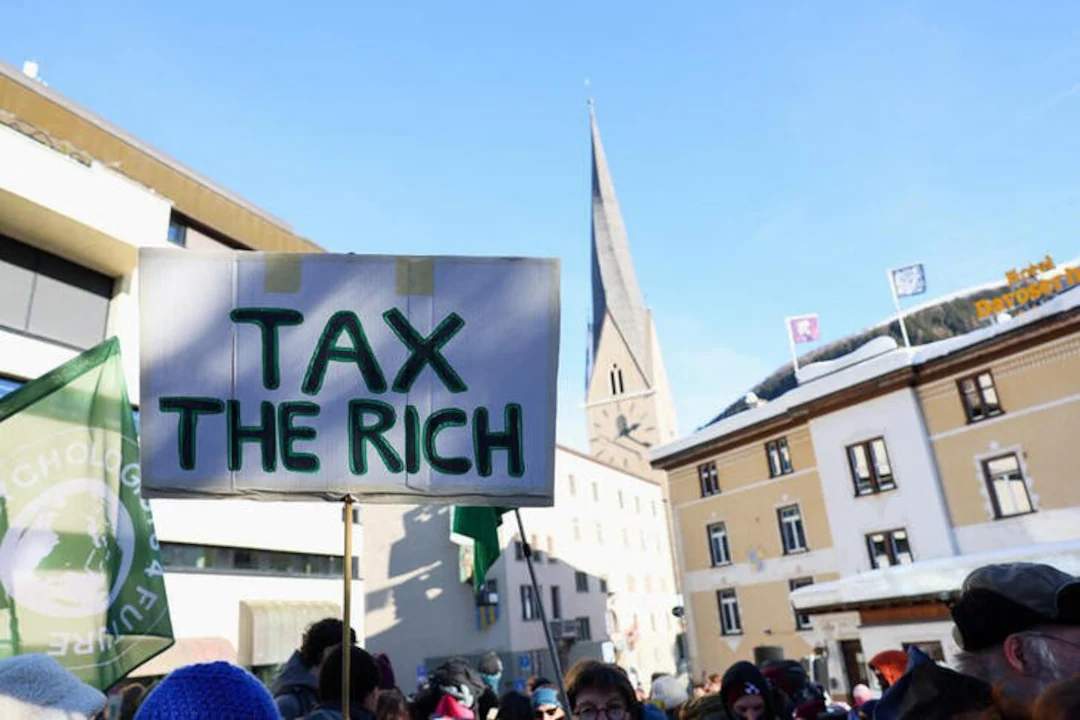
Protesters demonstrate outside the World Economic Forum in Davos against billionaire wealth and inequality
4. Monopoly Power and Market Consolidation
The Trump administration reversed attempts to address monopoly power, greenlighting multibillion-dollar mergers and consolidations that concentrate market control in fewer hands. When three companies control an industry, prices rise, wages stagnate, and competition dies — and the shareholders of those companies are, by definition, already rich.
5. The AI Wealth Cascade
Soaring valuations of artificial intelligence companies in 2025 delivered extraordinary windfall gains to tech billionaires who were already among the world's wealthiest. The AI boom was not a democratizing force — it concentrated wealth further upward. The workers who trained the models, labeled the data, and built the infrastructure saw no comparable gains.
The Human Cost: What $18.3 Trillion Represents
While billionaires accumulated wealth at an unprecedented rate:
- One in four people globally face food insecurity — regularly skipping meals
- Nearly half the world's population lives in poverty
- The rate of poverty reduction has stagnated, with levels roughly where they were in 2019
- Extreme poverty is rising again in Africa
- Political decisions to slash aid budgets could lead to more than 14 million additional deaths by 2030

Global hunger and food insecurity affecting communities, with one in four people worldwide unable to regularly access enough food
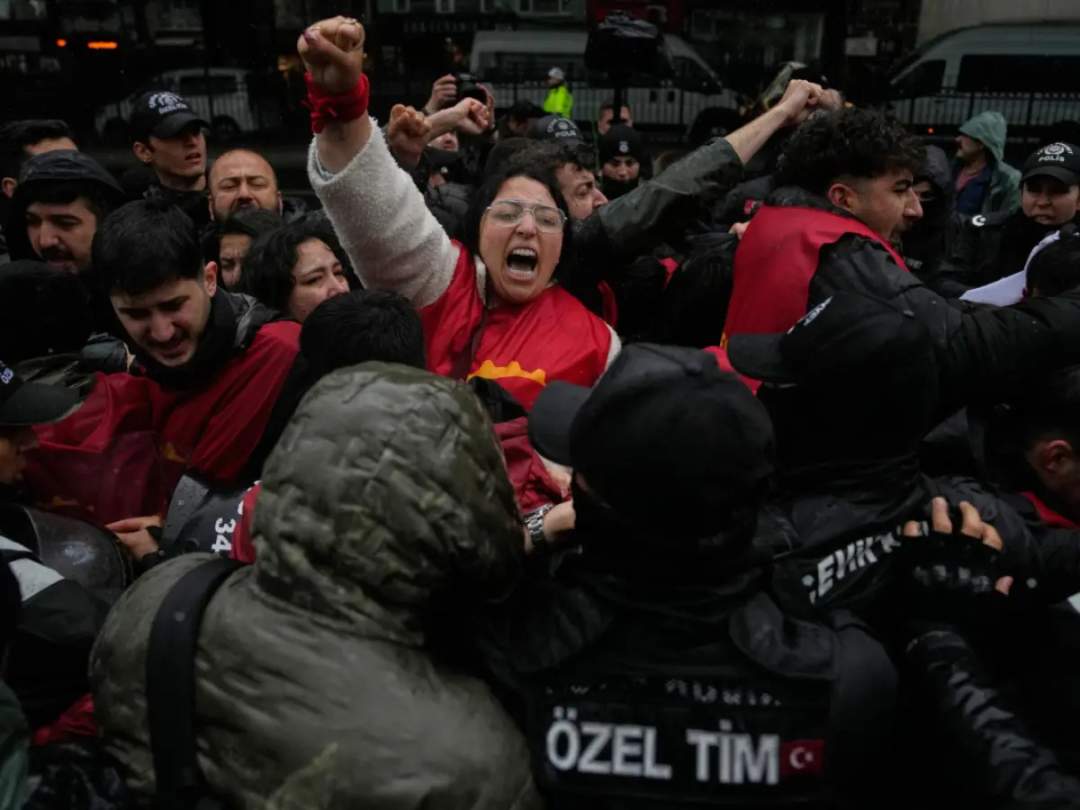
The 19th successive year of declining civil liberties and political rights was recorded in 2024. A quarter of all countries curtailed freedoms of expression. There were more than 142 significant anti-government protests across 68 countries — authorities typically met them with violence.
The Political Dimension: Oligarchy by Design
This is not simply an economic problem. It is a political crisis. Oxfam's research demonstrates that rising oligarchy is a worldwide phenomenon, not just an American one.
The chances of democratic backsliding — erosion of the rule of law, undermining of elections — are seven times more likely in highly unequal countries. "No country can afford to be complacent," Oxfam warns. "The pace that economic and political inequality can hasten the erosion of people's rights and safety can be frighteningly fast."
"Being economically poor creates hunger. Being politically poor creates anger." — Amitabh Behar, Executive Director, Oxfam International
"Governments are making wrong choices to pander to the elite and defend wealth while repressing people's rights and anger at how so many of their lives are becoming unaffordable and unbearable." — Amitabh Behar
The Solution: Tax the Rich. Fund the People.
Oxfam calls for:
- National Inequality Reduction Plans with time-bound benchmarks and regular monitoring
- Taxing the super-rich at high enough rates to reduce massive levels of inequality, including broad-based taxes on income and wealth
- Stronger firewalls between wealth and politics — tougher regulations on lobbying and campaign financing, more media independence
- Accountability through citizen empowerment — stronger protections for freedoms of association, assembly, and expression, and for civil society organizations and trade unions
The wealth exists. The $18.3 trillion is real. It could eradicate extreme poverty 26 times over. It could fund universal healthcare, education, climate adaptation, and housing for every person on Earth. The question was never about capacity. It has always been about political will — and whether governments will serve the people who elect them, or the billionaires who buy them.
"Our societies feel more toxic today because they demonstrably are, but not always for the reasons we're being told. The outsized influence that the super-rich have over our politicians, economies and media has deepened inequality and led us far off track on tackling poverty." — Amitabh Behar
Sources & Methodology(5 sources)
Frequently Asked Questions
- How much did billionaire wealth increase in 2025?
- Billionaire wealth grew by $2.5 trillion in 2025 — a 16% increase that was three times faster than the five-year average. Total billionaire wealth reached $18.3 trillion, an 81% increase since 2020.
- How does one year of billionaire wealth gains compare to the rest of humanity?
- The $2.5 trillion added to billionaire fortunes in 2025 is nearly equivalent to the total wealth held by the poorest 4.1 billion people on Earth — roughly half of humanity. That single year's gain could eradicate extreme poverty 26 times over.
- Do billionaires actually pay less tax than ordinary workers?
- Yes. The wealthiest 400 Americans pay an effective income tax rate of just 24% — lower than the average for all other taxpayers. When all income including unrealized capital gains is counted, US billionaires pay approximately 11% of their true economic income. The tax code deliberately favors wealth over labor.
- How much political power do billionaires wield?
- Billionaires are 4,000 times more likely to hold political office than ordinary citizens. In a World Values Survey of 66 countries, almost half of respondents said the rich often buy elections. The Trump administration has pursued what Oxfam calls a 'pro-billionaire agenda' — slashing taxes, blocking global corporate minimum tax efforts, and easing antitrust enforcement.
- How much of the world's media is controlled by billionaires?
- Billionaires own more than half of the world's largest media companies and all major social media platforms. Jeff Bezos owns the Washington Post, Elon Musk owns X, Vincent Bolloré controls CNews in France, and in the UK four super-rich families control 75% of newspaper circulation. After Musk's acquisition of X, hate speech on the platform increased by approximately 50%.
- How many people face hunger while billionaires accumulate record wealth?
- One in four people globally — approximately 2 billion — face food insecurity and regularly skip meals. Nearly half the world's population lives in poverty. The rate of poverty reduction has stagnated at 2019 levels, extreme poverty is rising again in Africa, and political decisions to slash aid budgets could cause more than 14 million additional deaths by 2030.
- What role has AI played in driving billionaire wealth?
- Soaring AI company valuations in 2025 delivered extraordinary windfall gains to tech billionaires already among the world's wealthiest. The AI boom concentrated wealth further upward — the workers who trained models, labeled data, and built infrastructure saw no comparable gains. The Trump administration's AI deregulation directly benefited ultra-rich investors worldwide.
- What would it actually take to fix this level of inequality?
- Oxfam proposes taxing the super-rich at high enough rates to reduce inequality, national inequality reduction plans with time-bound benchmarks, stronger firewalls between wealth and politics including curbs on lobbying and campaign financing, and stronger protections for civil society, trade unions, and freedoms of assembly and expression. The $18.3 trillion exists — the question has never been about capacity, only about political will.