

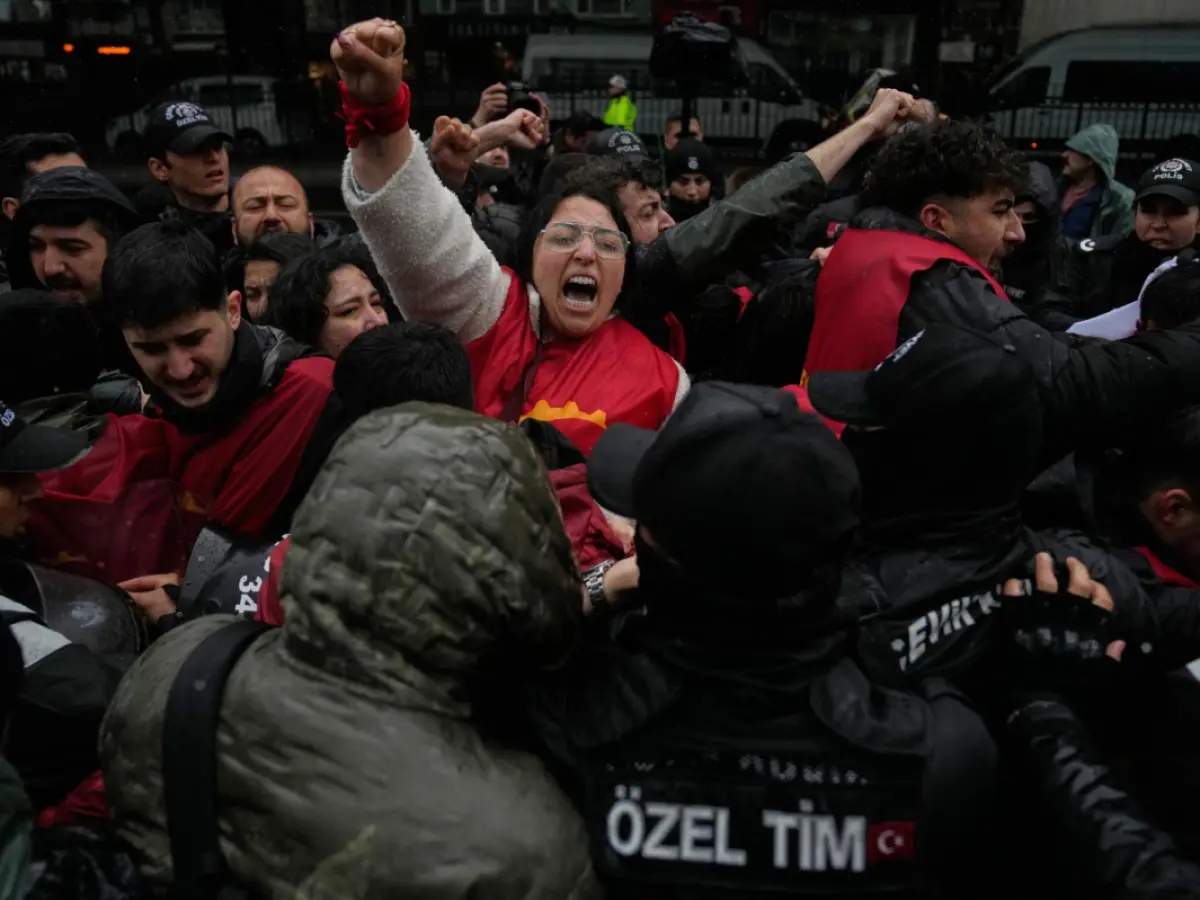
Everywhere in the world except the United States and Canada, May 1 is International Workers' Day. It's a public holiday in 66 countries. Millions of workers take to the streets. In the United States, we celebrate Labor Day in September — because in 1887, the US government was afraid of what May Day represents.
So let's talk about what it is. Where it comes from. Why the anarchist roots matter. And what it means for you, whether you're new to this movement or you've been in it for years.
The Origins: 1886, Chicago, and the Eight-Hour Day
May Day began as a demand for the eight-hour workday.
In 1884, the American Federation of Labor passed a resolution: "Eight hours shall constitute a legal day's labour from and after May 1st, 1886."
On May 1, 1886, more than 400,000 workers in Chicago went on strike. The city's factories went dark. This was the center of the agitation. And the anarchists were at the forefront.
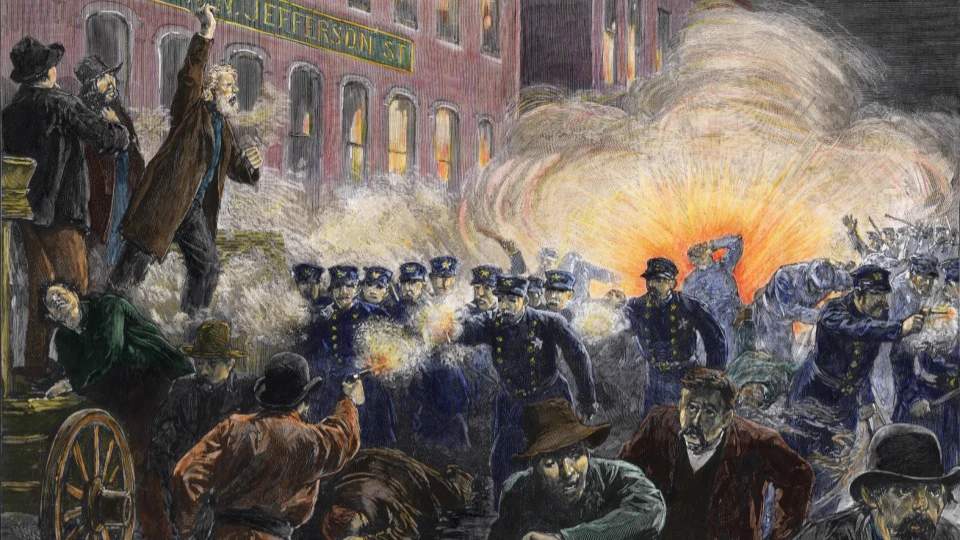
This 1886 engraving was the most widely reproduced image of the Haymarket massacre. It shows Methodist pastor Samuel Fielden speaking, the bomb exploding, and the riot beginning simultaneously. | Chicago Historical Society
The Haymarket Affair: When the State Murdered Martyrs
On May 3, 1886, police attacked striking workers at the McCormick reaper plant. They killed at least one striker, wounded five or six others. August Spies, an anarchist and labor organizer, rushed to the office of the Arbeiter-Zeitung and composed a circular calling for a protest meeting the next night.
On May 4, thousands of workers gathered in Haymarket Square. The speeches were peaceful. Then someone threw a bomb. One police officer was killed. The police opened fire. How many workers were killed or wounded by police bullets was never counted.
Eight men were put on trial for being "accessories to murder." They were August Spies, Samuel Fielden, Albert Parsons, Adolph Fischer, George Engel, Michael Schwab, Louis Lingg, and Oscar Neebe.
They weren't on trial for throwing the bomb. No proof was offered. They were on trial for being anarchists. For organizing workers. For speaking against capitalism.
On August 19, 1886, seven were sentenced to death. One — Oscar Neebe — got 15 years. After international protests, Schwab and Fielden got life imprisonment. Louis Lingg committed suicide in prison. On November 11, 1887, Albert Parsons, August Spies, Adolph Fischer, and George Engel were hanged.
Lucy Parsons: The Woman Who Kept Fighting
Lucy Parsons was born in Texas around 1853, the child of enslaved parents. She met Albert Parsons in Texas, and they moved to Chicago in 1873. Together, they became central figures in the anarchist labor movement.
Lucy was a sewing workers organizer. She was a brilliant speaker. She was Black, she was an anarchist, she was a widow, and she refused to be silenced. When Albert was sentenced to death, Lucy fought for his life. She toured the country, giving speeches, raising money, demanding justice.
She continued organizing for the rest of her life. She spoke at labor rallies. She wrote for anarchist newspapers. She marched. She organized. She became one of the most respected figures in the radical left, and she never stopped fighting.
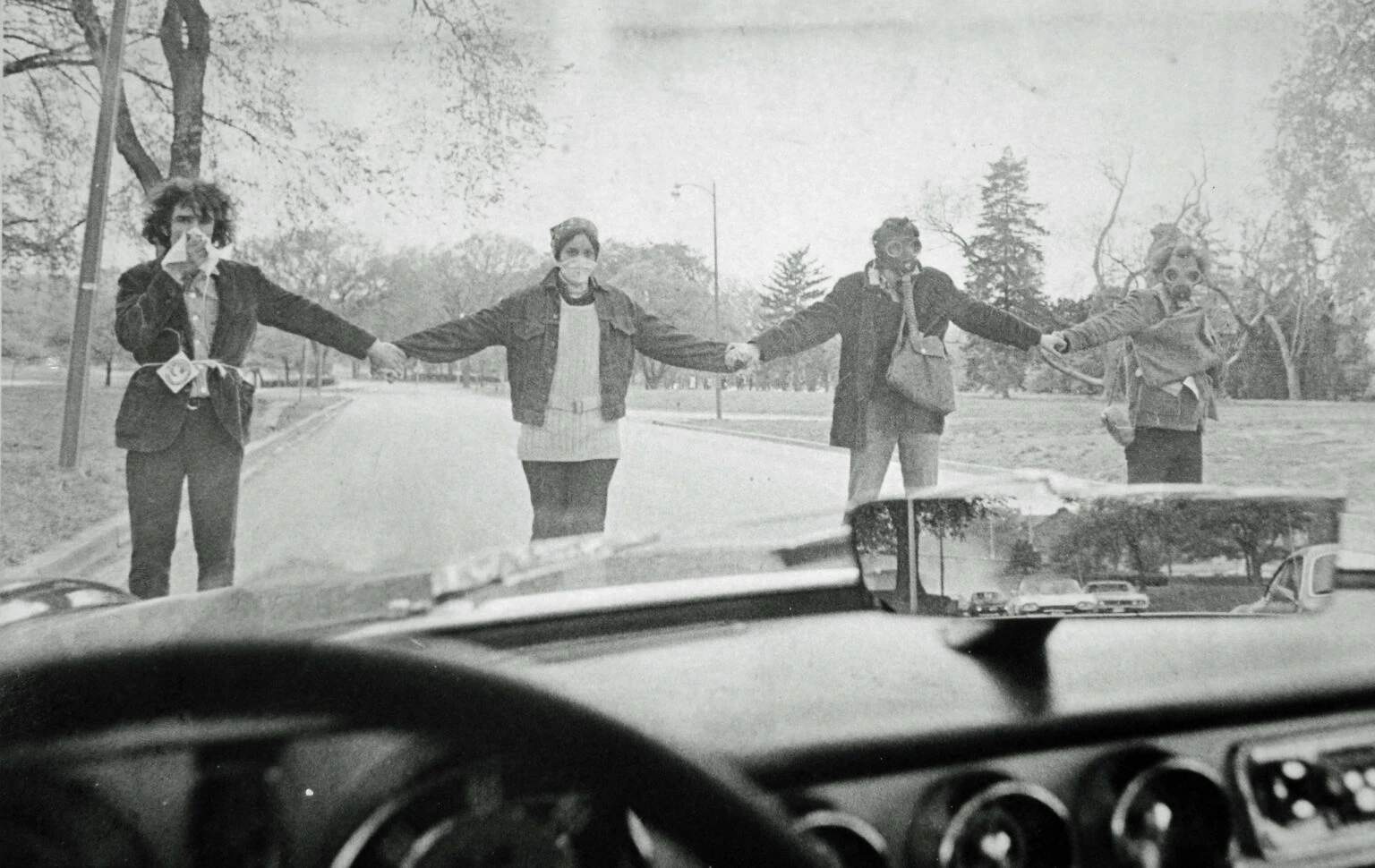
Civil disobedience at Independence Avenue SW near the Washington Monument blocks the street. (Flickr/Washington Area Spark)
Why Anarchism Matters to May Day
May Day is an anarchist holiday. That's not incidental. It's foundational. The people who organized the 1886 strikes were anarchists. The people who called the protest meeting at Haymarket were anarchists. The people the state murdered for fighting for workers were anarchists.
Anarchism, at its core, is a commitment to the idea that people can organize themselves without bosses, without states, without hierarchies. It's a belief that solidarity and mutual aid can replace coercion and exploitation.
The anarchists of 1886 were demanding the eight-hour day. But they were also demanding something else: the transformation of society. They didn't just want better working conditions. They wanted workers to control their own lives.
How It Became International
In 1889, the first congress of the Second International met in Paris for the centennial of the French Revolution. A delegate from the American Federation of Labor proposed making May 1 an international day of labor action to honor the Haymarket martyrs.
The proposal passed. In 1891, the Second International made it official: May Day would be an annual event. In 1904, the International Socialist Conference in Amsterdam called on all Social Democratic Party organizations and trade unions to demonstrate energetically on May First for the legal establishment of the 8-hour day.
Today, May Day is an official holiday in 66 countries. Workers march in the streets from Tokyo to Berlin, from Paris to Johannesburg, from Havana to Moscow. Everywhere except the United States and Canada.
Why the US Has Labor Day in September
In the United States, we don't celebrate May Day. We have Labor Day in September. Here's why: After the Haymarket Affair in 1886, US President Grover Cleveland was terrified. He worried that commemorating Labor Day on May 1 would give workers an opportunity to remember the anarchists, to honor the martyrs, to celebrate the radical tradition of American labor.
So in 1887, Cleveland supported a new Labor Day — the first Monday in September. This was the holiday supported by the Knights of Labor, a conservative union that rejected anarchism and believed in cooperation with capital.
The strategy worked. May Day was erased from American memory. Generations of workers grew up without knowing the history. The anarchists who gave their lives for the eight-hour day became footnotes. But the world didn't forget.
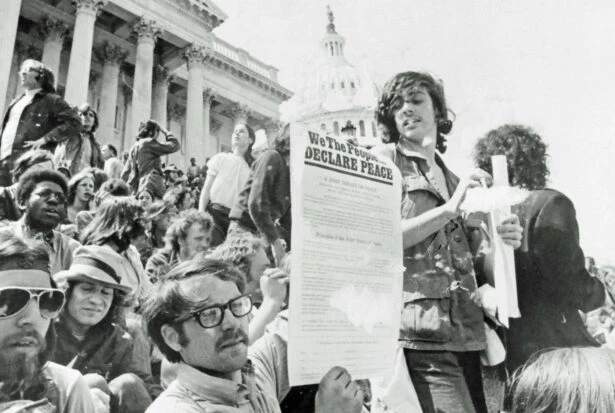
A demonstrator holds a copy of the People’s Peace Treaty on the steps of the U.S. Capitol during Mayday protests May 5, 1971. (Flickr/Washington Area Spark)
What May Day Means Today
This year — May 1, 2026 — workers in more than 120 countries are marching. In Paris, trade unions are mobilizing under banners of "peace" and "freedom." In cities across the United States, the May Day Strong coalition has organized thousands of events calling for "No work, no school, no shopping."
The UAW has called for a general strike on May 1, 2028. The NEA, AFT, American Postal Workers Union, and Chicago Teachers Union have already pledged to join them.
This is the largest coordinated day of labor action in generations. And it's building on the same tradition that started in 1886.
Why This Matters for Newcomers
If you're new to this movement — if you're just starting to question why the world works the way it does, if you're just starting to feel like there must be another way — May Day is your history.
This isn't something foreign or exotic. This isn't something that happens "over there." This is American history. The first May Day was in Chicago. The martyrs were American workers. The movement that made this a global day of action started here.
The state tried to erase it. They moved Labor Day to September. They demonized the anarchists. They buried the history. But the ideas survived. The movement survived. The hunger for a different kind of world survived. You're part of that survival.
What You Can Do This May Day
If you're new to the movement, here's the thing: you don't have to be an expert to participate. You don't have to read all the books. You don't have to know the history perfectly. You just have to show up.
If you can stay home: Join the economic blackout. Don't go to work. Don't go to school. Don't shop. Show the system that it depends on you more than you depend on it.
If you can't stay home: Find an event near you. March. Rally. Stand on an overpass with a sign. Bring a friend. Check maydaystrong.org for events.
If you're not ready for public action: Read about the history. Learn about Lucy Parsons. Learn about the Haymarket martyrs. Understand what they fought for and why they died for it.
If you want to go deeper: Join a union. Organize your workplace. Connect with local groups. This isn't just about one day a year — it's about building power every day.
The Message of May Day
Here's what May Day is really about: Workers have power. The system only works because we make it work. If we stop, it stops. Solidarity works. The eight-hour day wasn't won by one person. It was won by millions of people, across countries, acting together.
The state will kill to protect capital. The Haymarket Affair proved that. The history of labor struggle proves it. They will kill people who organize. They will imprison people who speak out. They will lie, frame, and murder.
The movement survives anyway. They killed the Haymarket martyrs. But the movement didn't die. It grew. It spread. It became global.
You are part of something bigger. When you participate in May Day, you're not just going to a protest. You're joining a tradition that stretches back to 1886. You're standing with Lucy Parsons and Albert Parsons and August Spies and everyone who ever fought for a better world.
The Future
The UAW is calling for a general strike on May 1, 2028. That's two years away. Between now and then, there's work to do. Organizing. Building. Connecting. Preparing.
May Day 2026 is a practice run. It's a way to test our capacity. It's a way to learn what we can do when we act together.
If you're new to the movement, welcome. This is your history. This is your tradition. This is your fight.
May Day isn't just about the past. It's about the future. The future we build together.
In the Words of August Spies
When August Spies was sentenced to death, he addressed the court. His final words have become famous: "If you think that by hanging us you can stamp out the labour movement... Here you will tread on a spark, but there and there, behind you — and in front of you, and everywhere, flames blaze up. It is a subterranean fire. You cannot put it out."
They hanged him. They killed the others. But the fire didn't go out. It's still burning. And on May 1, 2026, millions of people around the world will carry that fire into the streets. Including you.
Sources & Methodology(6 sources)
- libcom.org - A short history of May DayNews Article
Comprehensive history of May Day from the 1886 eight-hour day movement in Chicago, the Haymarket Affair, the trial and execution of anarchist labor organizers, and how May Day became International Workers' Day through the Second International.
Detailed account of the Haymarket Affair including Lucy Parsons' role, the police attack on workers, the bomb thrown, the subsequent raids and trials, and the execution of Albert Parsons and other anarchist labor leaders.
- Wikipedia - Lucy ParsonsNews Article
Biographical information on Lucy Parsons, born enslaved in Texas, who became a central figure in the anarchist labor movement, organized the May 4 meeting supporting striking sewing women, and continued organizing after her husband Albert Parsons was executed in the Haymarket Affair.
Historical account of Lucy Parsons' role in the Haymarket Affair, her speaking tour to raise money for her husband Albert Parsons' defense, and her continued activism in the anarchist movement after his execution.
- The Washington Post - What to know about May Day demonstrations as workers face rising energy costsNews Article
April 30, 2026 coverage of global May Day rallies calling for peace, higher wages, and better working conditions as workers grapple with rising energy costs and shrinking purchasing power tied to the Iran war.
May 1, 2026 coverage of May Day Strong coalition's 'workers over billionaires' protests with hundreds of demonstrations planned across the US, and global May Day rallies.
Filed Under
Frequently Asked Questions
- What is May Day?
- May Day, or International Workers' Day, is a celebration of the international labor movement and the struggle for workers' rights. It commemorates the 1886 Haymarket Affair in Chicago, when anarchist labor organizers were fighting for the eight-hour workday. Today, it's an official holiday in 66 countries, marked by protests, rallies, and celebrations of workers' power.
- Why doesn't the US celebrate May Day?
- In 1887, President Grover Cleveland feared that commemorating Labor Day on May 1 would give Americans an opportunity to remember the anarchists who were executed after the Haymarket Affair. He supported moving Labor Day to September, which is the holiday the conservative Knights of Labor preferred. This effectively erased May Day from American memory, though it remained celebrated worldwide.
- What was the Haymarket Affair?
- On May 1, 1886, 400,000 workers in Chicago went on strike for the eight-hour day. On May 4, a bomb was thrown during a peaceful protest at Haymarket Square, killing one police officer. Police opened fire on the crowd. Eight anarchist labor organizers were arrested, convicted in a rigged trial, and four were executed — Albert Parsons, August Spies, Adolph Fischer, and George Engel. They were innocent but were killed for their beliefs and organizing.
- Who was Lucy Parsons?
- Lucy Parsons was born enslaved in Texas around 1853 and became one of the most important figures in the anarchist labor movement. She organized sewing workers, spoke at rallies, and fought tirelessly for her husband Albert Parsons' defense after the Haymarket Affair. After his execution, she continued organizing for decades, becoming a legendary figure in the radical left and symbol of resistance.
- How can I participate in May Day?
- Join the economic blackout: don't go to work, don't go to school, don't shop on May 1. Find events near you at maydaystrong.org. March, rally, or stand on an overpass with a sign. If you're not ready for public action, read the history of May Day and the Haymarket Affair. Join a union or organize your workplace. May Day is about building power year-round, not just one day.