They said it wouldn't happen. They said the movement was fragmented, that Americans wouldn't strike, that the world had forgotten what solidarity meant. On May 1, 2026, workers proved them wrong. From New York to Istanbul, from Paris to Manila, from Chicago to Santiago, millions of people took to the streets. They chained themselves to the New York Stock Exchange. They faced tear gas in Lyon and Istanbul. They burned effigies of Trump in Manila. They marched through rain in Tokyo. They shut down intersections across Washington, D.C. This wasn't just a protest. This was a global uprising.
The Scale: 3,500 Actions, Millions in the Streets
The numbers tell a story the corporate media would rather ignore:
• 3,500+ events across the United States alone
• 22+ countries with major May Day demonstrations
• Tens of thousands of participants in cities from Chicago to Seoul
• Hundreds of arrests from Wall Street to Istanbul
• 22 North Carolina school districts closed as teachers joined the "Kids Over Corporations" march
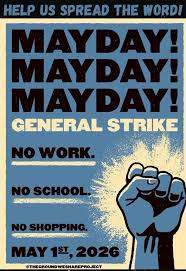
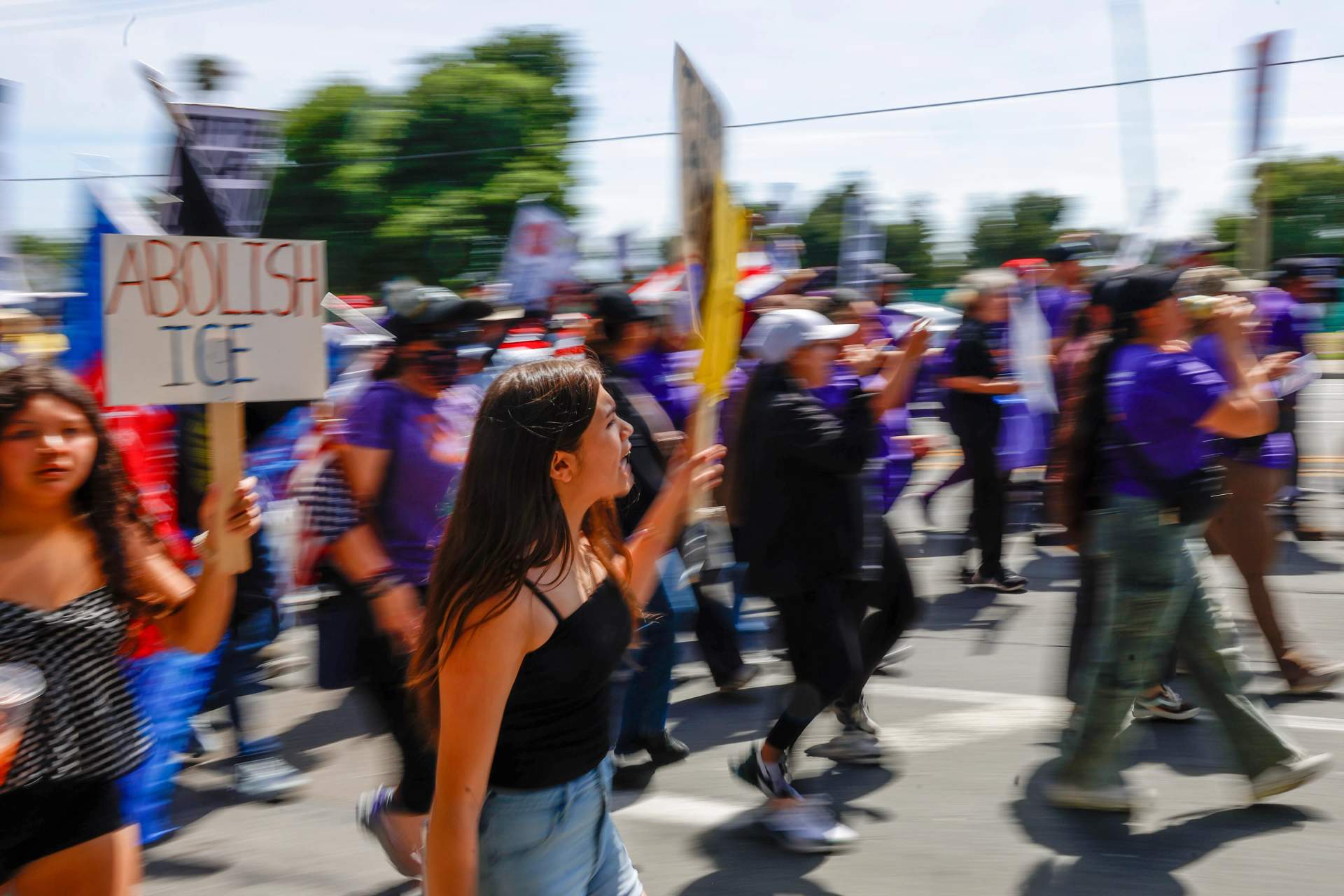
The May Day Strong coalition — bringing together labor unions, immigrant rights groups, DSA, and the No Kings movement — billed the day as an "economic blackout." No work. No school. No shopping. The message: Tax the rich. No ICE. No war. Expand democracy.
New York City: Chained to the Temple of Capital
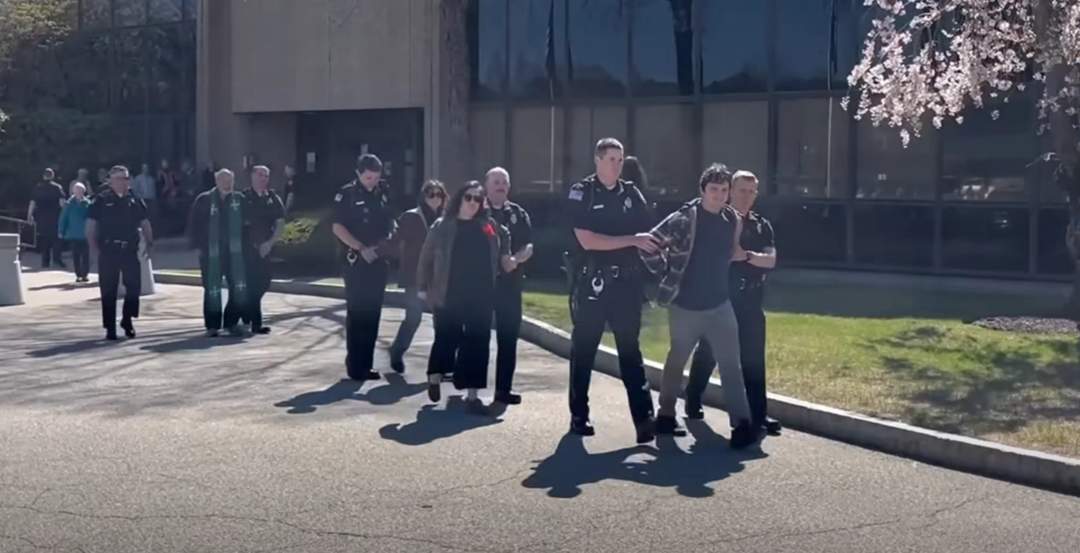
On Wall Street, the Sunrise Movement didn't just march. They chained themselves. In Lower Manhattan, climate activists chained themselves to the front of the New York Stock Exchange. They were joined by about 100 protesters blocking the exits to the property. For an hour, they shut down the temple of American capitalism. Then the arrests began. Police removed the protesters one by one. But a small crowd remained, playing music and chanting: "Tax the rich!" The NYSE action was one of several in New York. Earlier in the day, Amazon workers, Teamsters, and local politicians marched from the New York Public Library to Amazon's nearby corporate offices, demanding the corporation cut its contracts with ICE and DHS. At Union Square Park and Washington Square Park, thousands gathered. The crowds spilled into the streets, carrying signs demanding higher taxes on billionaires and an end to the Iran war.
Chicago: The Union Standard
If New York brought the heat, Chicago brought the numbers. Thousands gathered at Union Park before marching through downtown Chicago. Healthcare workers with SEIU marched on an Amazon warehouse, carrying a giant sign of owner Jeff Bezos's head. One person held an American flag upside down — the distress signal for a nation in crisis. At Union Park, police took at least one person into custody as tensions rose. The Chicago rally wasn't just about wages. It was about the war. About ICE. About a system that values profits over people. Stacy Davis Gates, president of the Chicago Teachers Union, explained why educators were in the streets: "As educators, we feel a very real accountability to the young people in the families that we serve. We want to connect people not just to the affordability crisis but the crisis of our institutions being marginalized in this moment and the impact on our young people."
San Francisco: Elected Officials Arrested
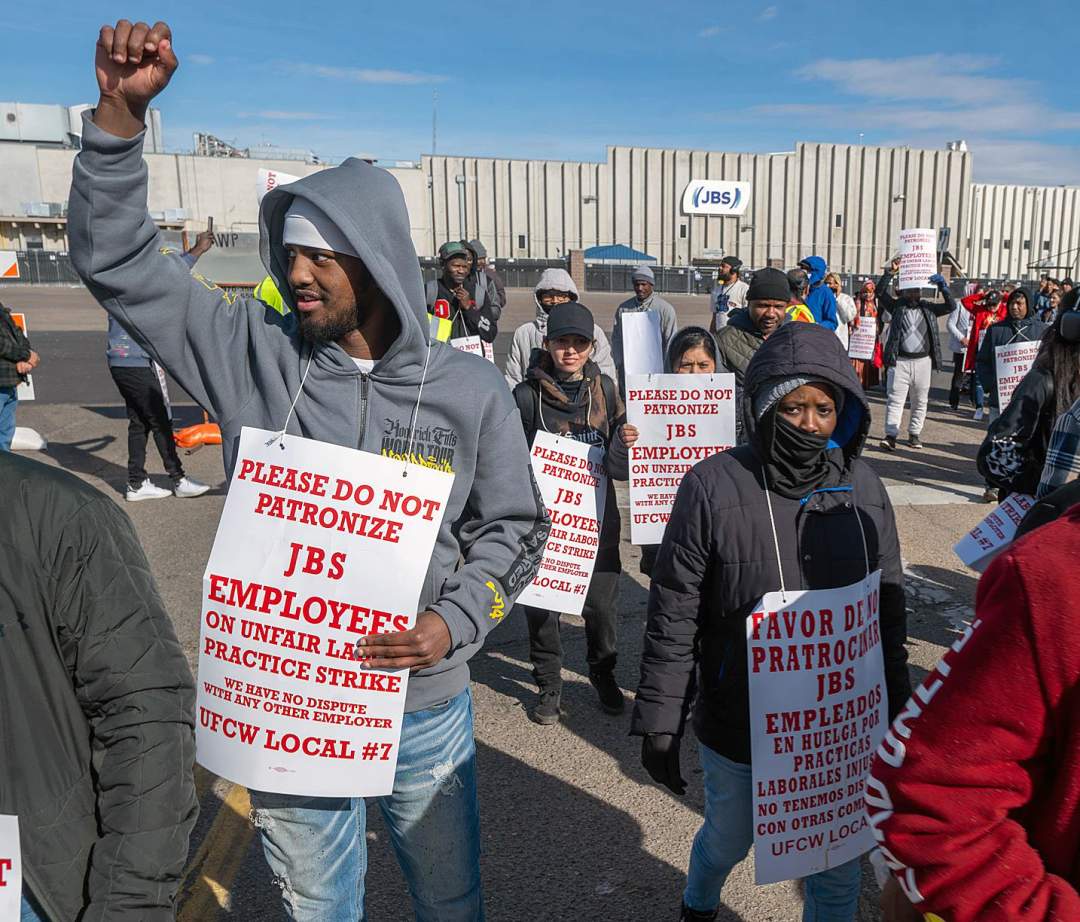
At San Francisco International Airport, the protest took a different turn. Several San Francisco city officials were arrested during a protest at SFO in support of airport workers' union picketing over wages and ICE's presence in airports. The message was clear: when ICE operates in airports, when airport workers can't afford to live in the cities they serve, when elected officials have to get arrested to demand justice — the system is broken.
Portland and Minneapolis: Sunrise Shines Bright
In Portland, Oregon, the Sunrise Movement escalated. They didn't just protest outside. They occupied a Hilton hotel lobby where Department of Homeland Security officials were allegedly staying. In Minneapolis, six Sunrise protesters were arrested for blocking a bridge. These weren't isolated incidents. They were part of a coordinated strategy. The Sunrise Movement understands that climate justice can't be separated from economic justice or anti-imperialism. The same system that's burning the planet is funding the wars that accelerate the crisis.
Washington, D.C.: Shutting Down the Capital
In the nation's capital, protesters with the organization Free DC shut down intersections across the city. They carried handmade banners reading "Workers over billionaires" and "Healthcare not warfare." At the National Mall, demonstrators rallied as Marine One with President Trump aboard departed from the South Lawn of the White House. The contrast was unavoidable: the President flying away to a political fundraiser while thousands below demanded an end to war and poverty.
Paris and Lyon: Bread, Peace, Freedom — and Tear Gas
In France, May Day has always been political. This year, it turned violent. In Paris, protesters used the slogan "Bread. Peace. Freedom." But as the day went on, projectiles were thrown. Police responded with tear gas grenades and forceful arrests. Footage showed protesters scuffling with officers. In Lyon, the situation escalated further. Between 6,500 and 12,000 people took part in demonstrations. Police in riot gear charged protesters letting off fireworks on Place Bellecour. Demonstrators marched through clouds of tear gas, their faces wrapped in cloth against the gas. Two people were arrested in Lyon, accused of "participating in a gathering with the aim of committing damage" and "violence (mortar fire) against persons holding public authority." The French protests weren't just about wages. They were about the war. About inflation. About a Europe that's arming conflicts while its own people struggle with the cost of living.
Istanbul: Taksim Square Sealed, 370 Arrested
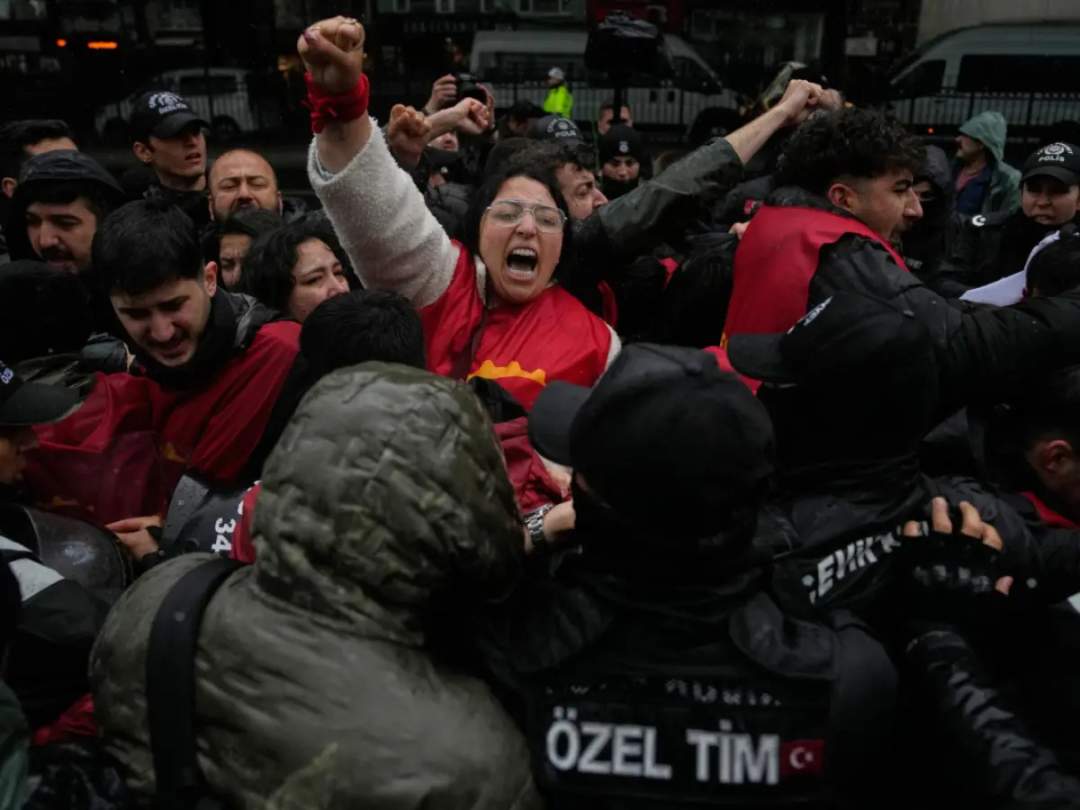
In Istanbul, the state responded with force. Turkish police blocked leftist groups from marching to Taksim Square, the historic center of Turkey's labor movement. Taksim has long carried symbolic weight — it was the scene of anti-government protests in the past. This year, police sealed it off overnight. Protesters attempted to break through barricades. They clashed with police. They demanded the right to march. The result: 370 people arrested in Istanbul alone. Police fired tear gas from riot-control vehicles into the crowd. One video showed the president of the Turkish Workers' Party, Erkan Bas, engulfed in pepper spray. A union official, Basaran Aksu, was arrested just after denouncing the Taksim lockdown. "You can't close off a square to the workers of Turkey," Aksu fumed. "Everyone uses Taksim, for official ceremonies, for celebrations. Only the labourers, the workers, the poor find the square closed to them." Before the protests, Turkish authorities issued arrest and search warrants against 62 people — 46 of them journalists, trade unionists and opposition figures deemed "likely to carry out attacks."
Turin, Italy: Water Cannons and Clashes
In Turin, Italy, the march moved toward the former Askatasuna social center. That's when it escalated. Demonstrators attempted to breach a police cordon. They struck shields with clubs. They sprayed cans toward officers and soldiers. Police responded with water cannons to push them back. The march was led by union banners with the slogan "Dignified Work" and a banner from the National Association of Italian Partisans — a reminder of the anti-fascist roots of Italy's labor movement.
Madrid and Barcelona: Capitalism Should Pay the War's Cost
In Spain, the message was clear: "Capitalism should pay the cost of their war." Thousands marched in Madrid and Barcelona under that banner. They protested stagnant wages, housing shortages, and militarism. But they also connected domestic economic struggles to foreign policy. Placards targeting Trump and Israeli Prime Minister Benjamin Netanyahu highlighted how international conflict featured prominently alongside domestic labor concerns. In Barcelona, crowds took to the streets in a show of solidarity with workers across the country. In Madrid, the message was the same: the cost of war — human, economic, moral — is being paid by working people, not the capitalists who profit from it.
Manila: Burning Trump's Effigy
In Manila, Philippines, workers didn't just march. They burned an effigy. Left-wing labor groups paraded a giant effigy depicting Trump, Israeli Prime Minister Benjamin Netanyahu, and Philippine President Ferdinand Marcos Jr. as a three-headed monster. The symbolism was deliberate. Domestic hardship — rising fuel and commodity prices, stagnant wages — tied directly to local and international political leadership. The war in the Middle East wasn't a distant conflict. It was driving up energy costs, crushing workers in the Philippines. Workers clashed with police near the U.S. Embassy. They demanded wage increases. They called for an end to the war in the Middle East.
Seoul: Unite with Iran and Palestine
In South Korea, thousands gathered near Seoul's Gwanghwamun Square for major labor rallies. But the messaging went beyond collective bargaining and worker rights. Korea Confederation of Trade Unions Chairman Yang Kyung-soo called on demonstrators to "unite with the Iranian and Palestinian workers and people suffering from American imperialist aggression." That was the theme of May Day 2026 in Seoul: labor solidarity as anti-imperialist solidarity. Korean workers understood that the same military-industrial complex crushing Iran's economy and funding Israel's occupation is the same one suppressing wages and crushing unions at home.
Baghdad: The Hammer and Sickle Returns
In Baghdad, supporters of the Iraqi Communist Party held a symbolic hammer and sickle as they took part in the May Day celebration. The image was striking. In a country devastated by decades of war, sanctions, and U.S. occupation, the Communist Party was alive. Workers were gathering under the symbols of international working-class solidarity. The message was the same as everywhere else: the future belongs to those who organize.
Santiago, Chile: Clashes Break Out
In Chile's capital, Santiago, some clashes broke out during May Day protests. The specific details were still emerging, but the pattern was familiar: workers taking to the streets, police responding with force. Chile knows the cost of neoliberalism. It knows the cost of U.S.-backed military dictatorships. May Day in Santiago wasn't just a celebration of workers' rights. It was a demand that never again.
Athens: Cracks in the European Front
In Athens, protesters rallied as Greece continues to struggle with economic crisis, austerity, and the fallout from the war in Ukraine. May Day in Athens wasn't just about wages. It was about the future of Europe — about whether the continent would fund war while its own people suffer.
Rome: A Concert for the Workers
In Rome, Italy's main national labor unions organized a concert to mark May Day. The message: resistance doesn't have to be grim. It can be joyful. It can be cultural. It can be a celebration of collective power.
Johannesburg, South Africa: Trade Unions March
In Tsakane, east of Johannesburg, members of trade unions took part in a May Day rally. The crowd gathered under the African sun, carrying the struggle of workers in a country that knows both the brutality of apartheid and the promise of liberation.
Sao Paulo, Brazil: Anti-Government Slogans
In Sao Paulo, demonstrators chanted slogans demanding greater labor rights during a May Day rally. Brazil, under right-wing rule, has seen attacks on unions, environmental regulations, and indigenous rights. May Day in Sao Paulo was a fight for the country's soul.
Havana: Dancing at the Anti-Imperialist Square
In Havana, Cuba, people danced during a march marking International Workers' Day at Jose Marti Anti-Imperialist Square. The name of the square says it all. Cuba has survived six decades of U.S. blockade. May Day in Havana isn't just a celebration — it's an act of defiance.
Tokyo: Marching Through the Rain
In Tokyo, union members carefully stepped through rain-formed puddles to participate in a May Day rally. Japan's workers face stagnant wages, overwork, and a government that's expanding military spending. But they were in the streets anyway.
What May Day 2026 Means
This wasn't just a protest day. It was a global referendum on the direction of the world. Workers in the United States marched against Trump and the Iran war. Workers in France marched against inflation and militarism. Workers in the Philippines burned effigies of Trump and Marcos. Workers in South Korea declared solidarity with Iran and Palestine. The billionaire class, the war machine, the surveillance state — they're all branches of the same tree. On May 1, 2026, workers around the world cut that tree down. They said it wouldn't happen. They said the movement was fragmented. They said Americans wouldn't strike. On May 1, 2026, they were wrong. The global uprising has begun.
Sources & Methodology(6 sources)
- The Guardian - May Day 2026 Economic BlackoutNews Article
Comprehensive coverage of May Day 2026 protests across the United States, including details on NYSE action, San Francisco arrests, and coordinated economic blackout strategy.
- Daily Mail - May Day Violence in EuropeNews Article
Detailed reporting on May Day clashes in Turkey, France, Italy and Spain, including arrest counts from Istanbul and tear gas use in Lyon.
Coverage of May Day 2026 protests from Paris to Istanbul, Madrid, Manila and Seoul, highlighting how protests expanded beyond labor rights to include anti-war activism.
- AP News - Workers Demonstrate on May Day in PhotosVideo / Audio
Comprehensive photo gallery of May Day 2026 protests from over 25 cities worldwide, including New York, Paris, Lyon, Istanbul, Manila, Seoul, Chicago, and Washington D.C.
Global coverage of May Day 2026 protests, including demonstrations in Venezuela, Cuba, Ecuador, Argentina, Mexico, Chile, and the Philippines.
Local New York coverage of May Day protests at the New York Stock Exchange, including details on multiple arrests.
Frequently Asked Questions
- How many May Day events took place in the United States on May 1, 2026?
- Over 3,500 events were organized across all 50 states, making it the largest coordinated day of labor action in generations. The May Day Strong coalition organized these actions under the 'Workers Over Billionaires' theme.
- How many people were arrested during May Day protests?
- Exact numbers are still being compiled, but arrests were reported in multiple cities including at least 100 at the New York Stock Exchange, several San Francisco city officials, six in Minneapolis, 370 in Istanbul, and multiple arrests in Paris and Lyon.
- What were the main demands of May Day 2026 protests?
- The three core demands were: (1) Tax the rich — families over fortunes, (2) No ICE, no war, no private army, and (3) Expand democracy, not corporate power. Protesters also called for an end to the Iran war and U.S. support for Israel.
- How many North Carolina school districts closed for May Day?
- At least 22 North Carolina school districts closed as teachers joined the 'Kids Over Corporations' march. The North Carolina Association of Educators helped organize the statewide action.
- What made May Day 2026 different from previous years?
- The scale (3,500+ events in the U.S. alone), the coordination between labor, immigrant rights, climate, and anti-war movements, and the explicit connection between domestic economic struggles and foreign policy issues like the Iran war and U.S. support for Israel. Protests in 22+ countries made it a truly global uprising.