Cristiano Ronaldo flew to Dallas on July 4 aboard Global Crossing Airlines flight N837VA, heading to a World Cup match against Spain. The same plane — tail number clearly visible in video footage — had deportation flights the day before and the day after. The aircraft has conducted more than 1,580 removal-related flights since May 2023 under ICE contract, making it one of the most heavily used weapons in the Trump administration's mass deportation machine. In March 2025, it was the plane that carried more than 200 Venezuelans to El Salvador's CECOT mega-prison, in defiance of a federal judge's order to turn around.
Some of those Venezuelan men were wrongly accused of being gang members. Once inside CECOT, they suffered physical and psychological abuse.
FIFA organized the flight. FIFA has not responded to questions about why it chose an airline that operates as an arm of the immigration carceral state.
This is the World Cup that FIFA wants you to see: glittering stadiums, corporate sponsors, national teams on the world stage. This is the World Cup that workers in host cities are making sure you also see: strike lines outside luxury hotels, 96 percent strike authorization votes, demands that ICE be kept out of workplaces, and a global sporting event built on the labor of people who are also the targets of state violence.
The SoFi Stadium Strike: 96 Percent, Unanimous, Unprecedented
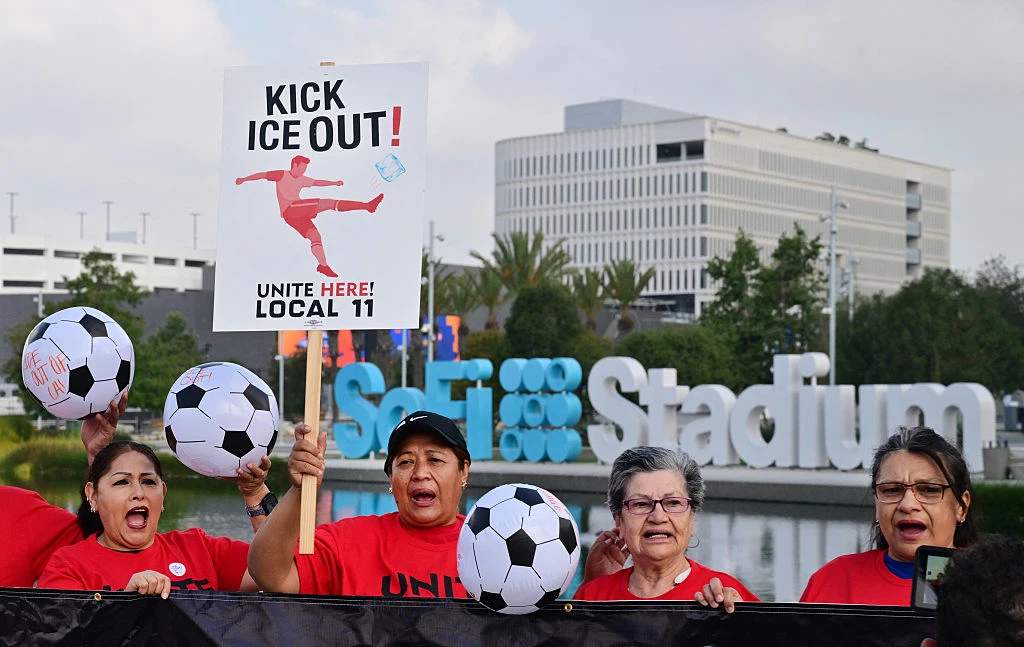
At SoFi Stadium in Los Angeles — the site of eight World Cup matches — 2,000 concessions workers represented by UNITE HERE Local 11 voted 96 percent to authorize a strike over two issues: poverty wages and the threat of ICE presence at the stadium.
These are cooks, bartenders, dishwashers, servers, and attendants — the invisible labor that makes luxury events possible. Their leverage was structural: you cannot run a World Cup match without concession workers. And they knew it.
The result was a contract that included:
- 30 percent increase in automatic tips for bartenders and servers
- $9-per-hour raise for non-tipped workers
- The right to walk off the job if ICE poses a threat to worker safety
That last provision is the most significant. It is not a wage demand or a scheduling grievance. It is a demand that employers recognize the right of workers to refuse to work in the presence of a federal law enforcement agency that has killed at least two civilians in the past week. It is, in effect, a demand for sanctuary in the workplace — codified in a legally binding contract.
As Cassandra Gomez, a senior staff attorney at the National Employment Law Project, told Truthout: "Workers represented by UNITE HERE Local 11 have created an important tool to keep themselves and their communities safe."
Philadelphia: $30 an Hour and a Nine-Day Walkout
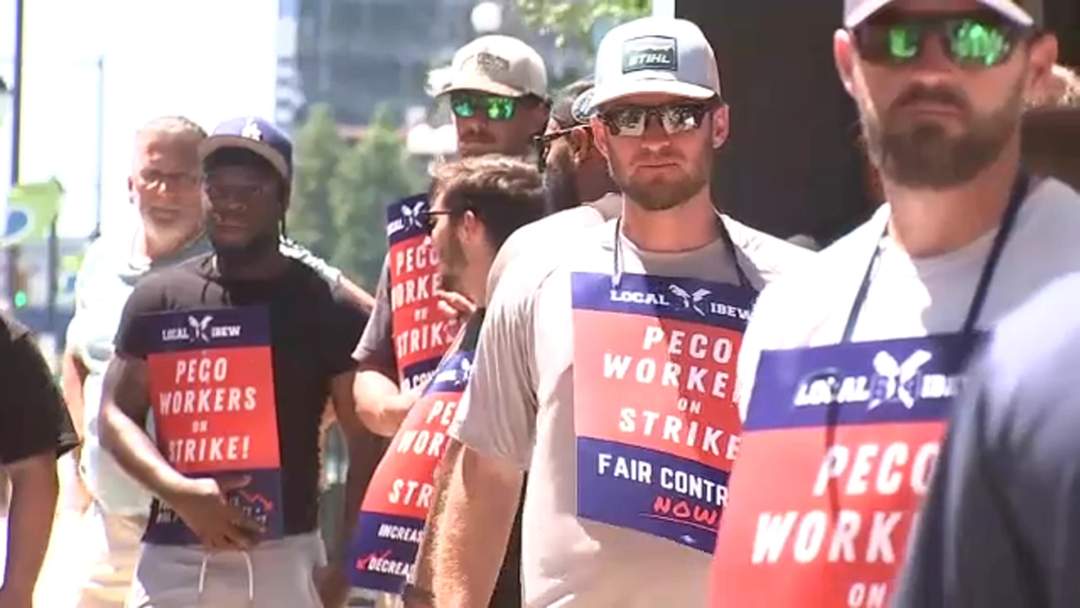
In Philadelphia, another World Cup host city, the Sheraton and Warwick hotels saw workers win contracts raising wages to $30 an hour by 2028. UNITE HERE Local 274 also won pension increases and reduced daily quotas for room attendants — the backbreaking metric system that turns housekeepers into industrial processing units.
At the Sheraton, workers walked out for nine days. At the Warwick, a strike authorization vote was enough to force a deal. The pressure came from multiple directions: World Cup tourism, the country's 250th anniversary celebration, and the MLB All-Star Game. Workers chose the moment. Capital had to fold.
*"$30 an hour will be a game-changer for me. It would mean I could actually start saving for the future." — Shafeek Anderson, seven-year Sheraton employee
The solidarity was cross-sectoral: IATSE members refused to cross the picket line to set up events. AFSCME District Council 33, the Philadelphia Federation of Teachers, and the Association of Flight Attendants brought food to rallies. This is what labor power looks like when workers understand that their leverage is collective, not individual.
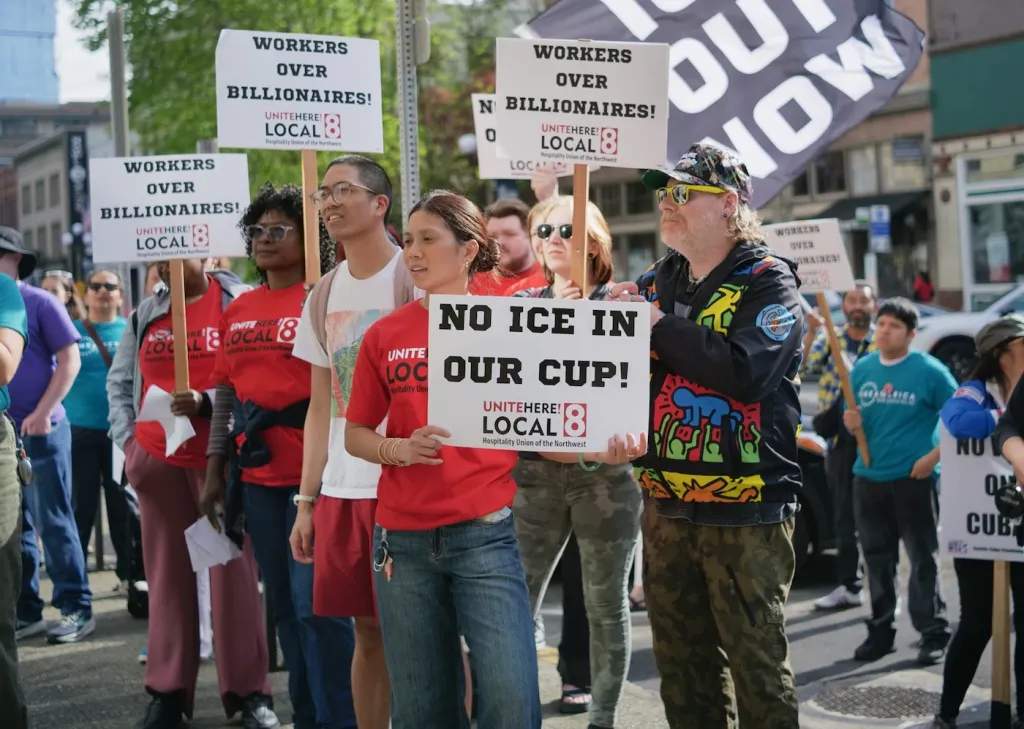
Unite Here Local 8 members picket the Hilton Suites ahead of the 2026 World Cup in Seattle.
Seattle: Strike Since June 18, World Cup or No World Cup
At the Hilton Embassy Suites in Seattle, hotel workers have been on strike since June 18 — before the World Cup began, and continuing after the city's five World Cup matches at Lumen Field concluded.
*"Some people left their job in the middle of their shift at 6 in the morning and joined us. It was electric, and it's been electric ever since." — Hayden Eyerly, front desk agent
Their demands include higher wages, improved health plans, and — critically — the right to call out without discipline if immigration agents are in the building.
*"Allowing workers to stay home if ICE were on the premises would just show a little bit of humanity, if Hilton was to do that." — Hayden Eyerly
Teamsters who pick up garbage at the hotel refused to cross the picket line. Seattle Mayor Katie Wilson relocated an event that had been scheduled at the hotel. Fans heading to World Cup matches at the nearby stadium joined the picket line with drums and chants.
The striking workers at the Hilton Embassy Suites are not waiting for the World Cup to end. They are demonstrating that labor power does not depend on a single event — it depends on the sustained refusal to work under conditions imposed by capital.
The Walrus and the Carpenter: When Restaurant Workers Unionize
In one of the most inspiring stories of the World Cup labor wave, workers at a James Beard Award-nominated oyster restaurant in Seattle — The Walrus and the Carpenter — formed an independent union called United Creatures of the Sea after the restaurant switched from tips to a service charge, cutting their pay.
Every single worker voted to walk out on an unfair labor practice strike.
*"No one had participated in a strike before, and no one really had an idea of what this is supposed to look like. I was like, 'I don't know if people are gonna do chants, maybe they're gonna think it's hokey.' Nope! Everyone was on board." — Ford Nickel, union secretary-treasurer and former server
The solidarity was mutual: restaurant strikers visited hotel picket lines, hotel strikers visited theirs, other restaurant workers brought food and water. An estimated 80 percent of customers chose not to cross the picket line — including regulars who said they'd return when the workers had a contract.
After eight days on strike, the United Creatures of the Sea returned to work with a reduced service fee of 6 percent and a return to the tipping model. A small independent restaurant. An independent union. A unanimous strike vote. A victory.
This is what organizing looks like at the base of the working class — and it is spreading.
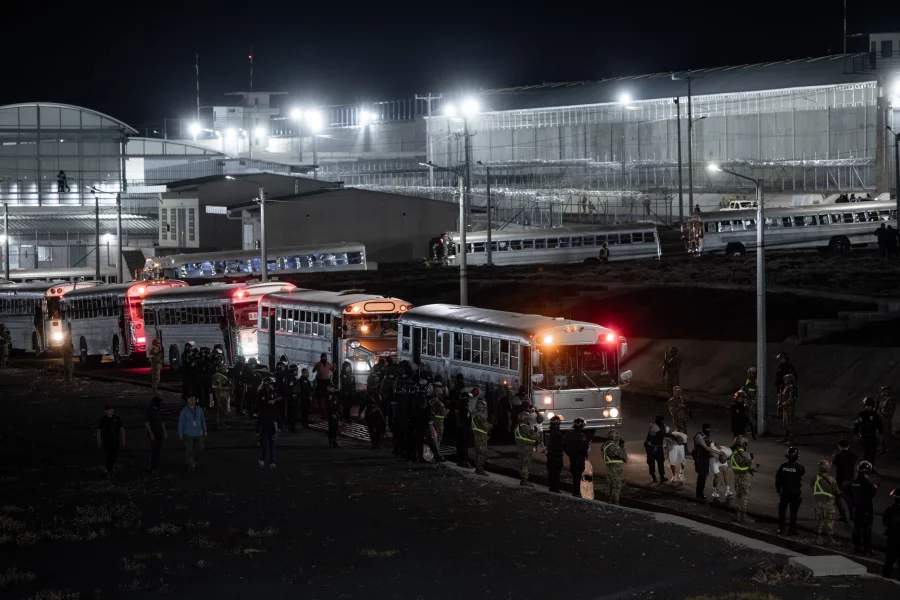
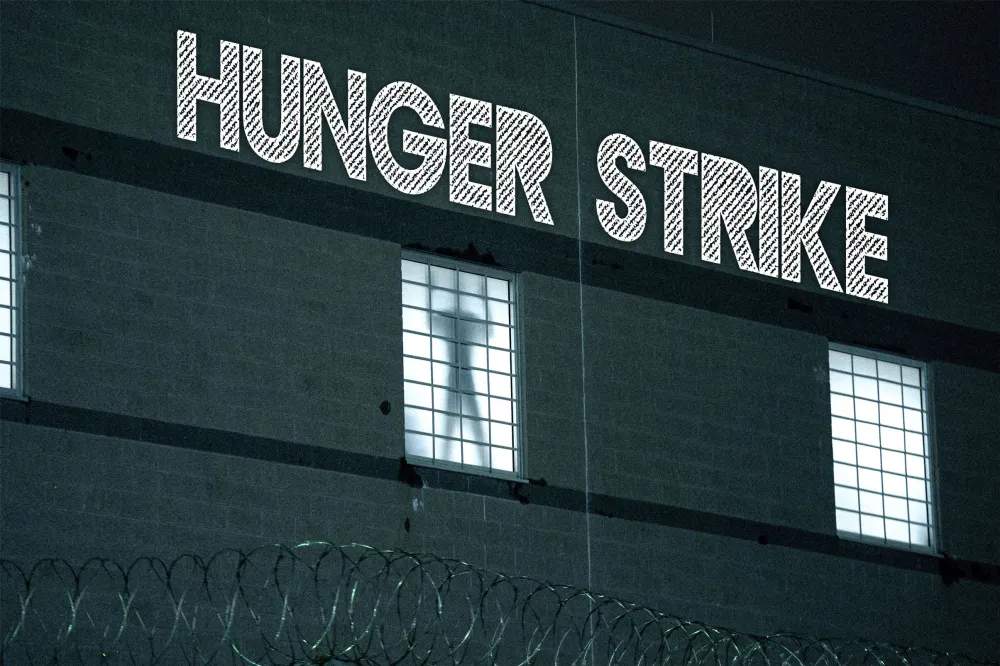
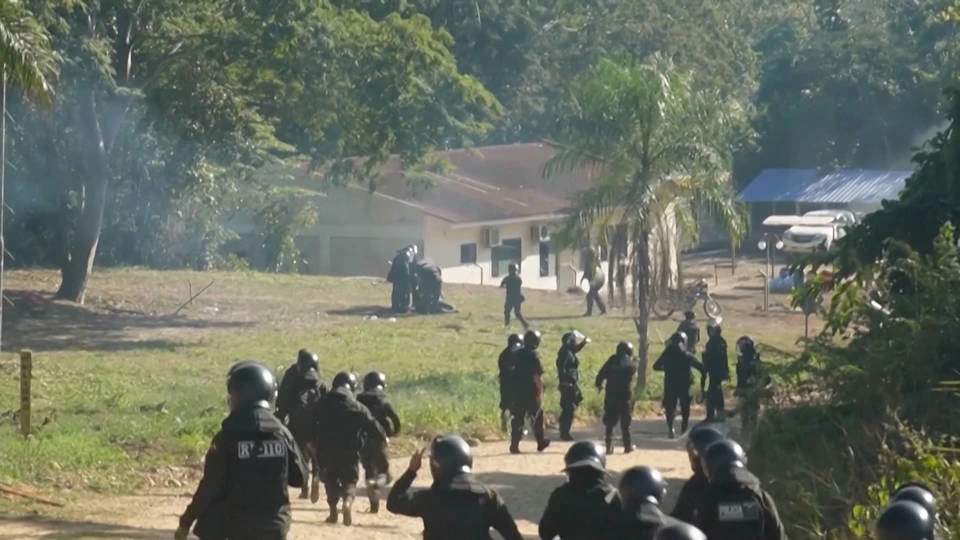
El Salvador's mega-prison CECOT.
The Deportation Plane: The Symbol That Connects It All
The image of FIFA flying Portugal's national team on the same aircraft used to deport Venezuelans to a Salvadoran mega-prison is not a coincidence. It is a structural connection.
The same airline — Global Crossing Airlines — that operates as a contractor for ICE's mass deportation program is also available for charter by FIFA for World Cup logistics. The aircraft that carried Ronaldo and his teammates has transported more detainees for deportation than most other planes in the ICE fleet. The company has not responded to questions about its dual role.
France's national team also flew GlobalX during the tournament — at least three flights, including one as recently as July.
This is not a single bad logistics decision. It is the integration of the World Cup's glossy corporate apparatus with the machinery of state violence. The tournament that celebrates national identity on the pitch is being facilitated, at the logistical level, by the same infrastructure that dissolves national identity through mass deportation. The spectacle requires the carceral state, and the carceral state requires the spectacle.
The France Connection: The Second Plane
The Guardian first reported that the French national team also used GlobalX for at least three flights during the World Cup. France — the country whose revolution gave the world the Declaration of the Rights of Man — flew to its matches on planes that shackled detainees at their hands and feet and transported them without notice to their families or legal counsel.
The symbolism is almost too perfect: the nation that invented the modern concept of citizenship transporting its athletes on aircraft dedicated to stripping citizenship from the undocumented.
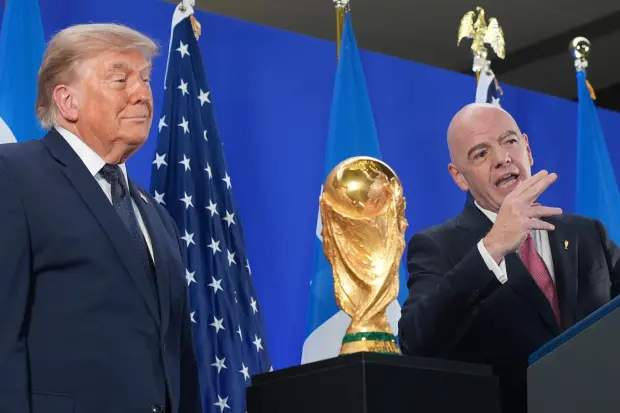
President Donald Trump listens as FIFA President Gianni Infantino speaks at a reception at Trump Tower in New York, Friday, July 17, 2026.
The Trump-Infantino Connection
Donald Trump's "great friendship" with FIFA President Gianni Infantino adds another layer of complicity. The relationship came under scrutiny during the World Cup after a red card against the U.S. men's team was dismissed following a personal phone call between Trump and Infantino.
When the president of the host nation is calling the president of the governing body to overturn referee decisions, and FIFA is chartering deportation planes for national teams, the pretense of sporting neutrality evaporates. The World Cup is not separate from politics. It is embedded in it — specifically, in the politics of the carceral state, the deportation machine, and the authoritarian administration that controls both.
The Strike Wave Context: Workers Are Withdrawn
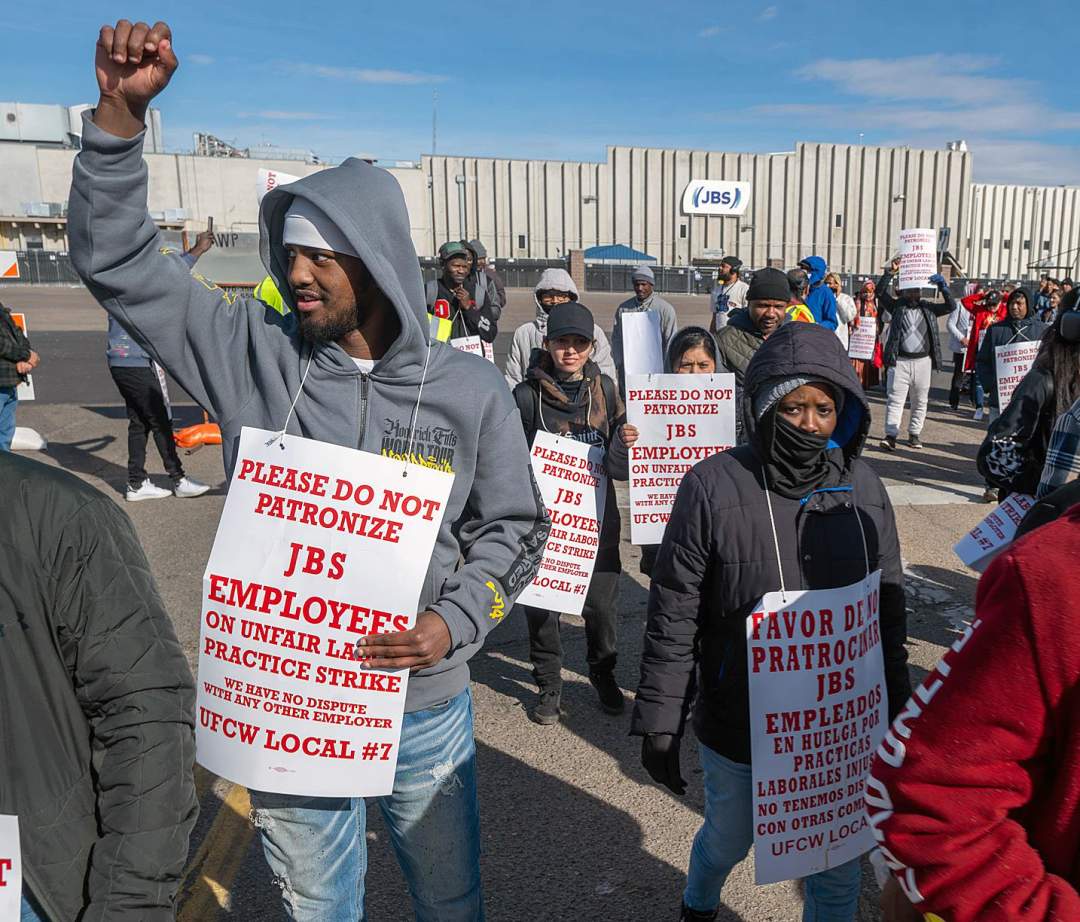
As we documented when the strike wave swept across America, the World Cup labor actions are part of a broader pattern of working-class resistance — from meatpacking workers in Denver who voted to authorize strikes against JBS, to the global May Day uprising that saw workers in dozens of countries take to the streets.
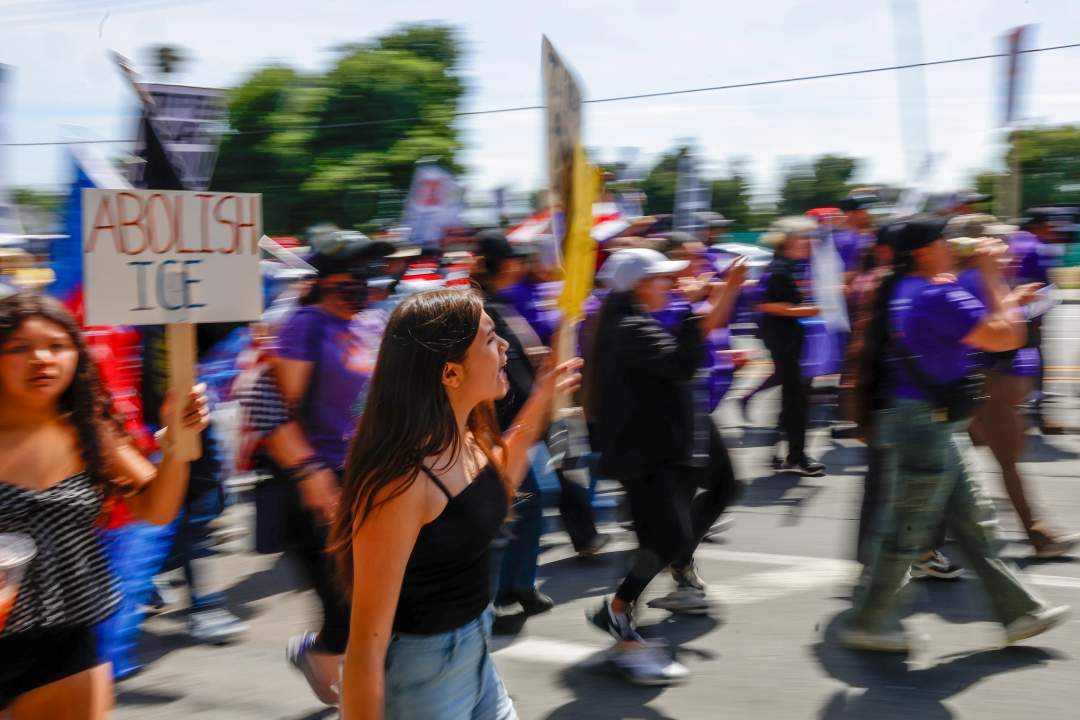
The World Cup strikes add a crucial dimension: the intersection of labor organizing with immigrant rights. These are not workers striking for better wages alone — though wages are central. They are workers striking for the right to be free from the threat of state violence at their workplace. They are demanding that their employers acknowledge what the state will not: that undocumented workers are human beings with human rights, and that the presence of ICE at a workplace is not a law enforcement operation but an act of terror.
Follow the Money: Who Profits?
The economics of the World Cup tell the story:
- FIFA expects $11 billion in revenue from the 2026 tournament
- Stadium operators charge millions per match for naming rights, luxury suites, and concessions
- Hotel chains in host cities see occupancy rates surge by 30-50 percent during the tournament
- Workers at these venues — the people who actually make the events function — were making poverty wages before the strikes
The labor theory of value could not be more visible. The wealth of the World Cup is produced entirely by the labor of the workers who build the stadiums, staff the hotels, serve the food, and clean the facilities. Without their labor, there is no event. The $11 billion in FIFA revenue is surplus value extracted from workers who were making $15-20 an hour in cities where a one-bedroom apartment costs $2,000 a month.
The strikes are not a disruption of the World Cup. The strikes are a demand that the World Cup acknowledge the labor that makes it possible.
The ICE-FIFA Nexus: From Spectacle to Prison
There is a direct line from the luxury suite to the detention cell. The same administration that has turned ICE into a killing machine — murdering Johan Sebastián Guerrero in Maine and Lorenzo Salgado Araujo in Texas — is also the administration that Trump's DHS Secretary Markwayne Mullin serves, the administration that accelerated ICE arrests to 1,400 per day.
The workers walking off the job at World Cup venues understand this connection intuitively. They are not abstractly "anti-ICE." They are refusing to work alongside an agency that kills people who look like them, speak like them, and in some cases, are them.
The strike authorization at SoFi Stadium — 96 percent — is not a political gesture. It is a survival strategy. In Los Angeles, where the Supreme Court has approved ICE "roving patrols" that operate by racial profiling, the presence of ICE at a workplace is not a hypothetical threat. It is an existential one.
What the Strikes Tell Us
The World Cup labor wave is significant for several reasons:
- Timing matters. Workers chose the moment of maximum leverage — when the eyes of the world are on host cities, when hotels cannot afford empty rooms, when stadiums cannot function without concession staff. This is strategic strike timing at its finest.
- Immigrant rights are labor rights. The demand for ICE-free workplaces blurs the line between labor organizing and immigrant defense. In practice, the two have always been inseparable — undocumented workers are workers, and their exploitation is the cutting edge of capitalist labor discipline. The strikes make this connection explicit.
- Independent unionism is growing. The United Creatures of the Sea at The Walrus and the Carpenter is an independent union — not affiliated with UNITE HERE or any national body. It formed organically, struck unanimously, and won. This is the kind of wildcat energy that terrifies capital, because it cannot be anticipated or managed through conventional collective bargaining frameworks.
- The spectacle is cracking. The World Cup's image as a celebration of human achievement is colliding with the reality of the carceral state that underwrites it. Workers are forcing the collision. Fans are choosing picket lines over luxury suites. The PR machine is failing.
The Demand
Pay the workers. Keep ICE out of workplaces. Stop using deportation planes for soccer teams. And stop pretending that a tournament built on exploited labor and carceral infrastructure is anything to celebrate.
The workers have spoken. The strikes are the answer.
Every. Single. Time.
Sources & Methodology(5 sources)
Methodology
Reporting based on Truthout's investigation of World Cup labor actions, The Guardian's investigation into FIFA's use of deportation planes, Jacobin's reporting on the SoFi Stadium strike authorization, ICE Flight Monitor data from Human Rights First, and worker testimonies from UNITE HERE members.
Filed Under
Frequently Asked Questions
- What did SoFi Stadium workers win?
- A 30% increase in automatic tips for bartenders and servers, a $9/hour raise for non-tipped workers, and the right to walk off the job if ICE poses a threat to their safety.
- What is the connection between FIFA and ICE deportation flights?
- FIFA chartered Global Crossing Airlines to fly Portugal's team. The same aircraft (tail number N837VA) has conducted 1,580+ deportation flights for ICE and was used to deport Venezuelans to El Salvador's CECOT prison in violation of a federal judge's order.
- Which cities have seen World Cup-related strikes?
- Los Angeles (SoFi Stadium), Philadelphia (Sheraton and Warwick hotels), and Seattle (Hilton Embassy Suites). Restaurant workers at The Walrus and the Carpenter in Seattle also struck under an independent union.
- Is France also involved in the deportation plane controversy?
- Yes. The Guardian reported that France's national team also flew GlobalX for at least three flights during the World Cup, using the same airline that operates as an arm of ICE's deportation program.