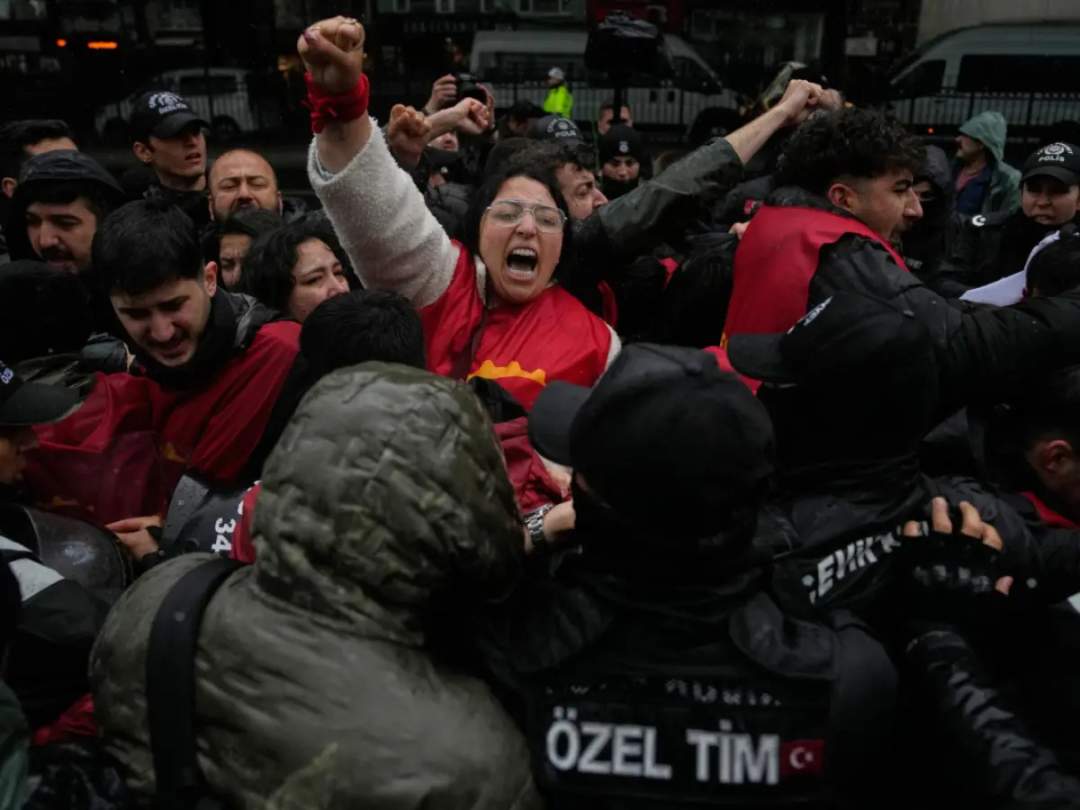
La Paz, Bolivia — Right now, Bolivia's administrative capital is cut off from the rest of the country. Highways are barricaded. Explosions echo through the streets of El Alto. Tens of thousands of Indigenous Aymara defenders in their signature red ponchos stand toe-to-toe with riot police outside government buildings. Four people are dead. Over ninety have been arrested. And the people are not leaving.
This is not a protest. This is a siege — and the people built it.
What's happening in Bolivia right now is one of the most significant examples of militant popular resistance in the Americas in years. And there are lessons here for every community facing a government that serves capital instead of people.
The Spark: Austerity Comes for the Poor
President Rodrigo Paz, a center-right businessman elected last October, campaigned on "capitalism for everyone." Six months in, capitalism arrived — and it came for the poor first.
In December 2025, Paz scrapped two-decade-old fuel subsidies by executive decree. Fuel prices doubled overnight. Gas stations ran dry or sold adulterated fuel that destroyed engines. Food prices followed. For a country where most people live on wages that were already thin, this was an act of economic violence.
Then in April 2026, his government pushed through Law 1720 — a land measure that reclassified small Indigenous agricultural holdings as "medium properties," stripping them of legal protections and making them eligible for bank seizure as collateral. Translation: the state opened the door to mass land dispossession of Indigenous communities.
The people read it clearly. First your gas money, then your land. The pattern is centuries old.
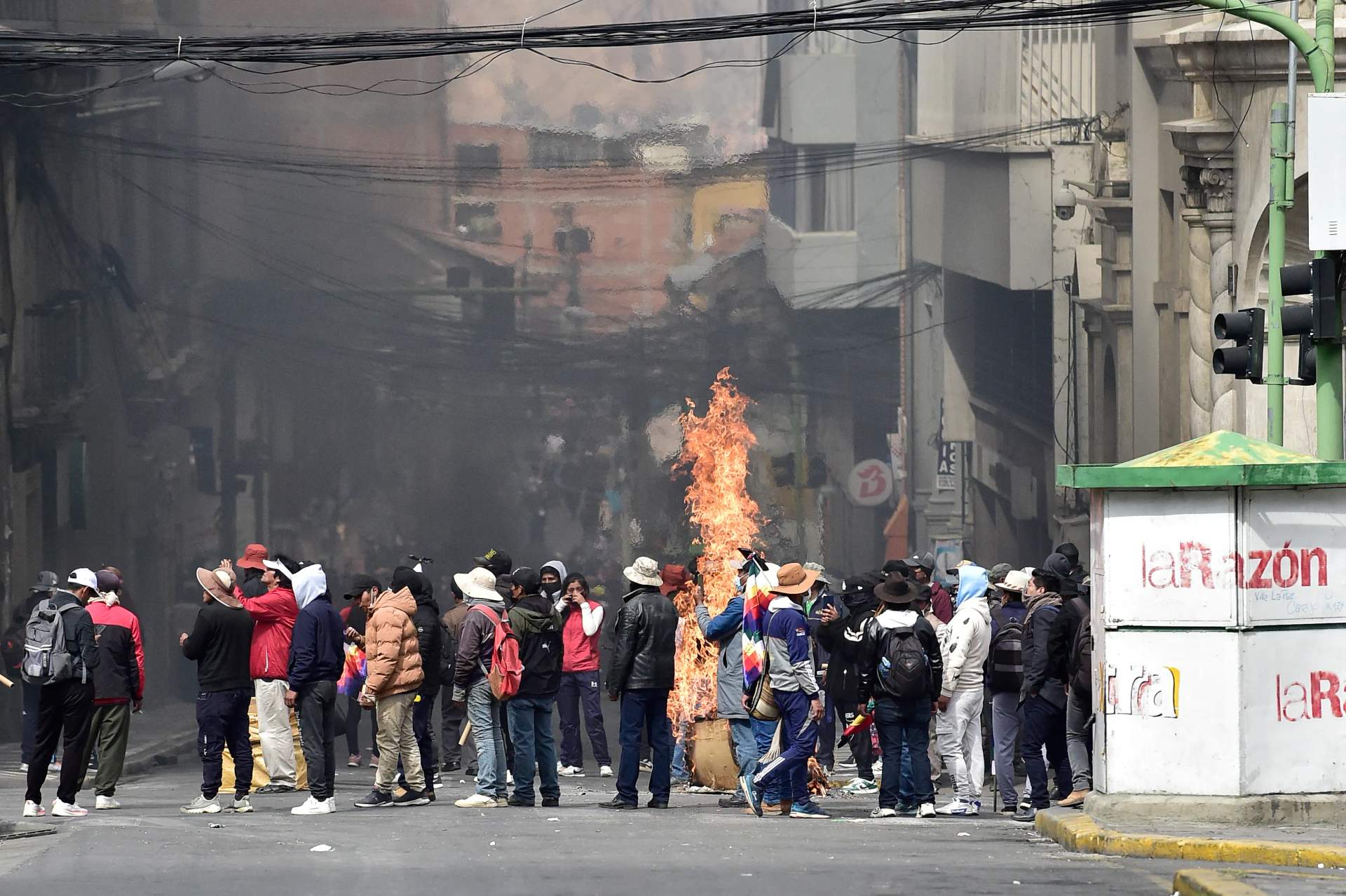
Flames rise from a street barricade during clashes between miners and riot police in La Paz, Bolivia, May 2026
The Arsenal of the Poor: How You Shut Down a Country
The Bolivian resistance didn't file petitions. They didn't wait for the next election. They used the oldest and most effective weapons the oppressed have — and they deployed them with military precision.
The Blockade Strategy
Within days of the land law passing, sixty-seven highways were blockaded across the country. Access to the Peruvian border was cut. Routes to Sucre, Oruro, Potosí, and Santa Cruz were severed. The Bolivian Highway Administration confirmed at least forty-one sustained blockade points.
This is not symbolic. Blockades starve the state. They stop the flow of goods, capital, and government authority. When La Paz couldn't receive food or fuel, prices spiked and the government's legitimacy bled out alongside the supply lines. The capital is functionally under siege — not by a foreign army, but by its own people.
Miners With Dynamite
State miners didn't picket. They marched into the capital carrying explosives and detonated them near the presidential palace. This is Bolivia's working-class tradition — miners have used dynamite as a political weapon for decades. It's not terrorism when the people who extract the country's wealth demand a share of it. It's a negotiation conducted at volume.
The Red Ponchos — Indigenous Territorial Defense
The Red Ponchos (Ponchos Rojos) are an Aymara community defense force. Tens of thousands strong. They are not a militia created for this moment — they are a permanent territorial defense structure rooted in Indigenous self-governance. When police deployed 3,500 officers with tear gas and rubber bullets against crowds in El Alto on May 16, the Red Ponchos held their ground at the Judiciary building, one block from the presidential palace.
Counter-protesters — bused in by the government's allies — burned the Wiphala, Bolivia's Indigenous flag, in front of them. The Red Ponchos did not retreat.
Labor Federation General Strike
The Central Obrera Boliviana (COB) — the country's largest trade union federation — called an indefinite national strike. Transportation workers paralyzed bus and taxi service in every major city. Teachers walked out. Coca growers, market vendors, and rural teachers joined. The strike turned sectoral grievance into a general paralysis of economic life.
Community Vigils and Occupation
Indigenous groups from the Amazon walked — walked — all the way to La Paz to join the blockades. Community vigils have been held outside government buildings. The streets around the Palacio Quemado are contested territory.
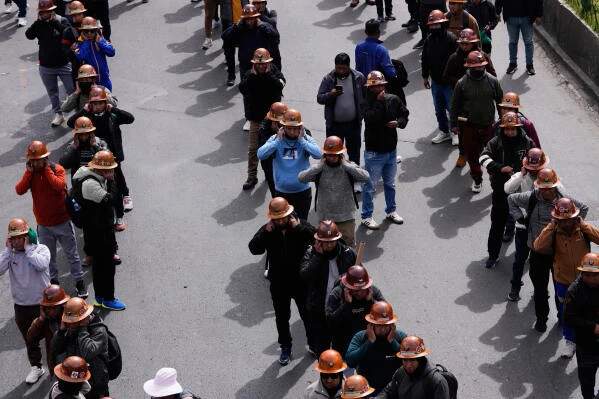
Bolivian miners cover their ears before dynamite detonates during anti-government protests in El Alto, May 2026
The State's Playbook: Terror, Lawfare, and Division
The Paz government's response has been textbook counterinsurgency dressed in democratic language.
Vice Minister of Indigenous Justice Jorge García publicly called blockade leaders "completely radicalized" and linked them to narcotrafficking — laying the rhetorical groundwork for mass criminalization. The Ministry of Public Works called blockades tools of "death" and "social convulsion." On social media, a coordinated campaign labels protesters "terrorists" and "drug traffickers."
The Wiphala has been quietly removed from the Plurinational Assembly and the presidential palace. Indigenous symbols are being erased from the state the way colonial governments always erase the people they dispossess.
The government has also used classic divide-and-conquer — signing side deals with individual union locals while isolating and arresting movement leaders. One union federation in El Alto signed a deal and was immediately accused by fellow protesters of selling out.
Marco Rubio, the US Secretary of State, weighed in from Washington, declaring that the US "will not allow criminals and drug traffickers to overthrow democratically elected leaders in our hemisphere." Translation: the empire is watching, and it has picked a side. It always picks the side that privatizes.
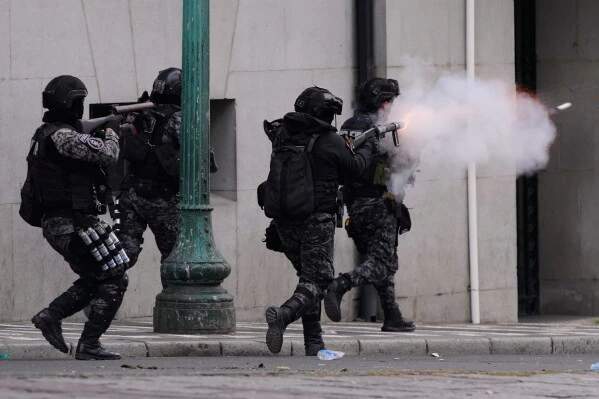
Bolivian riot police fire tear gas at anti-government protesters in La Paz, May 2026
The Lesson: Why Militant Resistance Works
The Bolivian resistance is educational not because it's clean, but because it's effective. Let's count what they've achieved:
- The land law is dead. After mass blockades and community mobilization, Paz signed a decree fully annulling Law 1720. The government conceded entirely on the most dangerous provision.
- The capital is paralyzed. Government offices are closed. Businesses are shuttered. The state's authority does not extend past the barricades.
- The movement has escalated its demands from "repeal this law" to "the president must resign." Once you prove you can shut down a country, the goalposts move — because the people realize the law was never the real problem. The system was.
- The government is fracturing. Vice President Edmundo Lara has publicly broken with Paz, condemning police violence, calling for dialogue, and inviting the Inter-American Commission on Human Rights to investigate.
What Bolivia Teaches Us
- Blockades work. There is no stronger weapon than denying the state the ability to move goods, people, and capital. A highway is a vein. Close it, and the body starves.
- You don't need a single leader. This movement has no figurehead. It's coalitions of miners, teachers, Indigenous defense forces, and labor unions operating on shared interest. The state is desperate to pin it on Evo Morales because a decentralized movement cannot be decapitated.
- Militancy has a language. Dynamite at the palace gates says what petitions cannot. The state understands force. When the people demonstrate they are willing to escalate, the state is forced to negotiate — or escalate, and lose legitimacy faster.
- The state will always call you a terrorist. That's not a reason to stop. It's confirmation you're effective. Every government that faces popular resistance calls the resisters criminals. The Red Ponchos defending their communities are not terrorists. They're the people the system was built to crush — and they're still standing.
- Victory is not a moment. The land law is repealed, but fuel subsidies are not restored. The president hasn't resigned. The fight continues. Militant resistance is not a tactic you deploy once — it's a posture you maintain until you win.
Bolivia's poor and Indigenous communities are teaching a masterclass right now. The question isn't whether their methods are justified — austerity and land theft justified resistance before the first barricade went up. The question is whether the rest of us are paying attention.
The people are at the gates. The dynamite is lit. And the state is running out of road.
Sources & Methodology(6 sources)
Filed Under
Frequently Asked Questions
- What triggered the Bolivia protests in May 2026?
- Two government policies sparked the uprising: a December 2025 decree eliminating fuel subsidies that doubled fuel prices, and Law 1720 in April 2026 which reclassified Indigenous agricultural land as medium properties eligible for bank seizure. Indigenous communities and workers saw both as attacks on their survival.
- What tactics are Bolivian protesters using?
- The resistance employs highway blockades (67 roads severed, 41 sustained blockade points), general strikes led by the COB labor federation, miner detonations of dynamite near government buildings, community defense by the Red Ponchos (Aymara Indigenous territorial forces), and occupation vigils around government buildings.
- Who are the Red Ponchos?
- The Ponchos Rojos are an Aymara Indigenous community defense force numbering tens of thousands. They are a permanent territorial defense structure rooted in Indigenous self-governance — not an ad-hoc protest group. They have faced off against 3,500 police officers and counter-protesters who burned the Wiphala, Bolivia's Indigenous flag.
- What has the government done in response?
- President Paz has deployed 3,500 police with tear gas and rubber bullets, arrested over 90 people, killed at least 4 protesters, removed Indigenous symbols like the Wiphala from government buildings, used divide-and-conquer tactics to split union federations, and framed protesters as terrorists and drug traffickers. Vice President Lara has broken with Paz over the violence.
- Has the resistance achieved anything?
- Yes. The government fully annulled Law 1720 (the land mortgage law), the capital La Paz is functionally paralyzed with government offices closed, demands have escalated from repealing specific laws to demanding the president's resignation, and the government is fracturing internally.
- What role is the US playing in the Bolivia crisis?
- US Secretary of State Marco Rubio has publicly denounced the protests, declaring the US will not allow 'criminals and drug traffickers to overthrow democratically elected leaders.' The government has also released 2019 coup plotters Jeanine Áñez and Luis Fernando Camacho, who were convicted for sedition, terrorism, and crimes against humanity.