More than 300 cannabis workers at a 75,000-square-foot grow house in Barry, Illinois — a town of roughly 1,300 people in Pike County — walked off the job at 2 a.m. on June 30 and did not come back for 30 days. They rejected a weak first contract offer. They stood through a July heatwave that pushed heat indices past 100 degrees. They held the line through rain and sweltering mornings on a rural two-lane road in western Illinois. On July 30, they ratified their first union contract by a vote of 224 to 54 — the largest strike in the history of the legal cannabis industry.
These are cultivators, processors, packagers, and distribution workers. They handle every stage of production at a facility that supplies dispensaries across the entire state of Illinois. Their employer, Ascend Wellness Holdings, reported $562 million in revenue in 2024, operates in seven states, and sat on $88.3 million in cash. Many of the workers who generate those millions were making $17.30 an hour and paying more than $1,000 a month for health insurance their families could barely afford to use.
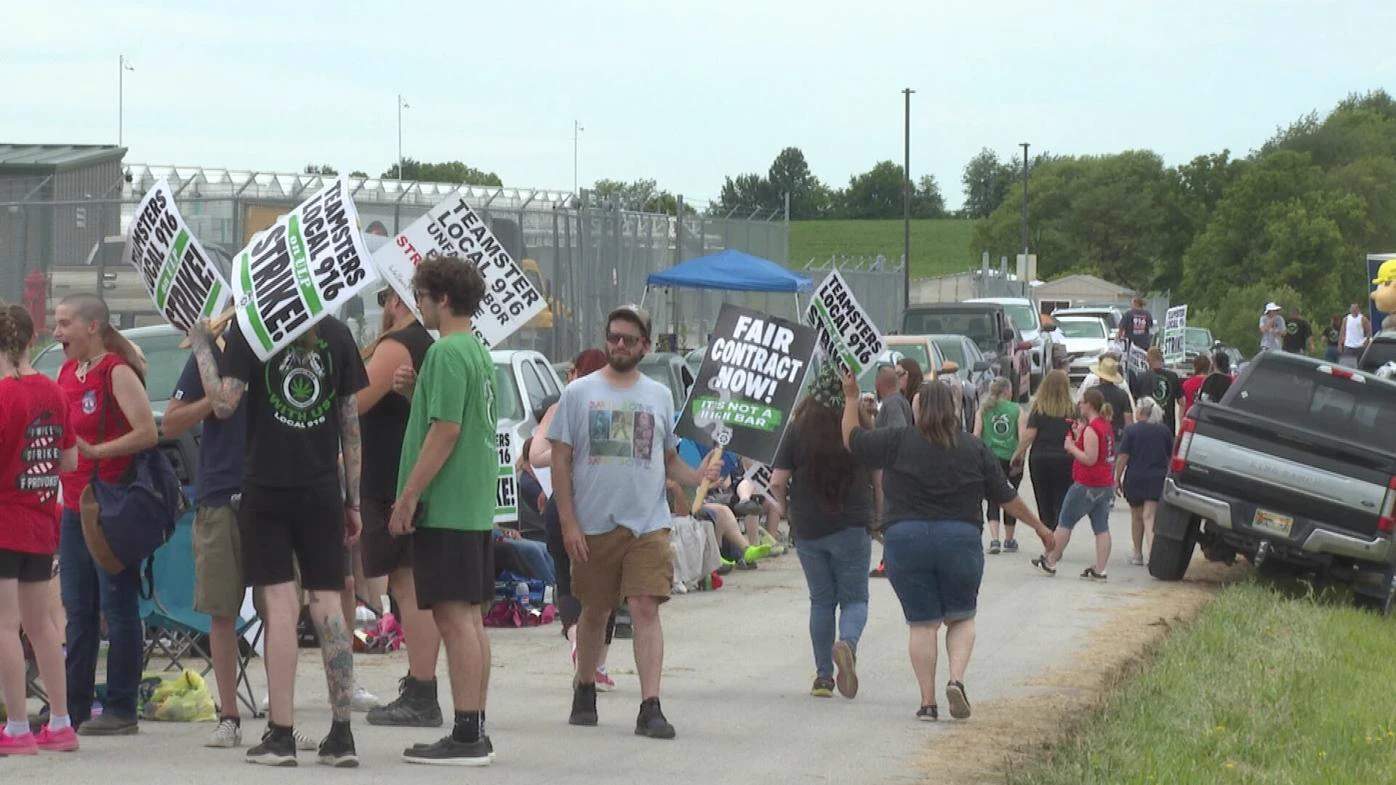
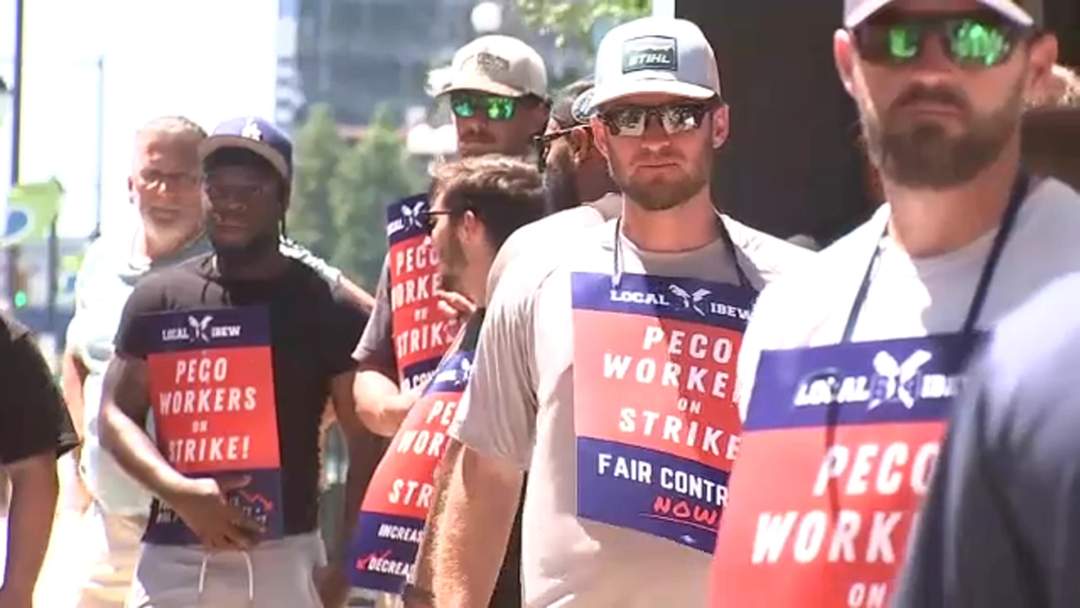
Striking Teamsters Local 916 grow house workers on the picket line.
A Year of Being Ignored, Then 30 Days of Being Heard
The strike did not come out of nowhere. Workers at the Barry facility had been trying to negotiate their first contract since May 2025 — more than a year of bargaining sessions where, according to workers, Ascend barely showed up. They sent lawyers instead of decision-makers. They stalled. They floated offers that didn't keep up with inflation, let alone the company's own revenue growth.
The breaking point came when Ascend allegedly retaliated against a member of the workers' own bargaining committee — a classic union-busting move that pushed the action from an economic dispute into an unfair labor practice strike filed with the National Labor Relations Board. The strike authorization vote passed by a 92 percent margin.
"Ascend's employees generate millions of dollars in revenue for this company every week, yet many of the workers responsible for that success earn only around $18 per hour. At the same time, many workers are paying a majority of the cost of health insurance premiums, with some families paying more than $1,000 per month for coverage."
— JP Fyans, President, Teamsters Local 916
The company's public response was corporate boilerplate: their "last, best and final offer" was on the table, they claimed, and the union just wouldn't let workers vote on it. Workers saw it differently.
"We've seen the numbers and we know how much these plants cost and I know how much I make in that cart room every week. We know that there's money and the company have never said that they can't afford it, they simply don't want to discuss it. We are the ones who help run everything here. Without us, this product doesn't get made, it doesn't grow."
— Vivianne Briarwood, cart room operator, Ascend Wellness Barry facility
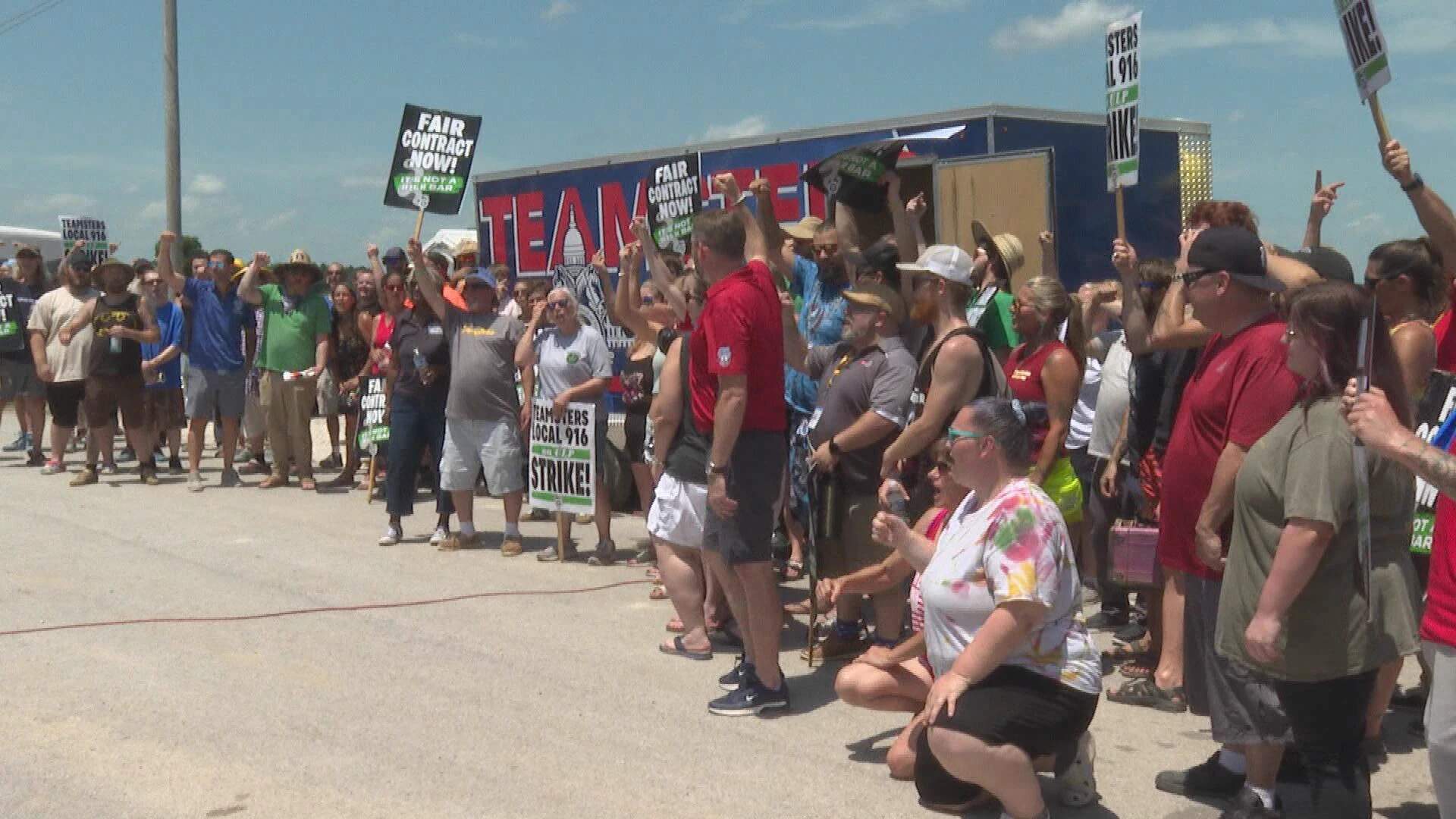
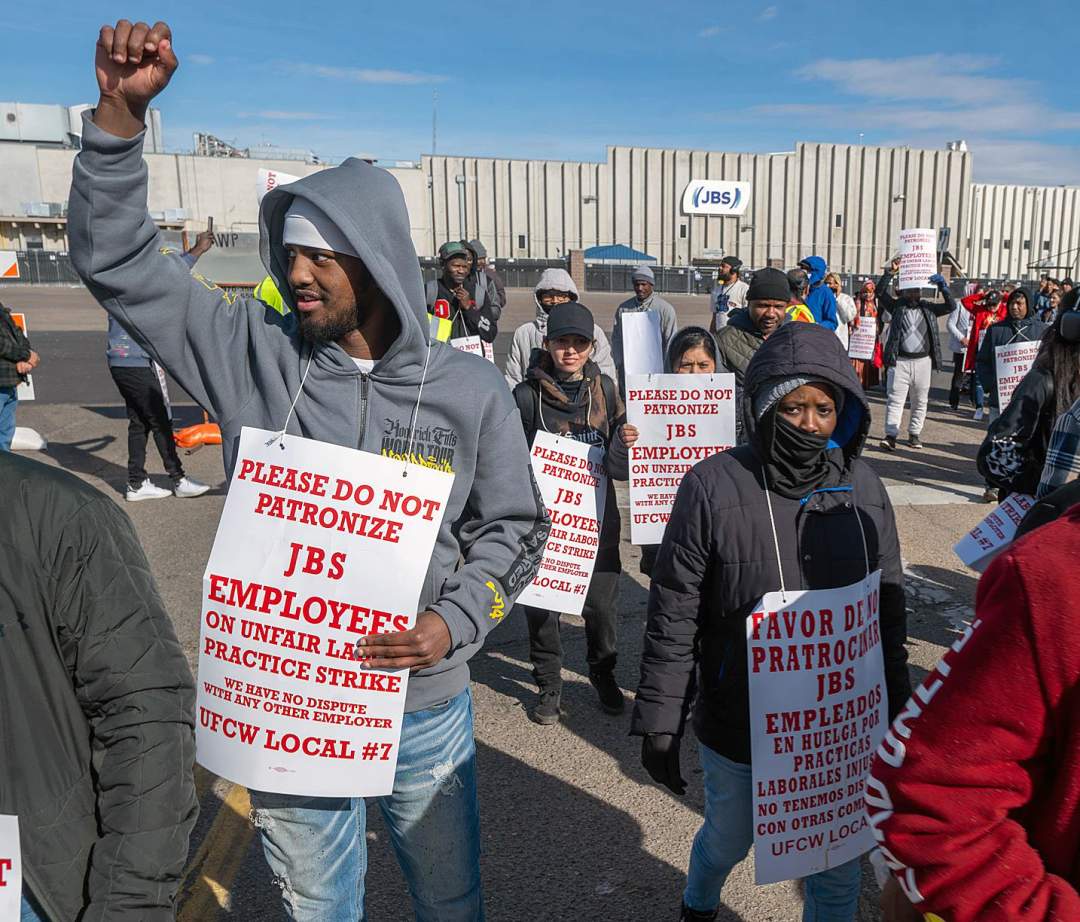
Striking Ascend Wellness cannabis workers rally on the picket line during the July heatwave in Barry, Illinois
The Heat, the Rain, and the Solidarity
By early July, a heatwave settled over the Midwest. Day eight of the strike fell on one of the hottest weeks of the summer. Workers rallied outside the gates of the 75,000-square-foot facility — originally built as a medical marijuana cultivation center under Revolution Cannabis in 2015, later absorbed by Ascend in 2018.
"It's been hot. There were a couple days where it was completely rainy and wet but I really like seeing the solidarity, you know what I mean, everybody is from all kinds of places that have kinds of different views but they've come together to essentially show them that they're not going to bow down."
— Drew Coulson, maintenance technician, Ascend Wellness Barry facility
Support rolled in from across the region. Illinois State Senator Doris Turner showed up. Workers arrived from Iowa, Wisconsin, Minnesota, and Missouri. The picket line — in a town of 1,300 — became a gathering point for the regional labor movement.
"As you walk around, it's not just the workers that work here in Barry, Illinois. I have met people from Iowa, Wisconsin, Minnesota, Missouri, as well as other cities throughout Illinois, and I think that that shows the solidarity that exists within the labor movement."
— Illinois State Senator Doris Turner (D-48)
But solidarity alone doesn't pay rent. The Teamsters provided $1,000 per week in strike pay to every worker on the line — a critical lifeline that Ascend and every corporation knows most unions can't match. The company's calculus, as Kyle Bollinger put it, was always to starve them out.
"Employers know that workers can't afford to go on strike, and that's their goal, right? Push them out on strike, they'll starve them out. But now that these people are getting a good strike benefit, they can pay for their rent, their groceries, and be able to afford to live and be able to continue to come out here every week until we get this resolved."
— Kyle Bollinger, Vice President, Teamsters Local 916
The Conditions Behind the Strike
The contract fight at Ascend wasn't just about wages — though at $17.30 an hour in an industry generating billions, wages were central. Workers were also fighting conditions inside the facility that the public never sees.
During the strike, Bollinger described what workers had been enduring: CO2 sensors that weren't functioning, forcing employees into rooms where carbon dioxide levels could pose health risks. Pesticides being sprayed in cultivation rooms, with management ordering workers back inside before safety clearance times had elapsed. Every day on the picket line, Bollinger said, brought a new story of a health or safety issue inside the facility.
These are the conditions that workers across industries have been forcing into the open — the hidden costs of production that don't appear in quarterly earnings reports. Cannabis cultivation is industrial agriculture. The plants need controlled atmospheres, chemical inputs, and round-the-clock attention. The workers providing that attention were doing it in environments that would trigger OSHA inspections in any other industry — but cannabis, operating in a regulatory grey zone between federal prohibition and state legalization, often escapes that scrutiny.
"Hearing the stories of the horrible working conditions every day, and every day I hear a new story of CO2 sensors inside that aren't working, and people are getting sick. Pesticides being sprayed in rooms, and the company telling people to go back in before time for safety."
— Kyle Bollinger, Vice President, Teamsters Local 916
What They Won — and What It Means Long Term
The ratified contract delivers on every front workers fought for: higher wages, lower healthcare costs, protection against unjust discipline, improved paid time off, and a formal dispute resolution process. For workers who had spent a year being told the company couldn't afford better, the contract is both a material gain and a moral vindication.
But the long-term impact extends far beyond the wages and benefits on paper. These 300+ workers now have a grievance process. They have protection from retaliation — the very thing that triggered the strike in the first place. They have a union contract that means management can't unilaterally change scheduling, can't fire a bargaining committee member for organizing, can't delay negotiations by sending a lawyer instead of a decision-maker.
"We went on strike because we knew the value of our work, and we knew we deserved better. This contract proves that by refusing to give up, workers can win the respect, job security, and opportunities we deserve."
— Cory Hill, Ascend cultivator and Teamsters Local 916 member
The contract sets a benchmark that ripples outward through an industry that has operated without meaningful labor standards. Cannabis workers in Illinois, Michigan, Massachusetts, and every other state with legal markets now have a reference point. The Teamsters' Food Processing Division, which oversaw the Ascend campaign, is already organizing at other cannabis operations. The Ascend contract is the floor.
"Cannabis workers are building a powerful movement across this industry, and this strike demonstrates what can be achieved when workers stand together and fight back. This contract sets a new and improved standard for cannabis cultivation and manufacturing workers across the country."
— Jesse Case, Director, Teamsters Food Processing Division
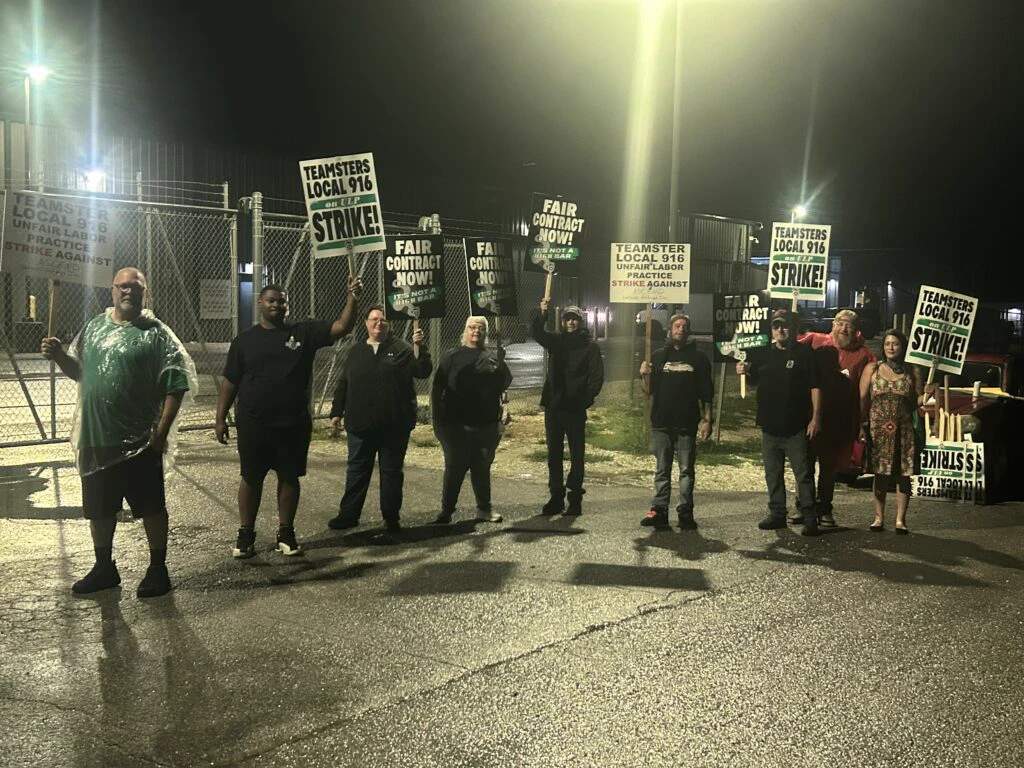
Teamsters Local 916 members maintain an early-morning picket line outside the Ascend Wellness cannabis grow house in Barry, Illinois
The People on the Line
What makes the Ascend strike matter isn't the contract language or the revenue figures. It's Vivianne Briarwood in the cart room who knew exactly what she was worth and refused to accept less. It's Drew Coulson, a maintenance technician, standing in the rain and calling out a company that "has a history of just not showing what they care about their employees." It's Kayla Wasson, who told a reporter on a 100-degree day: "We're striking for a purpose, and that purpose is for a better life for our family. And we need to stay strong in this."
It's Misty Cordero, who described the picket line as "really wonderful" — "There's a lot of camaraderie, amongst everyone here. Everyone taking care of each other." It's Kaleb Johns, who said that coming outside the gate brought workers together in a way the facility never had: "We all have the same want, so it's really nice how that brings everybody together."
These are not professional activists. They're cultivation workers and maintenance techs and packagers in rural Pike County, Illinois. They went on strike because the alternative — accepting $17.30 an hour, $1,000/month premiums, broken CO2 sensors, and pesticide exposure — was not a life. The same recognition that has driven workers to refuse dangerous conditions in warehouses and meatpacking plants drove them to walk out of a cannabis grow house at 2 a.m. on a Tuesday.
Which Company Is Next
The Ascend Wellness strike matters beyond Illinois, beyond cannabis, beyond a single contract ratification. It matters because it's proof that organizing works — in a brand-new industry, in a rural county, against a $562 million company that thought it could wait them out. Three hundred workers in Barry, Illinois held the line for 30 days through heat and rain and corporate silence, and they won.
The legal cannabis industry has generated billions in revenue since state-level legalization began spreading. The workers who make that revenue possible — the trimmers, cultivators, packagers, and drivers — have been treated as disposable inputs in a lucrative supply chain. The Ascend contract is the first major crack in that model at scale.
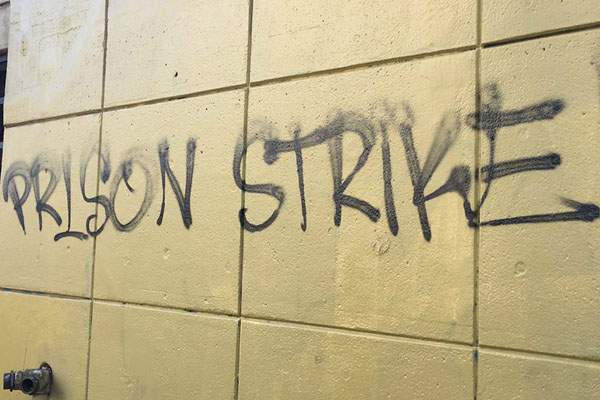
From prison strikes to May Day mobilizations to warehouse walkouts, the through-line is identical: workers are done waiting for permission. The industry's investors spent years building a legal framework to profit from cannabis. They didn't build it for the workers. Three hundred people in Barry, Illinois built their own framework on a picket line, and the industry will never be the same.
Sources & Methodology(7 sources)
Local coverage of the June 25 walkout with details on the 75,000 sq ft facility, ULP charges, and worker demands.
On-scene reporting during the July heatwave with worker interviews including CO2 sensor failures, pesticide exposure, and solidarity from neighboring states.
Methodology
Reporting based on official Teamsters Local 916 press releases, local news coverage from WGEM, KHQA, and the Quincy Herald-Whig, industry reporting from Cannabis Tech and PR Newswire, Ascend Wellness financial data from Cannabis Business Times, and on-scene worker interviews during the strike. Contract ratification vote (224-54) confirmed by WGEM. Strike authorization (92%) confirmed by Teamsters. Wage and healthcare figures from worker statements to local press.
Frequently Asked Questions
- What was the Ascend Wellness strike about?
- More than 300 workers at Ascend Wellness' cultivation facility in Barry, Illinois walked off the job on June 30, 2026 over unfair labor practices. They demanded fair wages, affordable healthcare, protection from unjust discipline, and a formal dispute resolution process.
- How long did the strike last?
- The strike lasted 30 days, from June 30 to July 30, 2026, when workers ratified their first contract with Teamsters Local 916.
- Was this the largest cannabis industry strike?
- Yes. The Teamsters and industry outlets confirmed it was the largest work stoppage in the history of the legal cannabis industry, with more than 300 workers participating.
- What did the final contract include?
- The ratified contract includes higher wages, lower healthcare costs, protection against unjust discipline, improved paid time off policies, and a formal dispute resolution process.
- Who is Ascend Wellness Holdings?
- Ascend Wellness Holdings is a vertically integrated multistate cannabis operator with operations in seven states including Illinois. The company reported $562 million in revenue in 2024 and operates dispensaries and cultivation facilities.