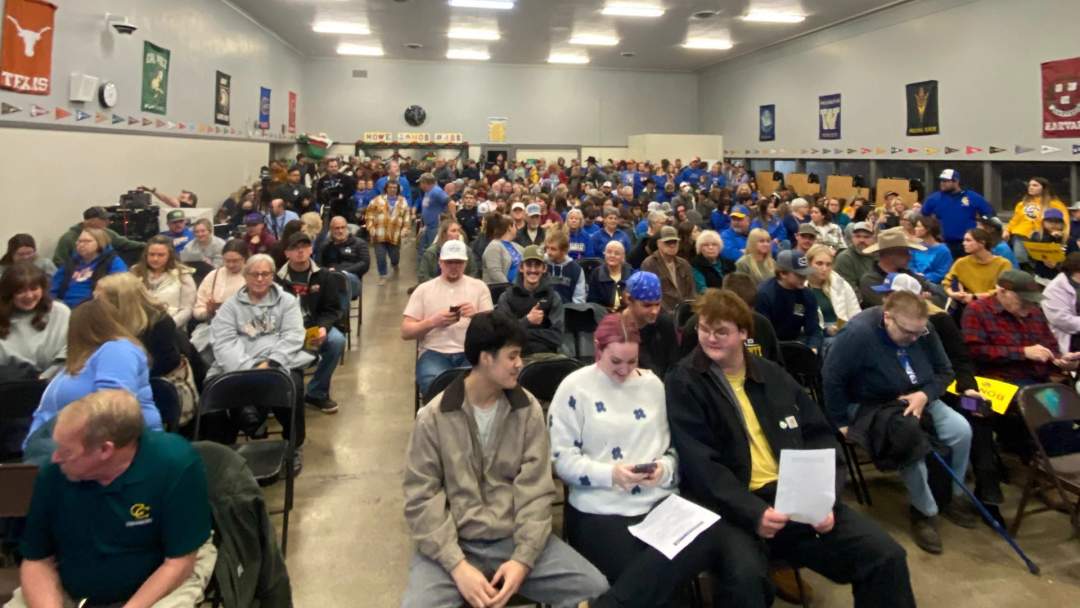
Central Oregon recorded a nearly 20% drop in homelessness this year — 402 fewer people without stable housing across the region. In Crook County, the numbers fell even harder: Prineville went from 367 individuals experiencing homelessness to 214, a 42% decline. Madras saw its count slashed by more than 50%.
The headlines celebrated. Governor Tina Kotek called it "solid progress." Nonprofit leaders said the region had "a lot to celebrate."
But look under the surface of the Point-in-Time count — a single-night snapshot taken in late January — and you find something more complicated than triumph. You find a fragile system running on temporary funding, political gridlock, and a working class that remains one missed paycheck from crisis.
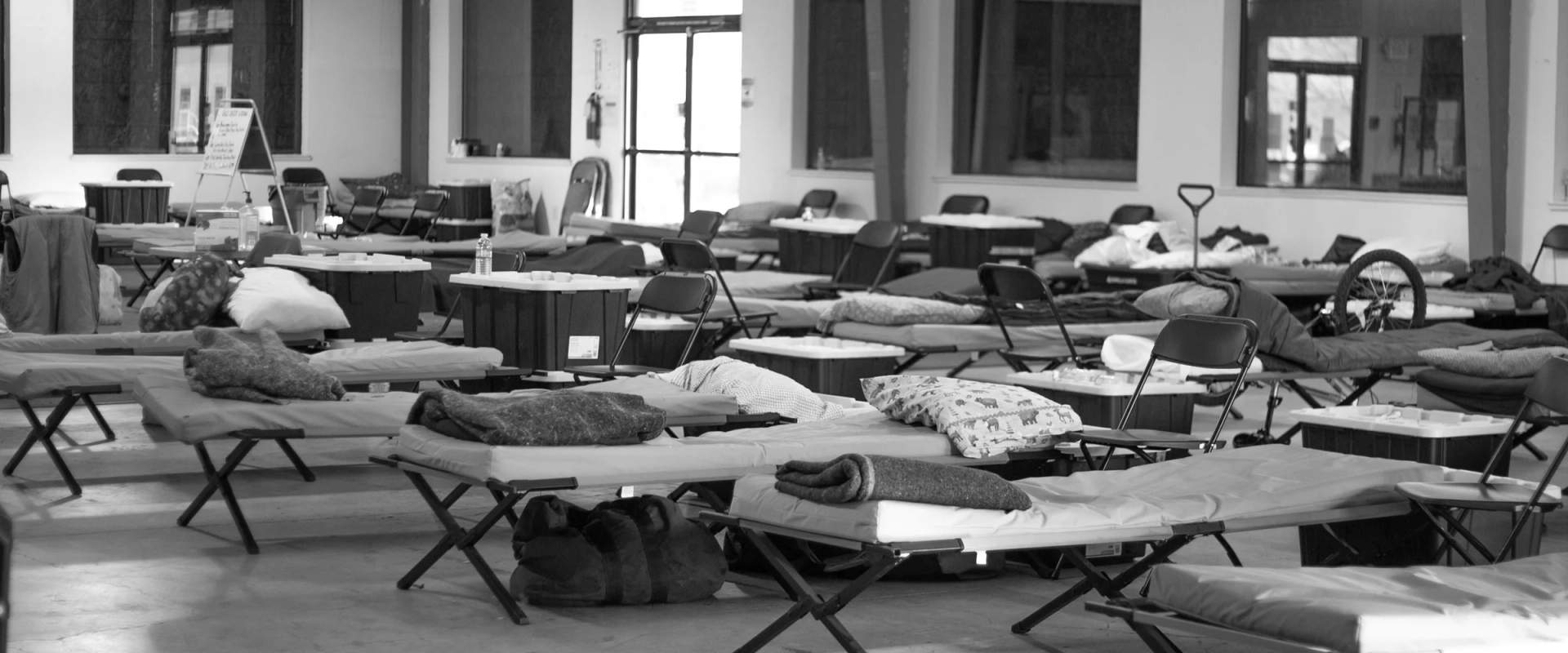
Black and white photograph of an emergency shelter building with people gathered outside in Central Oregon
The Count and Its Limits
The Homeless Leadership Coalition coordinates the annual Point-in-Time (PIT) count across Crook, Deschutes, and Jefferson counties and the Confederated Tribes of Warm Springs — 15,000 square miles of largely rural terrain. Eliza Wilson, the coalition's chair, called this year's decline "the largest year-over-year drop in over 20 years."
Wilson and Scott Cooper, executive director of NeighborImpact, attribute the drop to a coordinated push: new shelters opened in Bend, Redmond, Prineville, and Madras; expanded rental assistance; and housing-focused case management that helped people transition into stable housing. Cooper said Central Oregon housed more people in 2025 than any previous year.
But every researcher and service provider in the region offers the same caveat: the PIT count is a snapshot, not a movie. It captures who is homeless on one specific night in January. It does not capture the flow of people cycling in and out of homelessness throughout the year. Children and families are chronically undercounted — the coalition itself compares its data against McKinney-Vento school district numbers, which consistently show more homeless students than the PIT count finds.
And as Cooper himself noted, "people are more accessible during the summer" — meaning winter counts likely undercount.
The 84% of respondents who were single adults also tells a structural story. As Cooper explained, "the resources that we have for housing all require us to prioritize families. It's very difficult for a single individual to get into the resource base." Single adults — the majority of those counted — are the least likely to access the very programs credited with reducing the numbers.
For more on how rural Oregon communities face systemic neglect from state and federal systems, see our reporting on far-right pressure on Crook County schools and the militia takeover of Prineville's politics.
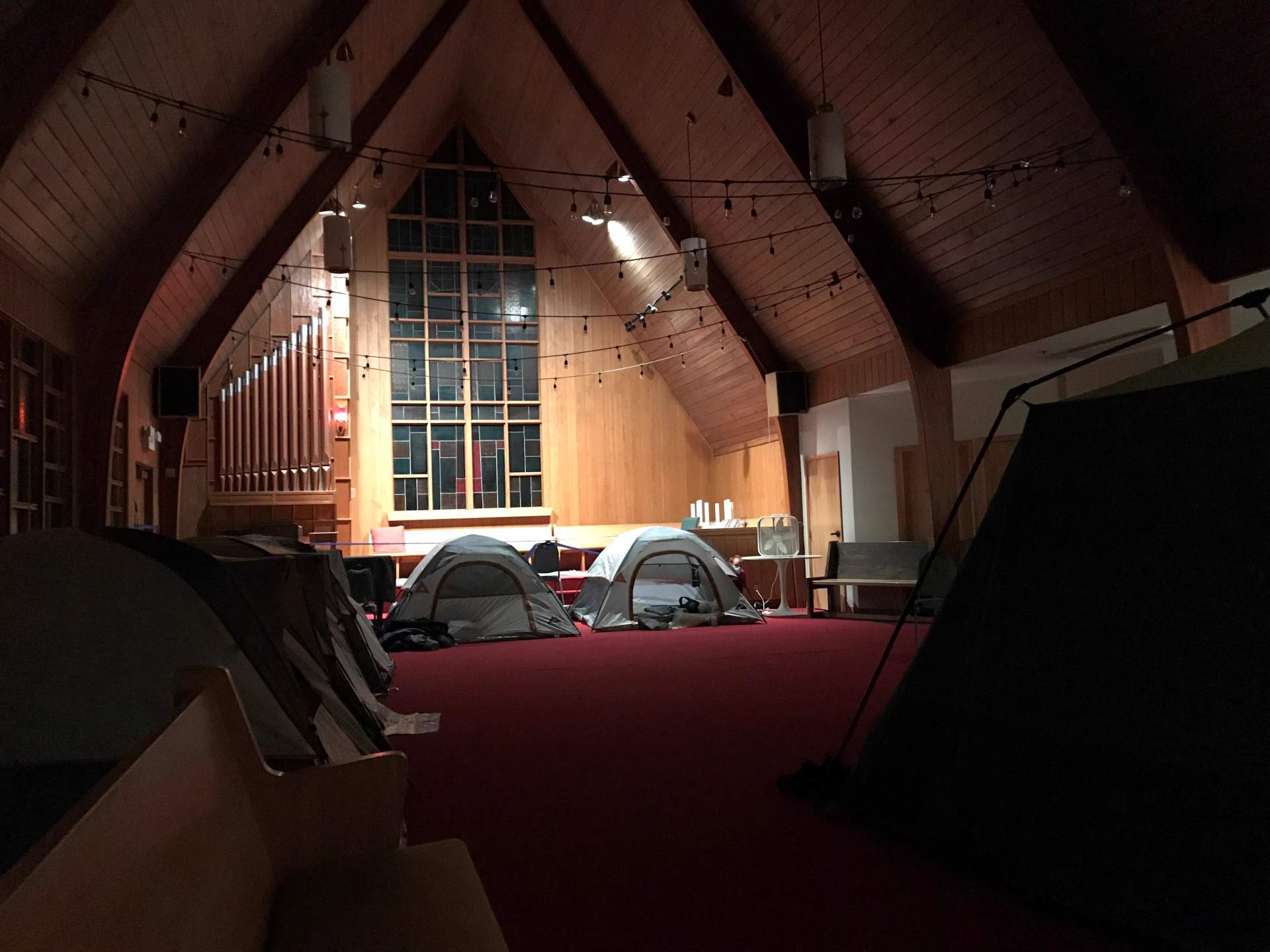
Emergency shelter building housing people experiencing homelessness in Central Oregon, showing shelter facilities and community members
The Money Problem
Here is the structural contradiction at the heart of Oregon's homelessness response: the state has declared a housing emergency, deployed emergency funding, and seen real results — then turned around and cut that funding.
Governor Kotek declared a state of emergency on homelessness on her first day in office. Emergency funds flowed to regions like Central Oregon, enabling the shelter expansion and case management that produced the 2026 decline. Those investments worked. The data proves it.
But Oregon's 2025 legislative session chose temporary shelters over eviction prevention — a trade-off that housing advocates described as a classic austerity move. Now, Cooper says, the state's housing budget for Housing Stabilization programs and homelessness prevention funding has been cut again.
"There are ongoing conversations for addressing this in the 27-29 legislature," Cooper said. "But we are going to have a gap."
That gap is not abstract. It means eviction prevention funds — the cheapest, most effective tool in the system — are being reduced at the exact moment they're needed to lock in the gains. As Cooper put it: "When communities invest upstream — before a missed rent payment becomes an eviction, before a utility shutoff becomes displacement — people stay housed." That upstream investment is what's being cut.
The standoff, as Cooper described it, is between local and state governments over who bears responsibility. In the meantime, the gains of 2025-2026 are at risk of evaporating in 2027.
Central Oregon is also not immune to the statewide trend. While the region's 19.1% decline runs counter to Oregon's overall 35% increase in homelessness between 2023 and 2025, Crook County previously had one of the highest rates of homelessness per 1,000 residents in the state — 14 per 1,000, behind only Clatsop and Multnomah counties. The baseline was severe enough that even a steep percentage decline still leaves hundreds of people without stable housing in a county of fewer than 25,000.
The Systemic Gap
Beyond funding, the deeper problem is structural. Crook County's economy is anchored in agriculture, ranching, and a growing but still limited service sector. The county has some of the lowest wages in Oregon. Housing costs have risen sharply as Central Oregon's population grows, but wages have not kept pace. The working poor in Prineville — farmworkers, service workers, retirees on fixed incomes — live in a gap between what they earn and what it costs to rent a stable home.
Advocates like Housing Works have pushed for ordinance changes and affordable housing development in Prineville. The Rural Organizing Project has facilitated community meetings to build capacity beyond "a one-day band-aid." But land-use regulations, limited state investment, and political resistance from those who prefer homeless people simply not be visible have slowed progress.
Region-wide, 25% of homeless individuals reported struggling with substance abuse, mental health challenges, or both. Cooper was blunt: "We need a better mental health treatment system and a better addiction treatment system than what we've got if we really want to get to that next layer of homelessness."
Around half of the people experiencing homelessness in Central Oregon have lived in the area for more than 10 years. These are not people who "came from somewhere else." They are neighbors, workers, community members who have been priced out or pushed out by a system that was never built to hold them.
The class dynamics are stark. Oregon lawmakers chose band-aids over structural solutions. Federal emergency funding that produced results is being pulled back. Austerity logic — spend less on prevention, spend more on crisis response — governs the political class even as the data shows the opposite works.
What Progress Actually Looks Like
The 2026 PIT count is good news. Forty-two percent fewer people experiencing homelessness in Prineville is a real and meaningful number. The coordinated shelter expansion, rental assistance, and case management that produced it should be studied, replicated, and — critically — funded permanently.
But progress that depends on emergency funding is not progress. It is a pause. And a pause in a system where 22% of homeless individuals are chronically homeless, where single adults are locked out of family-prioritized resources, and where the state legislature keeps choosing crisis response over prevention — that pause will not hold.
Crook County proved that investment works. Oregon's political class proved it won't sustain that investment. The working poor in Prineville — the farmworkers, the service workers, the people who keep the town running — deserve better than a system that congratulates itself for a one-year improvement while quietly defunding the mechanisms that produced it.
The question is not whether we know how to reduce homelessness. The data is in. The question is whether the people in power are willing to pay for what works. In Oregon, the answer keeps coming back no.
Sources & Methodology(7 sources)
- OPB — Central Oregon Homelessness DeclineVideo / Audio
- KGW — Oregon Homelessness Rose 34% in Two YearsNews Article
- Oregonian — Homelessness in Oregon Rises 35%News Article
Methodology
Reported using official Point-in-Time count data from the Homeless Leadership Coalition (January 27–February 2, 2026), Portland State University's 2025 statewide homelessness report, and interviews with service providers including NeighborImpact, RootedHomes, and Housing Works. Sources cross-referenced across OPB, Madras Pioneer, KGW, Oregonian, and the Rural Organizing Project.
Filed Under
Frequently Asked Questions
- How much did homelessness drop in Central Oregon?
- Central Oregon recorded a 19.1% decline — 402 fewer people without stable housing compared to 2025. Crook County (Prineville) saw a 42% drop, from 367 individuals to 214. Madras saw more than a 50% decrease.
- Why did homelessness decrease in Crook County?
- Providers credit new shelters in Bend, Redmond, Prineville, and Madras, expanded rental assistance, and housing-focused case management. Emergency state funding under Governor Kotek's homelessness emergency declaration enabled the expansion.
- What are the limitations of the Point-in-Time count?
- The PIT count is a single-night snapshot, not a longitudinal measure. It undercounts children, families, and young people. Most single adults struggle to access family-prioritized resources. Winter counts likely miss people who are more accessible in warmer months.
- Is the progress sustainable?
- Unclear. Oregon's 2025 legislature chose temporary shelters over eviction prevention. Housing Stabilization and homelessness prevention funding were cut for the 2027-29 budget cycle. Providers warn of a funding gap that could reverse gains.