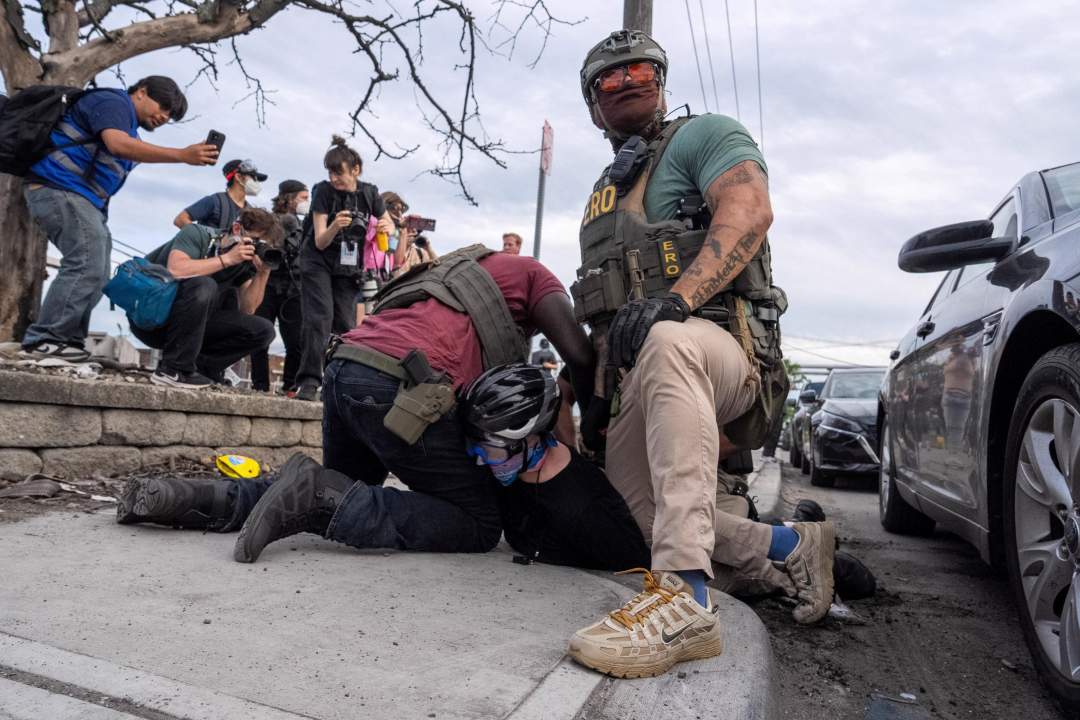
On the morning of July 27, masked federal agents in tactical vests began pulling people off the streets of Queens. By the end of the day, East Elmhurst, Corona, and College Point — neighborhoods where more than half the residents are foreign-born — had become the latest front in the Trump administration's war on immigrant communities.
Mayor Zohran Mamdani had ordered city agencies to refuse cooperation with federal immigration enforcement. The agents came in anyway.
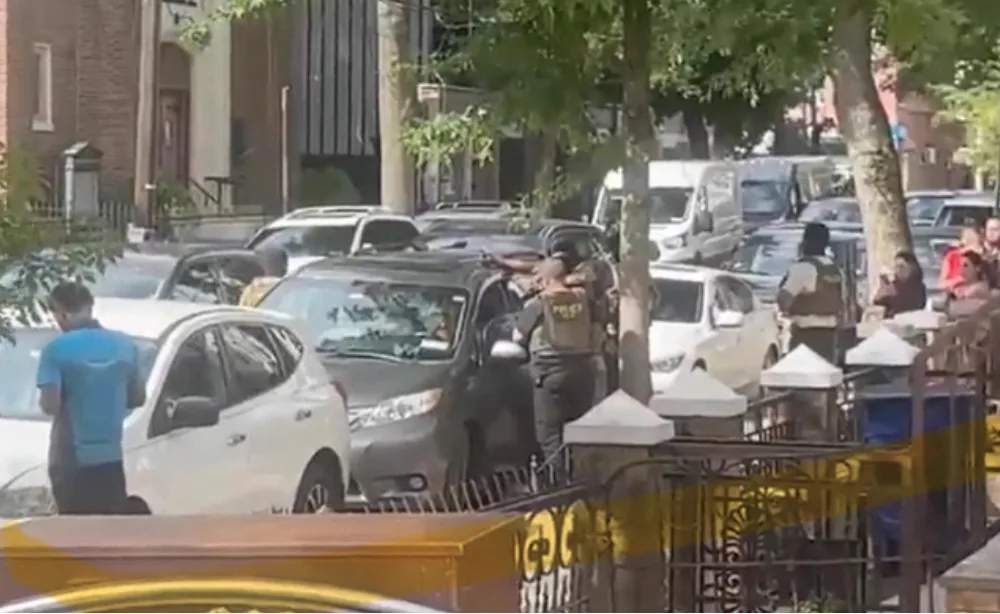
By July 30, the operation had spread. Masked ICE officers were spotted in Manhattan, Brooklyn, and on Long Island in larger numbers than anyone had seen in months. In Bushwick, agents questioned a family in a minivan and checked the passport of a young child. Protesters had already been confronting ICE at Brooklyn's Metropolitan Detention Center for months before the Queens surge began. In Inwood, a masked agent walked up to a 72-year-old woman filming on her phone and sprayed military-grade pepper spray directly into her face.
More than two dozen arrests were documented across Queens alone in the first two weeks of the surge. Nationwide, ICE had hit a record 51,000 arrests in July — an average of more than 1,600 people per day.
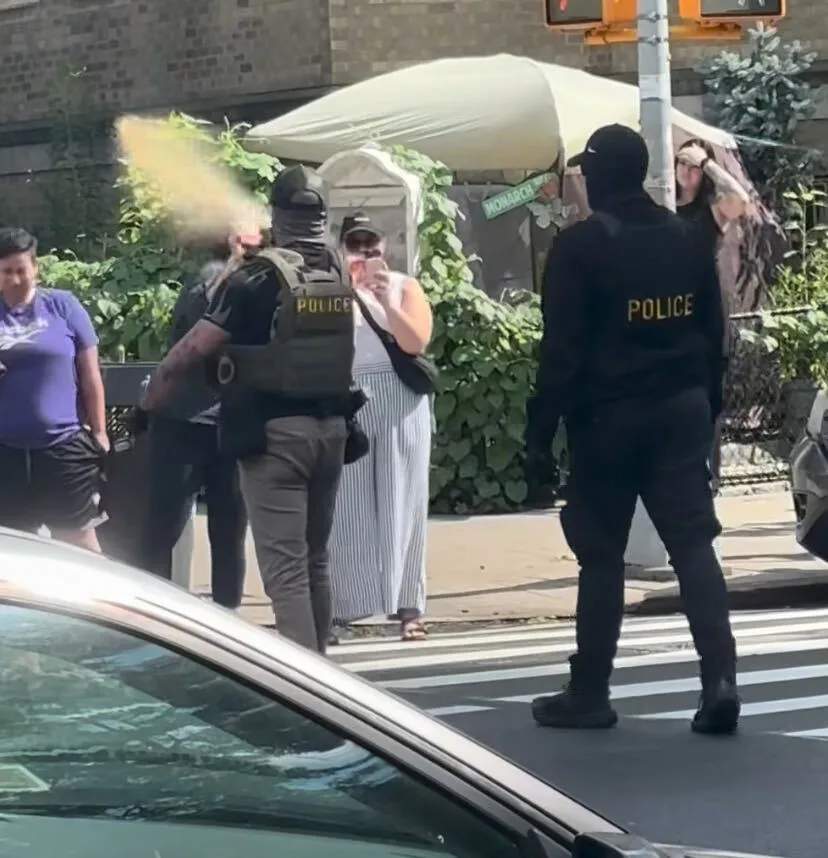
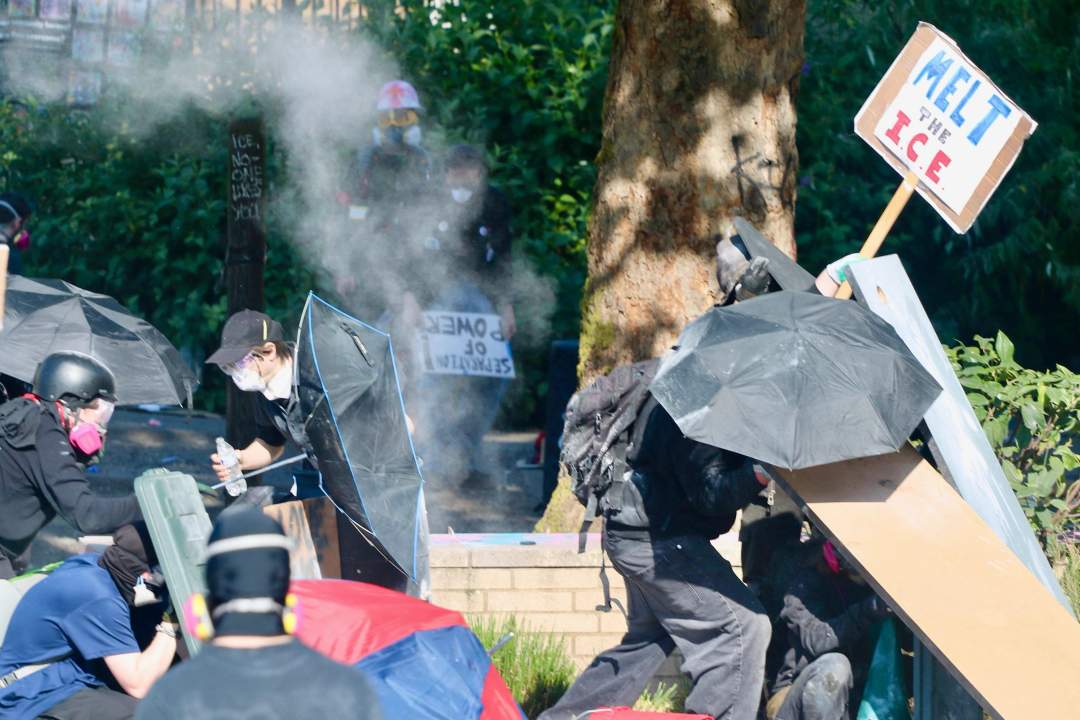
Protesters confront ICE agents, who respond with pepper spray, in Inwood, Manhattan near Inwood Hill Park
The Neighborhoods They Chose
Queens is the most diverse county in the United States. On Northern Boulevard between Grand Central Parkway and Roosevelt Avenue in East Elmhurst, Spanish, Bengali, and Urdu mix in the air alongside English. On Roosevelt Avenue in Corona, street vendors sell pupusas and arepas under the elevated 7 train. In College Point, immigrant families have built lives over decades.
These are the neighborhoods ICE chose.
Not the wealthy enclaves of Manhattan's Upper East Side. Not the corporate towers of Midtown. The immigrant neighborhoods. The ones where people work double shifts and send money home. The ones where a knock on the door at 6 a.m. doesn't mean a package delivery — it means a family is about to be torn apart.
"It is about cleansing. It is about cleansing our communities of the immigrant power and love that they're so afraid of. Shame on them, and we're not going anywhere."
State Assembly member Catalina Cruz — herself formerly undocumented — spoke those words at a rally in Corona Plaza on August 11. She was standing in the same borough where ICE had set up what appeared to be a staging ground at the Bulova Corporate Center in East Elmhurst, a building housing TSA offices. Activists filmed a parking lot filled with unmarked federal vehicles, including several with civilian plates and reinforced wheels that no one could explain.
"They're clearly federal vehicles. They're clearly law enforcement vehicles. They got the steel rims, donut wheels that are bomb-proof, and they're unmarked. I don't know why TSA would need vehicles like that," said Chuck Park, a progressive congressional candidate and former Foreign Service worker who toured the lot.
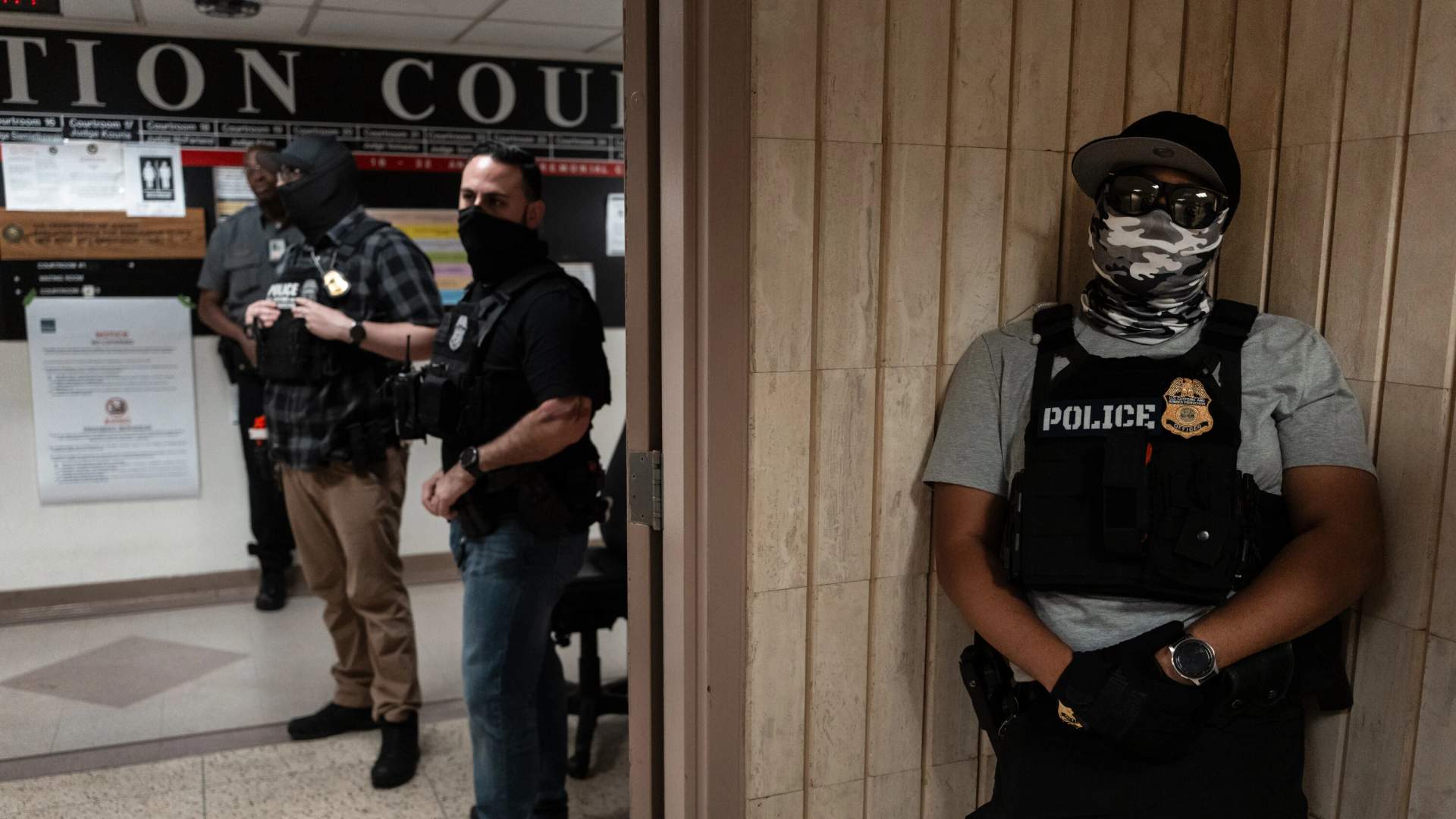
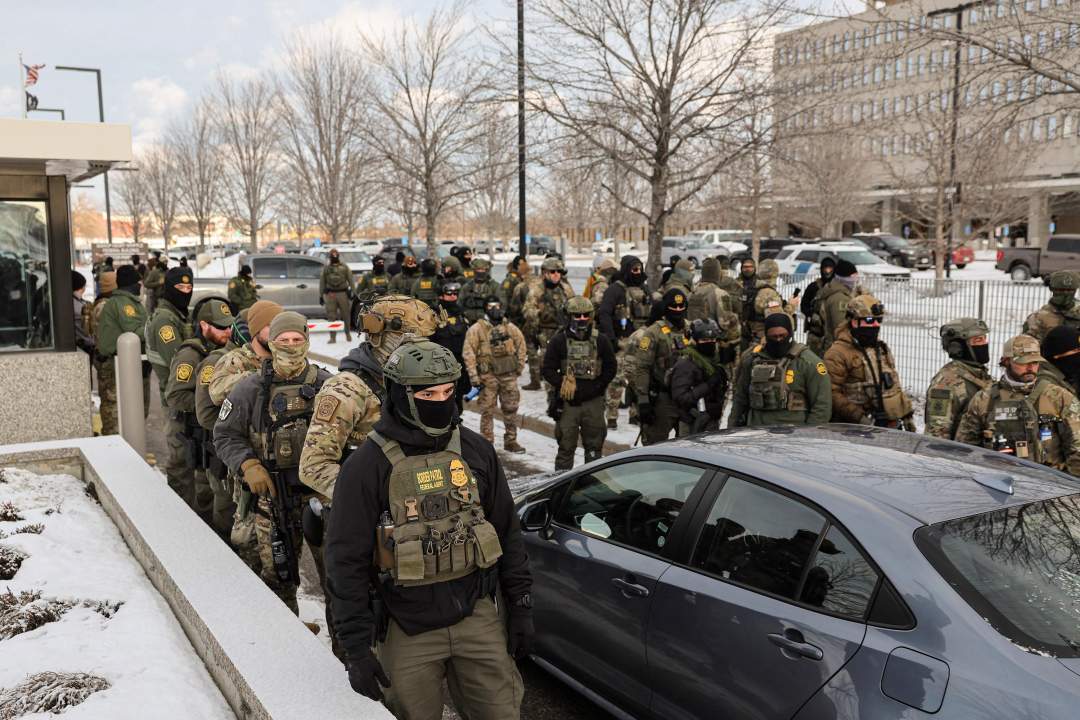
Masked ICE agents outside NYC immigration court.
The Mask Ban They Ignored
New York State had passed a law banning law enforcement officers from wearing masks during enforcement operations. The law was clear. ICE agents ignored it.
Video after video surfaced on social media: agents in body armor and balaclavas, faces completely concealed, stopping people on sidewalks, in parking lots, near subway stations. A federal judge issued a temporary injunction blocking the state mask ban, but the images had already circulated. The message was clear: these agents operated without identification, without accountability, and without fear of consequences — the same pattern of unmarked, unaccountable federal agents that immigrant communities have confronted in cities across the country.
In Inwood on July 30, the consequences became visible. Linda Wolff, a 72-year-old fashion stylist, was filming ICE agents near Inwood Hill Park — across the street from a community garden and the Good Shepherd Catholic school. A masked agent approached her and, without warning, discharged pepper spray into her face.
A second agent stood nearby holding what appeared to be a taser.
"I'm just a simple demonstrator. Obviously, I'm not going to do anything to get arrested. I'm going to do whatever I can to keep eyes on people," Wolff told USA TODAY, her throat still swollen days later.
DHS claimed demonstrators had become "combative and verbally assaultive" and that agents used "the minimum amount of force necessary." Civil rights attorney John Burris, who is representing Wolff, called that account fiction.
"It's more like officers who are carte blanche to do as they please, when they please. That's the part that's most troubling."
Wolff is filing a civil rights lawsuit against the federal government.
Homan's Promise, New York's Reality
This was not a surprise. It was a promise kept.
In June, White House Border Czar Tom Homan appeared on Fox News and warned New York City directly: "There's going to be a surge, and there needs to be a surge. But I am not going to show our hand, because there are well-funded groups who will try to impede, interfere."
When Mayor Mamdani reinforced the city's sanctuary protections — refusing to allow ICE to take custody of immigrants held in city jails, ordering city agencies to withhold cooperation — Homan responded by accelerating the timeline. The America First Legal Foundation, a conservative legal group, sent NYPD officers a guide telling them they could contact ICE "regardless of any local directive telling you not to" and offered free legal representation to any officer disciplined for doing so.
On August 12, Mamdani stood alongside Governor Kathy Hochul and Attorney General Letitia James at a press conference to announce new countermeasures. Mamdani called ICE practices "cruel and inhumane" and reaffirmed that New York City would not serve as a partner in what he described as federal overreach. James announced legal action. Hochul pledged $7.25 million in legal aid for immigrant children facing deportation alone.
Homan's response was characteristically blunt: "I'm sick of the lying."
The standoff had escalated from policy disagreement to something closer to a constitutional crisis playing out on the streets of the largest city in America.
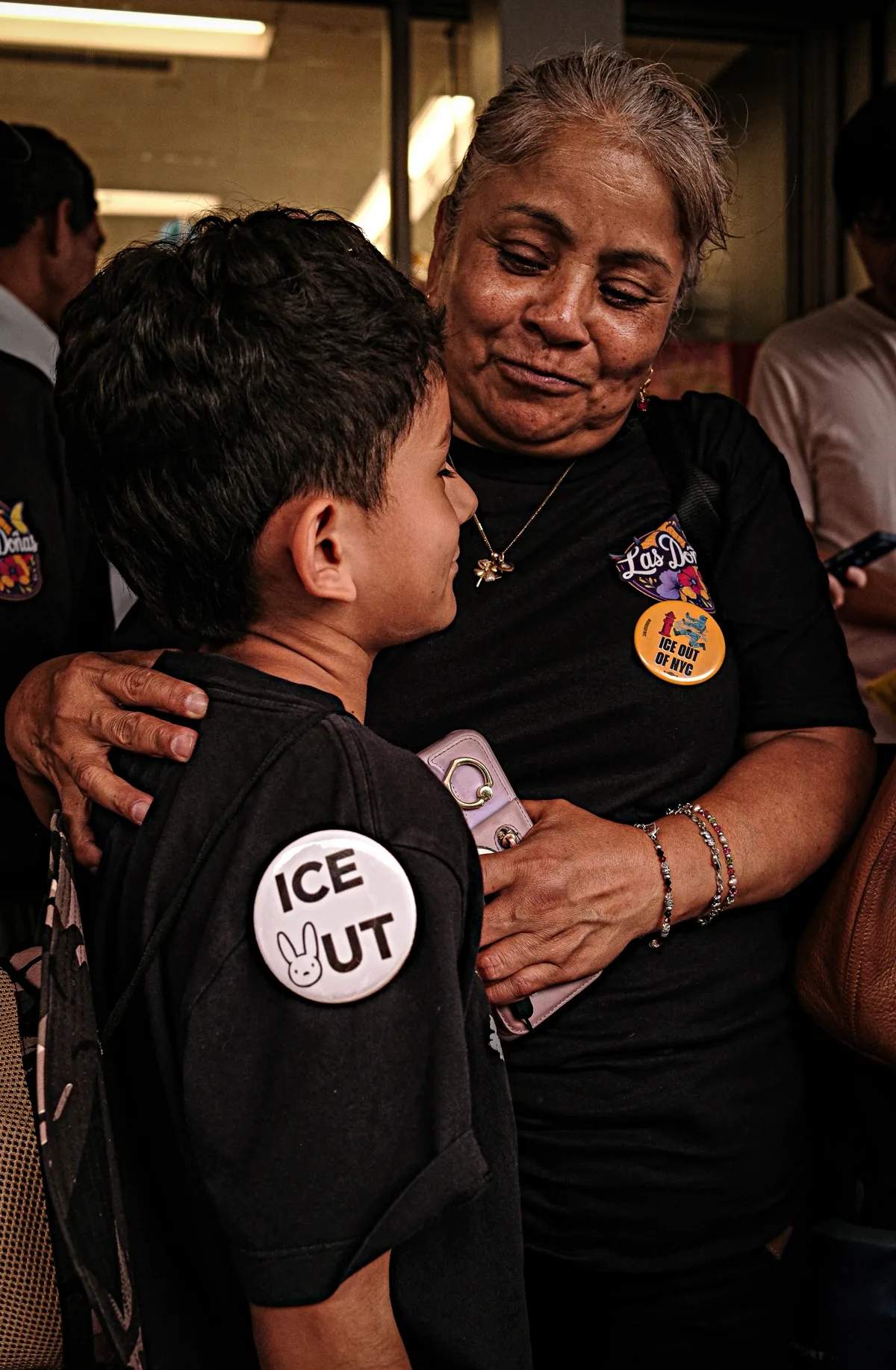
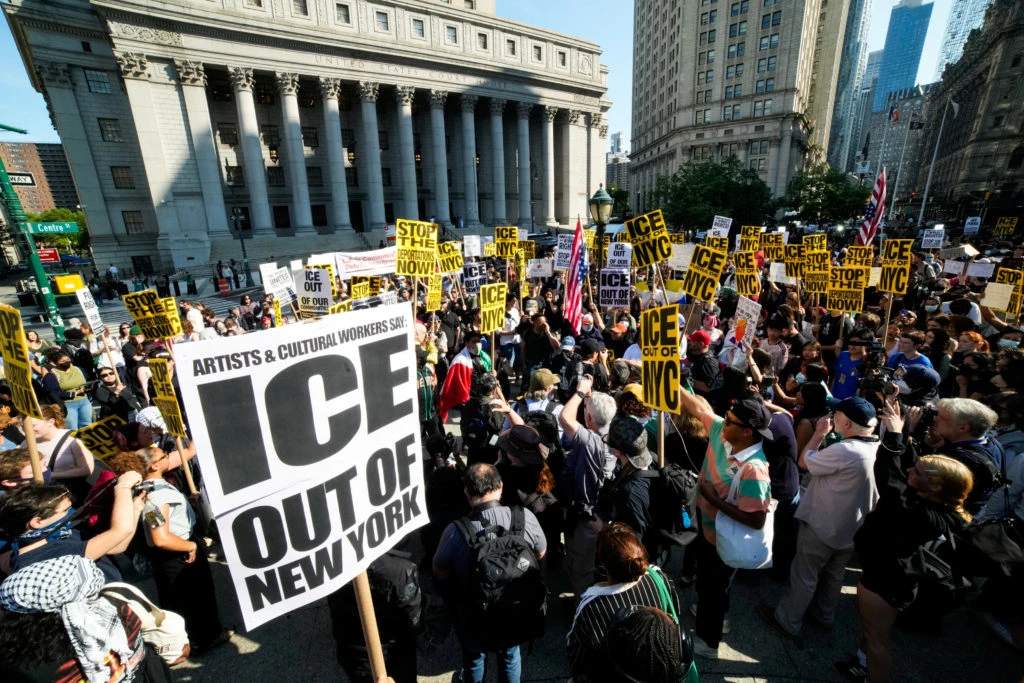
Family joins hundreds of protesters rally at Corona Plaza in Queens against ICE enforcement operations
The Communities That Fight Back
On August 3, ICE agents returned to Inwood, parking a black Ford F-150 with heavily tinted windows near the Good Shepherd Catholic Church. Demonstrators blew whistles and shouted "la migra" as they filmed. The truck briefly flashed red-and-blue lights before driving past Dominican restaurants, barbershops, and grocery stores. No one was detained that day.
But the fear had already done its work.
City Councilmember Elsie Encarnacion, who represents East Harlem and chairs the City Council's immigration committee, described families skipping school, missing medical appointments, and avoiding grocery stores. The New York Immigration Coalition confirmed at least 20 incidents of ICE activity in Queens in just two weeks. Over half the reported arrests occurred in Corona.
Volunteers with the coalition fanned out across East 116th Street, handing out bright yellow signs reading "Private Property" to businesses — a legal defense that requires ICE to present signed judicial warrants to enter. They distributed cards at subway entrances listing people's rights if stopped. Canvassers knocked on doors in Corona, Jackson Heights, and Flushing.
"If they flood the city, we're going to do the same," said Francis Madi, the coalition's director of leadership initiatives. "We're going to flood the city with information, mass information. We're going to be out in the streets."
Public Advocate Jumaane Williams addressed a crowd of more than 100 at Inwood Hill Park on August 1, as children in Little League uniforms shuffled past to the baseball diamond and the neighborhood farmers market operated a block away.
"We're asking folks to be nonviolent, but not to be silent. We're not going to just sit by while it's occurring."
What the Law Actually Says
The legal landscape is fractured. In April, The Legal Aid Society and the New York Civil Liberties Union filed a class action lawsuit against ICE, alleging the agency had established warrantless checkpoints in Corona, Jackson Heights, and Flushing — waiting in unmarked cars near commercial strips to arrest passing pedestrians.
A federal judge struck down the state's mask ban for federal officers but upheld a separate law banning 287(g) agreements — the formal partnerships between ICE and local governments that effectively deputize local police as immigration enforcers. That ban is set to take effect August 25.
Queens Congressmember Grace Meng introduced a bill in the House that would allow immigrants to attend court appearances virtually, reducing the risk of arrest at courthouses. The bill has not made it out of committee in the Republican-controlled House — and the DOJ has made clear it views resistance itself as criminal, now charging protesters with federal conspiracy for demonstrating against raids.
The courts are moving. The raids are moving faster.
The Bigger Picture
What's happening in Queens is not an immigration enforcement operation. It's infrastructure being tested.
The Trump administration is testing whether a progressive mayor can actually protect his constituents from federal power. Tom Homan is testing whether threats and surges can break sanctuary policy. ICE is testing how far it can go — masked agents, pepper spray on grandmothers, checkpoints on Roosevelt Avenue — before someone with authority forces them to stop. But the raids are only one line of the apparatus. The others are being built right now.
In Atlanta, a $109 million police training facility — Cop City — opened this spring with a mock city for urban warfare practice, burn towers, bomb simulations, and a Black Hawk helicopter landing pad. Similar facilities are being planned or built in Chicago, Fitchburg, and other cities. In Washington DC and Memphis, National Guard troops already patrol the streets under federal task forces that have killed multiple people since September. Now the Department of Justice is offering a $300 million "Model Cities Initiative" — two to four cities will receive tens of millions each, on the condition that they comply with federal immigration enforcement, crack down on homelessness, and agree to potentially repay the money if "civil unrest" occurs.
The model cities they cite as examples are the ones with troops on the ground.
This is not speculation. The cop cities, the federal grants with civil unrest repayment clauses, the DOJ conspiracy charges against protesters, the 51,000 monthly ICE arrests, the masked agents with no identification — it is one system. The state is building the infrastructure for militant domestic repression while the resistance to it accelerates in parallel. Over 330 cities have already held protests under the banner #ICEOut. Warehouse fires, mass demonstrations, and direct confrontations with federal agents are spreading in tandem with the construction of the facilities designed to crush them.
The question is no longer whether ICE will come to your neighborhood. The question is what happens when they do — and whether anyone in power will do anything about it before the infrastructure is finished.
In Queens, the answer so far has been resistance. Canvassing. Legal action. Protests. A 72-year-old woman who won't stop filming.
The raids continue. So does the fight. So does the building.
Sources & Methodology(7 sources)
Methodology
This article is based on reporting from amNewYork, USA TODAY, the Queens Ledger, Queens Daily Eagle, PIX11, and other local outlets. All claims are attributed to named sources or verified documentation. Arrest figures come from Hands Off NYC. National arrest data comes from ABC News reporting on ICE statistics.
Filed Under
Frequently Asked Questions
- When did the ICE raids in Queens begin?
- ICE enforcement operations began in Queens on July 27, 2026, with agents spotted in East Elmhurst, Corona, and College Point. By July 30, the surge had expanded to Manhattan, Brooklyn, and Long Island.
- How did Mayor Mamdani respond?
- Mayor Zohran Mamdani had already ordered city agencies to refuse cooperation with federal immigration enforcement. After the raids, he stood with Governor Kathy Hochul and Attorney General Letitia James on August 12 to announce legal countermeasures, calling ICE practices 'cruel and inhumane.'
- How many people were arrested?
- More than two dozen arrests were documented across Queens in the first two weeks of the surge, according to Hands Off NYC. Nationwide, ICE arrested a record 51,000 people in July 2026.
- What happened to the 72-year-old protester?
- Linda Wolff, a 72-year-old fashion stylist, was pepper-sprayed in the face by a masked ICE agent in Inwood on July 30 while filming federal officers near Inwood Hill Park. She is filing a civil rights lawsuit against the federal government.
- Why were ICE agents wearing masks?
- New York State had passed a law banning law enforcement from wearing masks during operations. A federal judge issued a temporary injunction blocking the law. ICE agents were widely documented operating in masks and balaclavas throughout the surge.
- What is the 287(g) agreement ban?
- New York passed a law banning 287(g) agreements — formal partnerships that deputize local police as immigration enforcers. A federal judge upheld this ban, which takes effect August 25, 2026.