

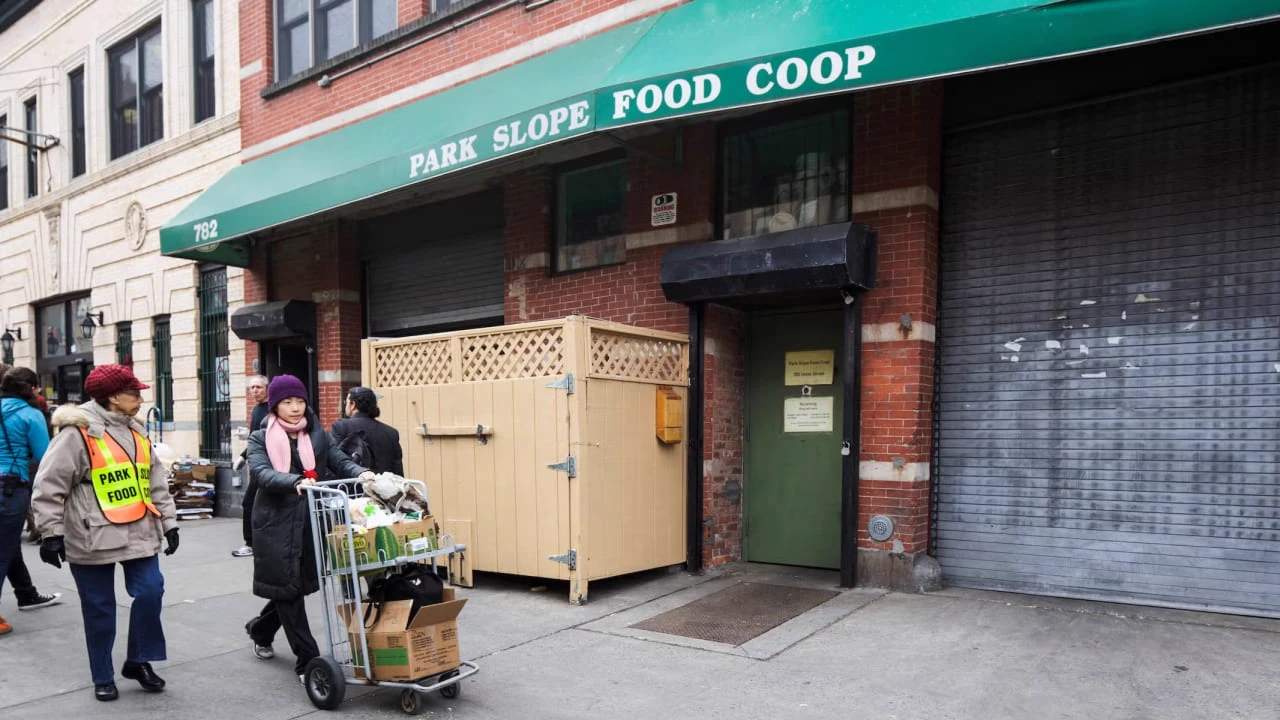
BROOKLYN, New York — The Park Slope Food Coop, one of the oldest and largest member-owned grocery cooperatives in America, has voted to boycott Israeli products following months of explosive internal campaigning that turned a Brooklyn produce aisle into a battlefield over genocide, free speech, and the limits of American liberalism.
On Tuesday, May 26, 2026, roughly 7,000 of the coop's 17,000 members logged into a three-hour virtual meeting to cast their votes. When the count came in, it wasn't close: 67% voted in favor of removing Israeli products from the shelves. Thirty-one percent voted against. Two percent abstained.
The boycott will affect nine Israeli products, including bell peppers, persimmons, olive oil, sesame products, Dorot frozen herb cubes, and Osem Bamba — the popular Israeli peanut-flavored snack.
The resolution is clear in its demands: "Until Israel complies with international law, including by ceasing unlawful discriminatory practices in its treatment of Palestinians, the Coop will not sell goods produced in Israel or in Israeli settlements in the Occupied Palestinian Territory."
A History of Conscience
This didn't come out of nowhere. The Park Slope Food Coop, founded in 1973, has a long and documented history of socially conscious boycotts. Members previously boycotted products from apartheid South Africa, from Chile under the Pinochet dictatorship, and from multiple corporations over labor abuses and environmental destruction.
"Our coop has a long and proud tradition of more than 20 boycotts," said Alyce Barr, a member for nearly five decades and one of the boycott proposal's sponsors. "We want to build on this tradition by boycotting Israeli products until Israel complies with international law."
The BDS (Boycott, Divestment, and Sanctions) effort has been debated inside the coop for more than a decade. But since October 7, 2023, and Israel's subsequent genocide in Gaza, the push became urgent. PSFC Members for Palestine first proposed the boycott in 2024. Coop4Unity, the anti-BDS faction, was formed specifically to block it.
Members also voted to lower the threshold for passing boycott measures from a 75% supermajority to a simple majority of 50% plus one. That measure passed 68% to 31%.
The Crackdown
The campaign was not without cost.
Pro-boycott advocates reported being verbally abused, having a table flipped over and their materials dumped in the street by an anti-boycott member, and being targeted with homophobic and misogynist slurs.
The coop's leadership sent an email to members condemning what it called antisemitic and anti-Arab comments made during meetings. In one documented statement, a member reportedly said: "We can't keep making the same mistakes we did with the Nazis and what we did with other hateful, racist groups. Jewish supremacism is a problem in this country."
Another comment reportedly invoked "Arab supremacy" in connection with October 7 and the Muslim Brotherhood.
General manager Joe Szladek increased security measures, citing "threatening letters, suspicious substances sent through the mail, aggressive phone calls and emails, repeated phone disruptions, hostile social media and online activity directed at staff and members."
The meeting was moved entirely online — coordinators cited explicit safety concerns from staff, presenters, and committee members who said they could not guarantee security for an in-person vote.
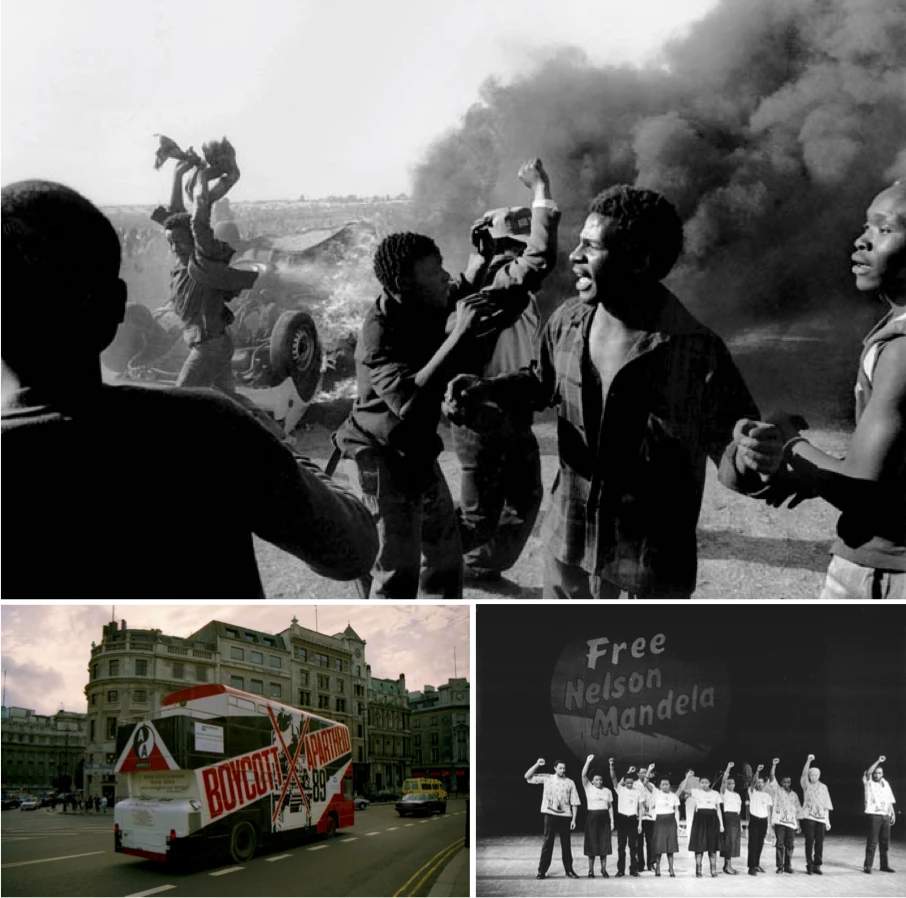
Anti-apartheid protesters in South Africa during the 1980s
Politicians Panic
The vote drew attention far beyond Park Slope. Congressman Dan Goldman and Brad Lander — two Democrats locked in a competitive primary where Israel is a central issue — both weighed in against the boycott.
Goldman called it "quintessential antisemitism," claiming it "shifts the responsibility for the Israeli government's actions to American Jews."
Mahmoud Khalil, the Palestinian advocate and Brooklyn resident recently targeted by federal immigration enforcement, defended the boycott as "the minimum response to Israel slaughtering civilians and committing human rights violations daily."
The rhetoric tells you everything. Politicians who have said nothing about 40,000+ dead Palestinians in Gaza found their voice the moment a food coop voted to stop selling Bamba.
Boycotts Work — History Proves It
The power of boycotts is not theoretical. It is historical fact.
South Africa: The Blueprint
The international boycott, divestment, and sanctions campaign against apartheid South Africa is one of the most successful nonviolent pressure campaigns in modern history.
Starting in the 1960s and escalating through the 1980s, a global coalition of activists, students, trade unions, churches, and governments organized boycotts of South African goods, divestment from companies doing business there, and cultural and sports boycotts that made the apartheid regime an international pariah.
By 1986, the U.S. Congress had passed the Comprehensive Anti-Apartheid Act over Ronald Reagan's veto. Major corporations including IBM, General Motors, and Citibank pulled out of South Africa. University endowments worth billions divested.
The economic isolation was devastating. The political cost was unsustainable. When F.W. de Klerk released Nelson Mandela and negotiated the end of apartheid, a major selling point for the white population was an end to boycotts and global isolation.
As veteran anti-apartheid campaigners noted: "Boycotting was a very effective propaganda tool" that strengthened the internal struggle for justice.
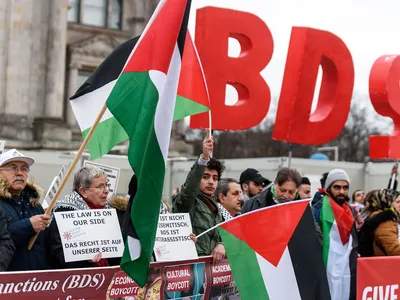
BDS movement supporters protesting at the Bundestag in Berlin
Modern BDS: Winning Now
The Palestinian BDS movement, founded in 2005 by Palestinian civil society, is following the same playbook — and it's working.
Recent victories include:
- Sacramento State University became California's first public university to divest from companies profiting from Israeli apartheid and genocide
- Harvard Law School's student body passed a divestment referendum by 73% in March 2025
- Yale students voted 76% in favor of divesting the university's $41 billion endowment from military weapons manufacturers supplying Israel
- The Norwegian oil fund divested from 23 complicit Israeli companies and dumped its entire Israel Bonds holding
- Over 60 student governments at U.S. universities have passed divestment resolutions since October 7
- BDS counts more than 250 "wins" in the United States alone since 2004
In December 2024, the International Court of Justice ruled that Israel's military occupation and annexation of Palestinian territory is illegal. Former senior UN human rights official Craig Mokhiber summarized the legal implications: "The ICJ's authoritative ruling makes clear that boycotts, divestment, and sanctions against Israeli occupation, colonization, and apartheid are not only a moral imperative but also a legal obligation."
The Significance of Park Slope
The Park Slope Food Coop vote matters not because it will cripple the Israeli economy — it won't. Nine products off the shelves of a Brooklyn coop is symbolic.
But symbolism is how movements build.
Every boycott that passes normalizes the next one. Every community that votes to divest makes it easier for the next community. Every news cycle that covers BDS shifts the Overton window.
The apartheid regime in South Africa didn't fall because of one boycott. It fell because of thousands of them — coordinated, sustained, and backed by an unshakeable moral argument.
The same is happening now. Park Slope is one vote. But it's one vote in a wave that is growing, not shrinking. Israel's defenders know this — that's why they're panicked about a food coop in Brooklyn. That's why they're passing anti-boycott laws in state legislatures across the country. That's why they're trying to deport activists like Mahmoud Khalil.
They're scared because boycotts work.
And the people of Palestine deserve every tool of resistance the world can offer them.
Sources & Methodology(10 sources)
- USCPR - US BDS VictoriesNews Article
Frequently Asked Questions
- What did the Park Slope Food Coop vote on?
- On May 26, 2026, members voted 67% in favor of boycotting nine Israeli products, including bell peppers, persimmons, olive oil, sesame products, Dorot frozen herb cubes, and Osem Bamba. The boycott will remain in effect until Israel complies with international law regarding its treatment of Palestinians.
- How many members voted?
- Roughly 7,000 of the coop's 17,000 members participated in the three-hour virtual meeting. Of the 6,772 votes cast, 67% voted in favor, 31% against, and 2% abstained.
- What is the BDS movement?
- BDS stands for Boycott, Divestment, and Sanctions. Founded in 2005 by Palestinian civil society, it is a global nonviolent movement pressuring Israel to comply with international law, end the occupation, and grant full equality to Palestinian citizens of Israel. It is modeled on the anti-apartheid movement that helped dismantle South Africa's racist regime.
- Has BDS been effective?
- Yes. BDS counts over 250 victories in the U.S. alone since 2004. Recent wins include Harvard Law passing a 73% divestment referendum, Yale students voting 76% to divest from weapons manufacturers, Sacramento State becoming California's first public university to divest from Israeli apartheid, and the Norwegian oil fund divesting from 23 Israeli companies.
- How did the boycott movement help end South African apartheid?
- The international boycott, divestment, and sanctions campaign against apartheid South Africa spanned decades. By the 1980s, major corporations had pulled out, university endowments worth billions had divested, and the U.S. Congress passed the Comprehensive Anti-Apartheid Act. The economic and political isolation was devastating to the regime and was cited by F.W. de Klerk as a key factor in negotiations to end apartheid.
- Were there security concerns during the vote?
- Yes. The coop moved the vote entirely online after staff and members raised explicit safety concerns. The general manager cited threatening letters, suspicious substances sent through the mail, aggressive phone calls, hostile social media campaigns, and confrontations between members during the campaign.