On the afternoon of June 13, 2021, Denver police shot and killed Duane Edward Manzanares Jr. — a 30-year-old father from Pueblo who was in the city because his 8-year-old son had just been diagnosed with acute leukemia and was fighting for his life in Children's Hospital Colorado's ICU. Three officers fired 11 rounds into him on a public sidewalk on East Colfax Avenue. He had a bottle of Fireball whiskey in his hand. The police department waited more than 24 hours to notify his family. His mother found out her son was dead from internet videos, not from the Denver Police Department.
This is the story of what happened to Duane "DJ" Manzanares — and how the Denver Police Department has responded.
A Father Beside His Son
On June 11, 2021, 8-year-old Damien Manzanares was diagnosed with acute leukemia in Pueblo. The child was rushed to Denver's Children Hospital Colorado via Flight for Life and admitted directly to the ICU. The diagnosis was devastating — acute leukemia in a child means years of chemotherapy, spinal taps, and hospital stays, treatments that can only be performed at specialized facilities in Denver or Colorado Springs.
Duane Manzanares Jr. did not hesitate. He left Pueblo immediately and went to Denver to be at his son's bedside. His mother, Mary Ann Medina-Trujillo, arrived the following day, Saturday, June 12, to support them both through what would become a grueling fight for Damien's life.
Sunday morning, June 13, Medina-Trujillo relieved her son at the hospital so he could go get some personal items for Damien. DJ didn't know Denver. He had to ask for directions to find a Walmart. He left around 10:30 a.m. with every intention of returning to his son's side.
He never came back.
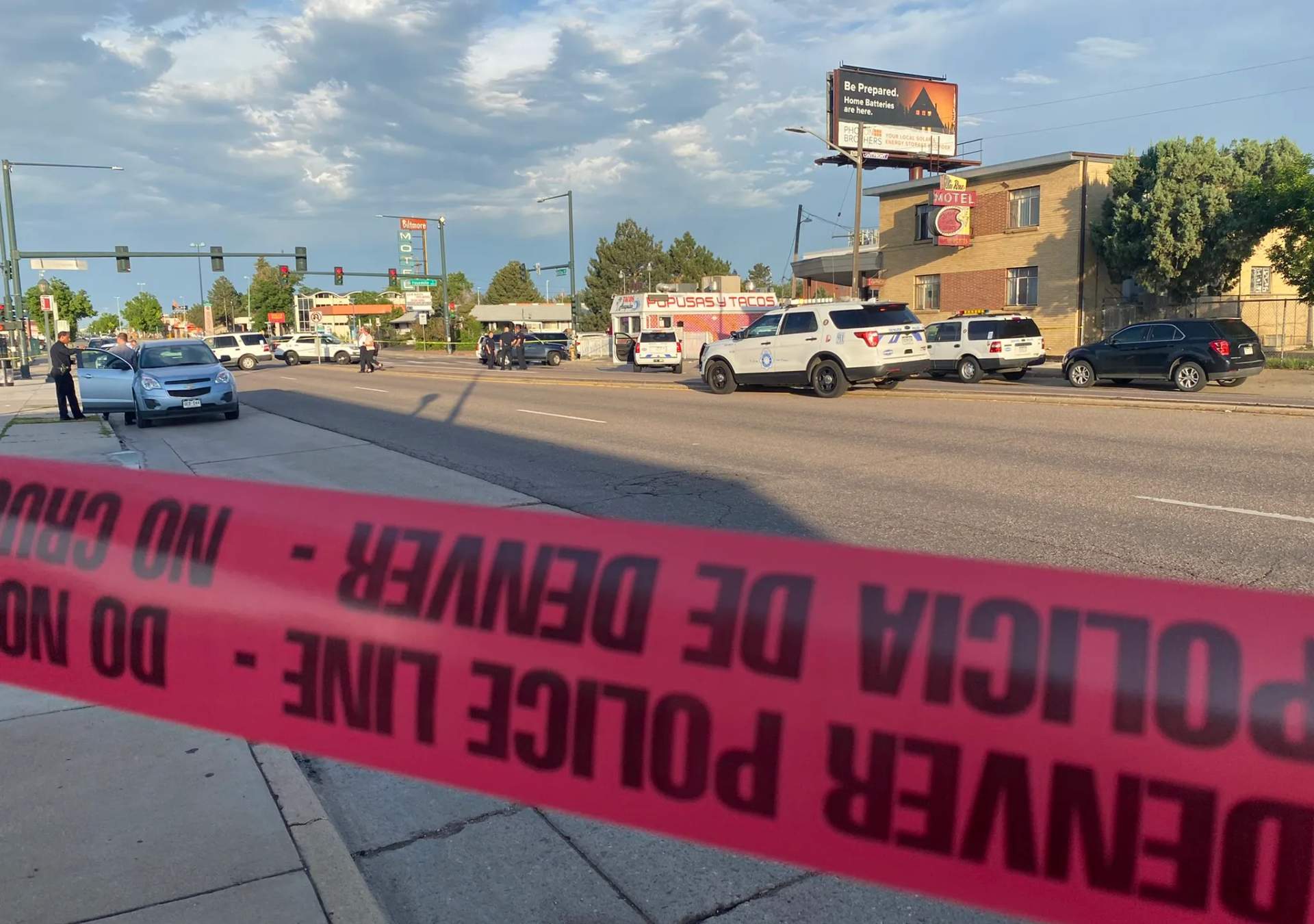
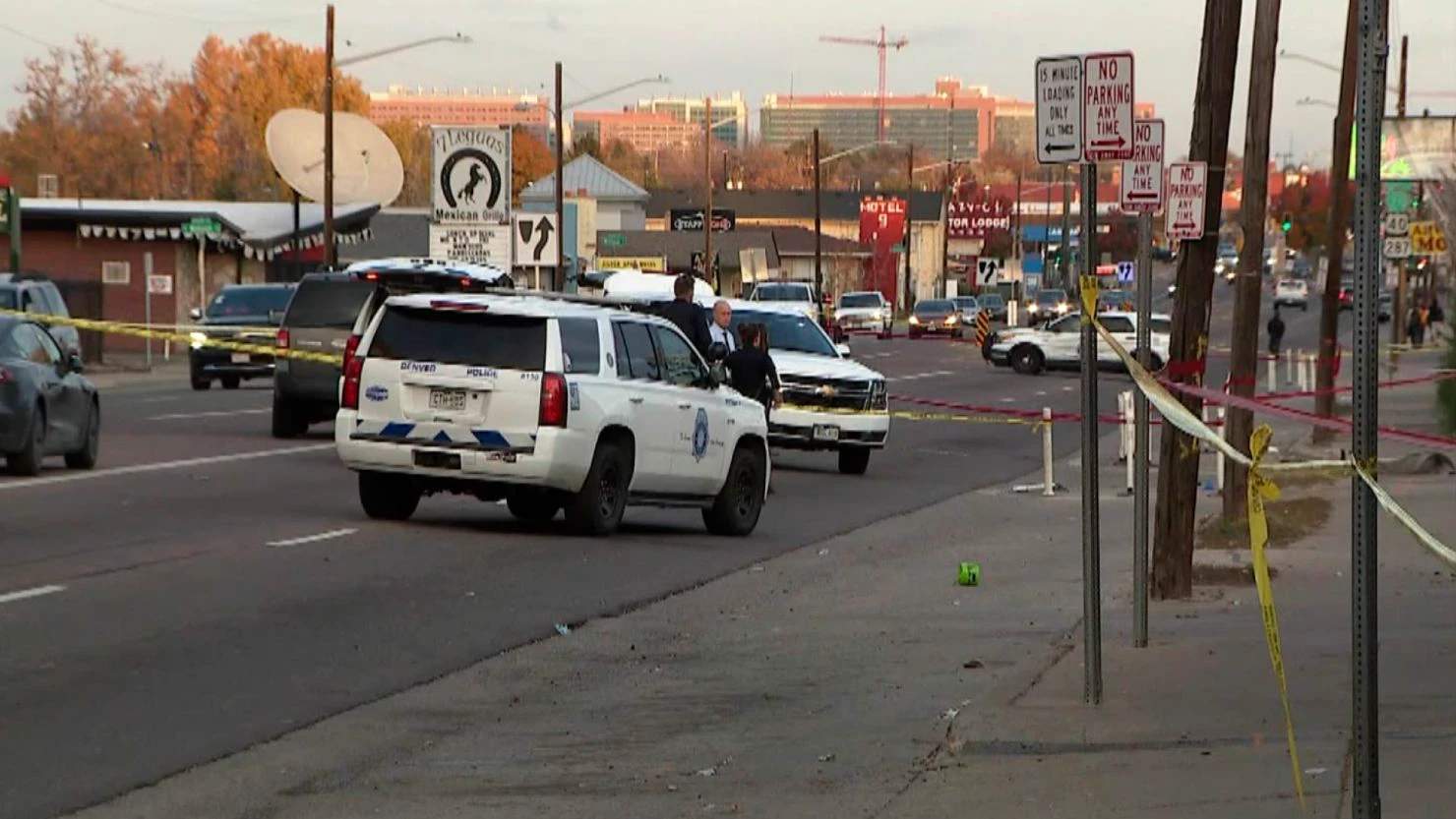
Police investigation at a shooting scene on a Denver street with evidence markers and emergency vehicles
The Trip That Ended on Colfax
What happened between DJ's departure from Children's Hospital and his death on East Colfax Avenue remains contested — but the broad strokes, confirmed by police themselves and corroborated by witness video, tell a disturbing story.
At some point on Sunday afternoon, a 911 call reported a man firing shots into an unoccupied vehicle near East Colfax Avenue and Ulster Street. When officers arrived, they found a car with multiple bullet holes in it. Witnesses directed police east on Colfax, providing a description of the man they'd seen.
Officers caught up with Duane Manzanares near East Colfax Avenue and Yosemite Street — roughly one block from where the shots into the car were reported. According to Denver Police Division Chief Matt Clark's press conference, three officers approached Manzanares from behind and saw a handgun tucked into his back waistband. They also noticed he was carrying a bottle of Fireball whiskey.
What happened next is where the police narrative and witness accounts diverge sharply.
According to police, officers ordered Manzanares to put his hands on his head. They say he refused, appeared "agitated," and became argumentative. Police claim he asked why he was being stopped, was told it was because he had a gun, and did not dispute it. Then, they say, he dropped the whiskey bottle and reached toward his waistband where the gun was visible.
Three officers — Samuel Bailey, Ryan Nelson, and Steven Whiteman — opened fire. Bailey fired four rounds. Nelson fired two. Whiteman fired five. A total of 11 shots. An autopsy would later confirm Manzanares was struck by six bullets — in his shoulder, chest, arm, abdomen, and thigh.
He was taken to a hospital and pronounced dead.
Witnesses Question the Official Narrative
Multiple witnesses who saw the shooting unfold in front of them pushed back on the police account from the beginning.
Ava Roy, 16, and her father Masada Roy were driving through the area when they witnessed the killing. Ava described it as "horrifying and crazy," saying Manzanares "was just standing there" before he was shot. Masada questioned whether the officers' response was proportional: "It didn't seem before the shots were fired that things were too intense to that point."
Another witness who recorded the aftermath told Denver7 they saw officers with guns pointed at Manzanares, and that "about seven shots were fired towards him" almost immediately.
Body camera footage from the three officers exists but has not been released to the public in full. The family, nearly two months after the killing, stated they still had not been shown any police footage.
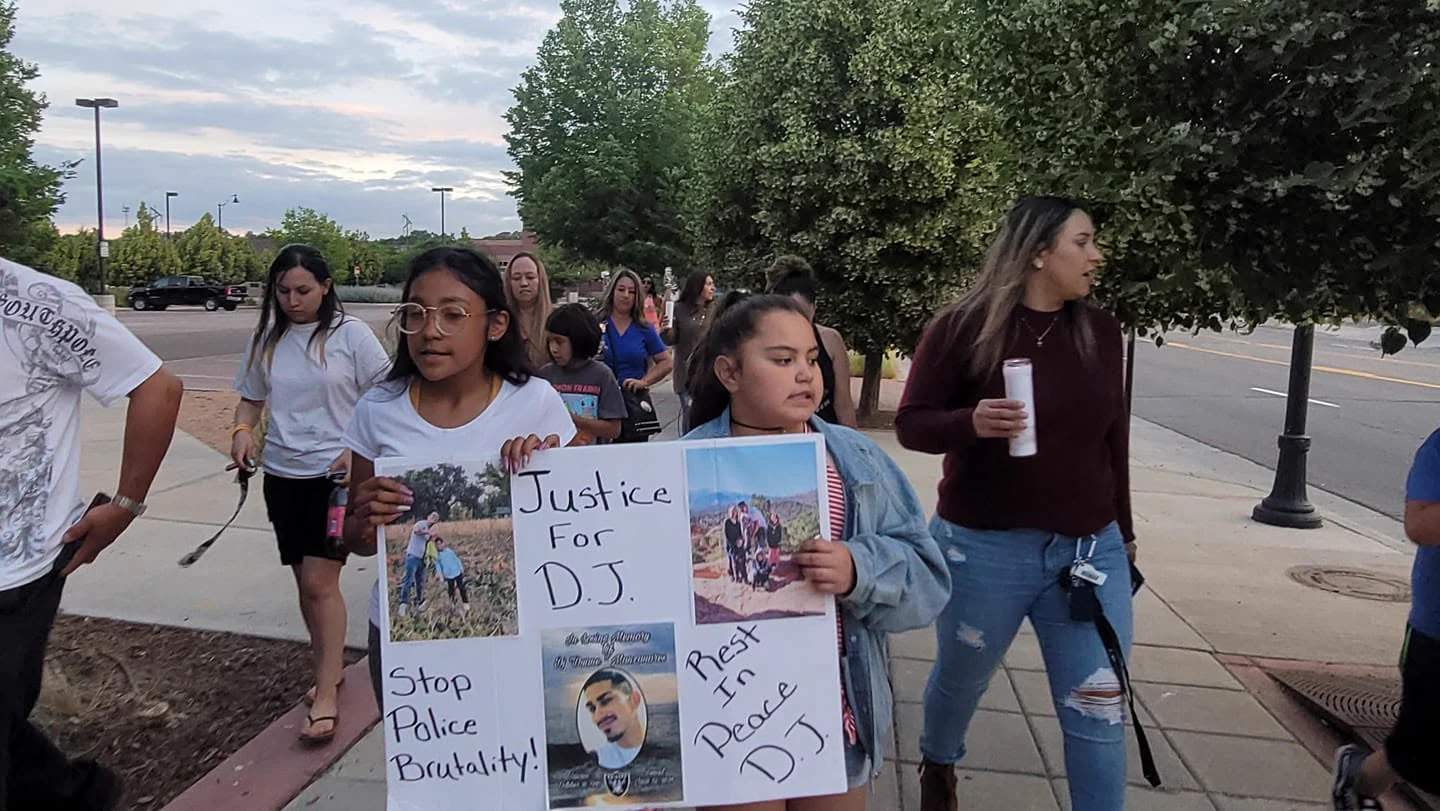
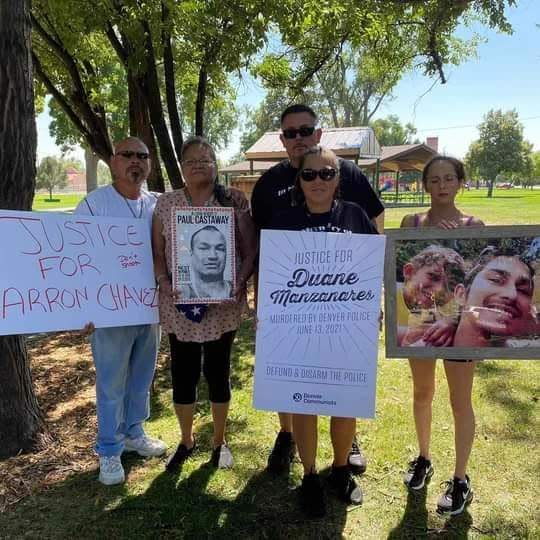
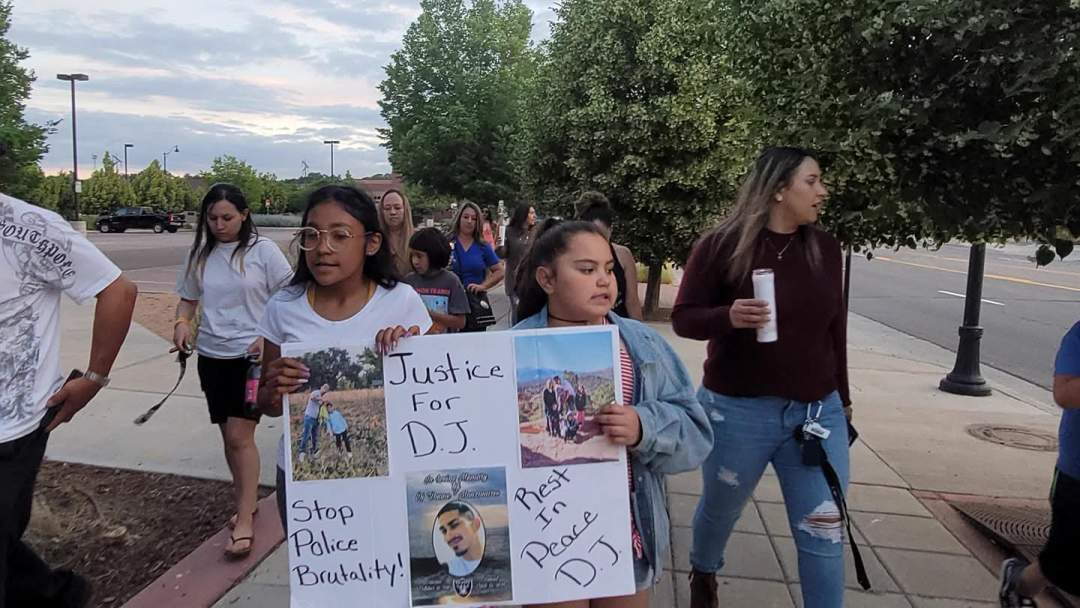
Family and friends of DJ march demanding justice for his murder by Denver Police.
The Cover-Up Begins: 24 Hours of Silence
Perhaps the most damning aspect of Duane Manzanares's killing is not the shooting itself — it is what happened afterward.
DJ had identification on him. His car was registered to him. He was not some unidentified John Doe. Yet the Denver Police Department did not contact his family for more than 24 hours.
His mother, who was at Children's Hospital with her critically ill grandson, spent Sunday evening and all of Monday calling around trying to locate her son. She called Denver police districts. She got no information. On Monday morning, she posted on social media asking if anyone had heard from her son. That was when people started sending her videos of a man being shot to death by police on East Colfax.
Medina-Trujillo refused to believe it could be her son. Then she watched the video.
It was him.
The Denver Police Department did not officially notify her until late Tuesday afternoon — more than 48 hours after the killing. When they finally called, their explanation for the delay was that they "had to identify him" — a claim that strains credibility given that the dead man had valid identification and a registered vehicle at the scene.
The department did not release the names of the three officers who shot Manzanares for nearly two months. All three were placed on "modified duty assignment" — essentially administrative leave with pay — while the Denver District Attorney's office conducted its review.
A Pattern of State Violence
DJ Manzanares's killing was not an isolated incident. It was the fifth fatal police shooting in Denver in under a month. Between May 14 and June 13, 2021, Denver police killed five people.
The department attempted to dismiss concerns about the pattern. Division Chief Ron Thomas told reporters there was "no pattern" to the increase in officer-involved shootings. This claim came as Denver was on pace to record its highest homicide rate in four decades — a year that would ultimately see 96 homicides, matching the worst bloodshed in 25 years.
The broader context of policing in Denver and Colorado is not one of public safety. Colorado is among the five states with the highest rates of fatal police shootings in the country, according to data from Mapping Police Violence. Denver police have killed dozens of people over the past decade. Almost none of the officers involved have faced criminal consequences.
The Boy Who Lost His Father
What makes Duane Manzanares's killing particularly cruel is the human devastation it left behind.
DJ was raising Damien as a single father. He was his son's world. Now Damien, an 8-year-old battling acute leukemia in an ICU, lost his father to a volley of police bullets on a Denver sidewalk — while his grandmother was a mile away waiting for him to come back with supplies from a Walmart he never reached.
Medina-Trujillo, who had already lost her eldest daughter in a car accident in 2014 and had raised that daughter's three children alongside her own, was suddenly responsible for another critically ill grandchild. Damien faces years of chemotherapy and spinal taps. His father will not be there for any of it.
"He was an amazing person with a big heart," his sister Jennifer Manzanares said. "You would've never seen him without a smile on his face."
DJ Manzanares worked in landscaping and construction. He was from Pueblo. He had a brilliant smile and loved to tell jokes. He loved his son enough to drop everything and rush to Denver when the worst news a parent can hear arrived.
The state of Colorado took him from his child forever. Three officers shot him 11 times. No one has been held accountable — and nearly four years later, the city settled with the family for $800,000 without a single officer facing consequences.
The family deserves answers. Damien deserves justice. And Duane "DJ" Manzanares Jr. deserves to be remembered as more than a headline — he was a father, a son, a brother, and a man whose life was stolen from him and from the child who needed him most.
Sources & Methodology(7 sources)
Methodology
This article was reported using public records, witness accounts, Denver Police Department press conference transcripts, Denver District Attorney decision letters, family statements, GoFundMe testimony, and coverage from the Denver Post, Denver7, CBS Colorado, KRDO, and the Denver Gazette. All material facts were cross-referenced across multiple independent sources.
Filed Under
Frequently Asked Questions
- Who was Duane 'DJ' Manzanares Jr.?
- Duane Edward Manzanares Jr., known as DJ, was a 30-year-old father from Pueblo, Colorado. He worked in landscaping and construction, raised his 8-year-old son Damien as a single father, and was described by family as having a brilliant smile and a big heart.
- Why was DJ Manzanares in Denver when he was killed?
- His 8-year-old son Damien had been diagnosed with acute leukemia on June 11, 2021, and was flown via Flight for Life to Children's Hospital Colorado in Denver. DJ went to be at his son's bedside in the ICU.
- How did the shooting happen?
- Three Denver police officers — Samuel Bailey, Ryan Nelson, and Steven Whiteman — encountered Manzanares near East Colfax Avenue and Yosemite Street. Police say he had a handgun in his waistband and was carrying a bottle of whiskey. After officers ordered him to put his hands up, they claim he reached toward his waistband and they opened fire, shooting 11 rounds. Manzanares was struck six times and pronounced dead at a hospital.
- How long did it take police to notify his family?
- More than 48 hours. DJ's mother, Mary Ann Medina-Trujillo, discovered her son was dead from videos circulating on social media — not from the Denver Police Department. Police did not officially notify her until late Tuesday afternoon, despite DJ having identification and a registered vehicle at the scene.
- Was this an isolated incident in Denver?
- No. DJ Manzanares's killing was the fifth fatal police shooting in Denver in under a month. Between May 14 and June 13, 2021, Denver police killed five people. Colorado is among the five states with the highest rates of fatal police shootings in the country.
![A restaurant's takeout window area with a large jagged hole smashed through the glass, tables and string lights visible inside. [Radical Edward - Untelevised Media]](https://cdn.sanity.io/images/ypejdt32/articles/6ce43fc29caba434d5be0701130cda948f122c1a-1030x691.png?fit=max&auto=format&w=1080&q=65)
![Blue jeep speeds towards back side of protest as several people throw items at the jeep. [Radical Edward - Untelevised Media]](https://cdn.sanity.io/images/ypejdt32/articles/f2de88c49a3b489332d4bf072cdb9e77238d076a-579x386.jpg?fit=max&auto=format&w=1080&q=65)