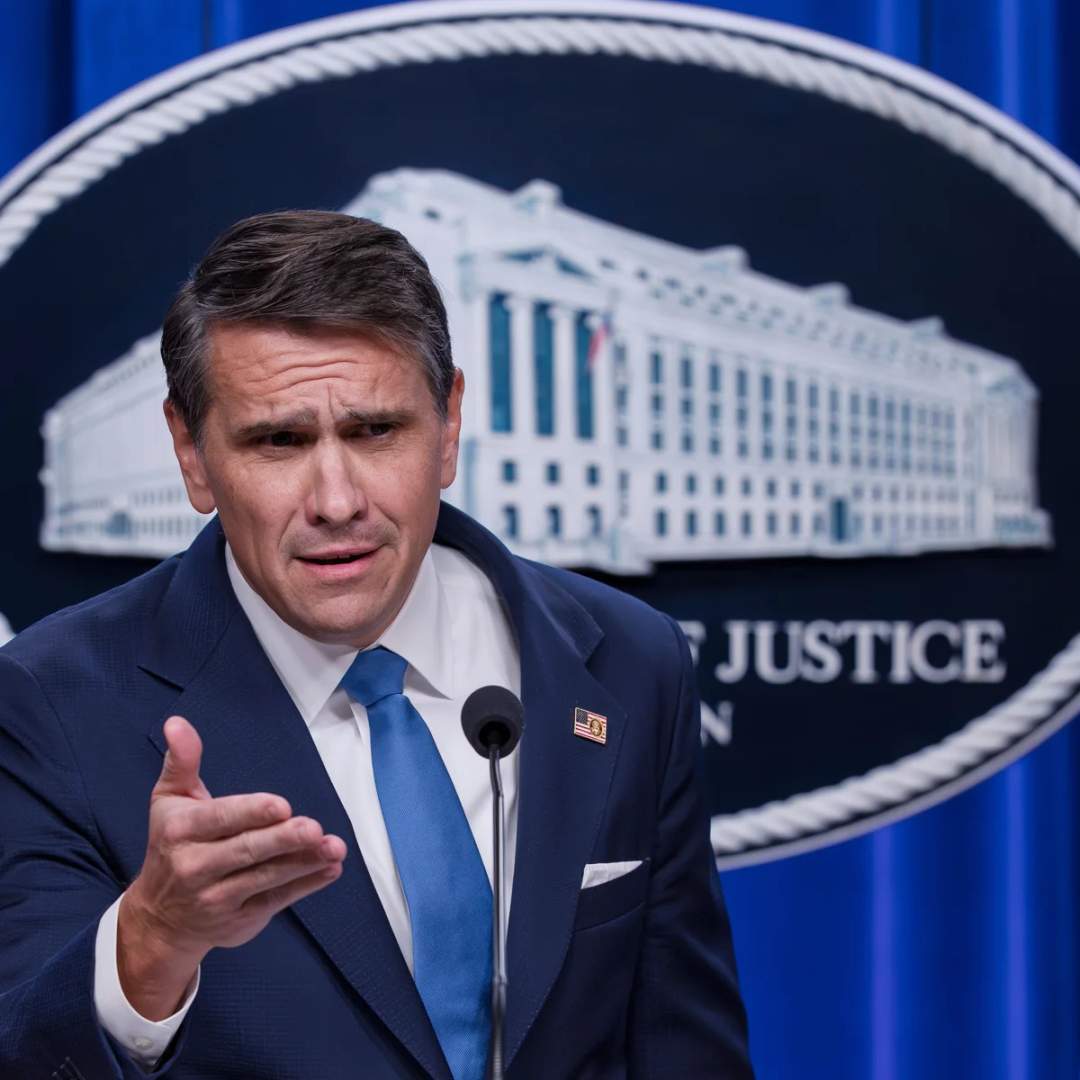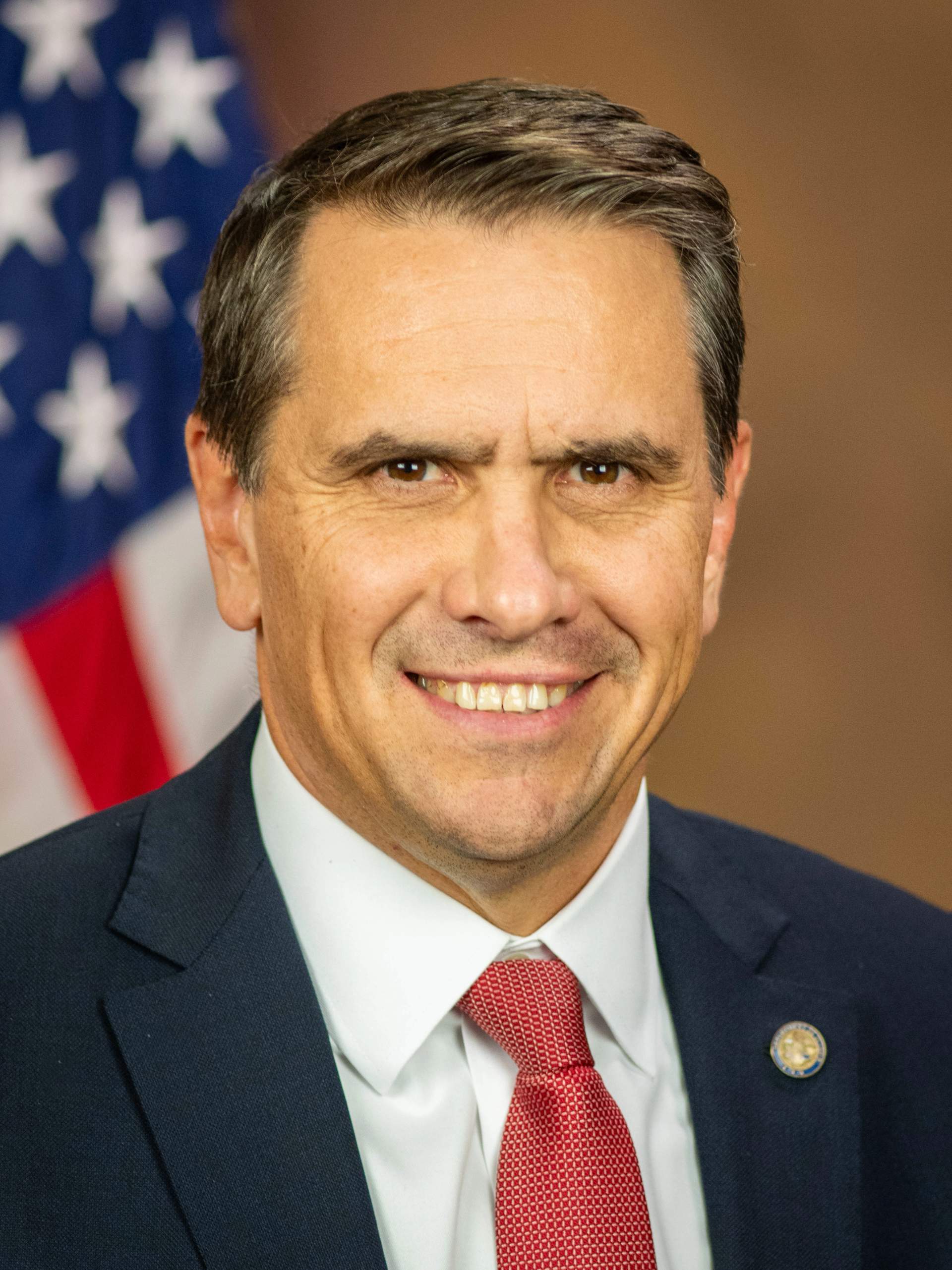
Todd Blanche is not supposed to be the president's lawyer. He is supposed to be the people's lawyer. But as acting Attorney General of the United States, Blanche has spent his tenure doing exactly what he was installed to do: serve Donald Trump's personal interests at the expense of the Constitution, the rule of law, and the American taxpayer.
Now, more than 100 federal judges, 1,200 former Justice Department employees, the New York City Bar Association, and a federal judge who called his conduct an act of "bad faith" have all said the same thing: this man has no business leading the Department of Justice.
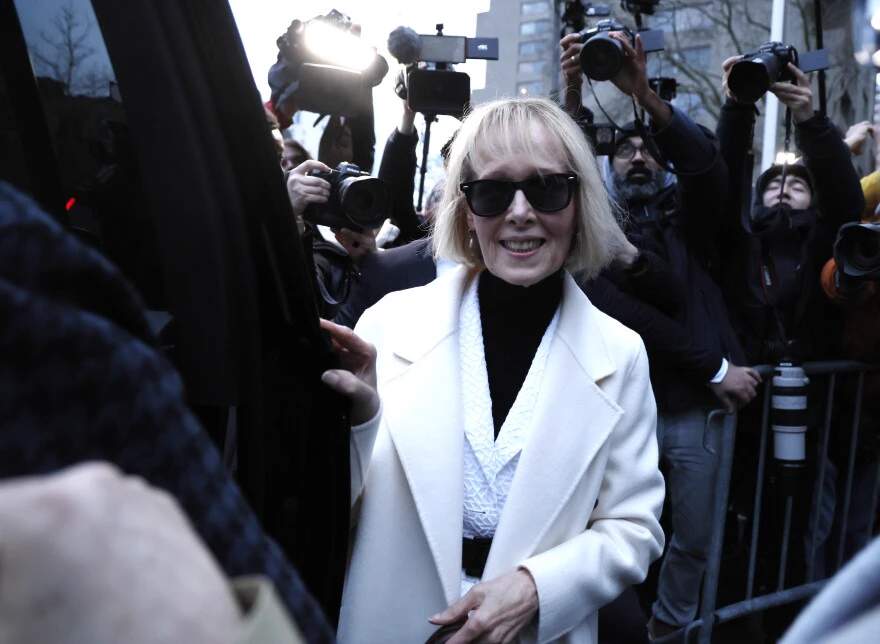
On July 22, the New York State Attorney Grievance Committee punted the judges' complaint to the DOJ itself — the very department Blanche runs — effectively asking Blanche to investigate himself. Three days later, on July 25, the same bipartisan coalition of judges filed an appeal demanding the committee reconsider. The spectacle of a man overseeing his own ethics investigation would be comical if it weren't the actual functioning of the United States government in 2026.
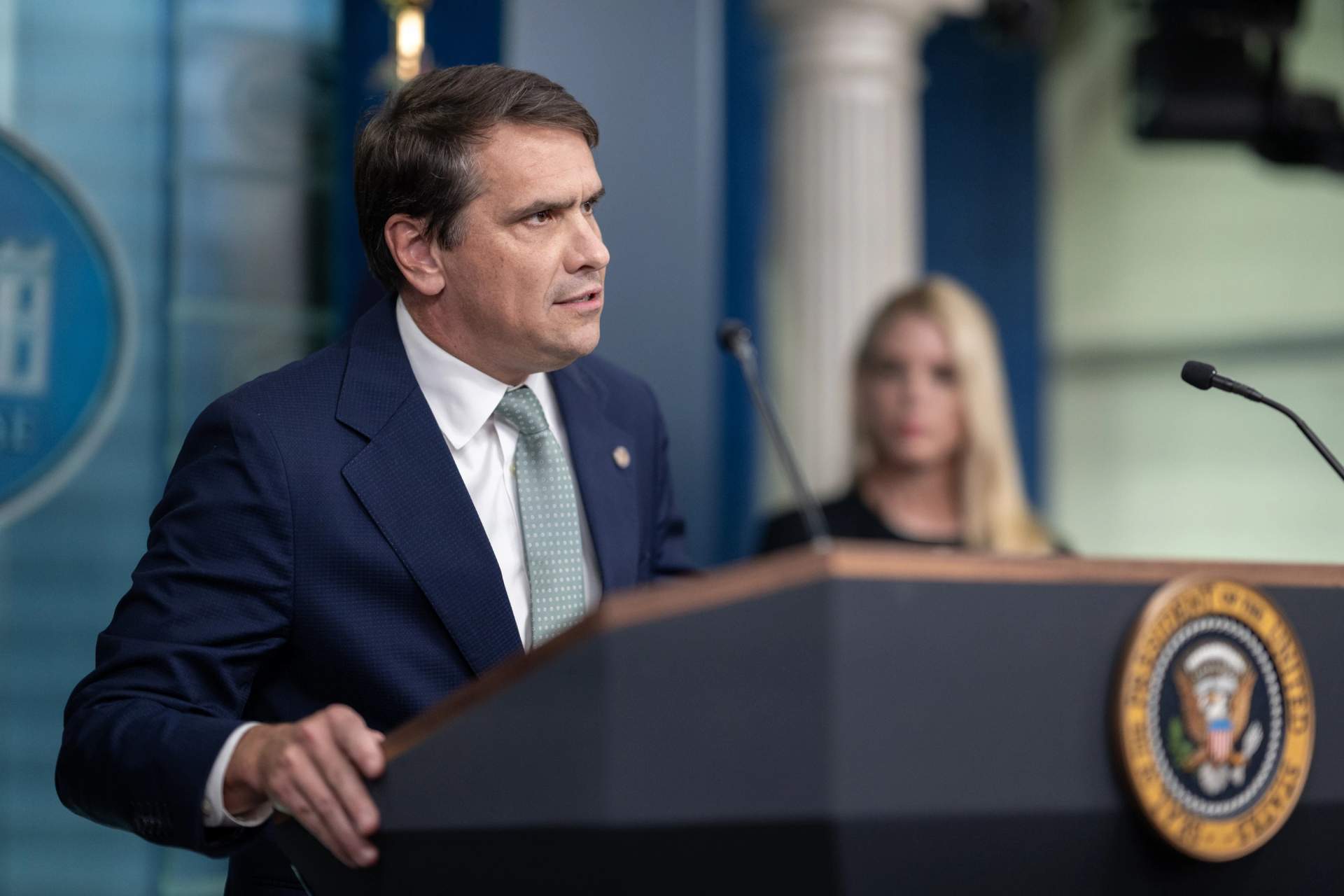
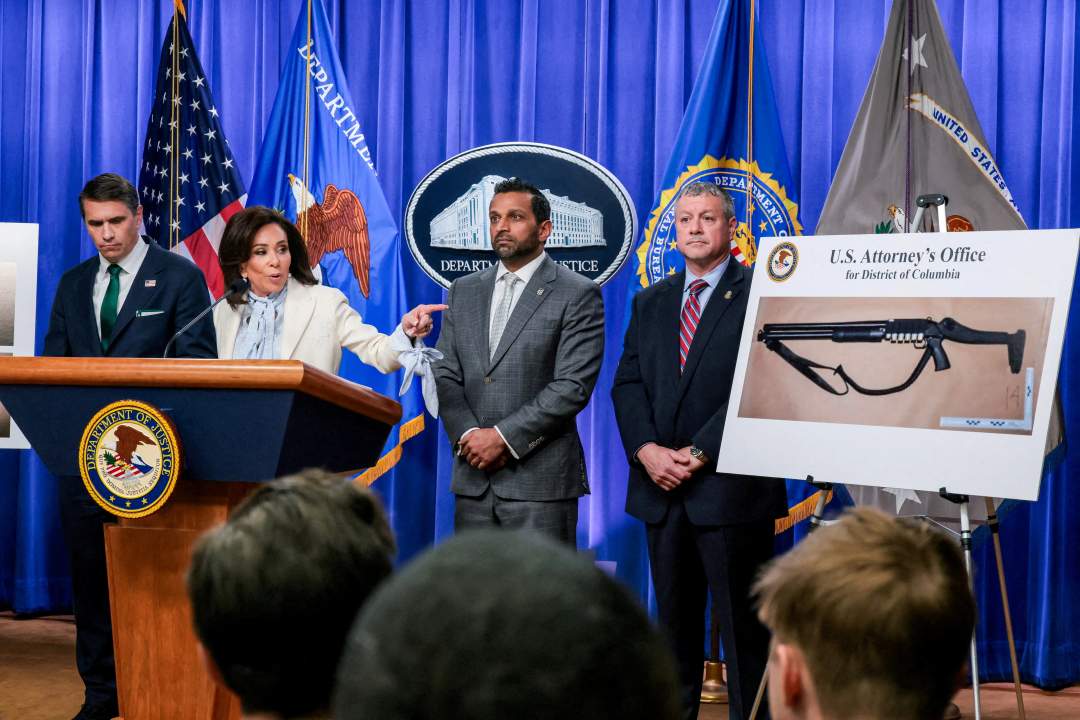
Donald Trump at a White House press conference podium with Pam Bondi and Todd Blanche seated nearby
The $1.8 Billion Slush Fund
In January 2026, Donald Trump filed a $10 billion lawsuit against the Internal Revenue Service, demanding compensation because a former IRS contractor had leaked his tax returns to the New York Times during his first term. The lawsuit was filed in the Southern District of Florida — a jurisdiction with a reputation for being favorable to Trump — and seemingly outside the statute of limitations, which Judge Williams noted in her ruling.
What made the lawsuit extraordinary was that Trump was, in effect, suing his own administration. He controlled both sides of the litigation: the plaintiff (himself and his sons) and the defendant (the IRS, an agency under his executive control). The DOJ's job was to zealously defend the United States against the suit. Instead, Todd Blanche — Trump's former personal defense attorney, who had represented him in criminal cases including the January 6 indictment — did not contest a single claim.
By May, Blanche announced a "settlement." Trump would drop the $10 billion suit. In exchange, the federal government would establish a $1.776 billion "Anti-Weaponization Fund" to compensate anyone who alleged the Biden administration had "weaponized" the legal system against them — a category that primarily covers January 6 rioters convicted of assaulting law enforcement officers and destroying federal property. The money would come from the Treasury, i.e., American taxpayers.
The deal also included a separate DOJ order — signed solely by Blanche, with no IRS signature — that "FOREVER BARRED" the government from auditing Trump, his sons Donald Jr. and Eric, and the Trump Organization over past tax returns. No one from the IRS signed the tax exemption order. Only Blanche did. The IRS reports to the Treasury Department, not the Attorney General.
Sen. Ron Wyden (D-Ore.) called the IRS deal "an obscene act of corrupt self-dealing." He was right. The New York Times reported in 2020 that Trump potentially owed as much as $100 million from an adverse ruling in a decade-long audit. Blanche's order extinguished that liability with the stroke of a pen.
The Judge's Reckoning
On July 14, U.S. District Judge Kathleen Williams, an Obama appointee, released a blistering order that laid bare the entire scheme.
"There was never adverseness between the Parties; there was never a case or controversy; and there was never a question as to who would prevail," Williams wrote, finding that Trump controlled the defendant because of his own executive order defining his authority over all federal agencies.
"The nature of the suit itself and the conduct of the Parties and counsel from its filing make plain that this was an attempt to use the Court to provide some legitimacy to an agreement to confer immunity to people and entities affiliated with the President and to earmark billions of dollars from American taxpayers to redress grievances not defined in the law."
Williams found that the DOJ had "abandoned its responsibility to zealously defend the interests of the United States" and adopted "the strategy of creating a 'slush fund disguised as a settlement, and then doling the money out to whatever constituency the Executive wants bankrolled.'"
She ordered monetary sanctions against Trump, demanded that the opinion be sent to the New York State Bar and the D.C. Bar for disciplinary proceedings, and barred Trump from describing the deal as a legitimate settlement in any future official proceedings.
After facing bipartisan backlash and the court injunction, Blanche publicly claimed the DOJ would "not be moving forward" with the slush fund portion of the settlement. But days later, in written answers to the Senate Judiciary Committee, Blanche refused to rule out reviving the fund in the future, declined to answer whether he had pressured IRS officials to sign the settlement, and refused to say whether it was "appropriate" to grant Trump and his family criminal immunity from tax audits. The audit exemption, HuffPost confirmed, remains in effect.
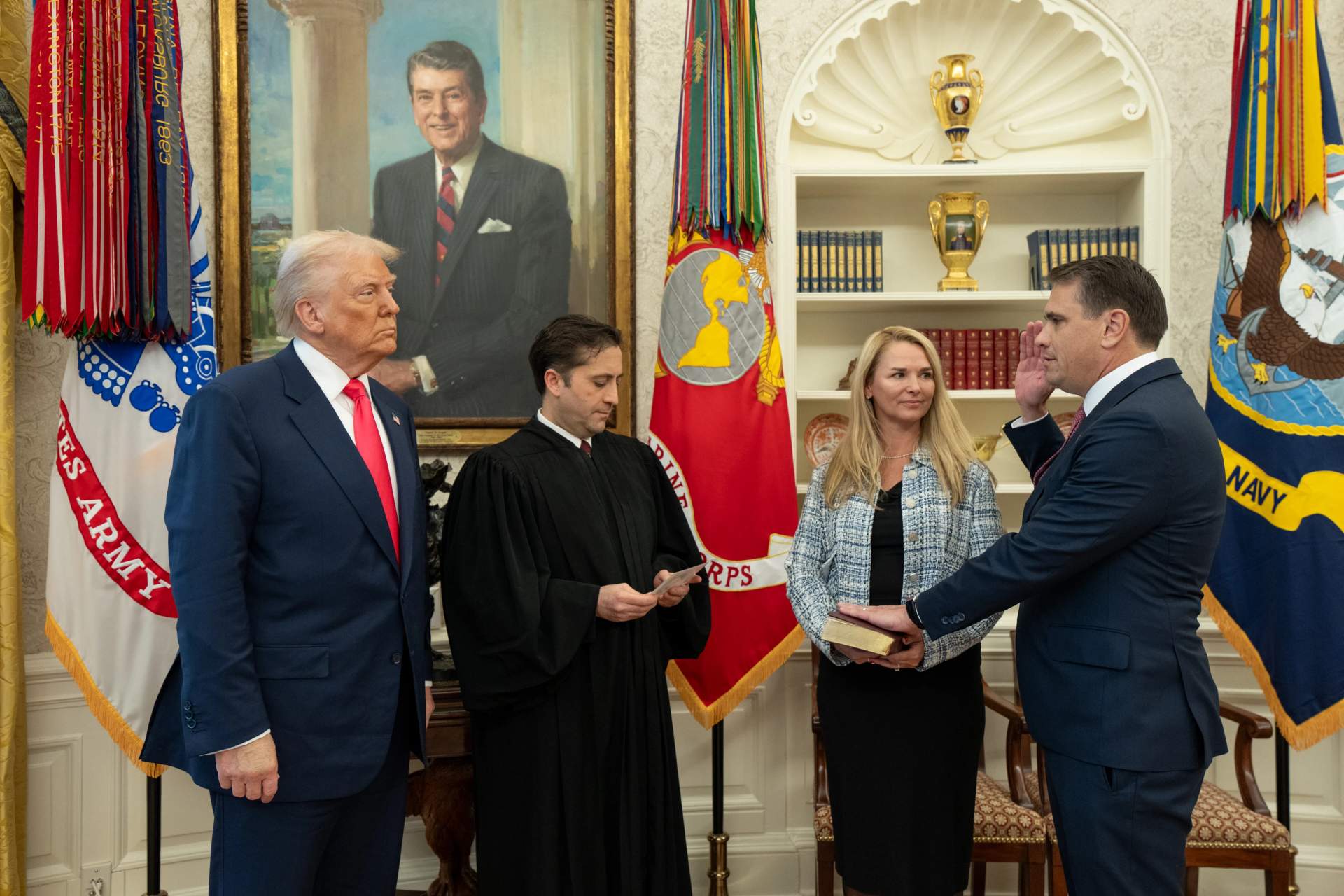
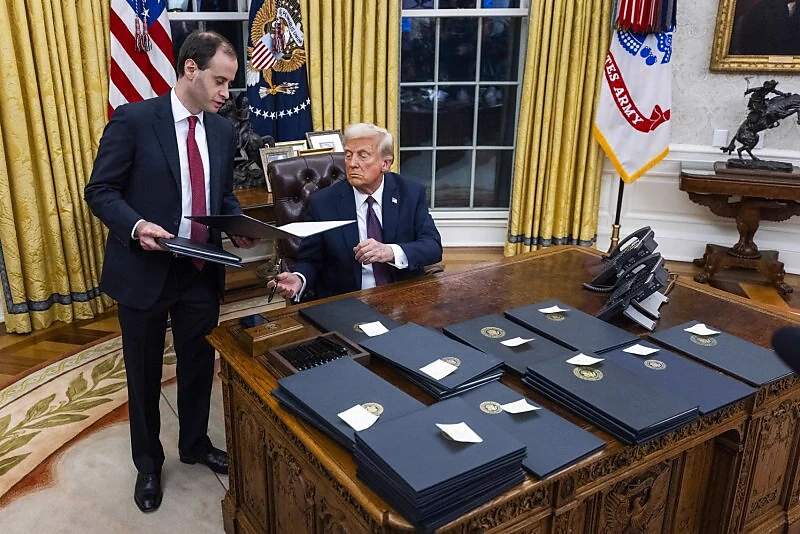
Donald Trump administering the oath of office to Todd Blanche in the Oval Office
101 Judges vs. the Attorney General
On June 22, 2026, more than 100 current and former federal and state judges — joined by two legal advocacy groups, Democracy Defenders Fund and Lawyers Defending American Democracy — filed a 73-page ethics complaint against Blanche with the New York State Attorney Grievance Committee.
The complaint documented roughly a dozen instances of alleged misconduct, including:
- Conflict of interest: Blanche continued to represent Trump's interests while overseeing DOJ investigations — most critically the Epstein Files investigation, where Trump is referenced more than 5,300 times, and the questioning of Ghislaine Maxwell, whom Blanche oversaw before her sudden transfer to a minimum-security prison, contradicting Bureau of Prisons policy for sex offenders.
- Throwing the IRS case: The judges alleged Blanche provided legal advice to Trump or threw the IRS case in the president's favor while supposedly representing the United States against the president.
- Violating professional ethics: Blanche violated the New York Rules of Professional Conduct through his conduct in the settlement and his representation of a former client while serving as the nation's chief law enforcement officer.
Scott Harshbarger, the co-founder of Lawyers Defending American Democracy and a two-term Massachusetts attorney general, said: "The damage over these many months to the once esteemed Department of Justice has been incalculable."
The DOJ's response was characteristically dismissive. A spokesperson called the judges' complaint a "pathetic stunt conjured up by activist judges" who are "desperate" for attention from the liberal media.
On July 22, the New York Attorney Grievance Committee — which has disciplinary authority over Blanche's law license — declined to open its own investigation and instead referred the complaint to the DOJ's Office of Professional Responsibility, effectively asking Blanche's own department to investigate him. On July 25, the judges appealed.
1,200 Former DOJ Employees Say No
The opposition to Blanche's nomination extends far beyond the judiciary. On July 7, more than 1,200 former Justice Department employees from administrations spanning both parties — with thousands of years of collective experience — sent a letter to the Senate Judiciary Committee urging rejection of Blanche's confirmation as Attorney General.
The letter, organized by Justice Connection, accused Blanche of degrading the DOJ's apolitical workforce by "demonizing career attorneys" and creating a "culture of fear" within the department. It described his tenure as an assault on the institutional norms that have historically insulated the DOJ from political interference.
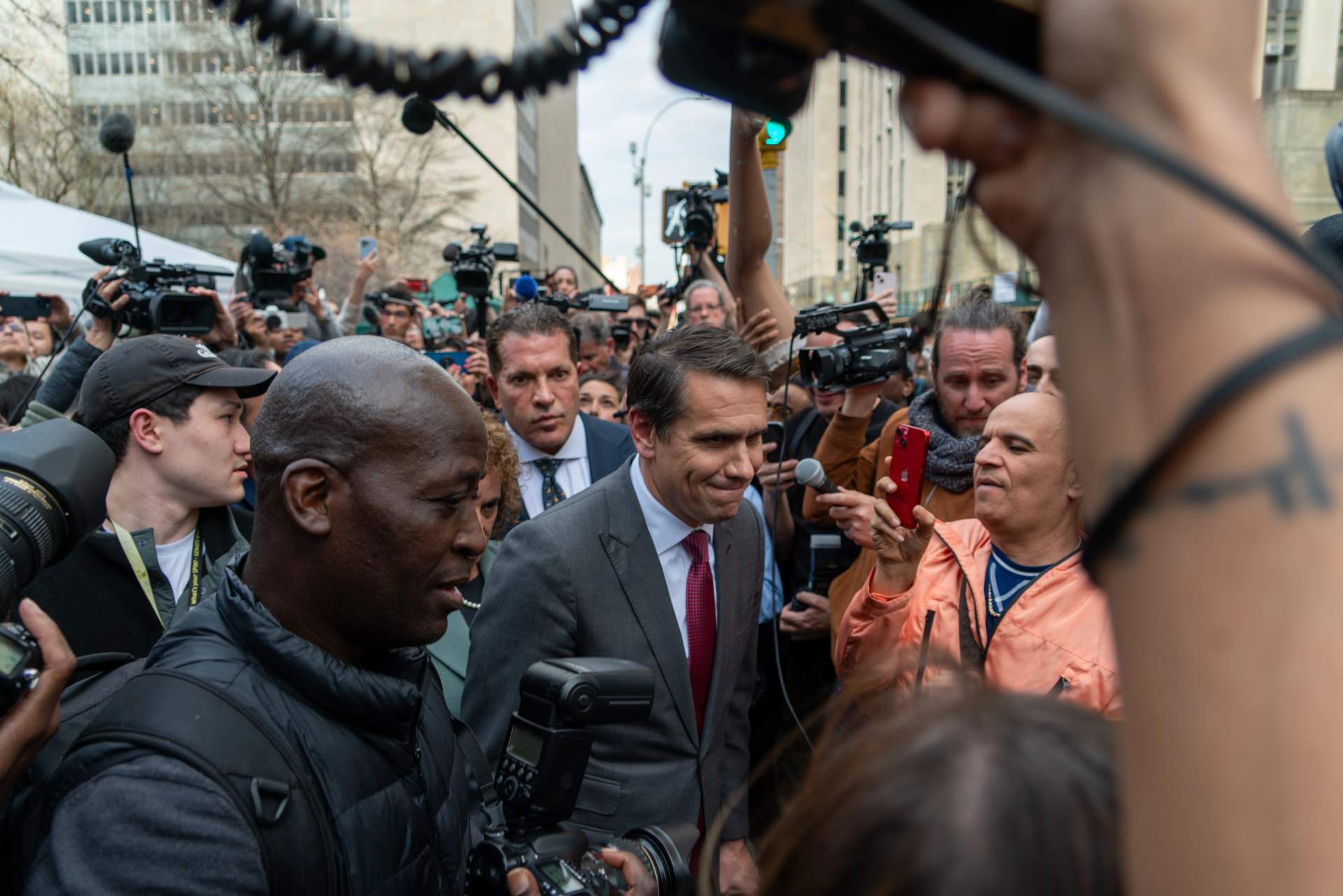
Todd Blanche walking outside a courthouse building in Manhattan
The Confirmation Charade
Senate confirmation hearings were held on July 15 and 16. Even Republican senators expressed concern. Sen. John Cornyn (R-Texas), who had lost a primary to a Trump-backed challenger, told reporters he wanted to hear how Blanche answered questions about the weaponization fund and the audit exemption.
When Blanche met privately with Sen. Dick Durbin (D-Ill.), the top Democrat on Judiciary, Blanche told Durbin he "had nothing to do with" the IRS lawsuit and believed he was "a victim of a hit job" by Judge Williams. Durbin was not convinced.
"He said 'No, it wasn't prospective,'" Durbin told reporters. "That was his defense. Having said that, that's not much of a defense, as far as I'm concerned. Why would they be exempt from tax laws because of some question about whether somebody disclosed his income tax return?"
The New York City Bar Association also formally opposed Blanche's nomination, an extraordinary step from one of the nation's most prestigious bar organizations.
What's at Stake
Todd Blanche's trajectory tells the story of the Trump administration's relationship to the rule of law. A former personal defense attorney for the president, installed first as deputy attorney general, then promoted to acting AG after Trump fired Pam Bondi in April, Blanche has used the nation's highest law enforcement office as an extension of Trump's personal legal team.
He gave Trump's allies $1.8 billion in taxpayer money. He exempted Trump's family from IRS audits. He oversaw the Epstein investigation while his former client appears in it thousands of times. He transferred Ghislaine Maxwell to a softer prison. He was referred for bar discipline by a federal judge and 101 of his judicial colleagues. He was opposed by 1,200 former DOJ employees. The NYC Bar said he shouldn't be confirmed.
And the Senate is still considering his nomination.
The rot at the top of the Justice Department is staggering. But the real scandal isn't Blanche — it's the system that put him there and the institution that refuses to hold him accountable. When the Attorney Grievance Committee asks the DOJ to investigate itself, when the Senate confirms a man 101 judges have condemned, when the rule of law is reduced to a punchline, the problem isn't one corrupt lawyer. The problem is that corruption has become the operating system.
Sources & Methodology(10 sources)
- HuffPost: Blanche IRS Settlement Is a Slush FundNews Article
Methodology
This article is based on primary source documents including federal court filings (Trump v. IRS, S.D. Fla.), the 73-page ethics complaint filed with the NY State Attorney Grievance Committee by 100+ federal judges, the Justice Connection letter signed by 1,200+ former DOJ employees, AP News live hearing coverage, and investigative reporting by HuffPost, Slate, New Republic, and Democracy Docket. All figures and quotes are directly sourced from these materials.
Filed Under
Frequently Asked Questions
- What is the $1.776 billion 'anti-weaponization' fund?
- A fund proposed in Blanche's 'settlement' of Trump's $10B IRS lawsuit that would compensate those who alleged the Biden administration weaponized the legal system — primarily January 6 defendants. It would be funded by the Treasury. After bipartisan backlash and a court injunction, Blanche claimed the DOJ would not move forward, but refused to rule out reviving it.
- Why did 101 judges file an ethics complaint?
- The bipartisan coalition of current and former federal and state judges alleged roughly a dozen instances of professional misconduct, including conflict of interest in the Epstein investigation, throwing the IRS lawsuit, and violating professional ethics by continuing to represent a former client (Trump) while serving as Attorney General.
- What did Judge Williams find in her July 14 ruling?
- Judge Williams found there was 'never adverseness' between the parties because Trump controlled the defendant (his own administration). She called the settlement an attempt to create 'a slush fund disguised as a settlement,' ordered monetary sanctions, barred Trump from describing the deal as a legitimate settlement, and referred the case to the NY and DC Bars for disciplinary proceedings.
- Is Blanche still acting Attorney General?
- Yes. Blanche has been acting AG since April 2, 2026, after Trump fired Pam Bondi. His confirmation hearing for the permanent role was held July 15-16, 2026. The Senate Judiciary Committee had not yet scheduled a vote as of late July.