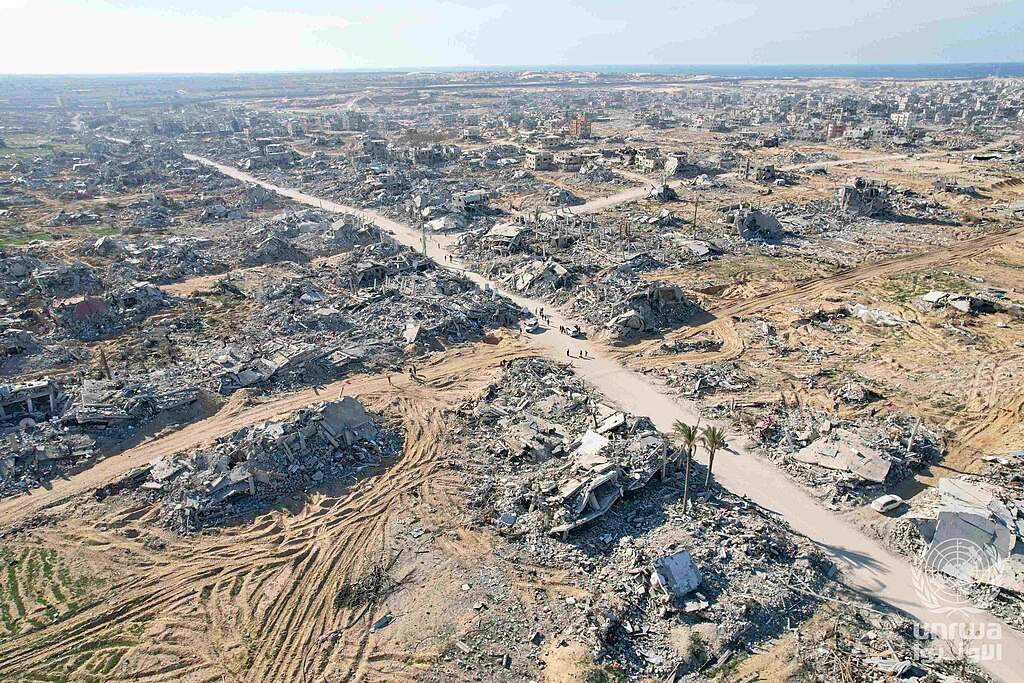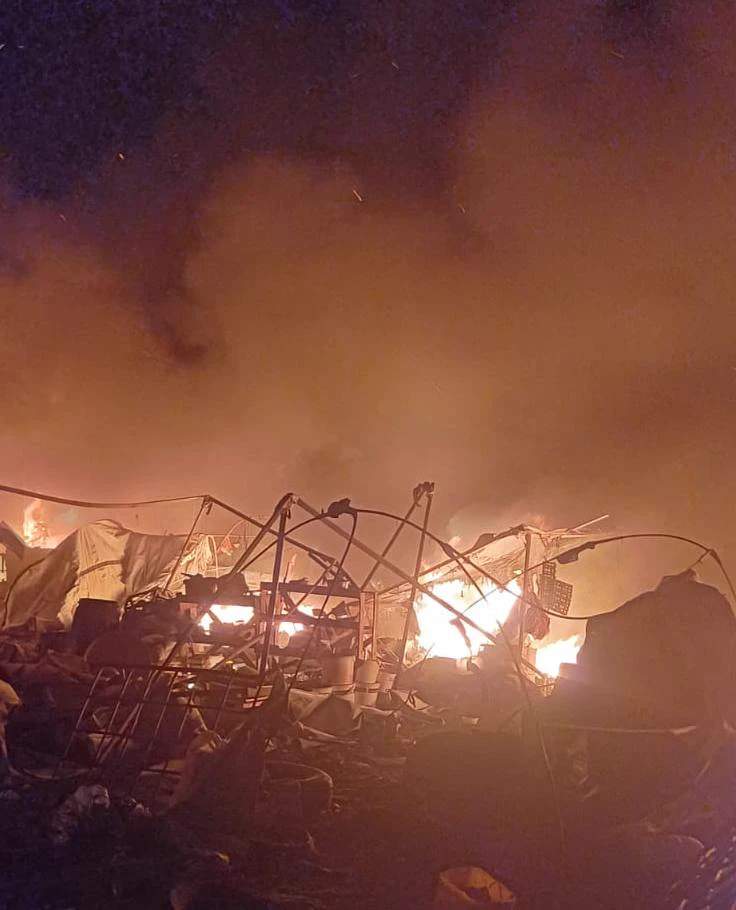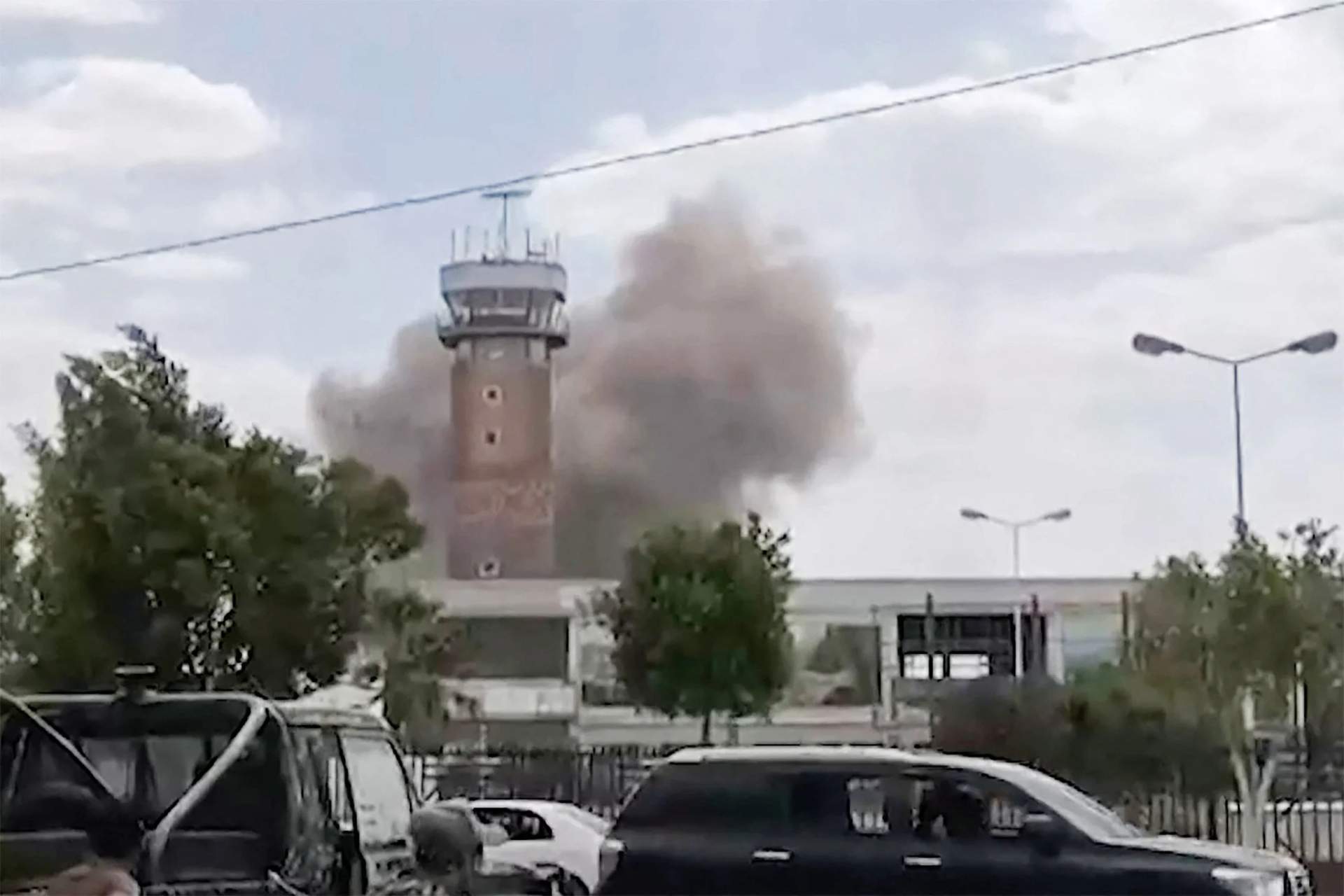
On July 7, 2026, at least four strikes slammed into the runway of Sanaa International Airport — the main civilian gateway for 20 million people under Ansarallah governance in northern Yemen. The bombing came minutes after a UN humanitarian flight had departed, in what can only be described as a calculated act of military aggression against a civilian airport in a country that has already endured a decade of U.S.-backed war, blockade, and famine.
The attackers? The Saudi-backed, internationally recognized Yemeni government — operating from exile in Riyadh, armed and bankrolled by a U.S.-supported coalition that has spent nearly a decade trying to bomb Yemen into submission. Their stated reason: an Iranian passenger plane carrying an Ansarallah delegation returning from Tehran, where they had attended the funeral of Iran's assassinated Supreme Leader Ali Khamenei, killed by a U.S.-Israeli strike in March.
The plane diverted. It landed safely in Hodeidah. The delegation survived. The runway did not.
What survived less intact was the four-year-old Yemen ceasefire — and with it, the fiction that the U.S. empire and its Gulf clients are interested in peace in the Middle East at all.
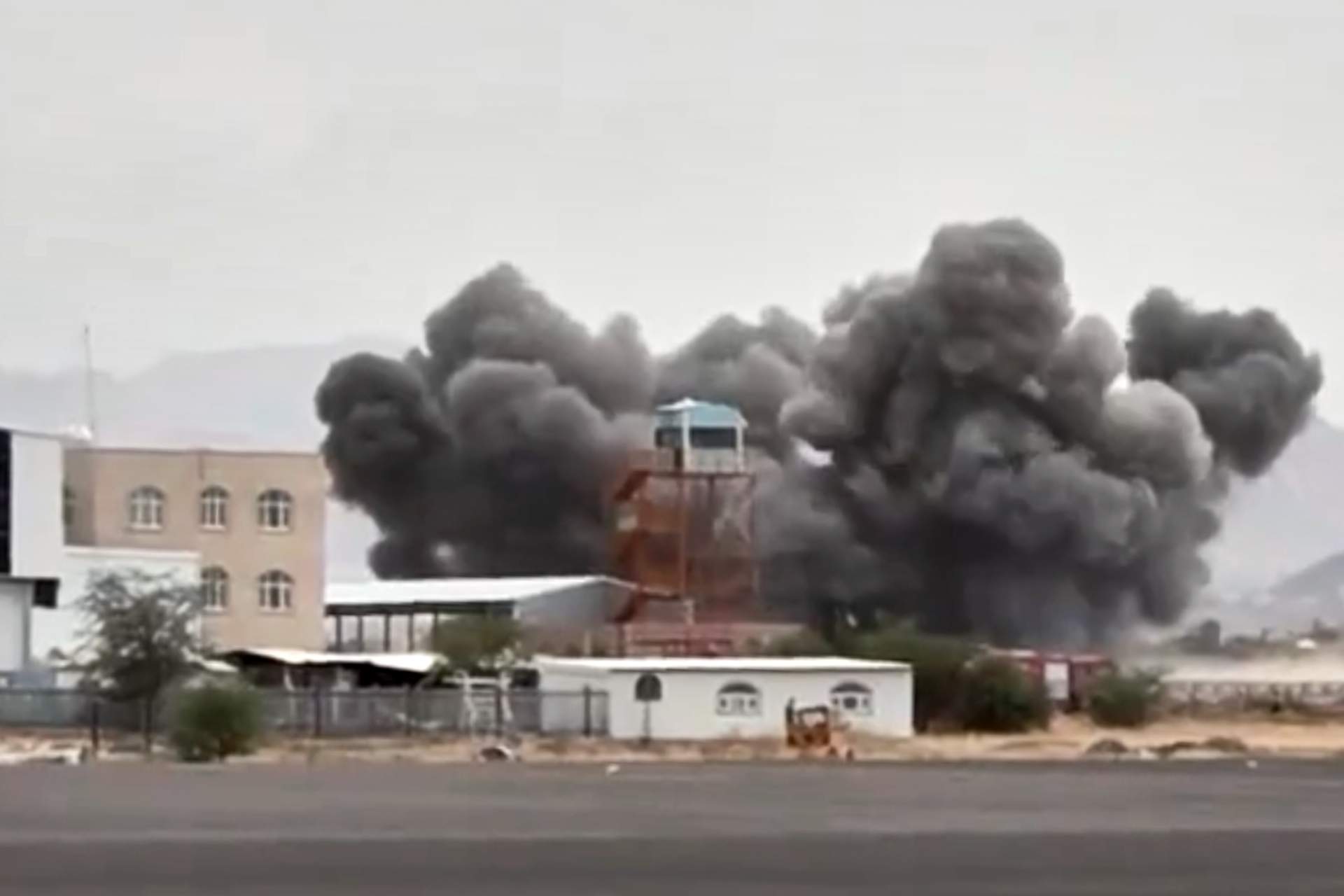
Image taken from video broadcast by Al-Masirah TV, a Houthi-controlled news channel, shows an explosion at the Sanaa International Airport
The Bombing: Precision Targeting Against Civilians
The mechanics of the strike tell you everything about the intent. Yemen's Defence Ministry issued a warning to "civilians, workers, diplomatic missions and humanitarian organisations" to evacuate the airport before the bombing began. They knew exactly what they were hitting. They knew who used it.
This was not a battlefield miscalculation. It was a deliberate attack on civilian infrastructure designed to punish a population for its political alignment.
Yahya Saree, Ansarallah's military spokesman, called it what it was: "blatant aggression that ended the de-escalation phase." The response came swiftly — ballistic missiles and drones struck Abha International Airport in southern Saudi Arabia, roughly 100 kilometers from Yemen's border. Flights to and from Abha were cancelled through Tuesday morning.
*"We warn the criminal Saudi enemy against repeating any attempt to breach the airspace or aggression targeting our country, as it will be met with a comprehensive response targeting its airports and vital interests on land and sea." — Brigadier General Yahya Saree, Ansarallah military spokesman
Saudi coalition spokesman Turki al-Maliki responded with characteristic escalation, vowing the coalition would respond with "unprecedented determination and force."
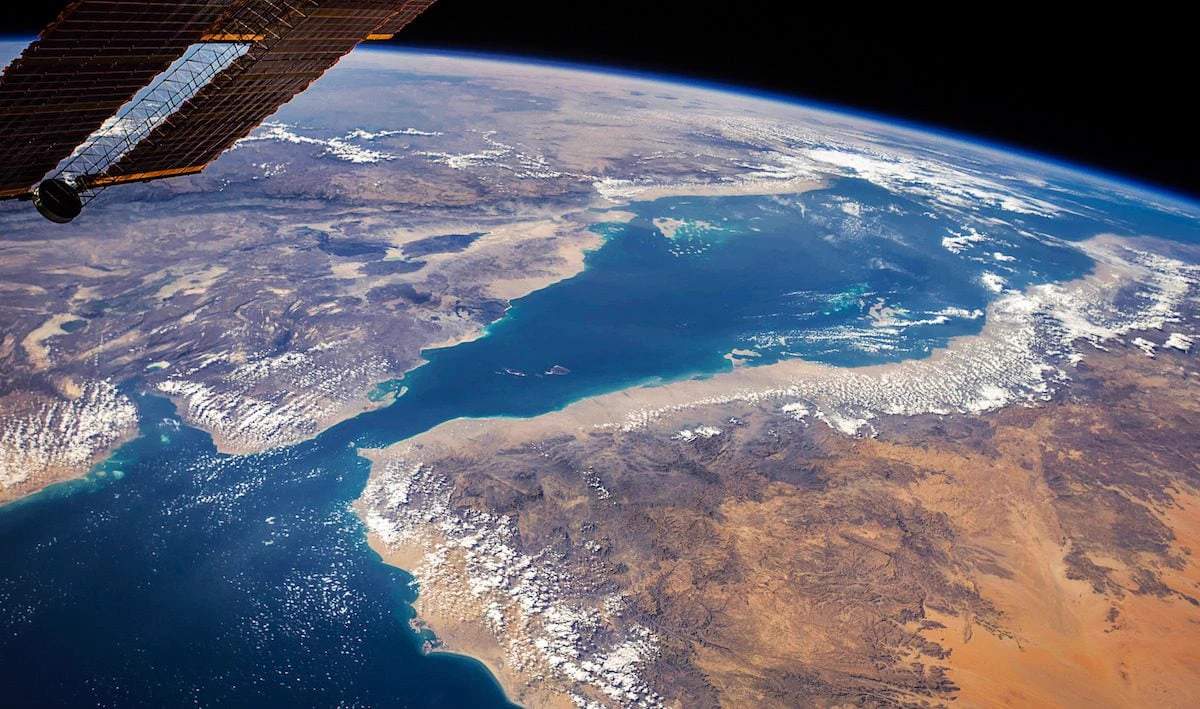
Bab al-Mandad Straight photographed from space.
Bab al-Mandab: The Chokepoint That Could Choke the Empire
But the real threat — the one that has Washington and Riyadh scrambling — came three days later from Mohammed al-Bukhaiti, a senior Ansarallah official. In an interview with Drop Site News, al-Bukhaiti warned that the strikes on Sanaa were "merely one of the initial steps in a broader escalation."
The centerpiece: Ansarallah would close the Bab al-Mandab strait — the narrow chokepoint connecting the Red Sea to the Gulf of Aden and the Indian Ocean, through which much of Saudi Arabia's oil exports flow to Asian markets.
*"We will focus on intensifying our military operations. The Bab al-Mandab strait is a legitimate leverage tool." — Mohammed al-Bukhaiti, Ansarallah official
Ansarallah leader Abdulmalek al-Houthi escalated further in a televised speech on Thursday, declaring that "all Saudi oil facilities and vital installations" were now targets. The IRGC's statement on Wednesday added weight to the threat, warning that additional oil and gas export routes beyond the Strait of Hormuz could be closed to the U.S. and its allies.
This is not a minor tactical adjustment. It is the opening of a second front in a global energy war — one that the empire is already losing in the Persian Gulf.
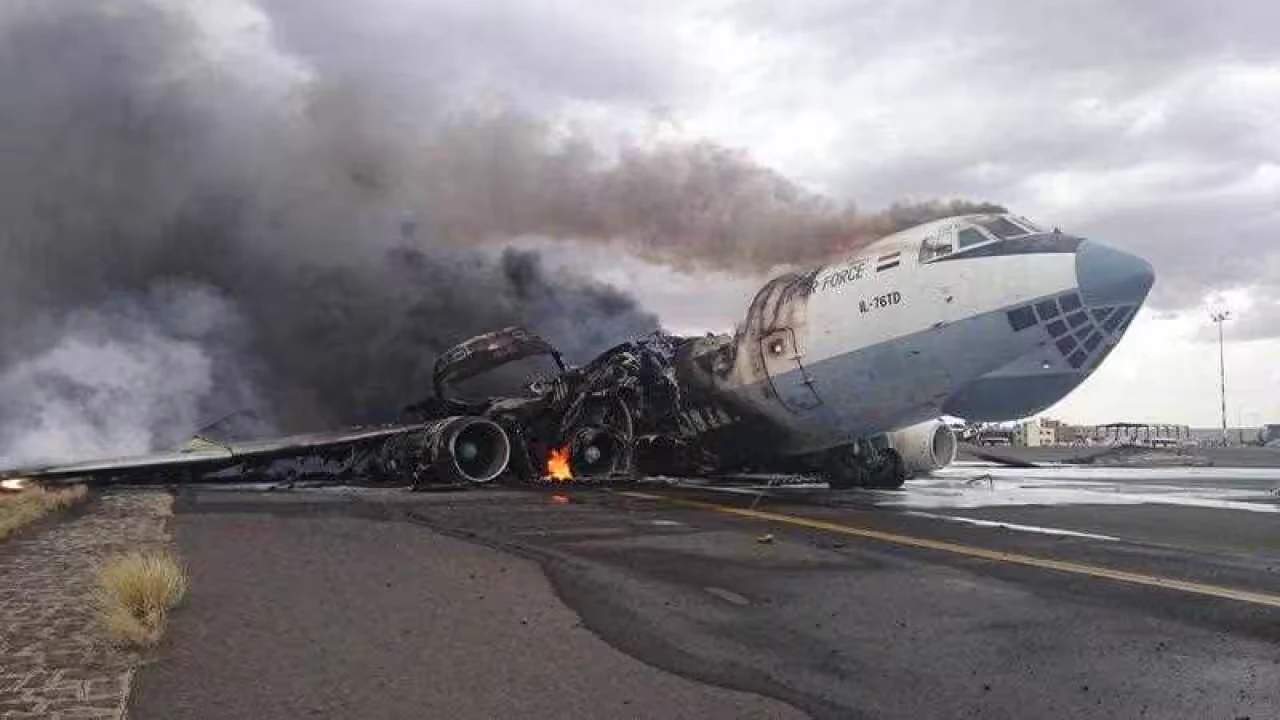
Saudi led attack leaves cargo plane destroyed on a runway at Sanaa International Airport in Yemen. May 4, 2015
The Iran Connection: Why Sanaa, Why Now
The proximate trigger was the Iranian Mahan Air flight carrying the Ansarallah delegation returning from Khamenei's funeral in Tehran. But the deeper context goes back to July 3, when the first Mahan Air flight landed in Sanaa to take the delegation to Iran — breaching a Saudi air blockade that has been in place for nearly a decade.
Yemen's Presidential Leadership Council, operating from Riyadh, called that flight "a clear violation" of Yemeni sovereignty. The irony of a government that has governed nothing, from a capital it does not control, issuing pronouncements about sovereignty — while the kingdom that bankrolls it bombs the actual sovereign territory of the people they claim to represent — would be comedic if it were not so murderous.
But the geopolitics are even more revealing. The delegation was attending the funeral of Ali Khamenei — assassinated in March by a U.S.-Israeli strike that demonstrated, with surgical precision, that the United States and its regional proxy do not recognize any constraint on their use of violence. Not international law. Not diplomatic norms. Not the sovereignty of nations.
As we documented when the ceasefire between Israel and Iran collapsed, Israel struck first — again — and the western press promptly rewrote history to blame Iran for the resulting conflagration. The same pattern is repeating in Yemen: Saudi proxies bomb Sanaa airport, and the resulting Ansarallah retaliation is framed as Houthi aggression in the pages of the Financial Times and the Washington Post.
Image
Who Are the Houthis? The Empire's Favorite Boogeyman
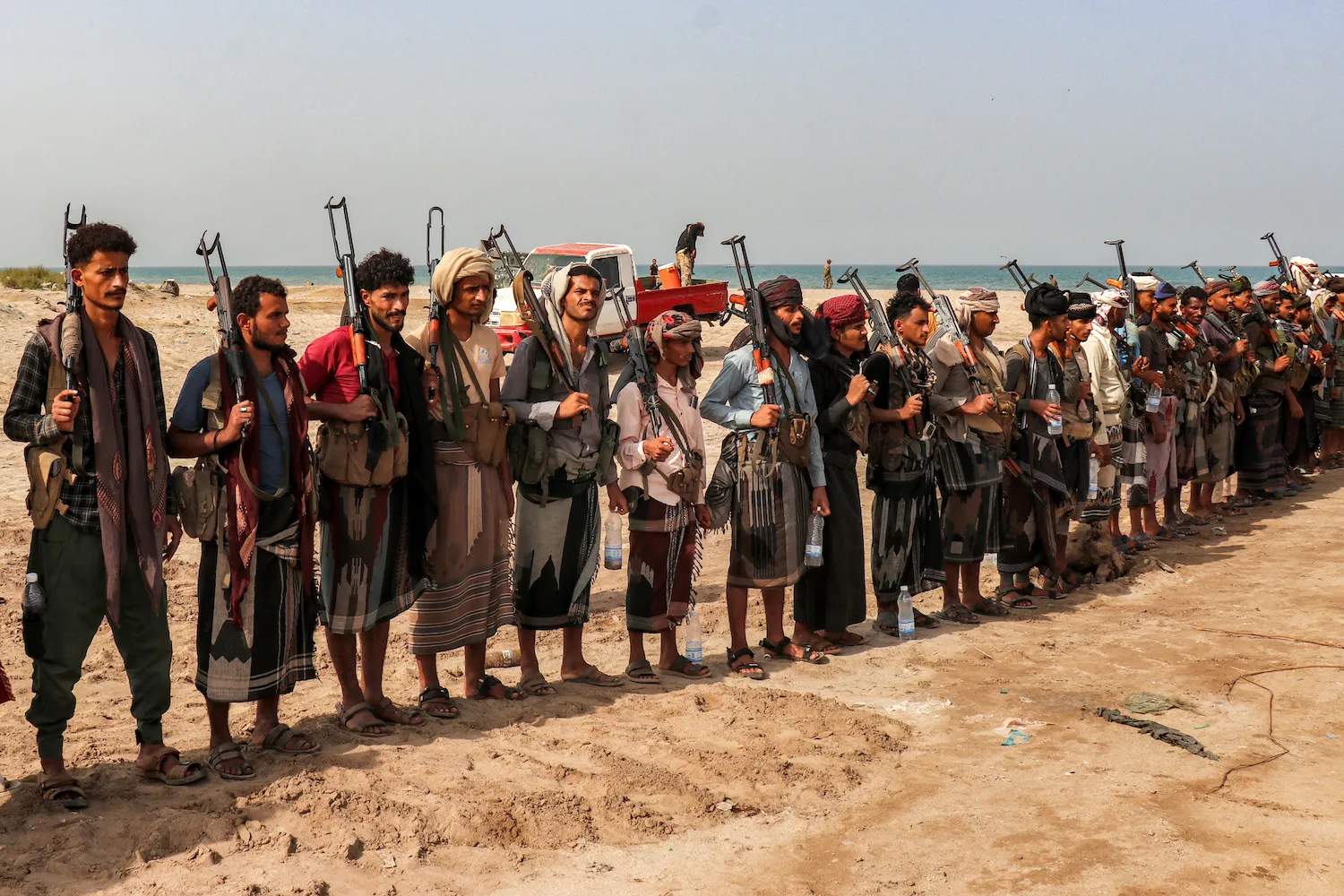
Western media insists on calling Ansarallah "Iran-backed Houthis" — a framing designed to erase the political agency of a movement that controls more Yemeni territory than any other faction, has survived a decade of the world's most destructive modern war, and has rebuilt its military capabilities to the point where it can threaten Saudi oil infrastructure and project power across the Red Sea.
The reality is more complex, and more instructive for anyone serious about understanding anti-imperialist resistance.
Ansarallah emerged from Yemen's Zaidi Shia minority in the early 2000s as a response to Saudi-backed Salafist expansion and the corruption of Yemen's U.S.-aligned government. Their 2014 seizure of Sanaa was not an Iranian invasion — it was a popular revolt against a kleptocratic regime that had sold Yemen's sovereignty to Riyadh and Washington.
Since then, the movement has consolidated domestic control, built a General Mobilization Force modeled on Iran's Basij militia, and — according to a May 2026 study by Conflict Armament Research examining over 800 missile and UAV components — developed the technical capacity to assemble Iranian-designed weapons from component kits inside Yemen. They are not a proxy. They are an autonomous partner in the Axis of Resistance, calibrating their involvement in regional conflicts to serve both the anti-imperialist coalition and their own domestic legitimacy.
Their restraint during the Iran-Israel war — avoiding Red Sea shipping attacks despite pressure from Tehran — reflected strategic calculation, not weakness. They prioritized domestic consolidation. Now that consolidation has reached a point where they feel ready to escalate.
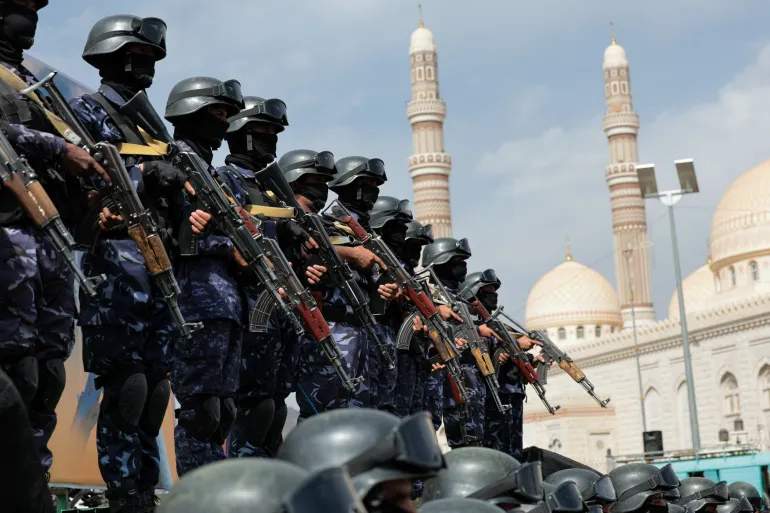
Houthi security force personnel stand guard in the Yemeni capital Sanaa as Houthi supporters rally against the Saudi-led coalition’s restrictions on Houthi-controlled areas, which the group describes as a blockade, July 17, 2026
The Hodeidah Offensive: Ground War Returns
The Sanaa airport bombing was not an isolated incident. It coincided with Ansarallah's deadliest ground offensive in years south of Hodeidah — the Red Sea port city that has been the centerpiece of the Saudi coalition's military strategy for nearly a decade. Houthi forces briefly overran government positions before a counterattack repelled them.
This ground offensive reveals the dual nature of the escalation: Ansarallah is simultaneously demonstrating military reach into Saudi Arabia and consolidating territorial control inside Yemen. The combination is designed to signal that the movement is not merely reacting to provocations — it is setting the agenda.
The Humanitarian Cost: The UN Looks On
UN Special Envoy for Yemen Hans Grundberg issued the standard UN plea: "We are urging them to de-escalate and refrain from any actions that would risk a new cycle of violence in Yemen."
What the UN will not say is what actually needs to be said: the Saudi-backed government, with U.S. arms and political cover, just bombed a civilian airport. The blockade that has starved Yemen for a decade is still in place. The famine that the UN itself called one of the world's worst humanitarian crises is still ongoing. And now the ceasefire that kept a lid on the violence is shattered.
The UN's impulse toward both-sides-ism is not neutrality — it is complicity. When one side bombs an airport and the other side fires missiles at a military base in response, the moral calculus is not symmetrical. The aggressor set the terms. The responder answered them.
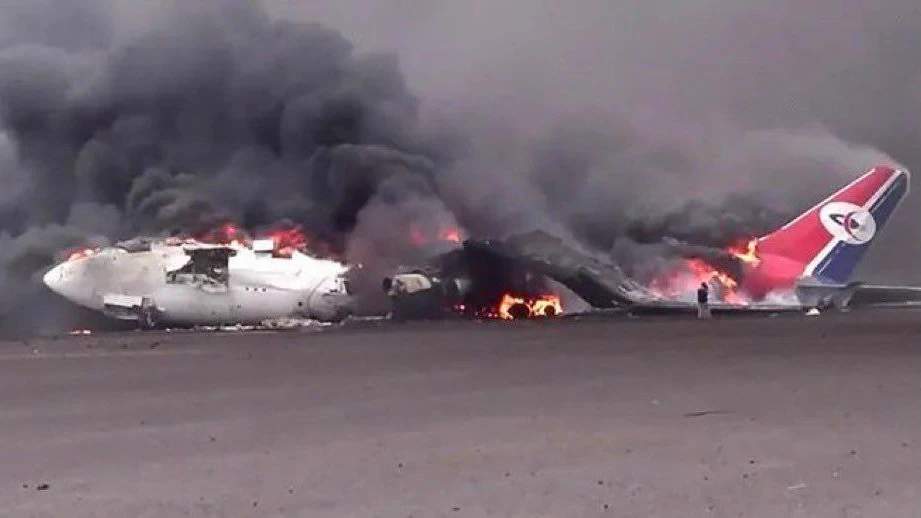
Israel destroyed Yemeni Airlines last plane in a May 2026 attack on Sanaa Airport.
The Broader Picture: Empire in Terminal Decline
The Yemen escalation cannot be understood in isolation. It is part of a regional conflagration that includes:
- The Israel-Iran war, sparked by Israel's assassination of Iran's Supreme Leader, with a ceasefire that Israel violated first
- The Red Sea shipping crisis, where Ansarallah has already demonstrated the ability to disrupt global commerce in solidarity with Palestine
- The Strait of Hormuz closure, Iran's primary economic weapon, which has already throttled Saudi oil exports through the Persian Gulf
- The Lebanon front, where Hezbollah has continued to engage Israeli forces despite devastating bombardment
Each front reinforces the others. The empire's strategy of managing multiple regional wars through proxies and client states is collapsing under the weight of its own contradictions. You cannot arm Saudi Arabia to bomb Yemen, arm Israel to bomb Gaza and Lebanon, and assassinate Iran's Supreme Leader — and expect no consequences.
The consequences are now arriving. Ballistic missiles at Abha. Threats to Bab al-Mandab. Ground offensives at Hodeidah. The architecture of imperial control in the Middle East is cracking, and the people it was built to crush are the ones doing the cracking.
What Ansarallah's Strategy Tells Us About Resistance
For anti-imperialists watching from the Global North, the Yemeni resistance offers a masterclass in asymmetrical warfare against a technologically superior adversary. Ansarallah has:
- Survived a decade of total war including Saudi aerial bombardment, naval blockade, and economic siege
- Developed domestic military production capabilities, moving from Iranian dependency to domestic assembly
- Maintained political legitimacy in northern Yemen while the Saudi-backed government governs nothing from exile
- Strategically calibrated escalation, joining the Iran-Israel war on their own terms and timeline
- Choked global shipping through the Red Sea, demonstrating that the empire's supply chains are more vulnerable than its militaries
- Now threatens a second energy chokepoint at Bab al-Mandab, compounding the Hormuz pressure on Saudi exports
This is not a movement on its last legs. This is a movement that has studied its adversary, identified its vulnerabilities, and is now exploiting them systematically.
The bombing of Sanaa airport was supposed to demonstrate Saudi strength. Instead, it demonstrated that the Saudi-U.S. alliance has run out of options other than escalation — and escalation is the one thing Ansarallah is better positioned to sustain.
The U.S. Role: Follow the Blood Money
The United States has armed the Saudi coalition in Yemen for a decade. The bombs that hit Sanaa airport were delivered by a war machine that Congress has repeatedly tried — and failed — to restrain through arms sales restrictions. Raytheon, Lockheed Martin, and General Dynamics have made billions selling the weapons that pulverize Yemeni infrastructure.
And Trump, ever the dealer, has bragged about using American military power in the region. As we reported when Trump boasted about blowing a hole in an Iranian ship, this president treats war crimes as campaign material. The assassination of Khamenei — the proximate cause of the delegation's travel to Iran, and therefore the proximate cause of this entire chain of events — was a U.S.-Israeli operation.
The trail of blood from Washington to Sanaa airport has no detours.
The Red Cross Detained
In a detail that western media largely ignored, Ansarallah detained an International Committee of the Red Cross aircraft at Sanaa airport and are holding its pilot and co-pilot. Yemen's information minister in the Saudi-backed government, Moammar bin Mutahar Al-Eryan, confirmed the detention.
The ICRC presence at Sanaa is one of the few lifelines connecting northern Yemen to the outside world. Cutting it off — even temporarily — is an act of collective punishment against a population that has already endured years of man-made famine. Both sides bear responsibility for humanitarian access. But the side that started the war by bombing the airport bears the greater share.
The Empires Dilemma
The Saudi-U.S. coalition faces an impossible dilemma. Escalate, and risk the closure of Bab al-Mandab — compounding the Hormuz chokehold on global energy markets. De-escalate, and concede that Ansarallah cannot be bombed into submission, effectively ending the decade-long project of regime change in northern Yemen.
For Ansarallah, the calculation is simpler. They have survived worse. Their military capabilities are growing, not shrinking. Their domestic legitimacy — built on resistance to foreign aggression — is reinforced by every Saudi airstrike. The bombing of Sanaa airport, intended to humiliate and punish, has instead become a rallying point.
Yahya Saree's warning was clear: "This aggression will not go unanswered or unpunished."
It already hasn't. The question is how much further the empire is willing to push — and whether it can survive the answer.
Sources & Methodology(6 sources)
Methodology
Reporting based on verified wire service reports from Al Jazeera, BBC, Al Mayadeen, Drop Site News, Palestine Chronicle, and Responsible Statecraft. Cross-referenced with official statements from Ansarallah military spokesman Yahya Saree, Saudi coalition spokesman Turki al-Maliki, UN Special Envoy Hans Grundberg, and Iran's Foreign Ministry.
Filed Under
Frequently Asked Questions
- Who bombed Sanaa airport?
- The Saudi-backed, internationally recognized Yemeni government claimed responsibility, saying they targeted the runway to prevent an Iranian Mahan Air passenger plane carrying an Ansarallah delegation from landing.
- What was the Iranian plane doing?
- The Mahan Air flight was carrying an Ansarallah delegation returning from Tehran, where they attended the funeral of Iran's assassinated Supreme Leader Ali Khamenei.
- How did Ansarallah respond?
- Ansarallah launched ballistic missiles and drones targeting Abha International Airport in Saudi Arabia. Military spokesman Yahya Saree declared the 'de-escalation phase' over and senior official Mohammed al-Bukhaiti threatened to close the Bab al-Mandab strait.
- What is the significance of Bab al-Mandab?
- The Bab al-Mandab strait connects the Red Sea to the Gulf of Aden and Indian Ocean. Its closure would severely impact Saudi oil exports to Asian markets and compound the existing Strait of Hormuz disruption.