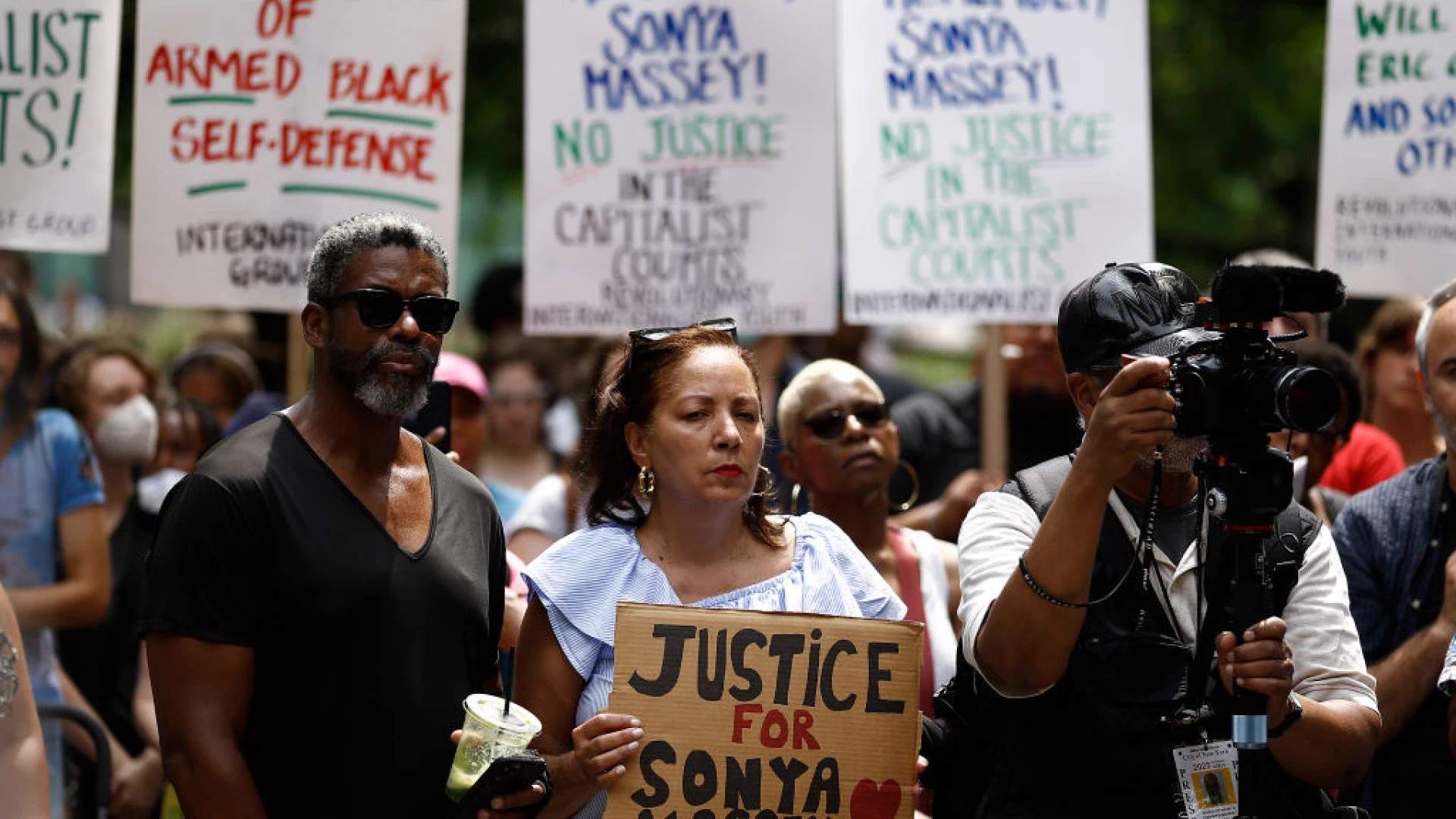
On July 6, 2024, Sonya Lynaye Massey — a 36-year-old Black woman, a mother of two, a woman in the grip of a mental health crisis — called 911 because she believed someone had broken into her home. She was scared. She was vulnerable. She was reaching out for help the way the system tells people to do: call the professionals. What arrived at her door was not protection. What arrived was Sean Grayson, and what he delivered was death. As we documented in the killing of Katelyn Hall in Louisville, calling for help in this country is often the most dangerous thing a person in crisis can do.
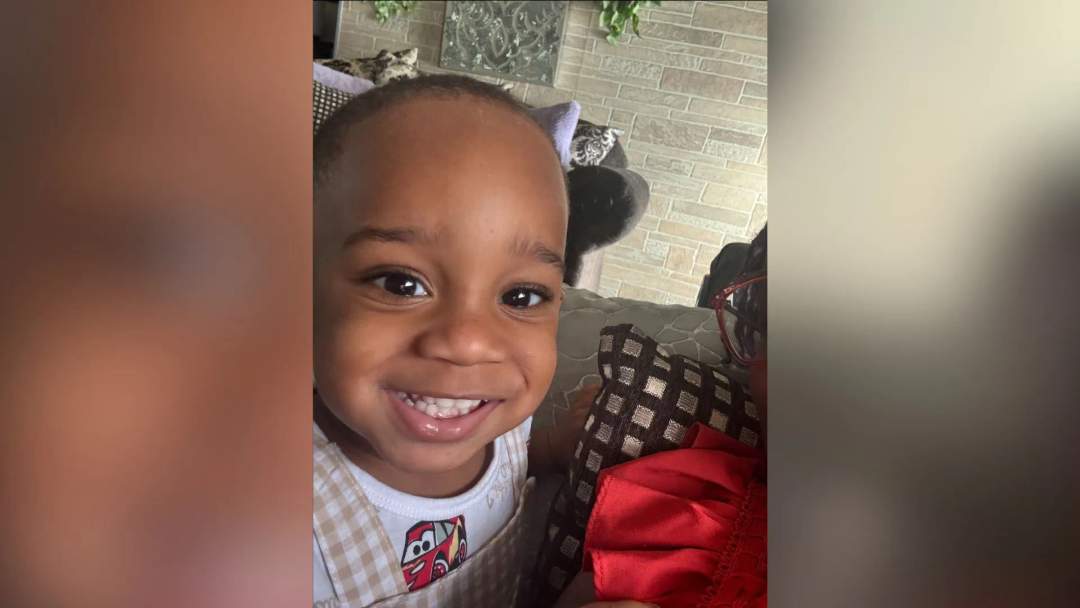
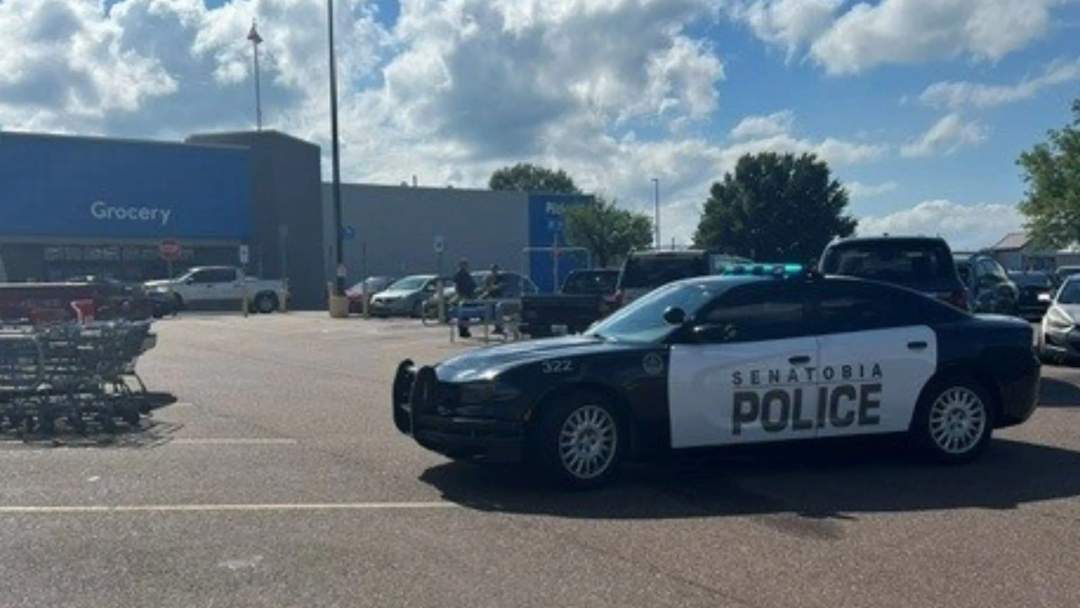
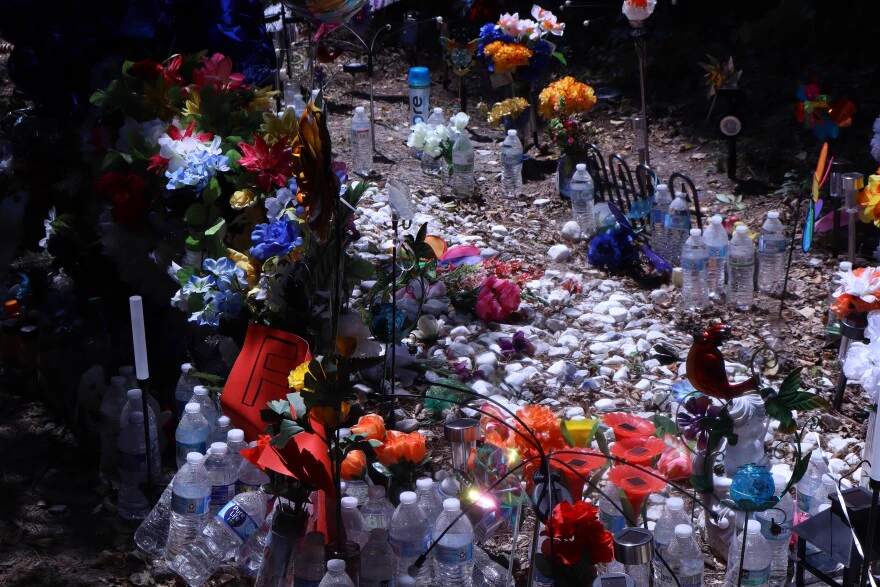
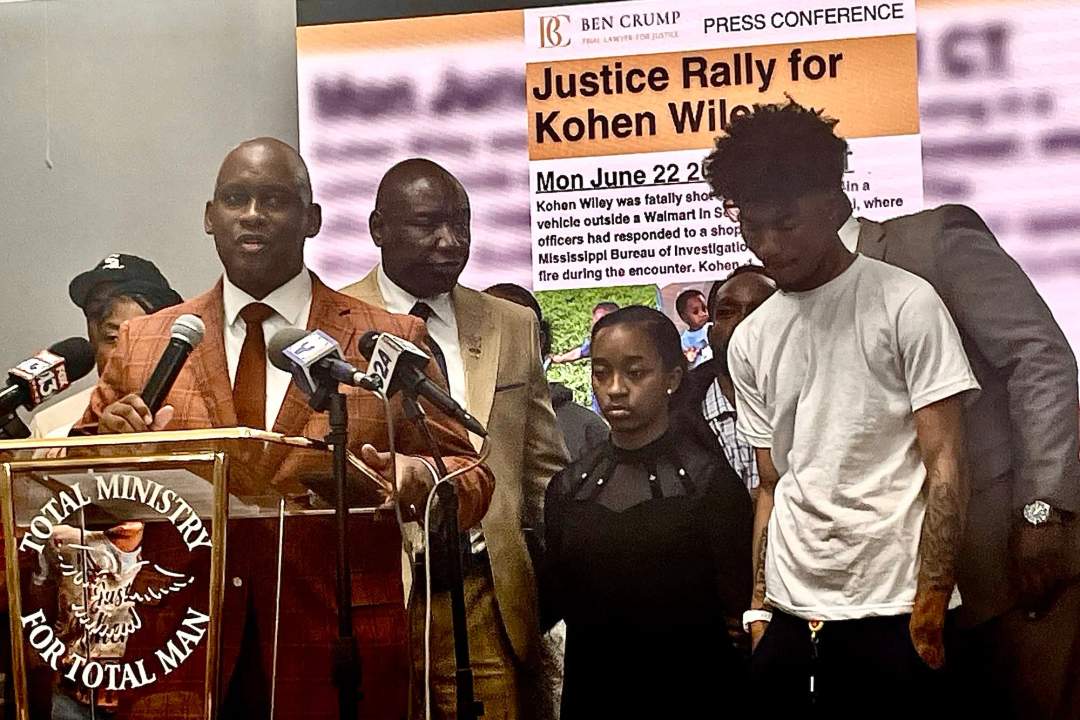
Nearly two years later, a jury in Peoria County, Illinois — the trial moved 75 miles from Springfield because of intense pretrial publicity — found Grayson guilty of second-degree murder. He was sentenced to the maximum 20 years in January 2026. His legal team is now petitioning for medical release after less than six months served. The Massey family called the conviction "a measure of justice." The system appears determined to make sure it stays exactly that — a measure. Nothing more. In Mississippi, after the murder of 1-year-old Kohen Wiley by a Senatobia police officer over a box of Pampers, the state spent months protecting the identity of the shooter — Hunter Foster — before an independent autopsy finally ruled the death a homicide. Even then, Mississippi kept protecting its own.
How Sonya Massey Died
The body camera footage, played in full during the seven-day trial, tells the story with the kind of clarity that makes every excuse evaporate.
It was just after 1:00 a.m. when deputies Sean Grayson and Dawson Farley of the Sangamon County Sheriff's Office arrived at Massey's home in Woodside Township, just outside Springfield. They searched her backyard and the immediate area. They found nothing. No prowler. No evidence of intrusion. The call, in police terms, was unfounded.
Grayson knocked on Massey's door. It took roughly three minutes before she opened it. She was on her cell phone. The deputies told her they hadn't found anyone. The exchange was calm. Massey showed them a black SUV in her driveway that wasn't hers. Farley walked around the side of the house to check the license plate. Then, for reasons that were never adequately explained, the three of them went inside Massey's home.
This is where the encounter shifted from routine to something else entirely. Inside, Massey was on a call with a 911 dispatcher, repeatedly asking the operator to hold on. She was looking through a stack of papers and her purse for her ID, as the deputies had requested. At one point, she asked Grayson to hand her a Bible. Grayson asked for her name, discussed the SUV, then asked for identification again. Massey said she had some paperwork and wanted to show it to them. Grayson and Farley insisted she produce her ID first.
While Massey searched, Grayson noticed a pot of water on her stove and told someone to remove it. Massey picked it up herself, carrying it from the stove to the sink — a distance of a few feet in her own kitchen, performing a task the deputy had effectively asked her to perform.
Grayson and Farley both stepped backward. Massey asked, "Where are you going?" Grayson replied, chuckling, "Away from your hot steaming water." Then Massey said the words that Grayson decided were a death sentence: "Away from my hot steaming water? Oh, I rebuke you in the name of Jesus."
"Huh?" Grayson asked.
"I rebuke you in the name of Jesus," Massey repeated.
What happened next was not a panic response. It was not a split-second decision made in the fog of a high-speed confrontation. Grayson replied with deliberate, measured menace: "You better fucking not. I swear to God I'll fucking shoot you right in your fucking face." He drew his service weapon. Farley drew his.
Massey's immediate response was to apologize. "OK, I'm sorry." She ducked behind a kitchen counter. She was hiding. She was unarmed. She was holding a pot of water she had been asked to move from her own stove. She was in her own home. She had called 911 for help.
Both deputies advanced from the living room toward the kitchen, weapons drawn, trained on a woman cowering behind a counter. They shouted for her to drop the pot. Then Grayson fired three shots. One struck Massey in the face. Sonya Lynaye Massey bled out on her kitchen floor and died. The pattern of police refusing to render aid after shooting civilians is not limited to one department or one state — Elijah McClain was injected with ketamine by paramedics after Aurora police restrained him, and community outrage at that cover-up exploded at the courthouse steps.
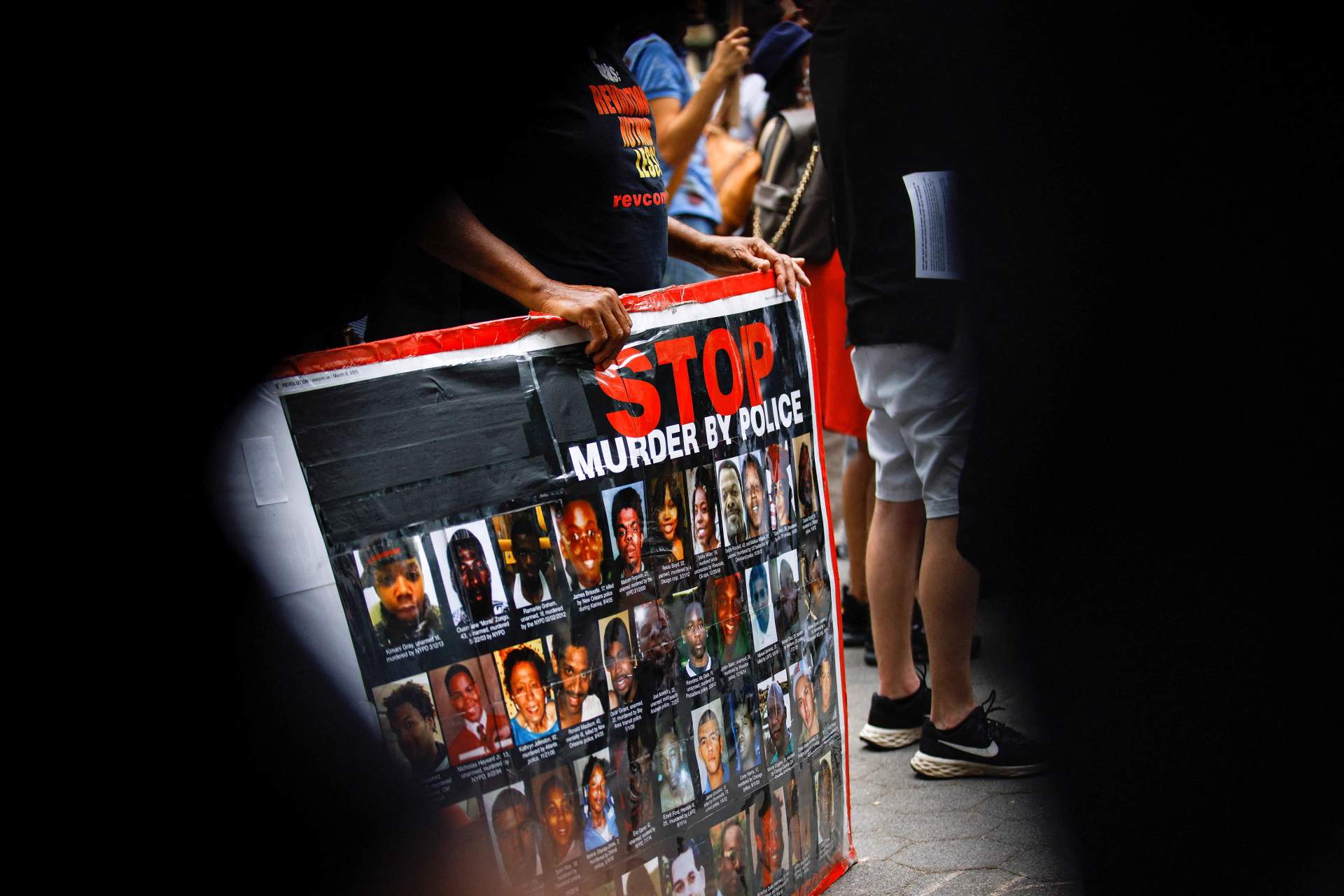
Large crowd of demonstrators holding signs and candles at a nighttime vigil for Sonya Massey
The Cold Calculus After the Kill
The shooting was monstrous. What Grayson did in the seconds and minutes after is what makes this case something beyond even the routine horror of American police violence.
Farley, to his limited credit, moved to retrieve his medical kit. Grayson stopped him.
"She's done. You can go get it, but that's a headshot."
Consider the depravity of that statement. A man who had just put a bullet through an unarmed woman's skull assessed the situation, determined she was not worth saving, and communicated that assessment to his partner with the casual detachment of someone commenting on a car that won't start. This was not the confusion of an officer who feared for his life and then realized the threat was gone. This was a man who understood exactly what he had done and did not care.
Grayson did not render aid. He did not call for medical assistance. He did not check on Massey's condition. He activated his body camera — after the shooting was already over, a detail that speaks volumes about his awareness that what he had done was wrong and his desire to control the narrative. Farley eventually went to get his medical kit while Grayson went to retrieve his own, leaving the woman he had just shot in the face to bleed out alone.
This is not the behavior of a man who made a tragic mistake in the heat of the moment. This is the behavior of a man for whom the life of the woman on the floor was already written off — a calculus made, a value assessed, found wanting.
A Paper Trail the System Ignored
The Invisible Institute, in a series of investigations that won the 2025 Driehaus Award for Investigative Journalism, exposed what should have been a career-ending dossier long before Grayson ever reached Sonya Massey's door.
Sean Patrick Grayson, 30 years old at the time of the killing, had been discharged from the U.S. Army in 2016 from Fort Riley for "misconduct (serious offense)." Military officials confirmed he was a wheeled vehicle mechanic but declined to disclose the nature of the misconduct. He received a general discharge. Before his military service, he had a misdemeanor DUI conviction in August 2015. He picked up another DUI in July 2016.
Between 2020 and 2023, Grayson worked for five different Illinois police departments and sheriffs' offices before being hired by the Sangamon County Sheriff's Office. He was, in the language of policing reform advocates, a textbook "wandering officer" — a problem officer who cycles between agencies because no single department wants to be the one that fires him but every department is willing to be the one that hires him.
In 2021, while working as a police officer in Kincaid, Illinois, Grayson falsely arrested a white man named Kyle Adkins. He claimed there was a warrant for Adkins' arrest and fabricated evidence to support felony drug charges. The case dragged on for two years before the charges were dropped — the warrant and evidence Grayson cited never existed. Body camera footage showed Grayson admitting to his own police chief that he had no evidence. Even after this footage surfaced in court, no other department or agency was notified.
In 2022, as a Logan County sheriff's deputy, Grayson led a high-speed chase at 110 mph, ignoring direct orders from superiors to terminate the pursuit. He turned off his lights and siren and only stopped after hitting a deer. Supervisors met with him about his conduct and discussed the possibility of termination. The Logan County Sheriff's Office ultimately took no action and never reported the misconduct to any outside agency.
At Logan County, Grayson also faced at least two formal complaints: one from a female detainee, Chelsey Lowe, who alleged that Grayson harassed her at the jail and at the hospital following her arrest. Internal investigators never interviewed her about her allegations. Police and correctional experts called the investigation a violation of basic practices.
None of this stopped Sangamon County Sheriff Jack Campbell from hiring Grayson in 2023. After Massey's killing, Campbell defended his vetting process and refused to resign, though he was ultimately forced into early retirement. Experts in police hiring — including Chris Burbank, the former longtime chief of the Salt Lake City Police Department — called the hiring negligent given the combination of military misconduct, DUI convictions, and integrity issues across multiple agencies.
The system saw every red flag. The system hired him anyway.
The Verdict — and What It Left Out
Grayson was fired by the sheriff's office and charged with three counts of first-degree murder on July 17, 2024. At trial, his defense was self-defense — the argument that a woman cowering behind a counter, apologizing, holding a pot she'd been asked to move, constituted a lethal threat justifying three shots to the face. His attorneys also leaned heavily on his stage 3 colon cancer diagnosis, arguing for sympathy.
The jury of eight women and four men deliberated for roughly two days. They convicted on the lesser offense of second-degree murder, meaning they could not unanimously agree on first-degree. The distinction is critical: first-degree murder in Illinois requires a finding that the defendant acted with intent to kill or with knowledge that his actions would kill. Second-degree, while still a felony, carries a presumption that the killing occurred in a moment of sudden and intense passion — a legal framework that, in this context, functioned as a gift to the defense.
The family's reaction was immediate and clear. In the courtroom, Grayson's family members were seen crying. The Massey family sat quiet, deflated, upset. Attorneys Ben Crump and Antonio Romanucci issued a statement:
"While we believe Grayson's actions deserved a first-degree conviction, today's verdict is still a measure of justice for Sonya Massey."
A measure. Not justice itself — a fraction of it, a portion carefully metered out by a system that instinctively buffers its own from the full weight of accountability.
On January 29, 2026, Judge Rodney Dexter Wykoff sentenced Grayson to the statutory maximum of 20 years. But second-degree murder in Illinois carries a range of four to 20 years, and under state sentencing guidelines, Grayson could be eligible for release after serving as little as half that sentence — potentially 10 years, possibly less with good behavior credits. Prosecutors had asked for the maximum. They got it on paper. Whether it holds is another question entirely.
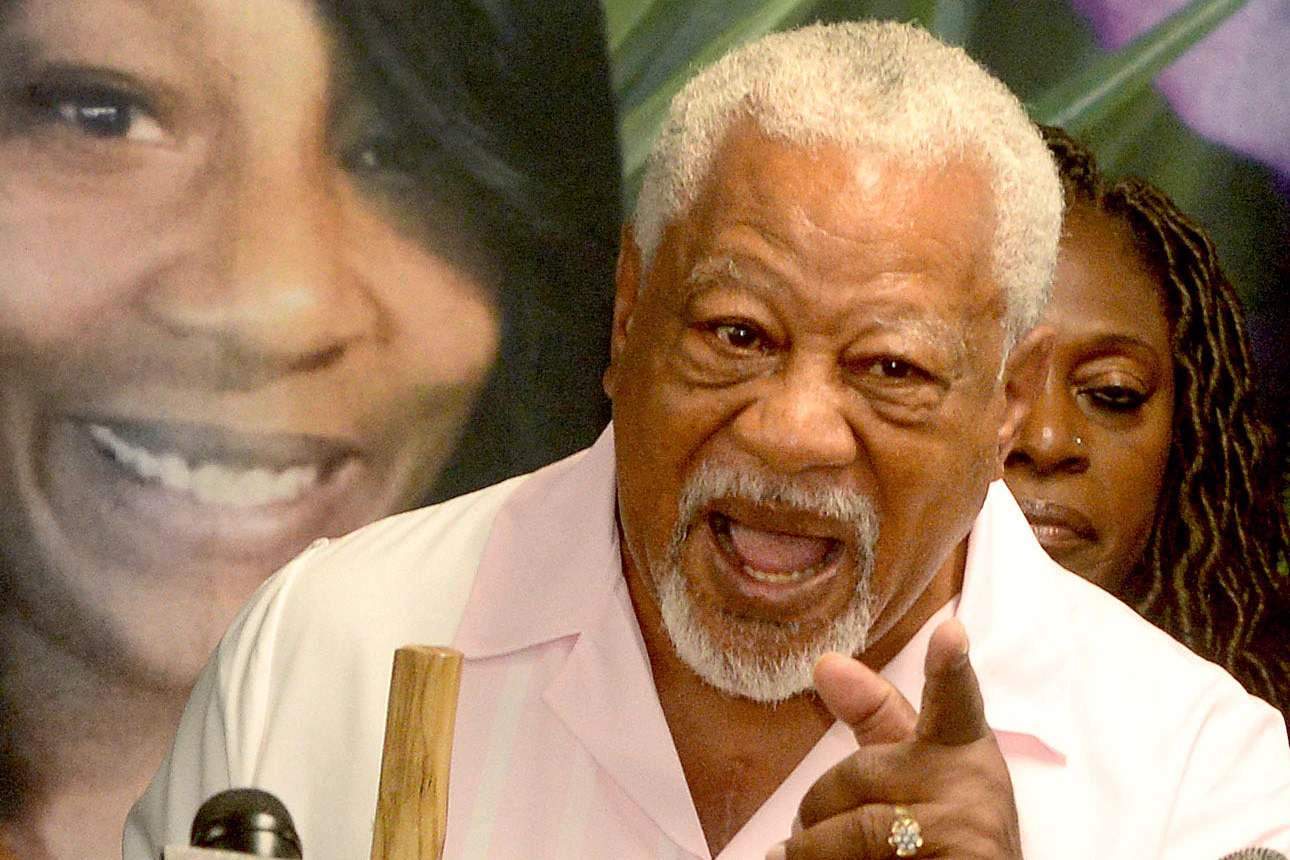
James Wilburn speaking at a podium with family members beside him during a press conference about Sonya Massey
How the System Protected Its Own
The machinery of insulation began working before the body was cold.
The Sangamon County deputy sheriff's union filed a grievance on Grayson's behalf after he was fired, contesting the termination through standard labor channels. The move was procedural — unions file grievances for terminated officers as a matter of course — but the symbolism was unmistakable: even after killing an unarmed woman in her own home, the institutional apparatus of policing moved to protect the officer's employment rights. The union quietly dropped the grievance on July 30, 2024, under mounting public pressure.
The Department of Justice opened a civil rights investigation into the Sangamon County Sheriff's Office in November 2024, following a formal request from the Massey Commission — a body established by Sangamon County officials in the wake of the killing. The investigation concluded in January 2025 with an agreement on "policing upgrades." Massey's cousin Sontae Massey, speaking for the family, said there was "an overwhelming sentiment in our community among a vast majority of individuals that this investigation has concluded too quickly, that the focus was too narrow, and that a broader overview would lead to a finding of discrimination."
The DOJ did not find systemic discrimination. The family and community believed it was there. The gap between those two positions is where the system lives.
In August 2025, Illinois Governor JB Pritzker signed "Sonya Massey's Law," requiring police departments to disclose the full employment histories of prospective recruits. The law targets the "wandering officer" problem that put Grayson in Massey's home. Pritzker said its goal was to stop officers from "moving quietly from one department to another with red flags hidden in their past." The legislation was necessary because the existing system — a patchwork of non-reporting agencies, unshared internal files, and no state-level audit mechanism — allowed Grayson to accumulate a decade of misconduct without consequence.
Sheriff Paula Crouch, who replaced Campbell after his forced retirement, said she would implement more thorough background checks including in-person visits to prior employers. The admission that such basic steps were not already standard practice is itself an indictment.
The System Moves Again
As of this reporting, Sean Grayson's legal team has petitioned the Illinois Prisoner Review Board for medical release under the Joe Coleman Medical Release Act, which allows incarcerated individuals with qualifying medical conditions to seek early release. The basis is Grayson's worsening colon cancer — the same diagnosis his attorneys used to argue for leniency at sentencing, where Judge Wykoff cited the "tragedy" of Grayson's medical condition even while imposing the maximum sentence.
The hearing is scheduled for July 31, 2026, in Springfield — the same city where Massey was killed, in the same county that hired and deployed her killer. The Prisoner Review Board has closed the proceedings to the public.
Less than six months into a 20-year sentence. The man who shot Sonya Massey in the face, told his partner she was "done" and a "headshot," refused to render aid, activated his body camera only after the killing — this man may walk free on a medical technicality before the year is out. The family that called for a broader investigation and was told the DOJ's review was sufficient will now watch the same system weigh the value of their daughter's life against her killer's cancer prognosis.
What Sonya Massey's Death Reveals About American Policing
The details of Sonya Massey's killing are specific and horrifying. The structural conditions that produced it are routine.
Sonya Massey's mother called 911 the day before the shooting to report that her daughter was experiencing a mental health crisis. She told the dispatcher her daughter was "sporadic" and having a "mental breakdown" but was "not a danger to herself" and "not a danger to me." Then she said the words that should haunt every person who has ever called 911 in this country:
"Don't send any combative policemen who are prejudiced, please. I'm scared of the police."
The system sent Sean Grayson.
This is the fundamental tension at the heart of American policing: the institutions that claim to protect are, for large segments of the population, the primary source of danger. Sonya Massey's mother understood this intuitively. She named the fear. The system demonstrated why that fear was justified. In Arkansas, the death of Tripp Brazeale exposed another cover-up for a child killer shielded by institutional silence. In Mississippi, Rankin County's "Goon Squad" — a group of deputies who tortured two Black men in a racially motivated attack — showed that the rot extends far beyond any single officer or department.
Grayson was not an anomaly produced by a single bad hire. He was a product of a culture that trains officers to approach every encounter as a potential threat scenario — a militarized mindset that converts mundane domestic calls into tactical operations. A woman holding a pot of water in her own kitchen becomes a threat assessment. A religious invocation — "I rebuke you in the name of Jesus" — becomes a provocation requiring lethal force. The officer's training, his conditioning, his entire occupational framework told him to see a threat, and so he saw one. That is not individual pathology. That is institutional design.
The "warrior cop" paradigm that has colonized American policing over the past three decades does not produce officers who de-escalate. It produces officers who dominate, who command, who escalate to force at the first sign of non-compliance — where non-compliance is defined so loosely that it can include holding a pot of water, quoting scripture, or existing while Black in your own home. This training is not an accident. It is funded, promoted, and defended by a law enforcement establishment that has staked its identity on the premise that officers operate in an environment of constant lethal threat, even when the evidence consistently shows otherwise.
The legal system routinely converts even the most brazen killings of Black Americans into exercises in self-defense theater. A South Carolina jury acquitted a store owner who killed 14-year-old Cyrus Carmack over a dispute about bottled water — another case where the victim's existence was deemed a threat justifying lethal force. Police unions file grievances and negotiate protections into collective bargaining agreements. District attorneys negotiate plea deals to lesser charges rather than pursue the full weight of the law. DOJ investigations produce narrow findings and consent decrees that change little. Sentencing guidelines and parole boards chip away at whatever accountability manages to survive the gauntlet. And medical release petitions — filed on behalf of the killer, never on behalf of the victim — wait in the wings as a final failsafe.
Sonya Massey called for help. The state sent her killer. The state knew his history — the Army discharge, the DUIs, the false arrest, the high-speed chase, the complaints, the supervisors who considered firing him. The state trained him, armed him, deployed him, and then moved to protect him after he pulled the trigger. The state is now being asked to release him on medical grounds less than six months after a jury said 20 years.
Her mother was scared of the police. She had every reason to be.
Sources & Methodology(9 sources)
- Wikipedia — Murder of Sonya MasseyNews Article
Methodology
This article was reported using court records, body camera footage descriptions, investigative reporting from the Invisible Institute, DOJ public statements, and coverage from USA Today, CBS Chicago, NPR Illinois, CNN, and the State Journal-Register. All factual claims are cross-referenced against multiple independent sources.
Filed Under
Frequently Asked Questions
- Who was Sonya Massey?
- Sonya Lynaye Massey was a 36-year-old unarmed Black woman and mother of two who was shot and killed by Sangamon County Deputy Sean Grayson inside her home in Springfield, Illinois on July 6, 2024, after calling 911 to report a suspected prowler.
- What was Sean Grayson convicted of?
- Grayson was convicted of second-degree murder on October 29, 2025, and sentenced to the maximum of 20 years in prison on January 29, 2026. The jury acquitted on first-degree murder charges.
- Why is Grayson seeking medical release?
- Grayson's legal team has petitioned the Illinois Prisoner Review Board for release under the Joe Coleman Medical Release Act, citing his stage 3 colon cancer diagnosis. The hearing is scheduled for July 31, 2026.
- What was Grayson's history before killing Sonya Massey?
- Grayson worked for six police departments in four years, was discharged from the Army for serious misconduct, had two DUI convictions, falsely arrested a man by fabricating evidence, and led an unauthorized high-speed chase at 110 mph. None of these red flags prevented his hiring.
- What legislative changes resulted from Massey's death?
- Illinois passed 'Sonya Massey's Law' in 2025, requiring police departments to disclose the employment histories of recruits to prevent 'wandering officers' with misconduct records from cycling between departments.