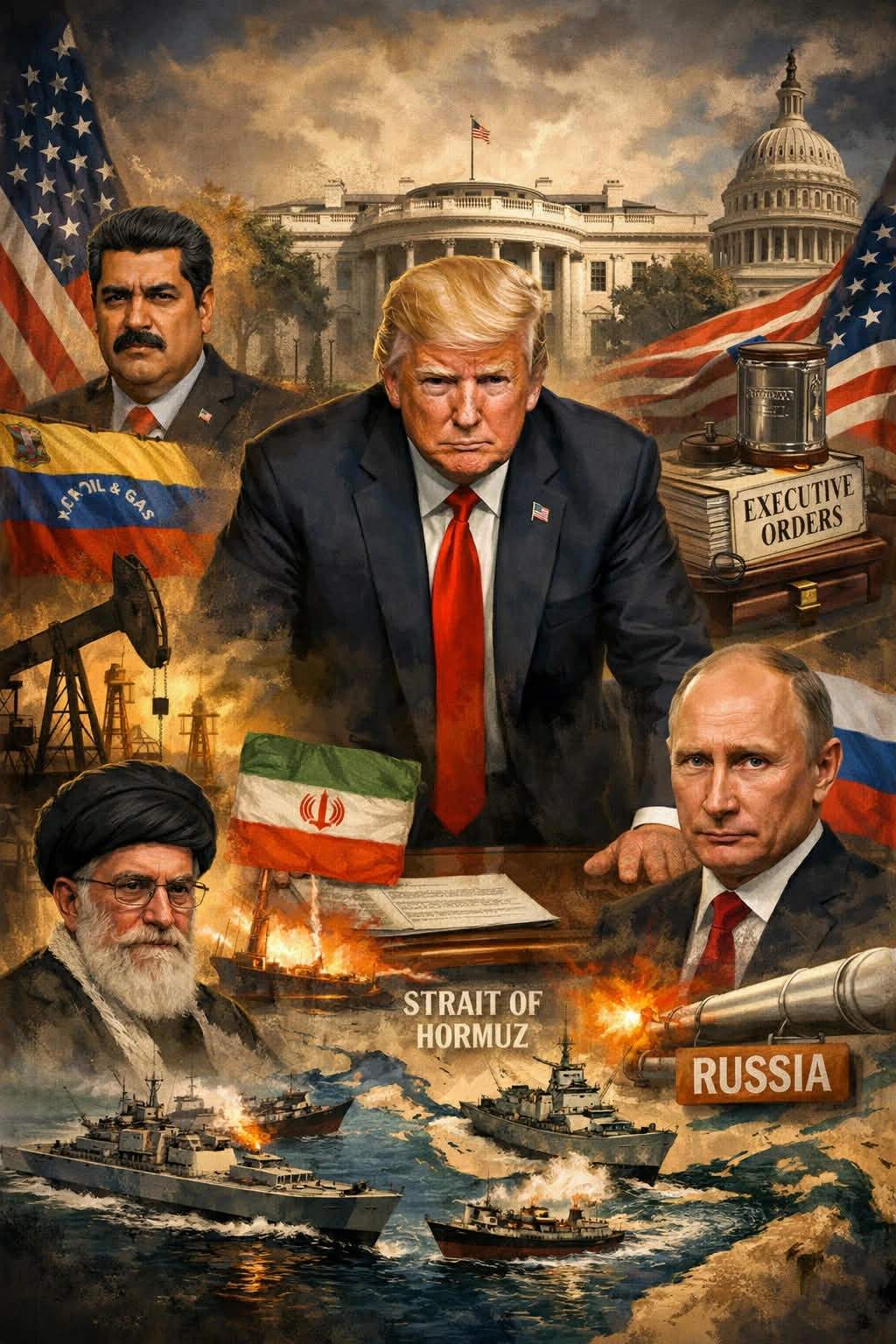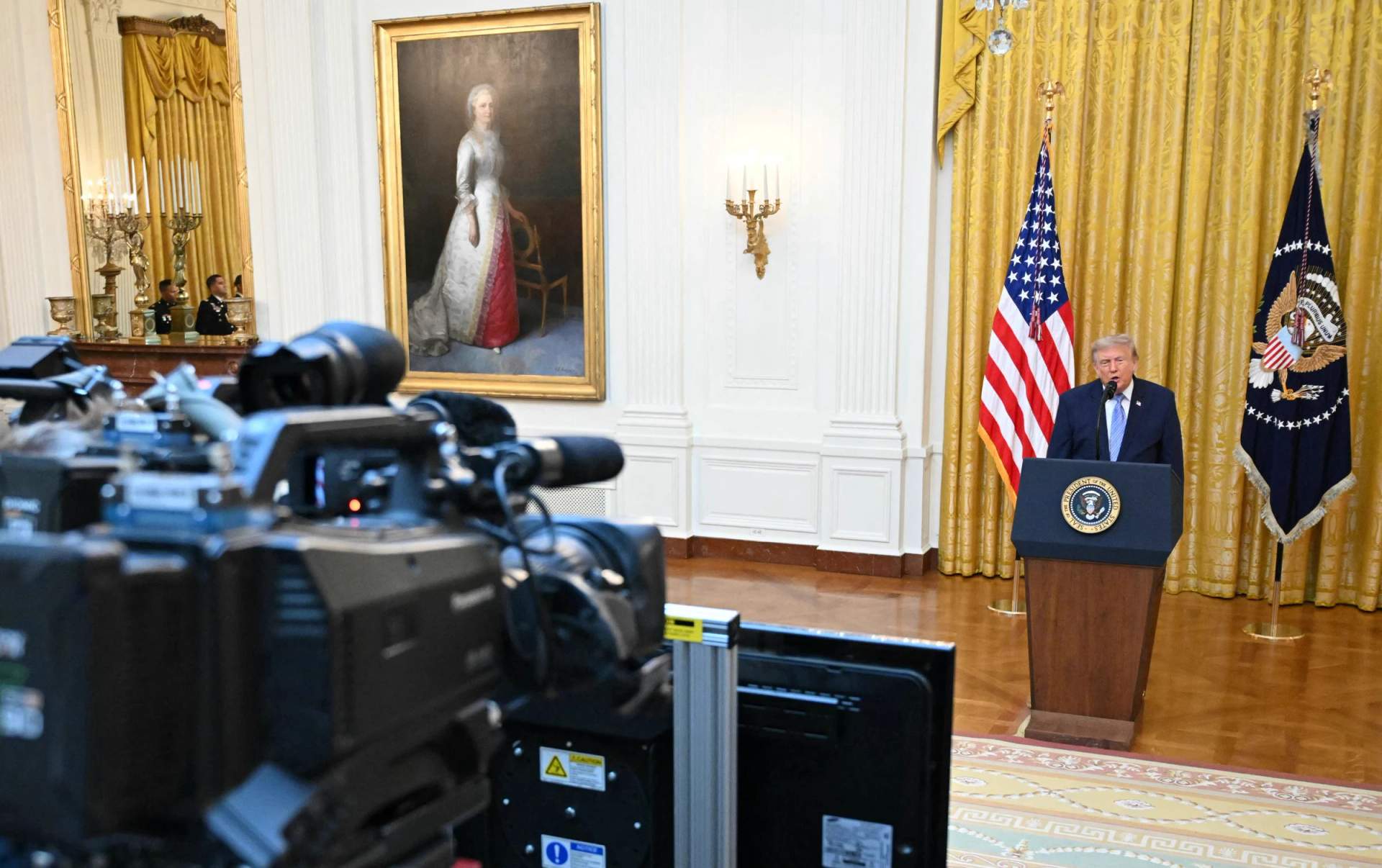
On July 16, 2026, Donald Trump stood in the East Room of the White House and delivered a primetime address on "election security" — a speech built on debunked fraud claims, anchored in conspiracy theory, and delivered with the theatrical grievance that has become his signature mode of governance. ABC and NBC chose not to air it live. CNN declined as well. CBS ran most of it, but with disclaimers about the president's history of falsehoods.
Trump's response was not to contest the networks' editorial judgment in the marketplace of ideas. It was to call for the revocation of their broadcast licenses — using the coercive power of the state to punish press outlets for the crime of editorial independence.
*"A network that does that should mean a revocation of their licenses. This can't be allowed to continue." — Donald Trump, July 16, 2026
This is not a policy dispute. This is not a First Amendment debate between reasonable parties. This is the President of the United States deploying the threat of state regulatory destruction against media organizations that refused to amplify his propaganda in real time. By any definition used in any political science textbook, it is authoritarian press intimidation.
The Mechanism: How the FCC Becomes a Weapon
Broadcast licenses in the United States are granted by the Federal Communications Commission — an independent regulatory agency that is, in theory, insulated from presidential pressure. The FCC does not "own" the airwaves; it manages them as a public trust. License renewals are typically pro forma affairs, granted on the basis that broadcasters serve the "public interest, convenience, and necessity."
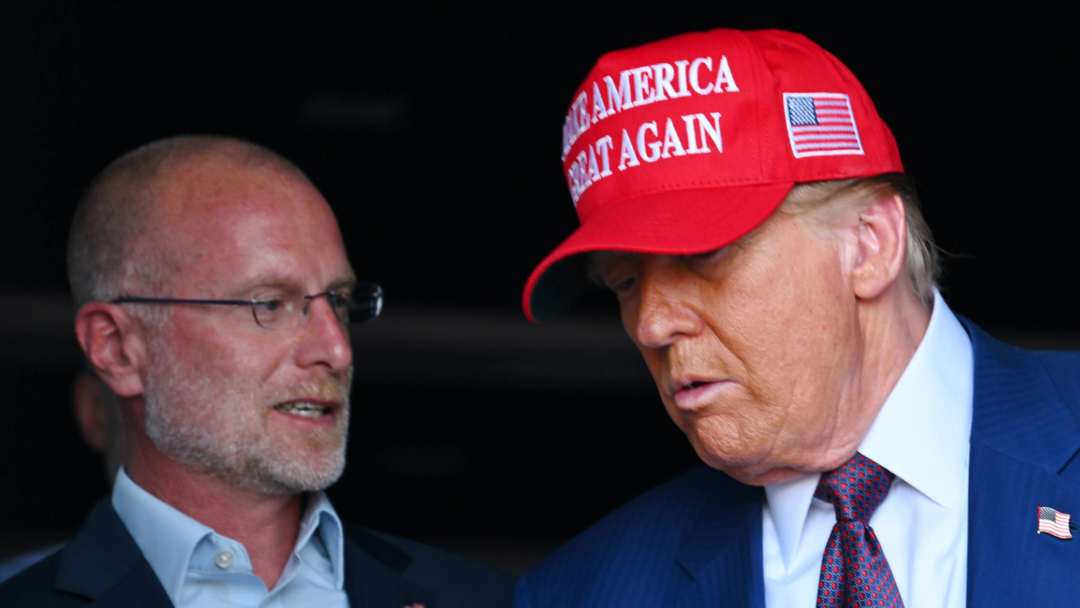
Under Trump's FCC chairman Brendan Carr, this system has been inverted. Carr — a Trump appointee who has consistently aligned his regulatory actions with the president's political grievances — has transformed the FCC from a communications regulator into an instrument of media discipline.
In April 2026, the FCC filed an order to conduct an early license review of eight ABC-owned stations operated by Disney. The move was described by the National Association of Broadcasters as "nearly unprecedented." The licenses were not due to expire until 2028 at the earliest. The stated rationale was a long-running diversity investigation — but the timing was unmistakable: the review was launched one day after Trump demanded that ABC fire late-night host Jimmy Kimmel over a joke about First Lady Melania Trump.
Carr has denied that the review resulted from White House "pressure" or "suggestion." Nobody believes him.
The FCC has also launched broader probes into broadcasters, alleging that their editorial practices violate public interest standards — a vague and expansive charge that could be weaponized against any outlet that displeases the administration.
The Bannon Signal: Eliminationist Rhetoric Goes Mainstream
Trump's demand for license revocation was amplified by Steve Bannon, his former chief strategist and the architect of much of the administration's media war. Bannon has publicly called for pulling broadcast licenses — framing the argument not as a regulatory matter but as a political imperative.
The Bannon-Trump feedback loop on press suppression operates in plain sight:
- Trump makes a demand (fire Kimmel, revoke licenses, punish networks)
- Bannon amplifies the demand through his media platform, framing it as a righteous crusade
- Carr at the FCC translates the political demand into regulatory action
- Trump cites the regulatory action as validation of the original demand
The circularity is the point. It creates the appearance of institutional process serving political will — the veneer of legality over authoritarian exercise.
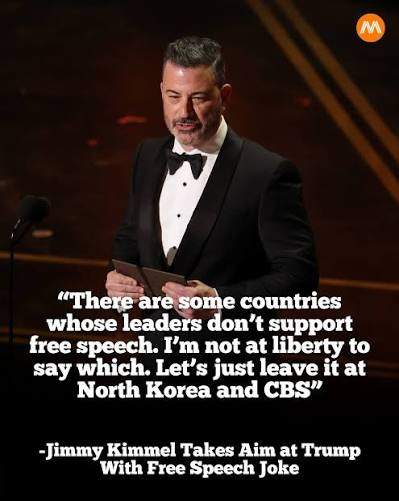
Jimmy Kimmel makes a joke about Trumps media supression: "There are some countries whose leaders don't support free speech. I'm not at liberty to say which. Let's just leave it at North Korea and CBS"
The Kimmel Precedent: A Joke as Justification for Regulatory Retaliation
The chain of events that led to the ABC license review is worth examining in detail, because it reveals how trivial the pretext can be:
- Jimmy Kimmel told a joke about Melania Trump on his late-night show
- Trump publicly demanded that ABC fire Kimmel, calling the joke unacceptable
- The next day, the FCC launched an early license review of eight ABC stations
- Carr claimed the review was unrelated to Trump's demand
This sequence — presidential grievance, followed by regulatory retaliation, followed by implausible denials — is the playbook of authoritarian governments worldwide. In Hungary, Viktor Orbán uses media regulators to discipline independent outlets. In Turkey, Recep Erdoğan has used licensing to shutter opposition media. In Russia, the pattern is so familiar it barely registers as news anymore.
Now it is the pattern in the United States.
The Corporate Media Contradiction: Who Owns the "Free" Press?
The irony of Trump's threats against ABC and NBC is that both networks are owned by massive corporations that have spent decades cultivating relationships with power:
- ABC is owned by Disney, the $200 billion entertainment conglomerate
- NBC is owned by Comcast, the $160 billion telecommunications empire
These are not radical independent outlets speaking truth to power. They are corporate media institutions that are, by default, aligned with the interests of capital. The fact that even they are being targeted for regulatory destruction should alarm anyone who cares about press freedom — because it signals that the administration's ambition is not to discipline a few hostile outlets but to establish the principle that all media operate at the pleasure of the executive.
As Chomsky and Herman documented in Manufacturing Consent, the dominant media in the United States already self-censor to serve the interests of state and corporate power. The propaganda model filters news through five screens: ownership, advertising, sourcing, flak, and anti-communist ideology. The system is designed to produce obedient journalism.
Trump's demands go further: they require not just obedience but performance — live amplification of his speech, unfiltered by editorial judgment, on pain of regulatory destruction. The corporate media's normal self-censorship is insufficient. Active propaganda service is required.
The Legal Reality: The President Cannot Revoke Licenses
Broadcast licenses are granted to stations, not networks. The FCC licenses individual local affiliates — WABC in New York, KNBC in Los Angeles, WRC in Washington. Revoking a network's "license" is not how the system works, because networks do not hold single blanket licenses.
Moreover, the FCC's authority to revoke a license is bounded by the First Amendment. The Supreme Court has repeatedly held that government regulation of broadcast content must be content-neutral. Revoking a license because a network declined to air a specific presidential address would be a content-based punishment — the kind of First Amendment violation that even this Supreme Court would struggle to justify.
But legal reality has never constrained Trump. The threat itself serves a purpose: it signals to every media organization in the country that antagonizing the president carries existential risk. You do not need to actually revoke licenses to produce a chilling effect. You only need to demonstrate the willingness to try.
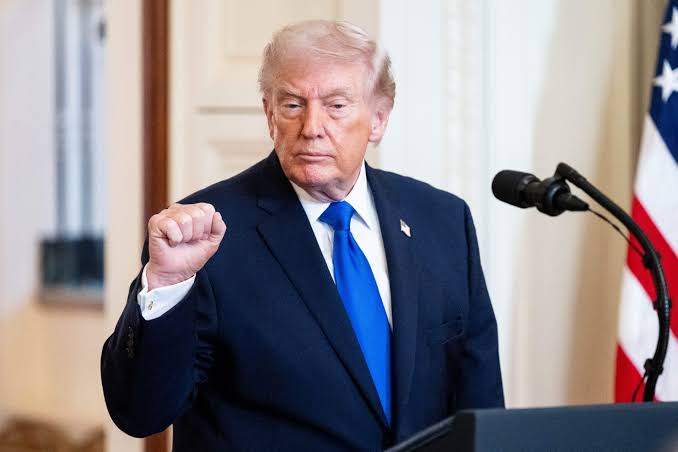
Donald Trump raises a fist after speaking about targeting media outlets who are critical of him - Feb 23, 2026
The Broader War: Press Freedom Under Siege
As we documented in our earlier investigation of how Trump's second presidency has weaponized the Justice Department against the press, the broadcast license threats are one front in a multi-pronged assault on journalistic independence:
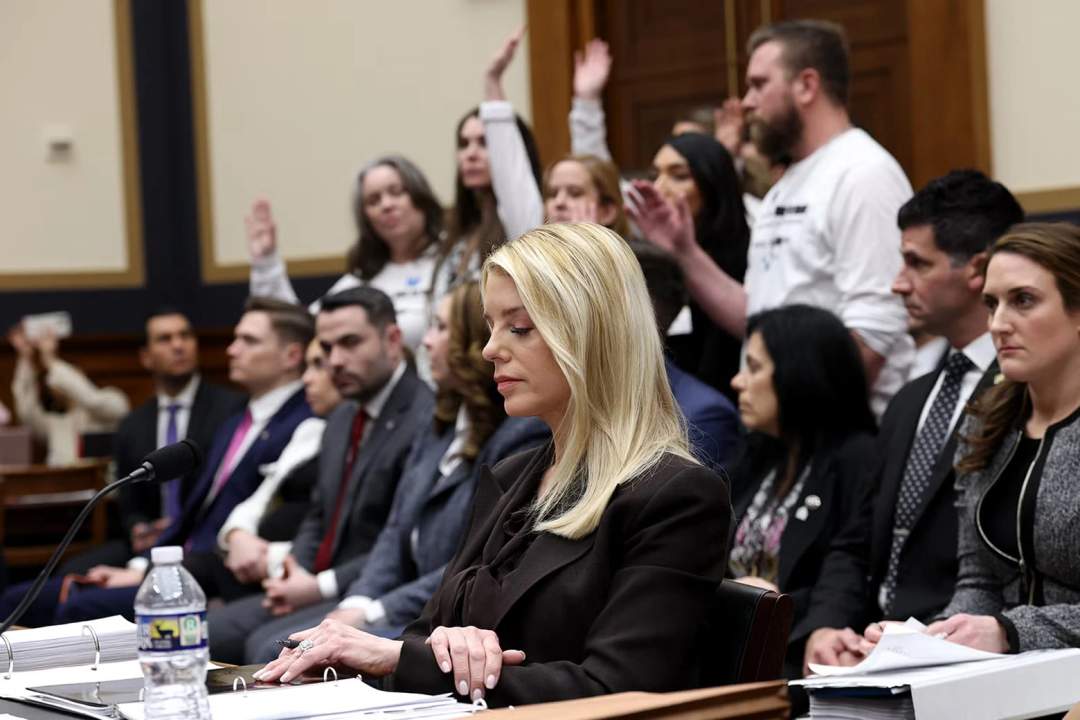
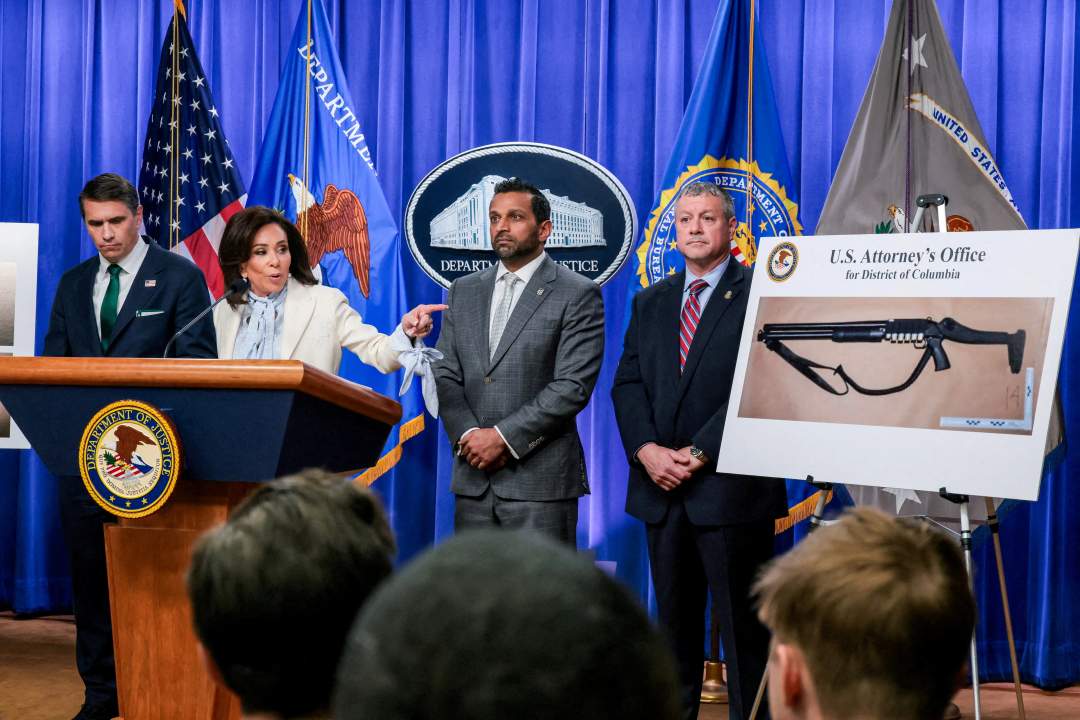
- The DOJ under Pam Bondi has pursued leaks investigations and targeted journalists
- The FCC under Carr has launched unprecedented license reviews
- Trump has publicly attacked journalists, called the press "the enemy of the people," and demanded specific personnel changes at networks
- Our earlier reporting on the FCC's broader campaign against broadcasters documented how the agency has been transformed into a political weapon
The individual fronts reinforce each other. Each act of intimidation normalizes the next. The cumulative effect is not just a chilled press but a fundamentally altered relationship between media and state — one in which editorial independence exists only at the sufferance of the executive.
Historical Parallels: Nixon's Enemies List, Trump's License Revocations
The comparison to Nixon is instructive but insufficient. Richard Nixon maintained an enemies list and used the IRS and FBI to harass political opponents and journalists. He wiretapped reporters. His administration conspired to block the publication of the Pentagon Papers.
But Nixon did not have an FCC chairman willing to launch unprecedented regulatory reviews on command. He did not have a former chief strategist publicly calling for the elimination of press outlets. He did not have a social media platform from which to mobilize millions of followers against specific journalists by name.
The technological and institutional tools available to Trump exceed anything Nixon possessed. The ambition is also greater. Nixon wanted to harass unfavorable coverage. Trump wants to establish a principle that unfavorable coverage is itself a regulatory violation.
Who Benefits: The Autocrat's Media Landscape
Consider the media landscape that would result if Trump's threats were carried to their logical conclusion:
- Networks that air Trump's speeches live and without commentary: safe
- Networks that air speeches with fact-checking disclaimers (as CBS did): at risk
- Networks that decline to air speeches: targeted for destruction
- Journalists who investigate the administration: prosecuted
The result is not state media in the formal sense — there is no Ministry of Truth, no explicit censorship bureau. Instead, it is a media ecosystem that has been disciplined into self-censorship so thoroughly that formal censorship becomes unnecessary. The networks would pre-empt their schedules for every presidential address, run every statement without disclaimers, and avoid investigations that might draw regulatory retaliation.
Chomsky called this manufacturing consent. The Trump administration is manufacturing obedience.
The Resistance: Why This Moment Matters
The press is not without defenses. The First Amendment remains the law of the land. Courts have blocked prior attempts to regulate broadcast content on political grounds. The National Association of Broadcasters — not exactly a radical free press organization — has pushed back against the FCC's unprecedented reviews. Journalism organizations from the Committee to Protect Journalists to the Reporters Committee for Freedom of the Press have documented and condemned the campaign.
But institutional defenses require institutional will — and the corporate media's will has always been weakest when the threat comes from the right. Disney and Comcast have the legal resources to fight license reviews. Whether they have the courage is another question.
The test is now. If ABC and NBC capitulate — if they begin airing every presidential address live, without disclaimers, without editorial judgment — the precedent is set. If they fight, the legal battle itself becomes a bulwark against future intimidation.
The Bottom Line
Donald Trump used the East Room of the White House to demand that television networks air his propaganda in real time, and when they declined, he called for the destruction of their broadcast licenses. His FCC chairman, appointed to an independent regulatory agency, has already launched unprecedented reviews of stations owned by a network whose late-night host told a joke the president didn't like.
This is not politics as usual. It is not a First Amendment test case with reasonable arguments on both sides. It is a president using state power to punish the press for editorial decisions — the defining characteristic of authoritarian media control in every country where it has been implemented.
The fact that it is happening in the United States, in 2026, with the full support of a compliant regulatory agency and amplified by a former White House strategist, should terrify every person who believes that a free press is a prerequisite for a free society.
The airwaves belong to the public. The licenses are held in trust. The press is free — or it isn't.
Trump is making his position clear. The question is whether the press will make theirs equally clear.
Sources & Methodology(6 sources)
Methodology
Reporting based on official statements from Trump's primetime address, FCC filings and Brendan Carr statements, analysis from POLITICO, Forbes, Time, Washington Post, and USA Today, and NAB commentary on unprecedented license reviews.
Filed Under
Frequently Asked Questions
- Can the president actually revoke broadcast licenses?
- Broadcast licenses are granted to individual stations, not networks, and are managed by the FCC — an independent agency. Revoking licenses based on editorial decisions would likely violate the First Amendment. The threat itself, however, produces a chilling effect even if not carried out.
- What is the FCC's connection to the Kimmel joke?
- The FCC launched an early license review of eight ABC stations one day after Trump demanded ABC fire Jimmy Kimmel over a joke about Melania Trump. The review was 'nearly unprecedented' per the NAB.
- Who owns ABC and NBC?
- ABC is owned by Disney ($200 billion conglomerate). NBC is owned by Comcast ($160 billion telecommunications empire). Both are massive corporate media institutions.
- What did other networks do?
- CNN also did not air the speech live. CBS ran most of it but with disclaimers about Trump's history of false election claims. Even Fox News aired disclaimers about the president's claims on voting machines.