

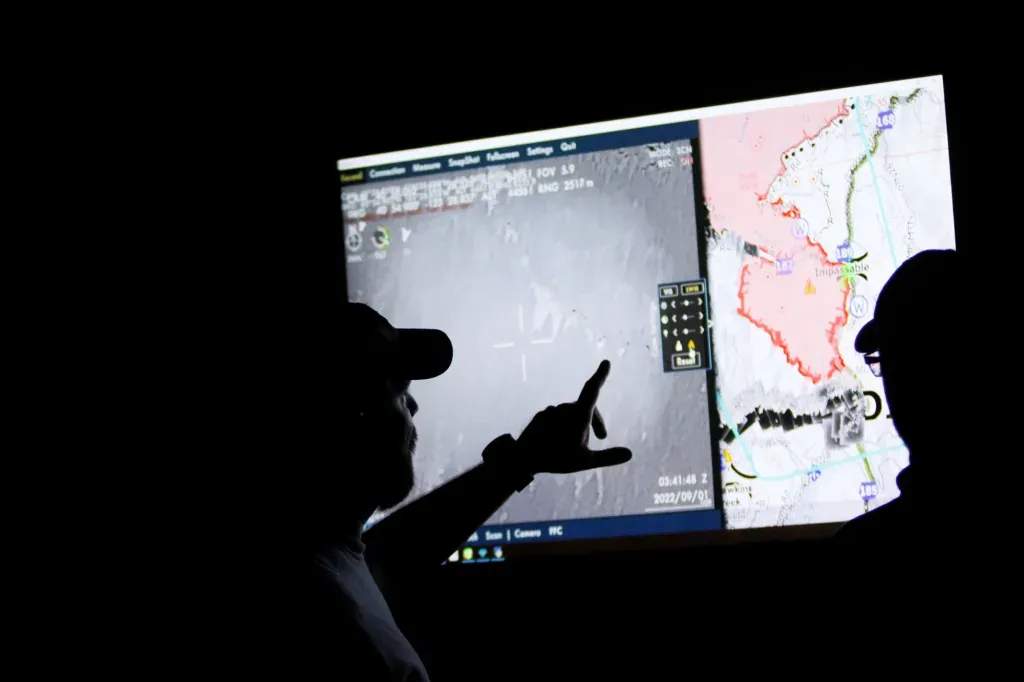
Cal Fire has recently implemented new technology that helps predict the direction of fires. This innovative system utilizes air resources and satellite imagery to provide real-time information to teams on the ground, aiding in fire suppression efforts.The use of technology in firefighting is not a new concept, but this particular advancement by Cal Fire is significant. By harnessing the power of air resources and satellite imagery, firefighters can now have access to critical information that can help them make informed decisions during firefighting operations.UntitledOne of the key advantages of this new technology is its ability to provide real-time data. In the past, firefighters had to rely on outdated maps and information that may not accurately represent the current situation on the ground. With this new system, they can receive up-to-date information about fire behavior, including wind patterns and fire spread predictions.This real-time data allows firefighters to adapt their strategies and tactics accordingly. They can anticipate how a fire might behave based on its current location, surrounding terrain, and weather conditions. Armed with this knowledge, they can make more effective decisions about where to allocate resources and how best to contain and suppress the fire.Furthermore, this technology enhances situational awareness for firefighters. It provides them with a comprehensive view of the fire’s progression and potential threats it poses to nearby communities or infrastructure. By having a clearer understanding of these factors, firefighters can prioritize their actions and respond swiftly to protect lives and property.In this context to its practical benefits during active firefighting operations, this new technology also has long-term implications for fire management. The data collected from these systems can be analyzed over time to identify trends in fire behavior patterns. This information can then be used for future planning purposes such as fuel reduction projects or determining areas at high risk for wildfires.Abnormally, Cal Fire’s implementation of this new technology is a significant step forward in improving wildfire response capabilities. By providing real-time information and enhancing situational awareness, firefighters are better equipped to combat wildfires and protect communities. With the increasing frequency and intensity of wildfires in recent years, advancements like this are crucial in mitigating the devastating impacts of these natural disasters.UntitledAs technology continues to advance, we can expect further innovations in wildfire prediction and response. It is encouraging to see organizations like Cal Fire embracing these advancements and utilizing them to improve their firefighting capabilities. With continued investment in research and development, we can hope for even more effective tools to combat wildfires in the future. Cal Fire Battalion Chief Jon Heggie wasn’t expecting much to worry about when a late summer fire erupted north of Santa Cruz, home to California’s moist and cool “asbestos forests.” This place doesn’t burn, he thought, with just three notable fires there in 70 years.Heggie’s job was to predict for the crews where the wildfire might go and when, working through calculations based on topography, weather and fuels — the “immutable” basics. For fire behavior analysts like Heggie, predictable and familiar are manageable, while weird and unexpected are synonyms for danger.UntitledBut that 2020 fire was anything but predictable.Around 3 a.m. on Aug. 16, ominous thunder cells formed over the region. Tens of thousands of lightning strikes rained down, creating a convulsion of fire that became the CZU Lightning Complex.By noon there were nearly two dozen fires burning, and not nearly enough people to handle them. Flames were roaring throughout the Coast Range in deep-shaded forests and waist-high ferns in sight of the Pacific Ocean. No one had ever seen anything like it. The blaze defied predictions and ran unchecked for a month. The fire spread to San Mateo County, burned through 86,000 acres, destroyed almost 1,500 structures and killed a fleeing resident.“It was astonishing to see that behavior and consumption of heavy fuels,” Heggie said. “Seeing the devastation was mind-boggling. Things were burning outside the norm. I hadn’t seen anything burn that intensely in my 30 years.”Almost as troubling was what this fire didn’t do — it didn’t back off at night.“We would have burning periods increase in the afternoon, and we saw continuous high-intensity burns in the night,” Heggie said. “That’s when we are supposed to make up ground. That didn’t happen.”
“Seeing the devastation was mind-boggling. Things were burning outside the norm. I hadn’t seen anything burn that intensely in my 30 years.” JON HEGGIE, CAL FIRE BATTALION CHIEF
That 2020 summer of fires, the worst in California history, recalibrated what veteran firefighters understand about fire behavior: Nothing is as it was.Intensified by climate change, especially warmer nights and longer droughts, California’s fires often morph into megafires, and even gigafires covering more than a million acres. U.S. wildfires have been four times larger and three times more frequent since 2000, according to University of Colorado researchers. And other scientists recently predicted that up to 52% more California forest acreage will burn in summertime over the next two decades because of the changing climate.As California now heads into its peak time for wildfires, even with last year’s quiet season and the end of its three-year drought, the specter of megafires hasn’t receded. Last winter’s record winter rains, rather than tamping down fire threats, have promoted lush growth, which provides more fuel for summer fires.Cal Fire officials warn that this year’s conditions are similar to the summer and fall of 2017 — when a rainy winter was followed by one of the state’s most destructive fire seasons, killing 47 people and destroying almost 11,000 structures.