Surveillance State Wins Another Round: Section 702 Gets Temporary Extension
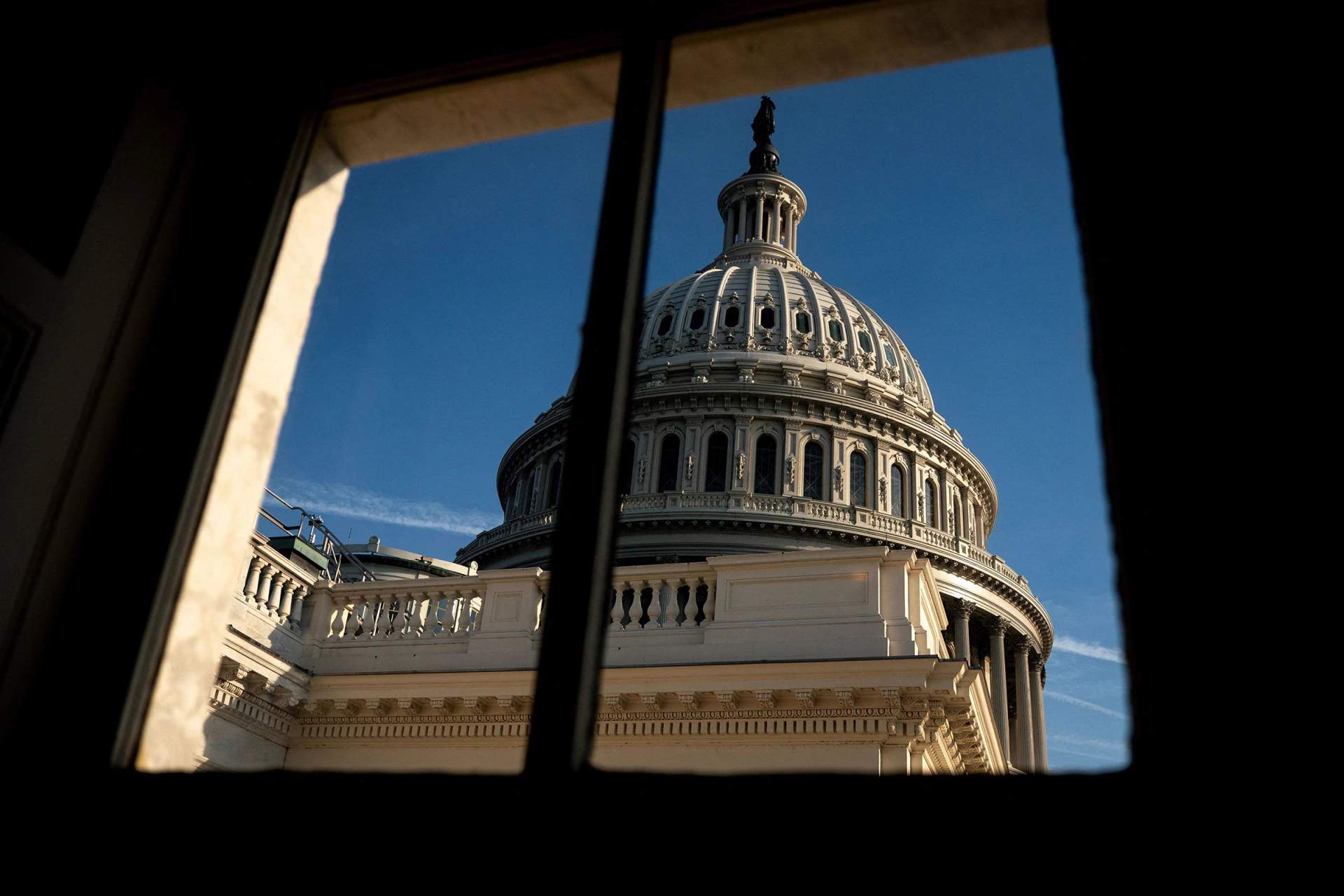
On April 17, 2026, Congress voted to extend Section 702 of the Foreign Intelligence Surveillance Act (FISA) for 10 days — until April 30. It was a temporary reprieve for a warrantless surveillance program that has long been criticized for allowing U.S. intelligence agencies to collect American citizens' data without a warrant.
The extension passed only after Republican leaders failed to secure both a five-year renewal and an 18-month renewal that President Donald Trump had demanded. Both proposals tanked in the early hours of Friday morning, leaving a stopgap measure as the only option.
The fight over Section 702 is one of those rare moments in Washington where the battle lines aren't partisan. It's surveillance-state supporters versus civil libertarians, and the divide cuts through both parties.
What Section 702 Does
Enacted in 2008 as an amendment to the Foreign Intelligence Surveillance Act of 1978, Section 702 authorized the ongoing interception of online communications involving alleged national security threats through "the targeting of non-United States persons."
Here's the problem: intercepting communications inevitably scoops up messages and data involving Americans.
As the U.S. government's own Privacy and Civil Liberties Oversight Board put it in a 2023 report, "Section 702 poses significant privacy and civil liberties risks, most notably from U.S. person queries and batch queries." The report cautioned that surveillance often extends to Americans "upstream" of nominal foreign targets.
The program allows the National Security Agency (NSA) and other intelligence services to collect data from foreigners outside the country — including their interactions with U.S. citizens. Collecting such data, which can include correspondence on email and telecommunications platforms, typically requires a warrant approved by a court.
Critics describe the process as a "backdoor search" that circumvents existing privacy laws.
Nearly 350,000 Targets, Countless Americans
Nearly 350,000 targets have their communications collected under FISA 702 authority. Many of those targets are in touch with Americans, whose calls, texts, and emails end up in the trove of information available to the federal government for review.
The NSA collects full conversations being conducted by and with targets overseas — including by and with Americans in the U.S. — and stores them in massive databases. The NSA then allows other agencies, including the FBI, to access untold amounts of that information.
The FBI, which supposedly focuses primarily on domestic matters and not overseas intelligence, "can query and even read" the U.S. side of international communication without a warrant and without informing targets that federal agents are pawing through their messages.
The "Secret Law" We're Not Allowed to Know
Sen. Ron Wyden (D-Ore.), who has opposed domestic surveillance activities for many years alongside Sen. Rand Paul (R-Ky.), says the situation is even worse than is widely understood.
Last month, Wyden warned that "there's another example of secret law related to Section 702, one that directly affects the privacy rights of Americans. For years, I have asked various administrations to declassify this matter. Thus far they have all refused… When it is eventually declassified, the American people will be stunned that it took so long and that Congress has been debating this authority with insufficient information."
The American people will be stunned.
Think about that for a moment. The senator who has been warning about surveillance abuses for years — and has a track record of being right — is telling us there's a secret legal interpretation of Section 702 that would shock the public if they knew about it. And Congress is being asked to reauthorize this program without that information.
Trump's Reversal: From "KILL FISA" to "Clean Reauthorization"
Just two years ago, then-presidential candidate Trump demanded that Congress "KILL FISA, IT WAS ILLEGALLY USED AGAINST ME, AND MANY OTHERS," referring to revelations that his campaign organization had been the subject of abusive government surveillance.
But now Trump is president, and the spies work for him. His views have changed accordingly.
"The fact is, whether you like FISA or not, it is extremely important to our Military," he argued earlier this month as he called for a "clean" (unamended) reauthorization of Section 702.
"I have spoken with many in our Military who say FISA is necessary in order to protect our Troops overseas, as well as our people here at home, from the threat of Foreign Terror Attacks," Trump wrote on Truth Social.
Even Trump, while calling for FISA 702 renewal, concedes that the law is dangerous. "While parts of FISA were illegally and unfortunately used against me in the Democrats' disgraceful Witch Hunt and Attack in the RUSSIA, RUSSIA, RUSSIA Hoax, and perhaps would be used against me in the future, I am willing to risk that as a Citizen in order to do what is right for our Country," he wrote on Truth Social.
Not Everybody Has Trump's Legal Team
But not everybody has Donald Trump's legal team, or his faith that the tradeoff between the law's risks and rewards is worthwhile. Many people view the misuse of surveillance power in domestic political squabbles as further evidence that the government needs to be stripped of some of its toys.
This is where the battle lines are drawn.
Progressive Rep. Ro Khanna (D–Calif.) insists that "everyone who loves the constitution must vote no" on FISA extension, echoing libertarian-leaning Rep. Thomas Massie's (R-Ky.) vow of "no FISA reauthorization without a warrant requirement for US citizens!"
Republican Congressman Thomas Massie has been a regular critic of Trump. "I will be voting NO on final passage of the FISA 702 Reauthorization Bill if it does not include a warrant provision and other reforms to protect US citizens' right to privacy," he wrote ahead of the House vote.
Oversight Gutted, Abuses Ignored
The Cato Institute's Patrick G. Eddington summarized the debate over Section 702:
"Congress is being asked to grant a clean 18-month reauthorization based on classified threat vignettes produced by the agencies seeking reauthorization, evaluated by an oversight board that has been politically gutted, with the internal compliance watchdog that would catch abuses abolished, in a context where sensitive FBI searches of Americans' communications tripled last year with no explanation, while a senator with an excellent predictive track record on surveillance abuses warns that the Section 702 program is operating under a secret legal interpretation that would 'stun' the American public if declassified."
That's the reality:
- Classified threat vignettes from the agencies that benefit from surveillance
- An oversight board that Trump gutted last year
- Internal compliance watchdogs abolished
- FBI searches of Americans' communications tripled last year with no explanation
- A secret legal interpretation that would "stun" the American public
And Congress is being asked to reauthorize this without reforms.
The Stakes
If lawmakers are unable to reach a compromise by April 30 and FISA 702 is allowed to lapse, intelligence collection could continue but would likely be subject to lawsuits from the technology and telecommunications companies who are compelled to provide the communications to the government.
The intelligence community has argued that reforms would inhibit the efficacy of the tool and endanger national security. Supporters point to the program helping to thwart a planned terrorist attack at a 2024 Taylor Swift concert in Austria.
But supporters — including President Biden when he was in office, and President Trump now — maintain that reforming the provision would lead to a lapse in national security.
The question is: at what cost?
What Comes Next?
The House and Senate both left town on Friday after advancing the short-term extension. Leaders in both chambers will have to resume negotiations when they return to Washington next week.
And they'll have to contend with members on both sides of the aisle who are calling for greater protection of U.S. citizens' privacy.
Reps. Jim Himes (D-Conn.), Jamie Raskin (D-Md.), and Jim McGovern (D-Mass.), the top Democrats on the House Intelligence, Judiciary, and Rules committees, respectively, issued a joint statement on Friday slamming their Republican colleagues for trying to jam through a five-year extension in the middle of the night.
"In agreeing to a two-week extension of this authority, Democrats have made clear that this will need to be a true bipartisan process, and they must work with us in good faith to reach an agreement that puts in place significant reforms and safeguards," the lawmakers wrote.
The extension buys 10 more days. The surveillance state gets another reprieve. Civil libertarians get another chance to fight for reforms.
But the fundamental question remains: should the U.S. government be allowed to collect Americans' communications without a warrant, stored in massive databases, searchable by the FBI without judicial oversight?
Sen. Wyden's warning about the "secret law" hangs over this debate. The American people will be stunned when they finally learn what's been done in their name.
The question is whether Congress will let them find out before voting to reauthorize the program again.
Sources & Methodology(4 sources)
April 24, 2026 - Reason article on Section 702's temporary extension to April 30, with detailed analysis of civil liberties concerns, Trump's reversal from opponent to supporter, FBI searches tripling, and Sen. Wyden's warning about a 'secret law' aspect that would 'stun' the American public.
- CNBC — Three things to know about FISA Section 702: Congress passes short-term extensionNews Article
April 17, 2026 - CNBC report on Congress approving a short-term extension of Section 702, noting GOP hard-liners spiked five-year and 18-month proposals, Trump's call for a clean 18-month extension, and the need for reforms to protect Americans' privacy.
April 17, 2026 - NPR report on Section 702's 10-day extension, noting nearly 350,000 targets under the program, the long-running debate over requiring court approval for reviewing Americans' information, and the risk of lawsuits if the law lapses.
- Al Jazeera — US Congress extends controversial surveillance power under FISA for 10 daysNews Article
April 17, 2026 - Al Jazeera report on the temporary extension, describing Section 702 as a 'backdoor search' that circumvents existing privacy laws, with quotes from Senate Majority Leader John Thune and Rep. Thomas Massie opposing reauthorization without reforms.
Frequently Asked Questions
- What is Section 702 of FISA?
- Section 702 of the Foreign Intelligence Surveillance Act, enacted in 2008, authorizes the NSA and other intelligence agencies to intercept electronic communications of foreign nationals located outside the United States. The program inevitably scoops up communications involving Americans, which critics describe as a 'backdoor search' that circumvents existing privacy laws.
- What happened on April 17, 2026?
- Congress voted to extend Section 702 for 10 days until April 30. The extension passed after Republican leaders failed to secure both a five-year renewal and an 18-month renewal that President Trump had demanded. Both proposals were rejected by libertarian-leaning Republicans and privacy advocates in the early hours of Friday morning.
- Why is Section 702 controversial?
- Section 702 allows the government to collect Americans' communications without a warrant, stored in massive databases that the FBI can query without judicial oversight. The FBI's searches of Americans' communications tripled last year with no explanation. Sen. Ron Wyden warns of a 'secret law' aspect that would 'stun' the American public if declassified.
- What are the reform proposals?
- Civil libertarians from both parties, including Reps. Ro Khanna (D-Calif.) and Thomas Massie (R-Ky.), are demanding a warrant requirement for U.S. citizens' communications. They argue that the Fourth Amendment should apply to Americans whose data is collected under this program, regardless of whether they were the nominal target.
- What happens if Section 702 is not reauthorized by April 30?
- If Congress fails to reauthorize Section 702 by April 30, intelligence collection could continue but would likely be subject to lawsuits from technology and telecommunications companies compelled to provide communications to the government. The intelligence community argues this would endanger national security, while privacy advocates say it's necessary to restore oversight.