When Silicon Valley's Castles Come Under Fire
The first Molotov cocktail hit Sam Altman's $27 million Russian Hill mansion at 3:45 a.m. on Friday, April 10, 2026. The second came as a single gunshot fired from the passenger window of a passing sedan at 1:40 a.m. on Sunday, April 12.
In three days, the CEO of OpenAI — the face of artificial intelligence, the architect of the technology that everyone is told will either save humanity or destroy it — has seen his home attacked twice. The media is calling it "fear and anxiety about AI."
They're missing the point. This isn't about fear. This is about a bill coming due.
The Attacks: What Happened
Friday, April 10 — The Fire
Daniel Alejandro Moreno-Gama, a 20-year-old from Texas, allegedly threw a bottle containing a flaming rag at the metal gate of Altman's home on Chestnut Street. Security guards extinguished the fire. No one was hurt.
But Moreno-Gama didn't stop there. According to police reports, he then traveled to OpenAI's Mission Bay headquarters and threatened to burn down the building. He was arrested there.
He's been charged with attempted murder, arson, possession of an incendiary device, and making criminal threats. He's being held without bail.
Online writings attributed to him reveal a man convinced that AI poses an existential threat — that tech leaders are "gambling with our future" without sufficient morals. He'd engaged with groups like PauseAI but wasn't an organizer calling for violence. He was, by all accounts, someone who looked at the trajectory of AI and decided the future was worth fighting for.
Sunday, April 12 — The Gunshot
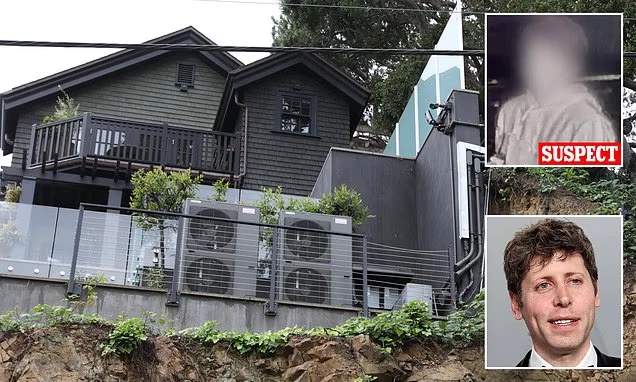
Two days later, a sedan with two people inside circled Altman's property, which stretches from Chestnut to Lombard Street. According to surveillance footage and security reports, the passenger extended an arm from the window and fired one round toward the Lombard Street side of the residence.
The car fled, but its license plate was captured. Police arrested Amanda Tom, 25 (the driver), and Muhamad Tarik Hussein, 23 (the passenger) nearby on Taylor Street. A search of their residence turned up three firearms. Both were booked on suspicion of negligent discharge of a firearm.
No injuries. No one was inside the targeted area at the time.
The Altman Response: "Fewer Explosions"
Hours after the Molotov attack, Altman posted a family photo on his personal blog. "I love them more than anything," he wrote, adding that he hoped the image might "dissuade the next person from throwing a Molotov cocktail at our house, no matter what they think about me."
He acknowledged underestimating the "power of words and narratives," referenced a critical New Yorker profile, and called for de-escalation: "While we have that debate, we should de-escalate the rhetoric and tactics and try to have fewer explosions in fewer homes, figuratively and literally."
The statement is revealing. Altman positions himself as a participant in a "debate" — a discourse about AI's future that's gotten too heated. But you don't throw Molotov cocktails at debates. You throw Molotov cocktails at power.
The people attacking his home aren't interested in de-escalation. They're interested in stopping something they believe is unstoppable.
In an unrelated move, Sam Altman also began to recently advocate for a 4 day work week and universal basic income.
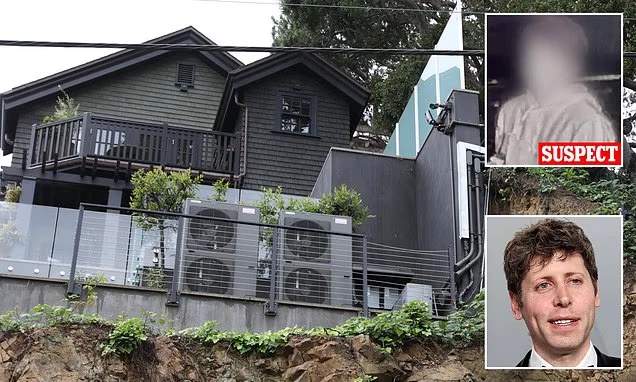
OpenAI CEO Sam Altman's home, as seen from Chestnut Street, was the target of an alleged incendiary device Friday morning. On Sunday, two people were detained after shots were allegedly fired near the home.
What the Media Misses: The Economics of the Backlash
The coverage has focused on "AI anxiety" — fear of job displacement, existential risk, technology moving too fast. But look closer at what's actually happening across the country.
Residential electricity prices are surging in key regions, driven largely by the explosive growth of data centers needed to train and run large language models. Communities from Virginia to Georgia to the Midwest are mounting resistance through zoning fights, moratoriums, and public hearings. They're pushing back against electricity costs, water consumption, land use, and the reality that these data centers provide minimal local economic benefits while draining local resources.
This isn't abstract fear about a future where machines take over. This is concrete anger about a present where working-class households are paying higher electric bills so that OpenAI can train the next model. This is resentment at being told that your job might disappear because a CEO decided to automate it — and that you should be grateful for the "progress."
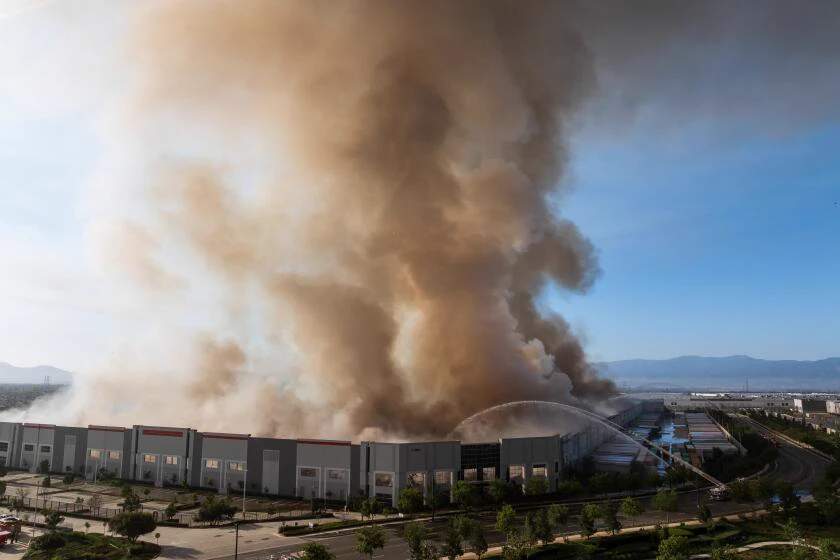
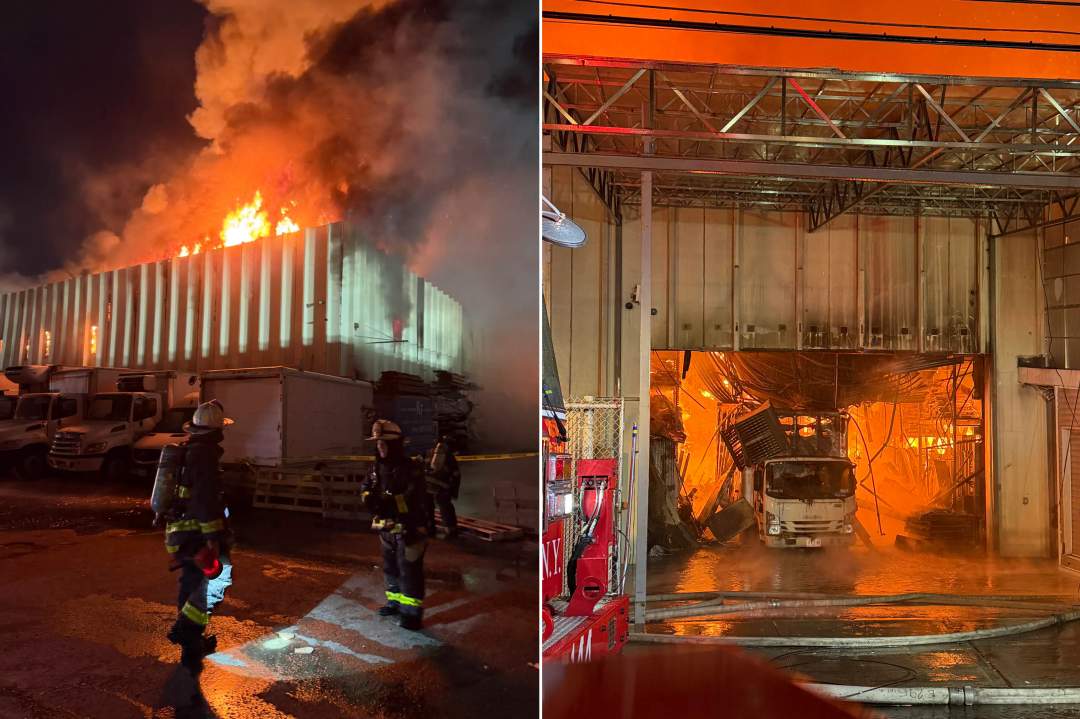
The attacks on Altman's home are connected to the fires at Amazon fulfillment centers and tractor-trailers, the warehouse blazes in Ontario and Queens, the lumber yard infernos in Ohio and Georgia. They're all expressions of the same phenomenon: the working class has found a new way to vote with the only currency that matters to the people who profit from their suffering.
The Architecture of a System Under Siege
Altman's home is worth $27 million. It stretches from Chestnut Street to Lombard Street in Russian Hill, one of San Francisco's wealthiest neighborhoods. It has security guards, surveillance cameras, metal gates.
It is a fortress. And twice in three days, it was breached — not by armies, but by individuals with gasoline, glass bottles, and a single gunshot.
What does it say about a system when its most powerful figures can't protect their own homes? What does it say when the CEO of the company that claims to be building the future can't stop a 20-year-old with a Molotov cocktail or a 23-year-old with a handgun?
The answer is uncomfortable: the system is losing its legitimacy.
People are no longer asking permission to be heard. They're no longer waiting for elections or protests that change nothing. They're taking direct action against the people and institutions they hold responsible for their suffering.
The Pitchforks Are Here
Altman wrote that he hoped a family photo would "dissuade the next person" from attacking. That's the belief of someone who thinks this is about him personally — that if people just saw him as a human being with a family, they'd stop.
But this isn't about Sam Altman the person. It's about Sam Altman the symbol of an industry that is gambling with the future while ordinary people pay the price. The attacks on his home are attacks on what he represents: a tech elite that is racing toward a future that leaves the working class behind, all while telling them it's for their own good.
The pitchforks aren't coming. They're already here.
The question is what happens next. Do we double down on a system that is increasingly under siege — more security, more surveillance, more distance between the haves and the have-nots? Or do we acknowledge that the backlash is a warning, that a system that requires fortresses to protect its leaders is a system that has failed?
The people attacking Altman's home aren't the problem. They're the symptom.
The problem is an economic order that has told millions of people that their lives don't matter, that their futures are disposable, that the profits of a few justify the suffering of many. And now those people are deciding that if the system won't listen to their words, maybe it will listen to fire.
The Verdict
Two attacks in 72 hours. A $27 million mansion breached twice by individuals with crude weapons. A CEO begging for de-escalation while the company he leads continues to accelerate a technology that threatens to upend the lives of millions.
This is what happens when the tensions of an unjust system reach their breaking point. This is what happens when people stop believing that the system works for them — and start trying to break it instead.
The working class has found a new way to vote.
Sam Altman's home is just one castle. The fires are spreading everywhere.
Sources & Methodology(7 sources)
April 12, 2026 - Reports on the second attack involving gunfire, arrests of Amanda Tom and Muhamad Tarik Hussein, and three firearms seized.
April 10, 2026 - Details on the first attack by Daniel Alejandro Moreno-Gama, threats to OpenAI headquarters, and OpenAI's response.
Comprehensive coverage of both attacks, Altman's blog response, and broader context of AI backlash and data center resistance.
San Francisco Police Department official statement on the April 12, 2026 shooting incident and arrests.
Altman's personal response posting family photo and calling for de-escalation after the Molotov attack.
- SF Chronicle - Gunfire Near Altman's HomeNews Article
Local reporting on the shooting incident, details on the Honda sedan, and Police Chief Derrick Lew's statement.
Original reporting on the Friday April 10, 2026 Molotov cocktail incident at Altman's Russian Hill residence.
Frequently Asked Questions
- Was Sam Altman hurt in the attacks?
- No. In both the April 10 Molotov cocktail attack and the April 12 shooting incident, no injuries were reported. Altman was not at home during either attack, and no one was inside the targeted areas when they occurred.
- Who was arrested for the attacks?
- For the Molotov cocktail attack on April 10, Daniel Alejandro Moreno-Gama, a 20-year-old from Texas, was arrested and charged with attempted murder, arson, and possession of an incendiary device. For the shooting on April 12, Amanda Tom, 25, and Muhamad Tarik Hussein, 23, were arrested and booked for negligent discharge of a firearm. Three firearms were seized from their residence.
- What was Sam Altman's response?
- Hours after the first attack, Altman posted a family photo on his personal blog, writing 'I love them more than anything' and hoping the image might 'dissuade the next person from throwing a Molotov cocktail at our house.' He called for de-escalation and 'fewer explosions in fewer homes, figuratively and literally.'
- Why are people attacking Altman's home?
- While the media frames this as 'AI anxiety' or fear about existential risk, there's a deeper economic dimension: working-class communities are resisting the infrastructure demands of AI — data centers that drive up electricity prices, consume water resources, and provide minimal local economic benefits. The attacks represent direct action against the tech elite perceived as gambling with ordinary people's futures.
- Is this part of a broader pattern?
- Yes. These attacks follow a wave of fires and sabotage targeting economic infrastructure across the United States — Amazon fulfillment centers, warehouses, lumber yards, and tractor-trailers. The common thread: the working class using direct action against institutions they believe are exploiting them, after conventional channels of protest and politics have failed.
- What has OpenAI said?
- OpenAI confirmed the Molotov attack in an emailed statement: 'Early this morning, someone threw a Molotov cocktail at Sam Altman's home and also made threats at our San Francisco headquarters. Thankfully, no one was hurt.' The company told employees there was no immediate threat and announced increased security around its Mission Bay offices.