

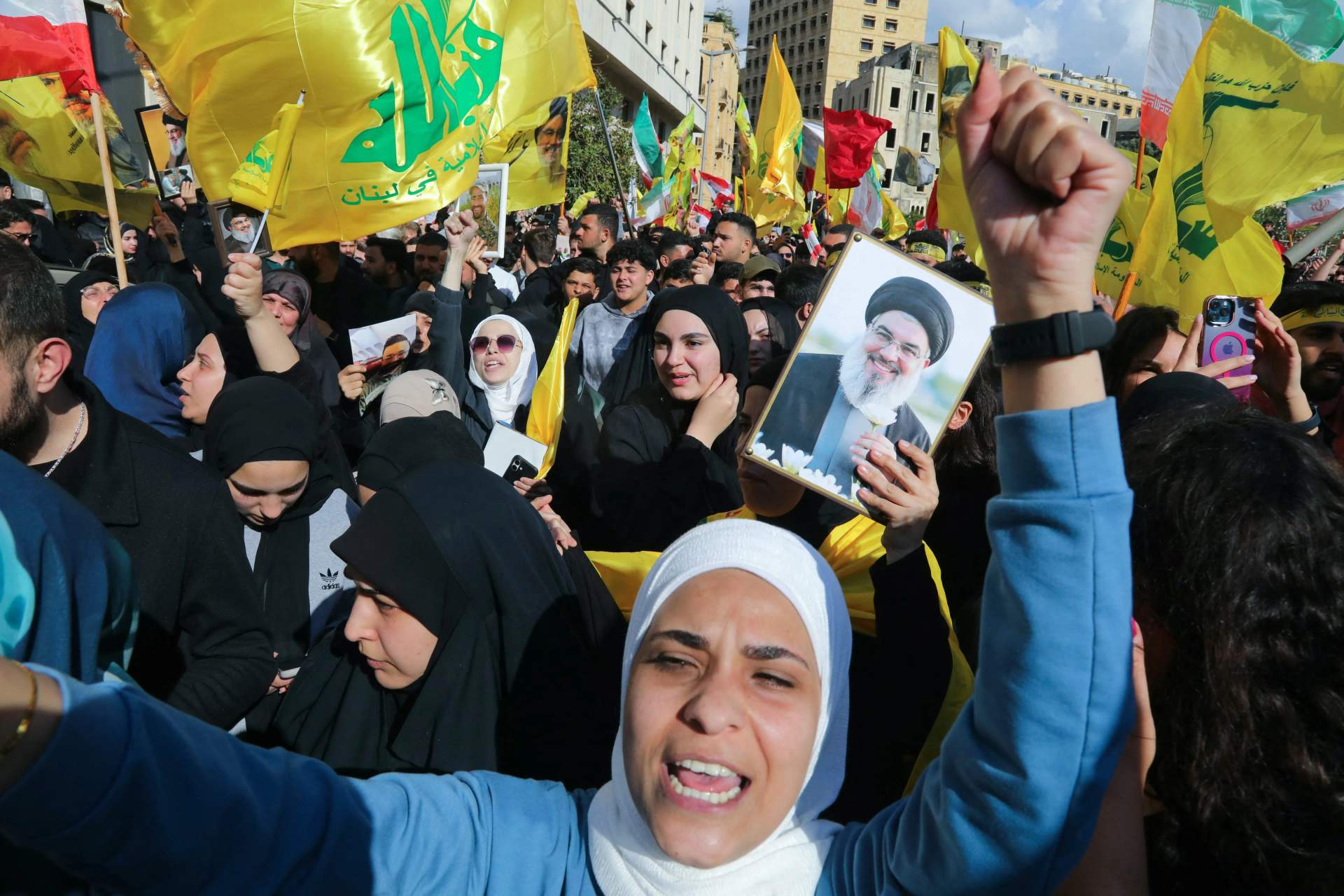
Hezbollah Rejects Israel-Lebanon Talks, Rocketing Northern Israel as Washington Negotiations Begin
As Lebanese and Israeli ambassadors sat down for "historic" direct talks in Washington on Tuesday, Hezbollah launched a barrage of rockets at 13 northern Israeli towns — a stark message that the Iran-backed group would not accept negotiations it called a "free concession" to Israel.
The Washington talks, brokered by the United States and attended by Secretary of State Marco Rubio, represented the first bilateral engagement between Lebanon and Israel since 1993. But the path to a breakthrough was clear from the start: Lebanon came seeking a ceasefire, while Israel came for Hezbollah's disarmament.
Hezbollah leader Naim Qassem had rejected the negotiations outright on Monday, calling them "futile" and urging the Lebanese government to "take a historic and heroic stance" by refusing to attend.
"You cannot conduct negotiations to stop the fighting if you are under fire and under pressure," Ali al-Miqdad, a Hezbollah member of the Lebanese parliament, told Al Jazeera.
The Washington Meeting: Two Different Agendas
The talks began Tuesday at 11am Eastern Time at the US Department of State headquarters in Washington, DC. The participants included Nada Hamadeh, Lebanon's ambassador to the US, and Yechiel Leiter, Israel's ambassador to the US, with Rubio and other US officials facilitating.
But the two sides approached the table from vastly different positions.
**Lebanon's position:** The Lebanese government framed the Washington meeting strictly as a "preliminary meeting" to secure a pause in military activity. Lebanese Culture Minister Ghassan Salameh acknowledged that Lebanon lacks significant leverage but stressed that the government was attempting to "reassert state authority" and separate the Lebanese file from the Iranian track.
President Joseph Aoun expressed hope that the meeting would "mark the beginning of the end of the suffering of the Lebanese people."
"The only solution lies in the Lebanese army re-deploying up to the internationally recognised border, and so being solely responsible for the security of the area and the safety of its residents, without the partnership of any other party," Aoun said.
**Israel's position:** Israel attended the talks with explicit instructions "not to agree to a ceasefire," according to Israeli media reports. Instead, Prime Minister Benjamin Netanyahu has demanded what he calls "the dismantling of Hezbollah's weapons, and a real peace agreement that will last for generations."
To achieve this, Israel is expected to propose dividing southern Lebanon into three security zones:
- **Zone 1** (0-8km from the border): Long-term Israeli military presence until Hezbollah is "fully dismantled"**Zone 2** (up to the Litani River): Continued Israeli operations with gradual handover to the Lebanese army**Zone 3** (North of the Litani River): Lebanese army assumes sole responsibility for disarming Hezbollah
Israeli officials have also floated formally reestablishing a "buffer zone" in southern Lebanon, a policy abandoned decades ago after facing resistance from Lebanese armed groups.
Hezbollah's Rejection: "Under Fire, There Is No Negotiation"
Hezbollah's opposition to the talks is rooted in both principle and strategy.
Qassem, the Hezbollah leader, called the negotiations a "ploy to pressure Hezbollah into laying down its weapons," noting that "Israel clearly states that the goal of these negotiations is to disarm Hezbollah."
"So, how can you go to negotiations whose objective is already clear?" Qassem asked in a televised speech Monday.
The group's objections go beyond the issue of disarmament. Hezbollah officials argue that:
- **Negotiating under fire is capitulation:** "You cannot conduct negotiations to stop the fighting if you are under fire and under pressure," al-Miqdad said.
- **There is no national consensus:** Qassem warned that the talks require a "Lebanese consensus" and accused the government of acting without the backing of the majority of the population.
- **Disarmament is an internal matter:** Hezbollah maintains that its weapons are a "Lebanese internal matter" that can only be discussed by Lebanese factions after a complete Israeli withdrawal.
- **The government has betrayed the resistance:** Hezbollah officials accused the Lebanese government of "backstabbing" by declaring Hezbollah's military activities illegal at the start of the war on March 2.
The group has unequivocally stated it will not abide by any agreements reached in Washington.
"We will not rest, stop or surrender," Qassem said. "Instead, we will let the battlefield speak for itself."
The Reality on the Ground
While diplomats met in Washington, the war in Lebanon raged on.
Hezbollah said it targeted 13 northern Israeli towns with rockets "with simultaneous rocket salvos" at 6:15pm Tuesday — shortly after the Washington talks began. In a statement, the group said it targeted Kiryat Shmona, Metula and 11 other towns.
The Israeli military, meanwhile, said its forces had completely surrounded the key southern town of Bint Jbeil. The town holds deep symbolic significance for Hezbollah as a site of resistance during the 2006 war.
Retired Lebanese Brigadier General Hassan Jouni, a military and strategic expert, told Al Jazeera that the outcome of the battle for Bint Jbeil would directly influence the negotiations in Washington.
"If the Israeli army completely controls Bint Jbeil, it will give them a strong signal to maintain high demands," Jouni said. "But if Hezbollah holds its ground and maintains its defensive immunity… Israel will be further convinced that subduing Hezbollah militarily will be very difficult."
The human cost of the war continues to mount. Since Israel intensified its offensive in Lebanon in early March, at least 2,089 people have been killed, including 165 children and 87 medical workers. More than 1.2 million have been forced from their homes.
The escalation began on March 2, when Hezbollah launched a salvo of rockets at Israel in retaliation for the US-Israel killing of Iran's Supreme Leader Ayatollah Ali Khamenei two days earlier. A ceasefire between Israel and Hezbollah had ostensibly been in effect since November 2024, but Israel continued carrying out near-daily deadly attacks throughout that period.
The Regional Context
The Washington talks must be understood as part of the broader US-Iran conflict that began on February 28, when the United States and Israel launched strikes against Iran in response to what Washington described as Iran's nuclear program.
The US-Iran ceasefire agreed last week included Lebanon, but Netanyahu refused to abide by that provision. Instead, he announced direct talks with the Lebanese government — a move that analysts say was designed to prevent Tehran from claiming credit for halting the war in Lebanon.
"Lebanon was used as a 'bargaining chip' during Saturday's ceasefire negotiations in Islamabad between the US and Iran," Ameen Kammourieh, a political writer and analyst, told Al Jazeera.
"The US brokered these direct talks to pull that card out of Iran's hands," Kammourieh explained. "Israel rushed to join the talks following a two-week US-Iran ceasefire to prevent Tehran from claiming credit for halting the war in Lebanon."
The US has framed the Washington talks as a "historic opportunity" for Lebanon and Israel. But for Hezbollah and many Lebanese, the talks represent something else: an attempt to force disarmament under the pressure of continued bombardment, with no guarantee of Israeli withdrawal.
What Happens Next?
The immediate prospects for a ceasefire appear slim. Lebanon is pushing for a halt to hostilities, but a US official acknowledged that Israel's immediate concern is disarming Hezbollah, and that Israel doubts Beirut's ability to deliver on that demand.
Hezbollah, for its part, has made clear that it will continue fighting until Israeli forces withdraw from Lebanese territory. The group's rocket attacks on northern Israel on Tuesday — timed to coincide with the Washington talks — were a statement that while Lebanese diplomats may be at the negotiating table, Hezbollah remains on the battlefield.
The battle for Bint Jbeil will likely determine the next phase of the conflict. If Israel succeeds in capturing the town, it will enter Washington with strengthened leverage to demand Hezbollah's disarmament. If Hezbollah holds, the group will have demonstrated that it cannot be defeated militarily — undermining Israel's central demand.
For now, the Washington talks proceed under the shadow of continued violence. As Rubio met with the ambassadors on Tuesday, sirens sounded in northern Israel as Hezbollah's rockets fell.
"Israel is at war with Hezbollah, not Lebanon, so there is no reason the two neighbours should not be talking," a US official said.
But Hezbollah has made clear that for the group, there is no separating the two. As long as Israel occupies Lebanese territory and continues its bombardment, Hezbollah says, there is no negotiation — only resistance.
"We will not rest, stop or surrender," Qassem said. "Instead, we will let the battlefield speak for itself."
Sources & Methodology(4 sources)
April 13, 2026: Naim Qassem, Hezbollah leader, rejected upcoming meeting between Lebanese government and Israel in the United States, calling such efforts 'futile' as Israeli forces intensify attacks on Lebanon. Called on government to take 'a historic and heroic stance' by not attending.
April 14, 2026: Comprehensive coverage of the Washington talks between Lebanese and Israeli ambassadors, including participants, conflicting agendas, Israel's three-zone security plan, Lebanon's stance, Hezbollah's rejection, and the battlefield context including Bint Jbeil.
April 14, 2026: Live coverage including Marco Rubio calling Israel-Lebanon talks a 'historic opportunity', Lebanon President Joseph Aoun's hope that talks will mark 'beginning of the end' of suffering, and foreign ministers from 17 countries urging Israel and Lebanon to 'seize this opportunity.'
Coverage of casualties in Lebanon: at least 2,089 people killed including 165 children and 87 medical workers, with more than 1.2 million displaced. Context on the war that began March 2, 2026, in retaliation for killing of Iran's Supreme Leader.
Frequently Asked Questions
- What were the Israel-Lebanon talks in Washington about?
- The talks on April 14, 2026, were the first direct bilateral engagement between Lebanon and Israel since 1993. Lebanese Ambassador Nada Hamadeh and Israeli Ambassador Yechiel Leiter met at the US Department of State, with US Secretary of State Marco Rubio participating. Lebanon sought a ceasefire to halt Israel's attacks, while Israel came demanding Hezbollah's disarmament — fundamentally opposing agendas.
- Why did Hezbollah reject the Washington talks?
- Hezbollah leader Naim Qassem called the negotiations 'futile' and a 'ploy to pressure Hezbollah into laying down its weapons.' The group argued that negotiating while Lebanon is under bombardment is capitulation, not diplomacy. Hezbollah also stated that disarmament is a Lebanese internal matter that can only be discussed after Israel completely withdraws from occupied territory, and accused the Lebanese government of lacking national consensus.
- What is Israel's three-zone security plan for Lebanon?
- Israel proposed dividing southern Lebanon into three security zones: Zone 1 (0-8km from border) would have long-term Israeli military presence until Hezbollah is 'fully dismantled'; Zone 2 (up to the Litani River) would see continued Israeli operations with gradual handover to the Lebanese army; Zone 3 (north of the Litani River) would place the Lebanese army solely responsible for disarming Hezbollah.
- What happened during the talks?
- As the Washington talks began at 11am Eastern Time on April 14, Hezbollah launched rockets at 13 northern Israeli towns including Kiryat Shmona and Metula, saying it targeted them 'with simultaneous rocket salvos' at 6:15pm. Meanwhile, the Israeli military announced it had completely surrounded Bint Jbeil, a key southern town with deep symbolic significance for Hezbollah.
- What are the casualties in Lebanon?
- Since Israel intensified its offensive in Lebanon in early March 2026, at least 2,089 people have been killed, including 165 children and 87 medical workers. More than 1.2 million people have been forced from their homes. The escalation began March 2, when Hezbollah launched rockets at Israel in retaliation for the US-Israel killing of Iran's Supreme Leader Ayatollah Ali Khamenei.
- Why are these talks happening now?
- The US-Iran ceasefire agreed in April 2026 included Lebanon, but Netanyahu refused to abide by that provision and instead announced direct talks with the Lebanese government. Analysts say this was designed to prevent Tehran from claiming credit for halting the war in Lebanon. The US framed the talks as a 'historic opportunity,' but Hezbollah and many Lebanese view them as an attempt to force disarmament under continued bombardment.